Artwork
River God
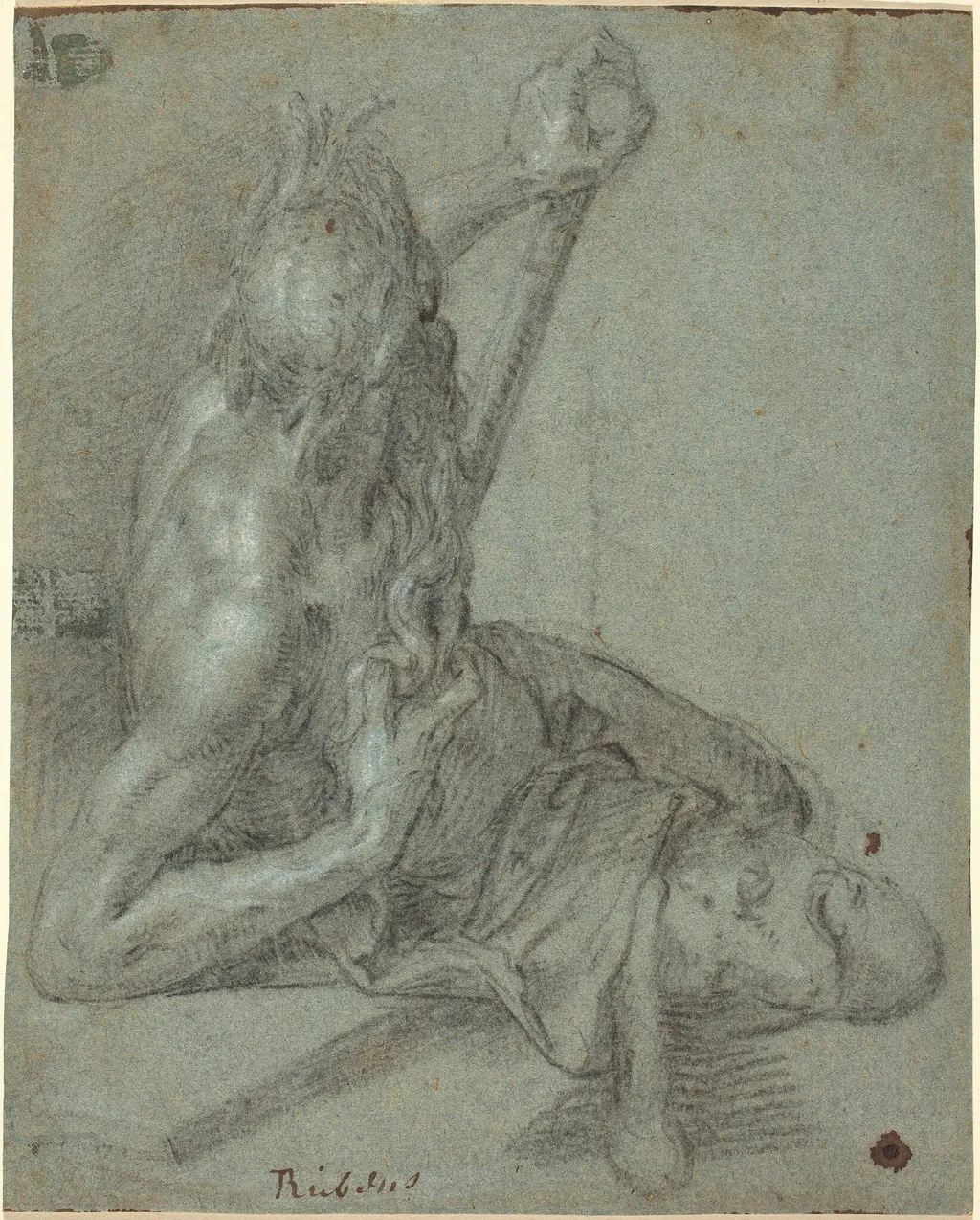
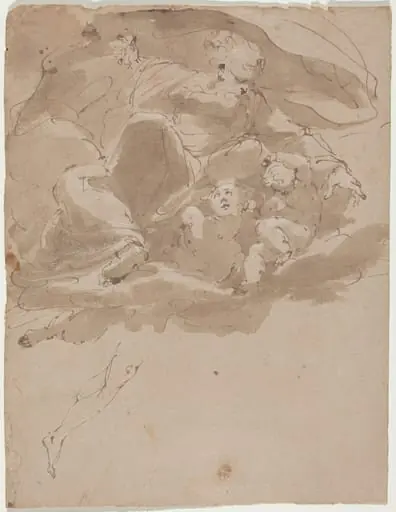
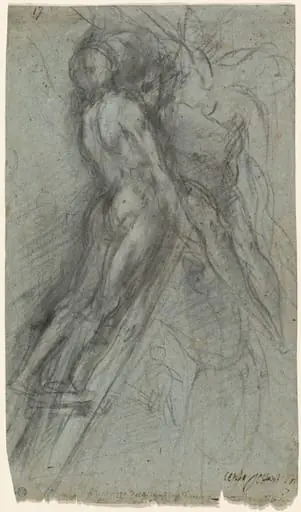
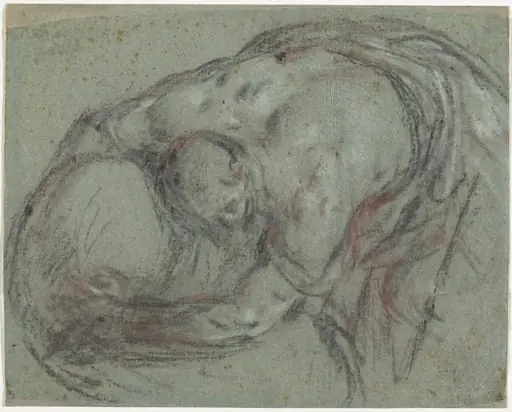
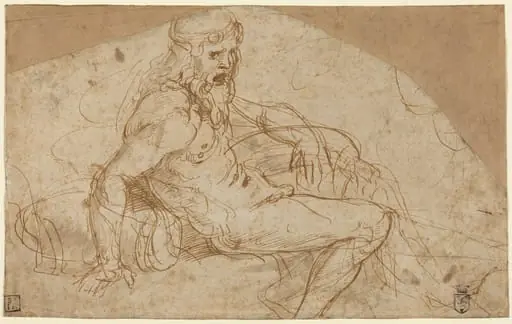
River God is a chalk drawing by the Baroque artist Italian 17th Century. It dates from 1620 and is held in the collection of the National Gallery of Art.
- Inscription
- Inscribed:by later hand, lower center in pen and brown ink: Rubens; by later hand, center verso in graphite: 14 (in circle); by later hand, center to center right verso in graphite: R - VI - A xx(superscript, underlined); by later hand, across bottom verso in graphite: From the Lady Lucas Collection
About this work
Overview
The River God is a drawing executed in black chalk with white gouache highlights on blue laid paper, depicting a figure emerging from water.
Subject & Meaning
The drawing shows a partially rendered male figure with flowing hair and beard, rising from the water, with the lower body indicated by faint lines. The artist's signature 'Rivulus' is visible in the corner.
Technique & Style
The artist employed black chalk for the primary drawing and white gouache to accentuate certain areas, creating contrast on the blue paper. The use of these materials and the emphasis on dramatic gesture are characteristic of the Baroque style.
Context
The River God drawing is associated with the Baroque period, known for its dramatic and dynamic representations.
Artist & collection

Artist
This Italian artist worked in the 17th century, making engravings, ink drawings, and oil paintings.