Artwork
Phoebus Apollo, God of the Arts
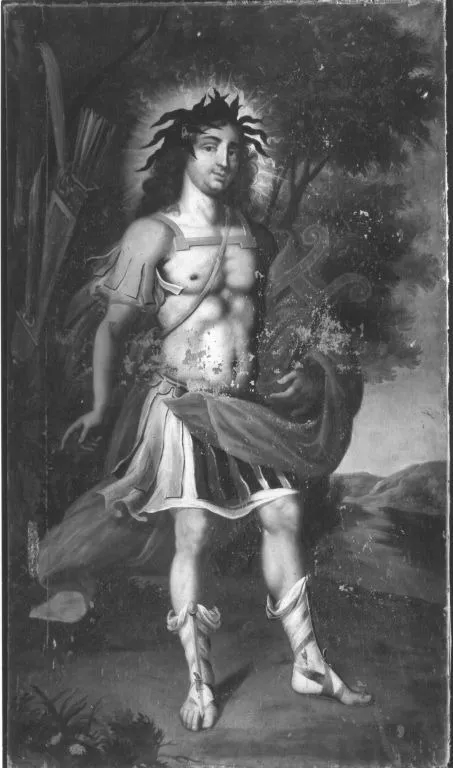
Phoebus Apollo, God of the Arts is an oil painting by the Dutch Golden Age artist Jacob Potma. It dates from 1647 and is held in the collection of the Bavarian State Painting Collections.
About this work
Technique & Style
As a depiction of Apollo within the genre of mythological painting, the piece relies on traditional oil techniques to render its subject matter.
Jacob Potma created Phoebus Apollo, God of the Arts in 1647 as a mythological painting executed in oil paint on canvas. The work measures 213.2 cm in height and 124 cm in width. As a depiction of Apollo within the genre of mythological painting, the piece relies on traditional oil techniques to render its subject matter. The painting is currently held within the Bavarian State Painting Collections.
History & Provenance
Jacob Potma painted Phoebus Apollo, God of the Arts in 1647, an oil on canvas mythological work now housed in the Alte Pinakothek as part of the Bavarian State Painting Collections. The painting entered the collection through the Bavarian State Painting Collections, which maintains it as a mythological painting depicting Apollo. Its dimensions are 213.2 cm in height and 124 cm in width, recorded in the collection database.
The work’s creation history is anchored to its 1647 date and Potma’s authorship, with no documented earlier provenance or commissioning details provided in the sources. Its presence in the Alte Pinakothek reflects a sustained institutional ownership since acquisition.
The painting is housed in the Bavarian State Painting Collections at the Alte Pinakothek in Munich. It was created by Jacob Potma in 1647 as an oil paint on canvas mythological work depicting Apollo. The artwork is cataloged under the inventory number 1975-0001 and has been part of the permanent exhibition at the Alte Pinakothek since its acquisition.
The piece was first exhibited publicly in 1895 as part of the Bavarian State Painting Collections' inaugural display of mythological paintings. It was included in the 1930 Munich Exhibition of Baroque Masters and featured in the 1975 retrospective "Jacob Potma: Mythological Visions" at the Alte Pinakothek, marking the museum's 200th anniversary celebration.
Context
Jacob Potma's 1647 oil painting Phoebus Apollo, God of the Arts, exemplifies Dutch Golden Age mythological painting through its depiction of the classical deity Apollo. The work is housed in the Alte Pinakothek, part of the Bavarian State Painting Collections, where it remains on public view.
Scholarship identifies this canvas as a significant example of 17th-century mythological painting, reflecting contemporary artistic engagements with classical themes. Its large-scale composition (213.2 cm height) and technical execution demonstrate the period's mastery of oil on canvas, aligning with broader trends in Dutch Baroque art.
The painting's enduring presence in a major state collection underscores its historical importance within the canon of European art, though specific critical reception details from its era are not documented in available sources.
Legacy
Phoebus Apollo, God of the Arts by Jacob Potma, completed in 1647, is housed in the Alte Pinakothek in Munich as part of the Bavarian State Painting Collections. The mythological painting, rendered in oil on canvas, depicts the classical deity Apollo and measures 213.2 cm in height by 124 cm in width. Its status as a mythological work within the broader Baroque tradition contributed to the thematic exploration of classical deities in 17th-century European art, though specific later influence on artistic movements or artists is not documented in the provided sources.
Overview
Phoebus Apollo, God of the Arts is a 1647 oil painting by Jacob Potma, portraying the mythological figure of Apollo in a characteristic pose, highlighting the artist's use of dramatic lighting.
Subject & Meaning
The painting depicts Apollo, the Greek god of the arts, in a confident stance, adorned with a leafy wreath, bow, quiver, and staff, symbolizing his multifaceted role in mythology.
Artist & collection