Artwork
Vanitas Still Life with Skull with a Laurel Wreath and Two Burning Candles
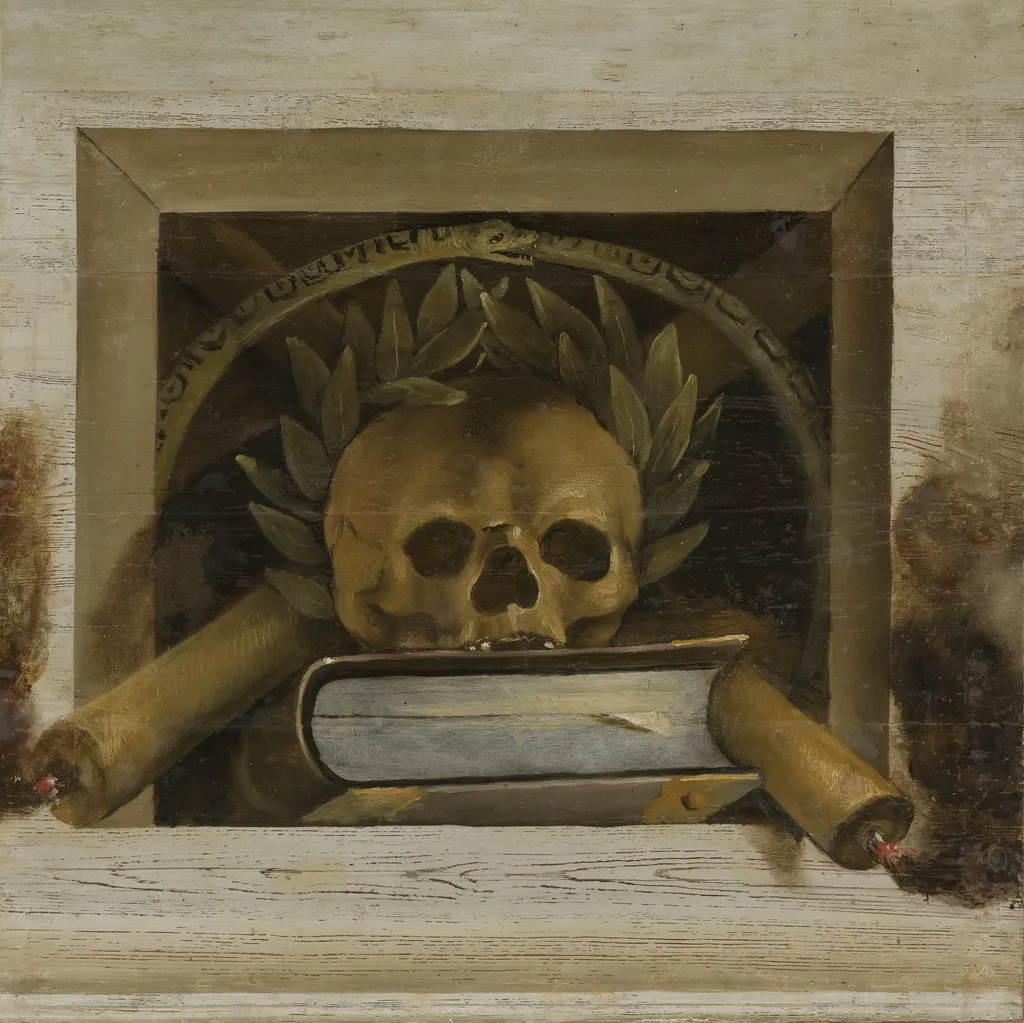
Vanitas Still Life with Skull with a Laurel Wreath and Two Burning Candles is an oil painting by the Dutch Golden Age artist Jacob van Campen. It dates from 1650 and is held in the collection of the Rijksmuseum.
About this work
Technique & Style
Jacob van Campen's Vanitas Still Life with Skull with a Laurel Wreath and Two Burning Candles is executed in oil paint on a panel support.
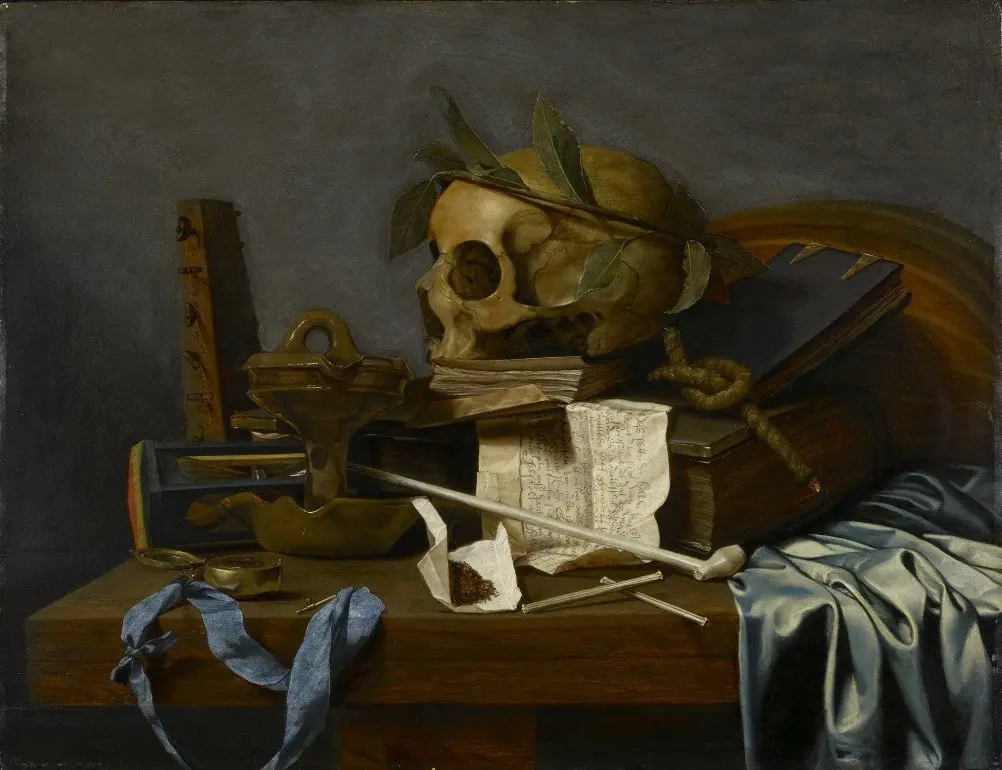
Jacob van Campen's Vanitas Still Life with Skull with a Laurel Wreath and Two Burning Candles is executed in oil paint on a panel support. Created in 1650, the work measures 86.6 cm in height and 86 cm in width. As a still life, the painting employs the medium of oil to depict symbolic objects including a skull, a laurel wreath, and burning candles, characteristic of the vanitas genre.
The use of a rigid panel support was typical for this period and genre, providing a stable ground for the detailed oil application required to render the textures of bone, foliage, and flame.
History & Provenance
The painting Vanitas Still Life with Skull with a Laurel Wreath and Two Burning Candles by Jacob van Campen is currently held in the collection of the Rijksmuseum in Amsterdam. While some records associate the work with the Museum Flehite, the primary location is identified as the Rijksmuseum. The artwork was created in 1650 and is executed in oil paint on panel.
No specific inventory or accession numbers are provided in the available records. The sources do not contain information regarding a history of exhibitions for this specific piece.
Overview
This 17th-century oil painting, created around 1650 by Jacob van Campen, is a still life that embodies the vanitas theme, cautioning against the transience of life. It is currently part of the Rijksmuseum's collection.
Subject & Meaning
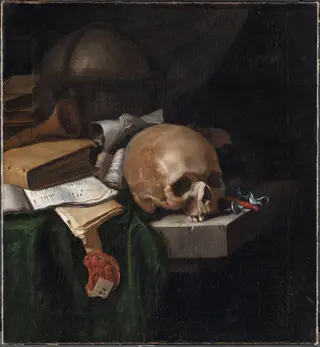
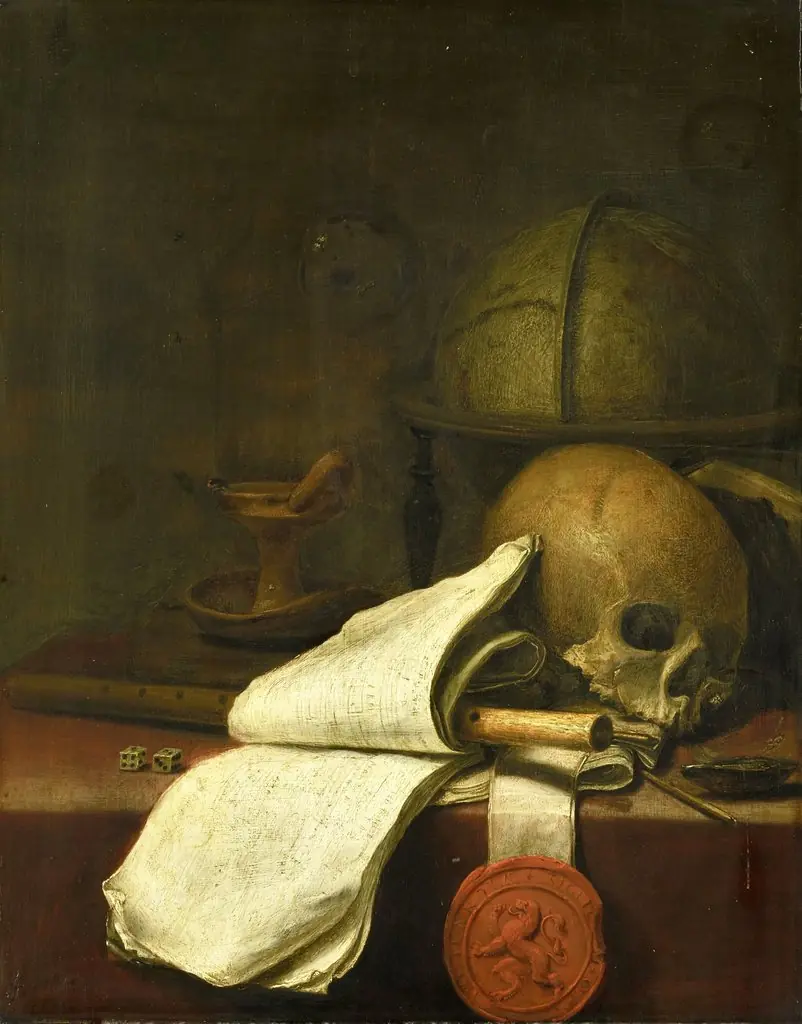
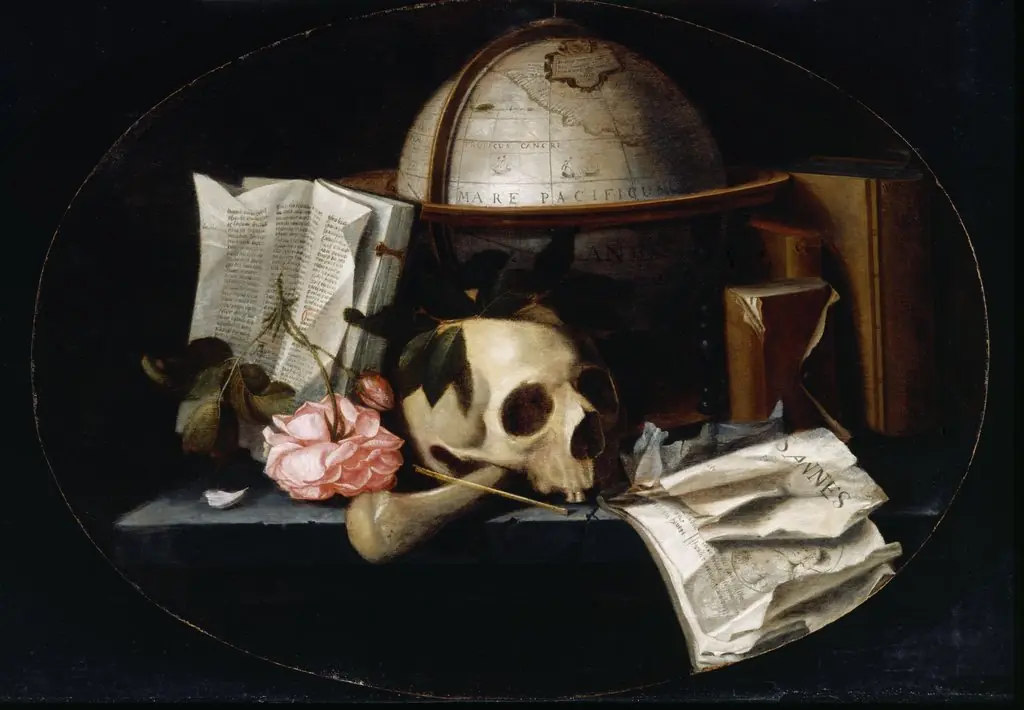
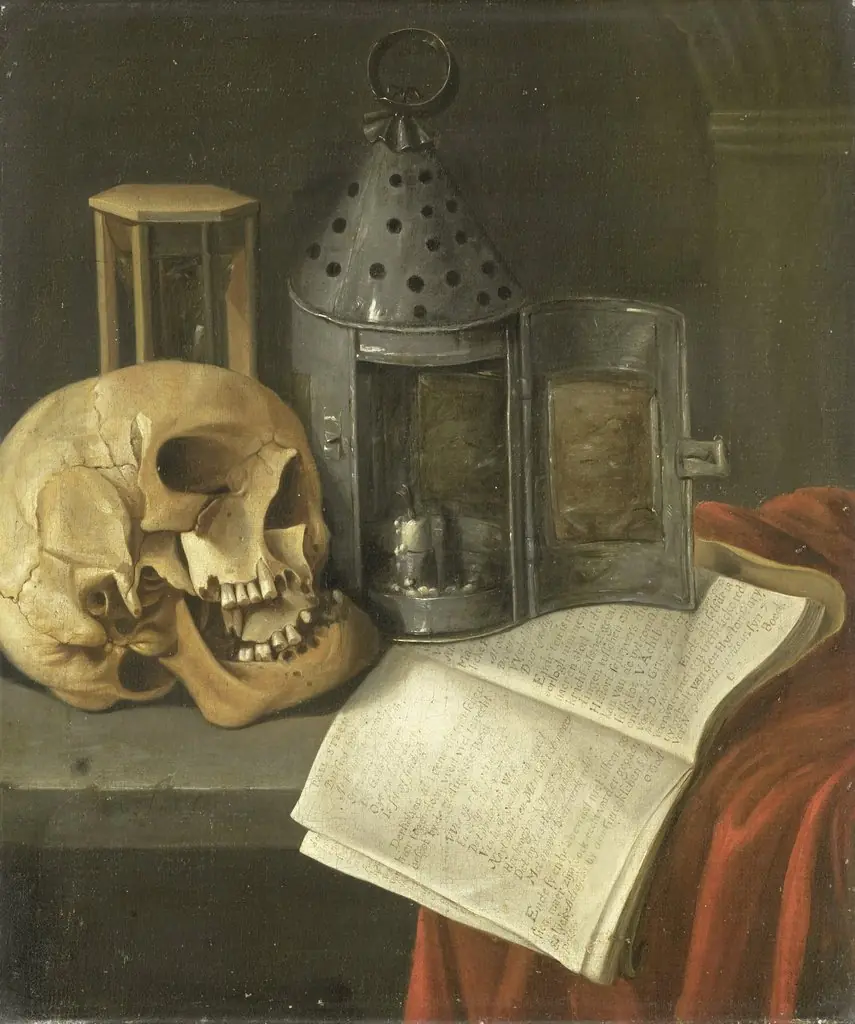
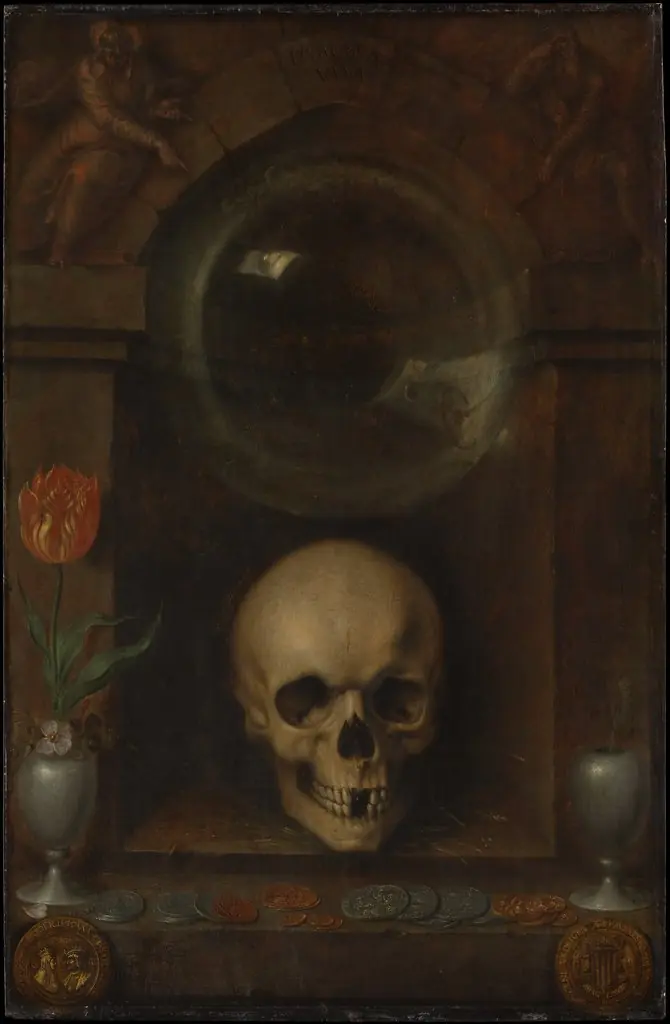
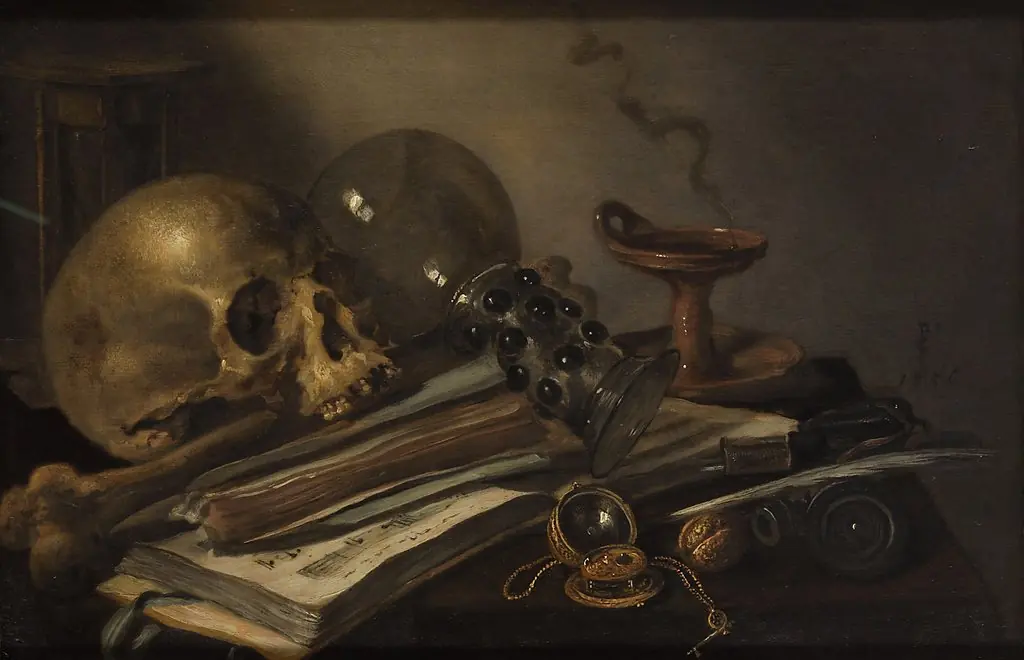
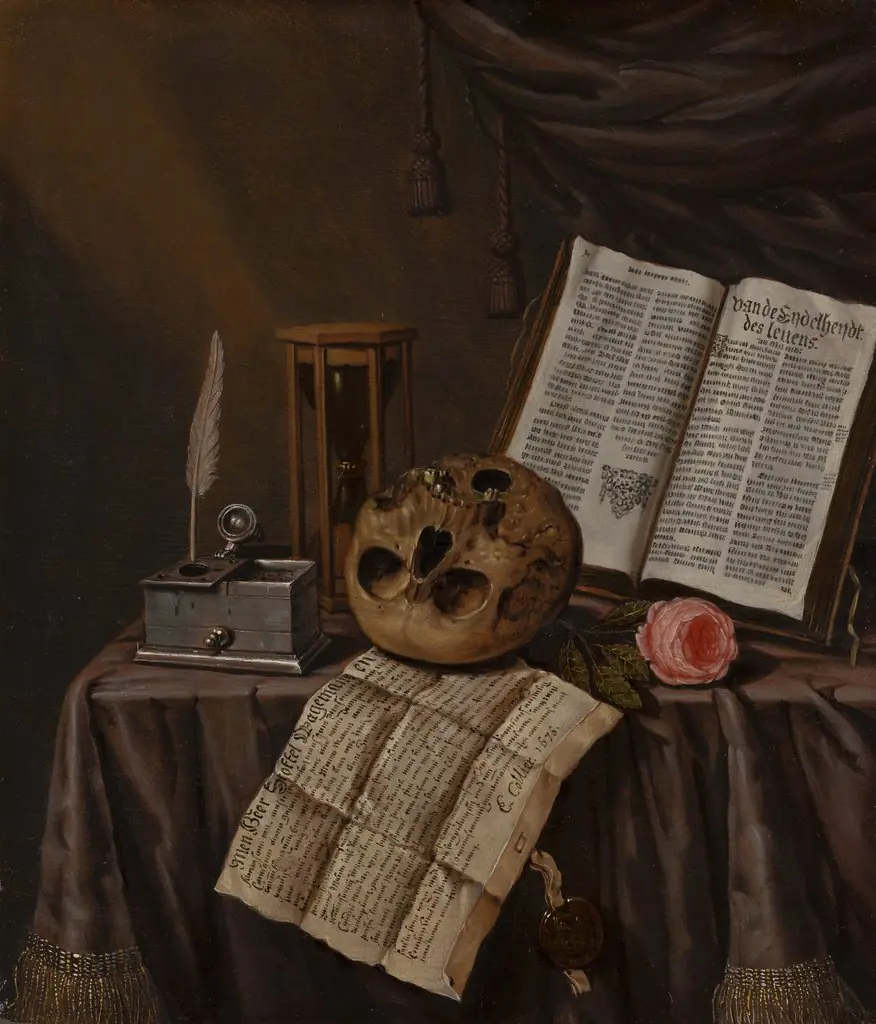
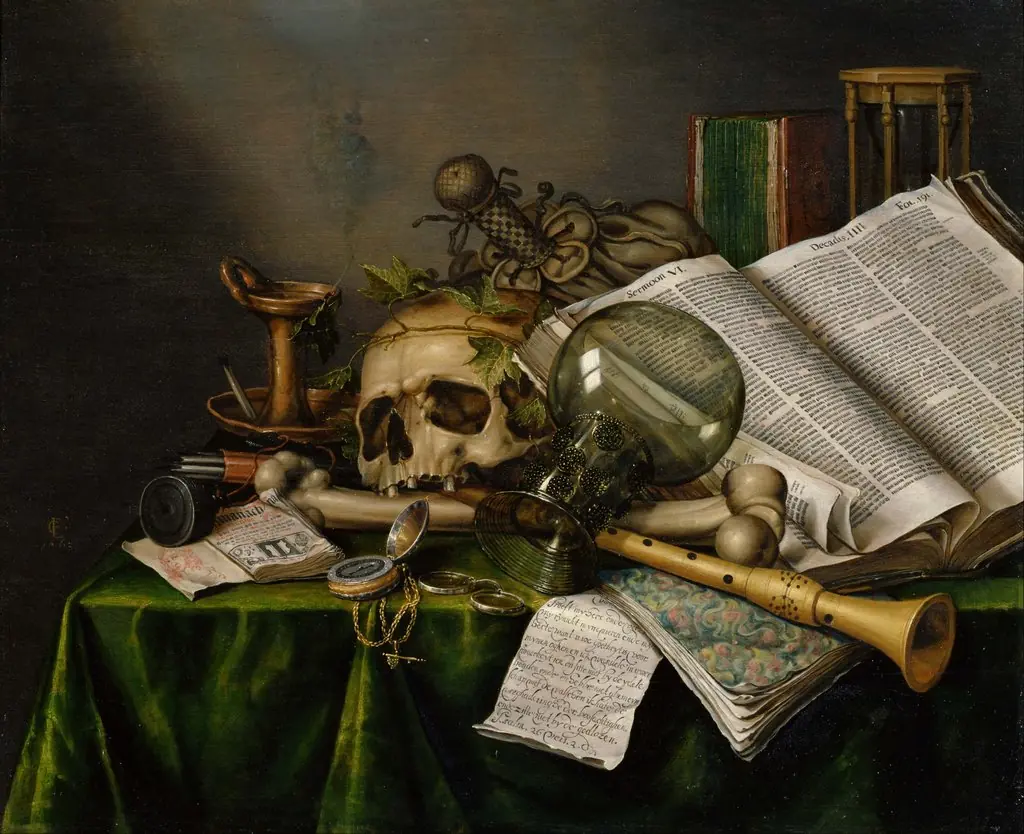
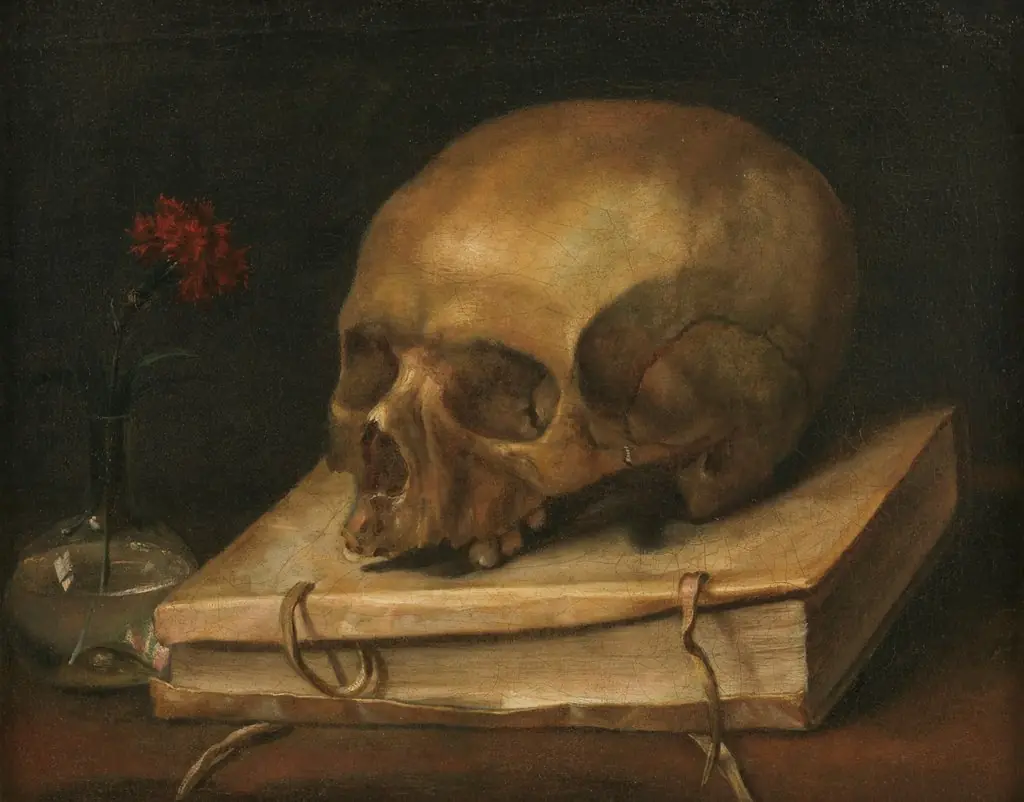
The painting features a skull adorned with a laurel wreath, an open book with a quill pen, and two burning candles. These elements symbolize the fleeting nature of human achievement and the inevitability of mortality, with the candles emphasizing the passing of time.
Own this work as a print
Artist & collection