Artwork
Woody Landscape with Cattle and a Stream
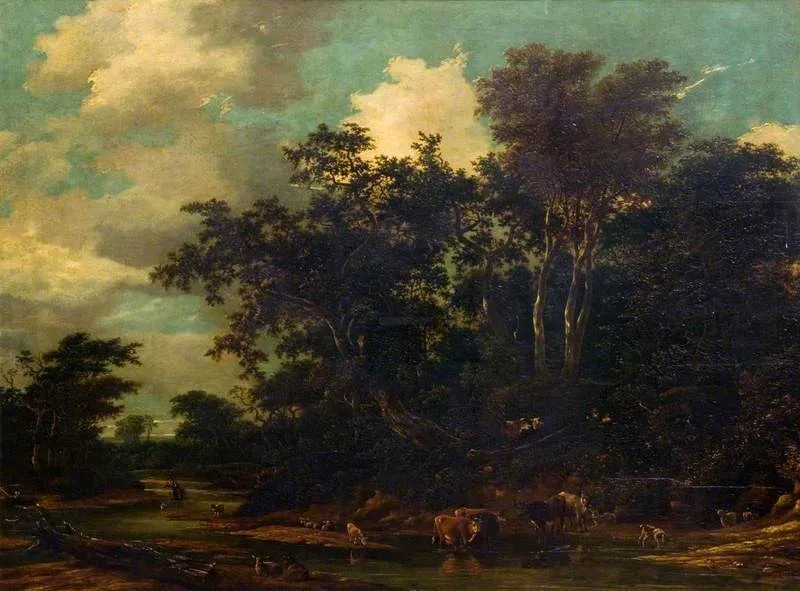
Woody Landscape with Cattle and a Stream is an oil painting by the Dutch Golden Age artist Jacob van Ruisdael. It dates from 1665 and is held in the collection of the Victoria and Albert Museum.
About this work
Overview
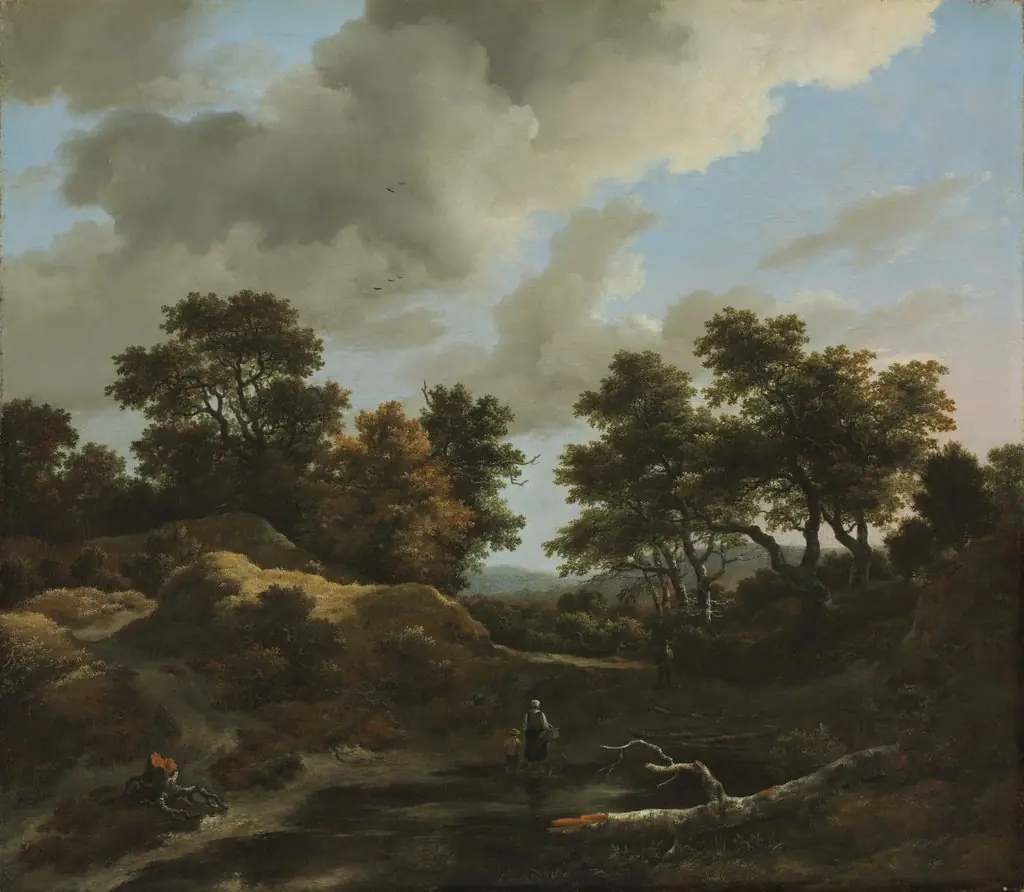
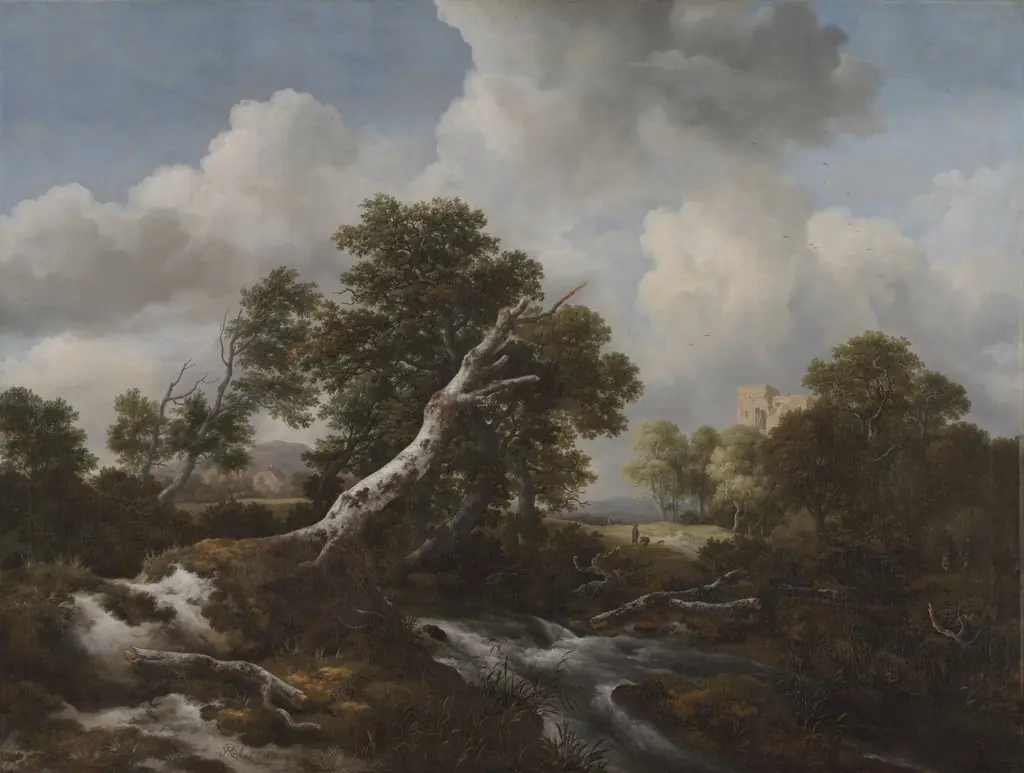
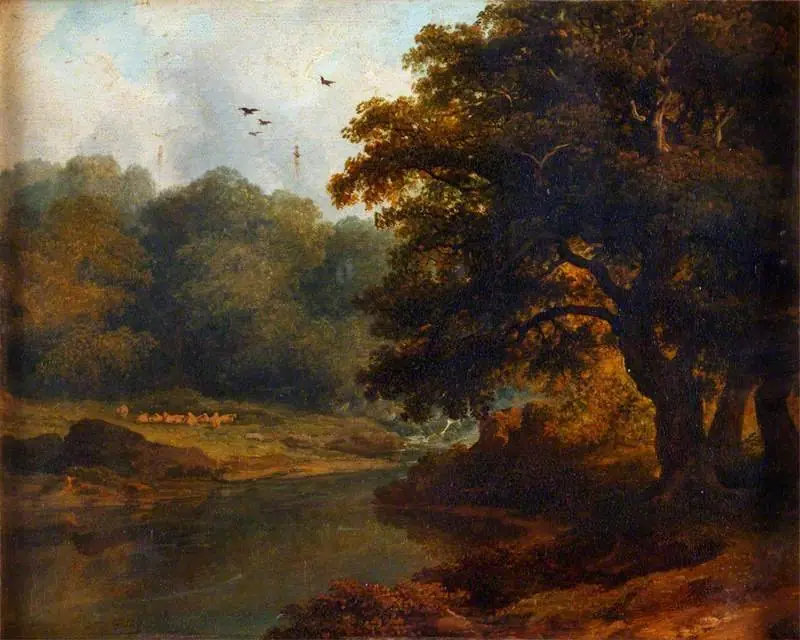
A small herd of cattle grazes near the water's edge, introducing a pastoral element that contrasts with the wild, untamed nature of the surrounding forest.
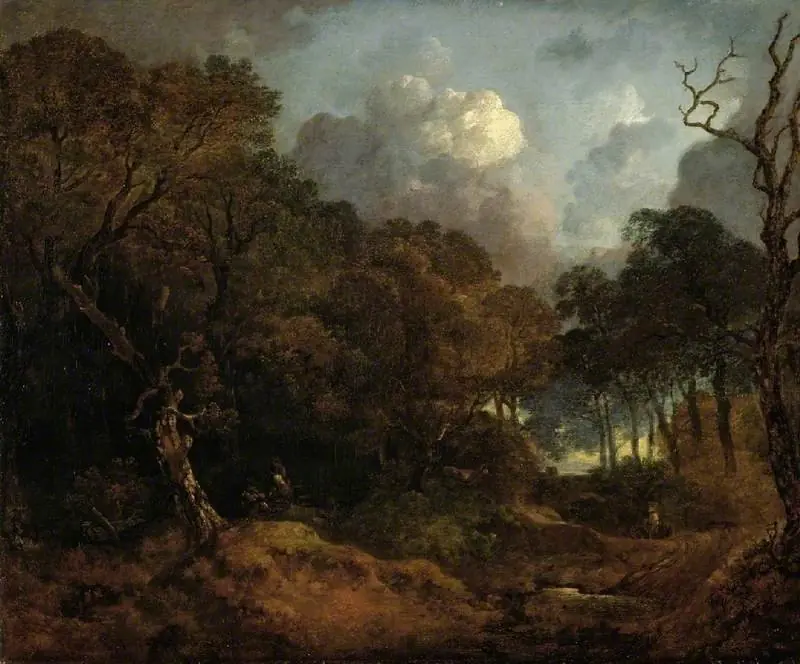
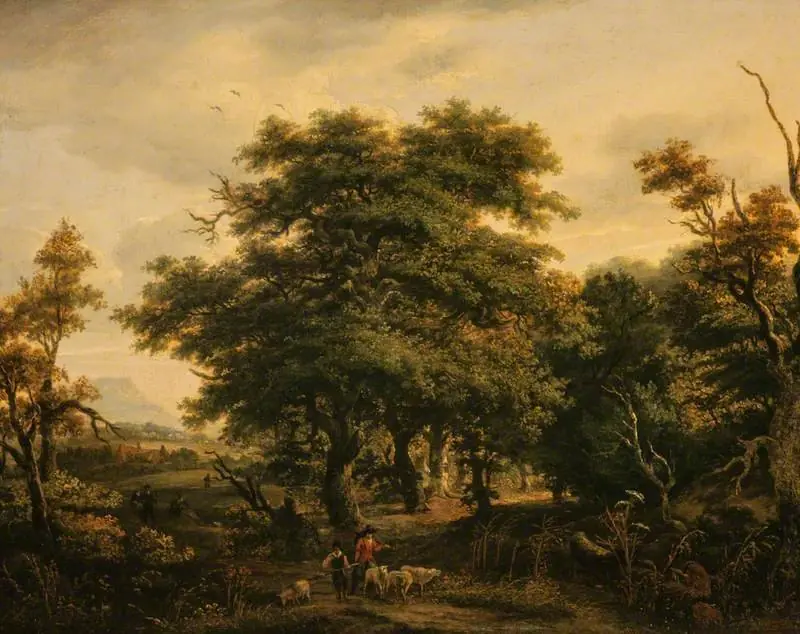
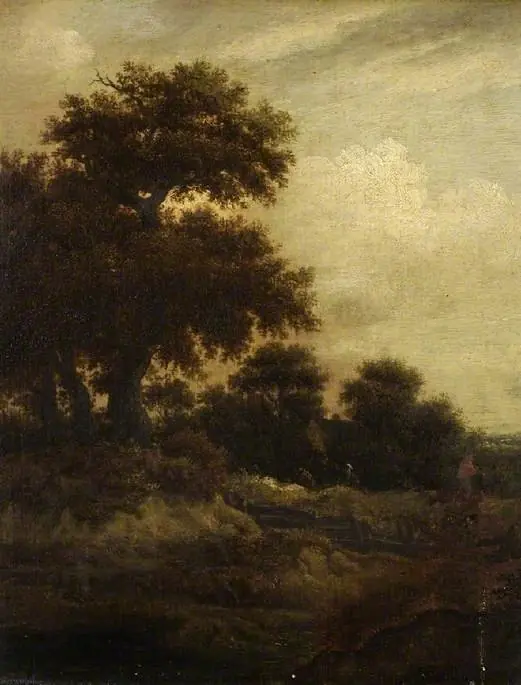
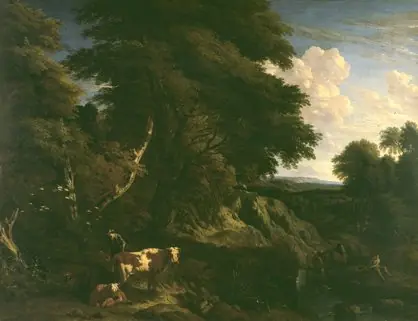
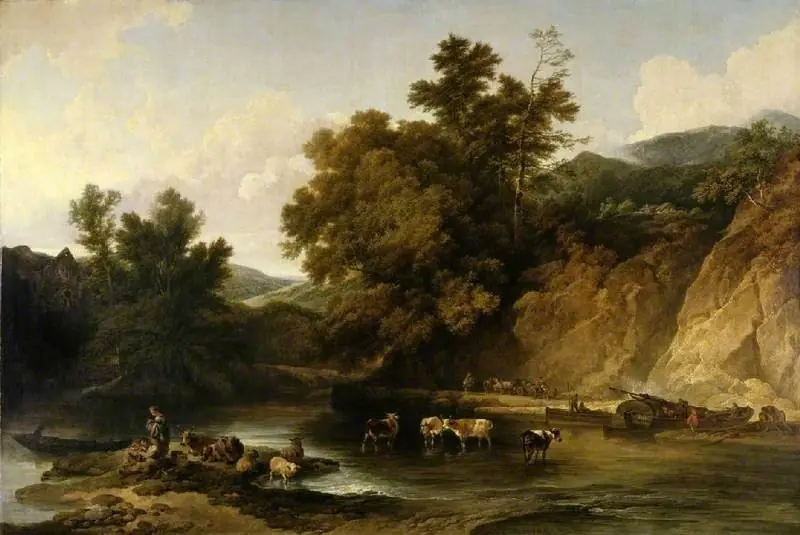
Jacob van Ruisdael's 'Woody Landscape with Cattle and a Stream,' dated 1665, exemplifies the mature phase of his career during the Dutch Golden Age. The composition centers on a dense, wooded environment where a stream meanders through the foreground, partially obstructed by a fallen tree trunk that anchors the viewer's perspective and creates a sense of depth. A small herd of cattle grazes near the water's edge, introducing a pastoral element that contrasts with the wild, untamed nature of the surrounding forest.
Ruisdael employs a palette of rich earthy tones, utilizing layered glazes to render the varied textures of moss, bark, and foliage with meticulous detail. The lighting suggests a specific time of day, casting dappled shadows that enhance the three-dimensionality of the trees and the atmospheric quality of the scene. This work reflects the artist's signature interest in the dramatic interplay between light and shadow within natural settings, moving beyond mere topographical representation to evoke a mood of serene solitude.
Created during a period when Ruisdael was producing some of his most ambitious landscapes, the painting demonstrates his mastery in organizing complex natural elements into a cohesive and balanced whole, solidifying his reputation as a leading figure in 17th-century landscape painting.
Subject & Meaning
The composition centers on a pastoral setting, emphasizing the harmonious relationship between nature and domesticated animals. The cattle, positioned near the water’s edge, suggest a moment of quiet activity within an otherwise still landscape, inviting contemplation of rural life in the Dutch Golden Age.
Technique & Style
Ruisdael employs a restrained palette of earthy greens, browns, and muted blues, allowing the natural tones to dominate. Careful modulation of light and shadow creates a subtle chiaroscuro effect, giving the trees, water, and animals a three‑dimensional presence that guides the viewer’s eye through the scene.
History & Provenance
Created in the mid‑1660s, the painting entered the Victoria and Albert Museum’s holdings through acquisition in the 19th century. Its provenance reflects the broader appreciation of Dutch landscape painting among British collectors during that period.
Artist & collection
Artist
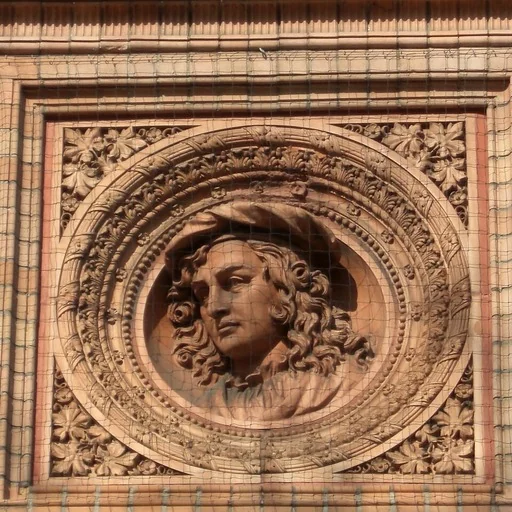
Jacob Isaackszoon van Ruisdael was a Dutch painter, draughtsman, and etcher. He is generally considered the pre-eminent landscape painter of the Dutch Golden Age, a period of great wealth and cultural achievement when…