Artwork
Paradise
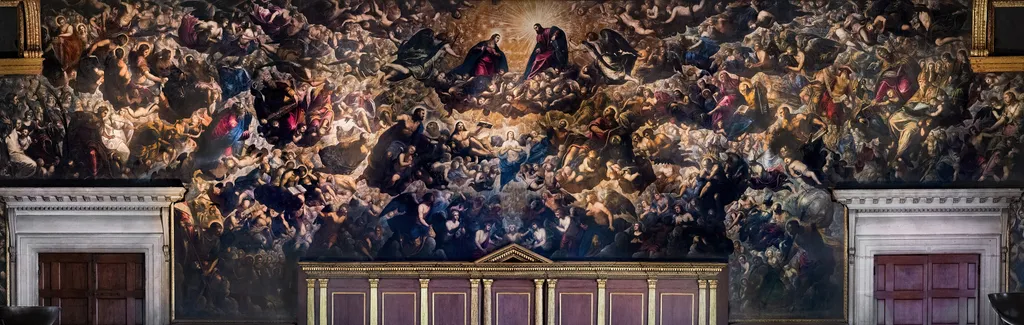
Paradise is an oil painting by the Mannerist artist Jacopo Tintoretto. It dates from 1594 and is held in the collection of the Doge's Palace.
About this work
Overview
Paradise is an immense oil painting on canvas, measuring 22 by 9 metres, prominently displayed in the main hall of the Doge's Palace in Venice. Created by Jacopo Robusti (Tintoretto), it is among the largest canvas paintings globally.
Subject & Meaning
The painting depicts a heavenly scene with numerous religious figures, including Saint Justina of Padua. A central path of light connects the earthly realm to the Empyrean, facilitating the ascent of the just with angelic aid and the descent of God's Grace upon the Doge, symbolized by a radiant, semi-veiled Archangel at the path's center.
Technique & Style
The composition is densely populated with approximately 500 detailed figures, characteristic of Tintoretto's mastery of scale and crowd depiction in his religious works.
History & Provenance
Commissioned for the Doge's Palace, the painting has remained in situ due to its size and integral role in the palace's decor, a common fate for many of Tintoretto's large-scale, location-specific works in Venice.
Context
Noted art critic John Ruskin highly praised the work, asserting its unparalleled value among existing artworks of its time, reflecting the painting's significance within the artistic canon.
Artist & collection
Artist
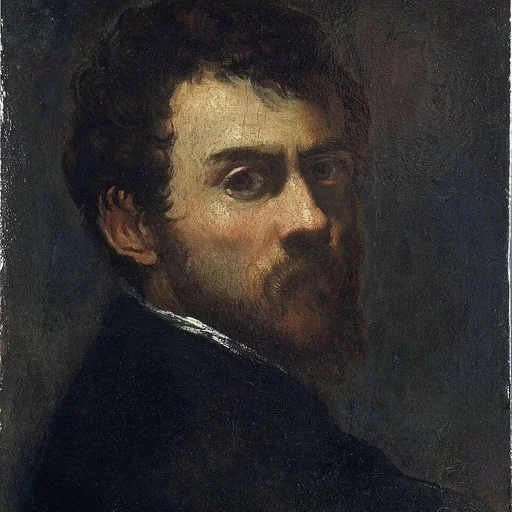
Jacopo Robusti (late September or early October 1518 – 31 May 1594), best known as Tintoretto ( TIN-tə-RET-oh; Italian:; Venetian: ), was an Italian Renaissance painter of the Venetian school.

- The assumption of the Virgin
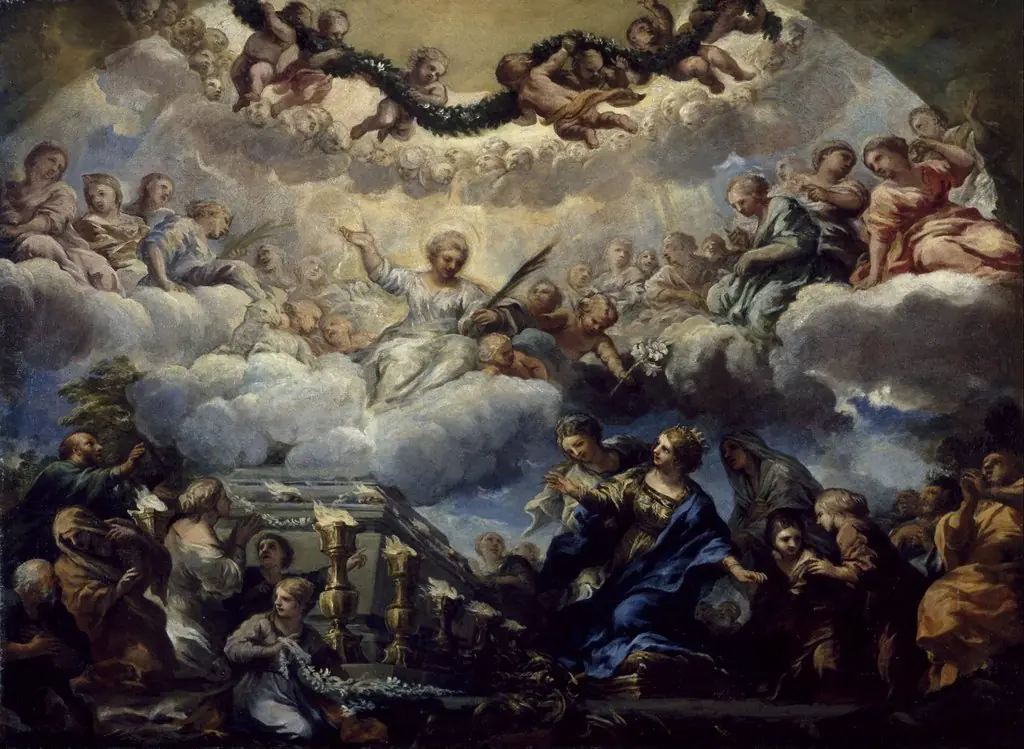 Saint Constantia's Vision before the Tomb of Saints Agnes and Emerentiana
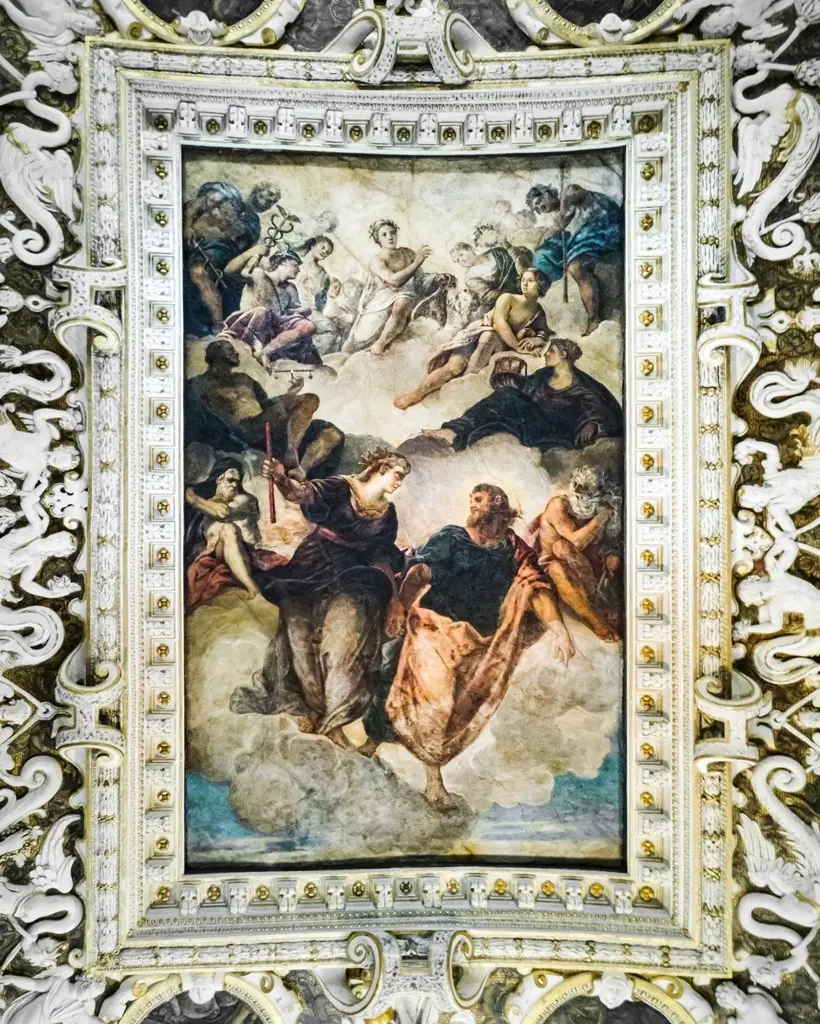 Jupiter hands over the dominion of the Adriatic to Venice
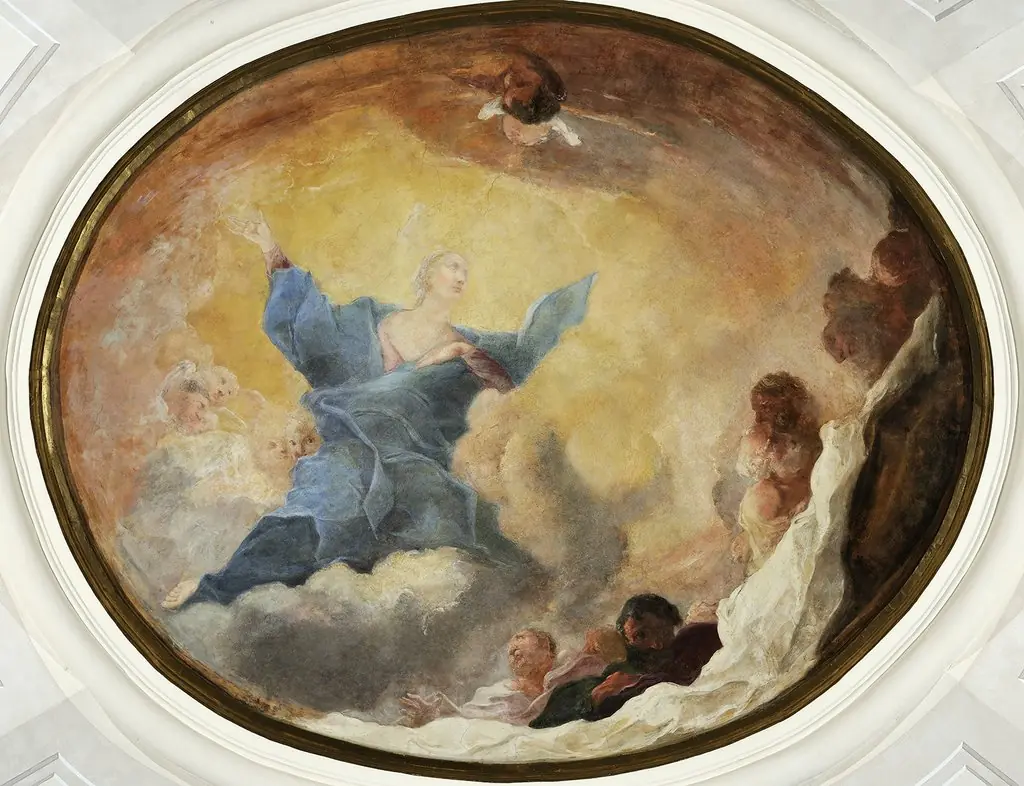 L'Assomption de la vierge
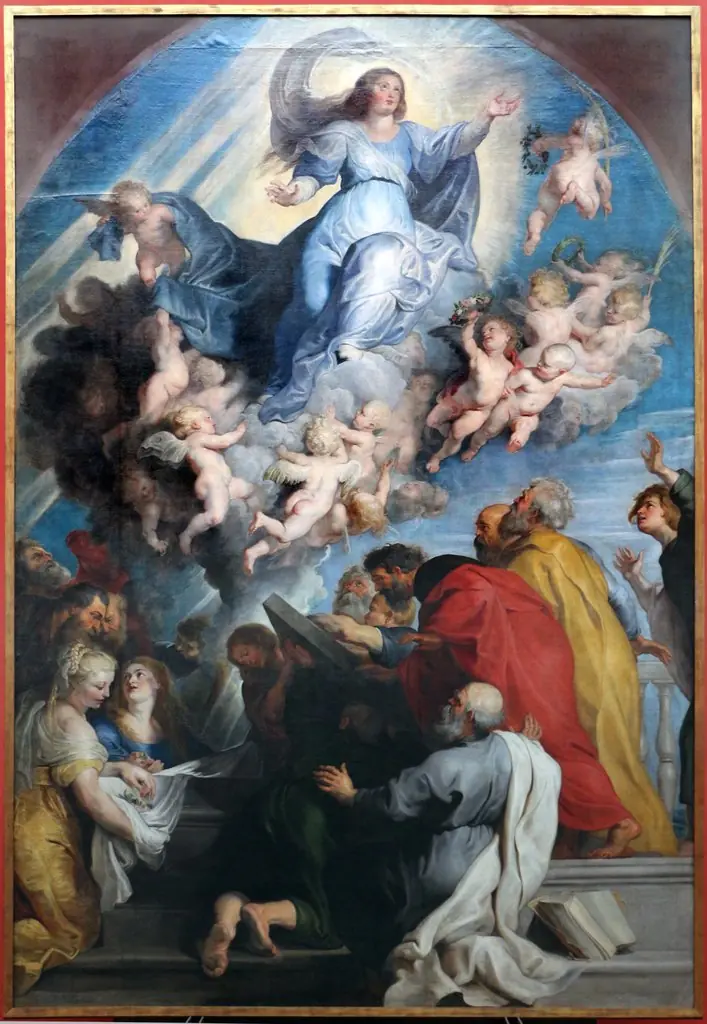
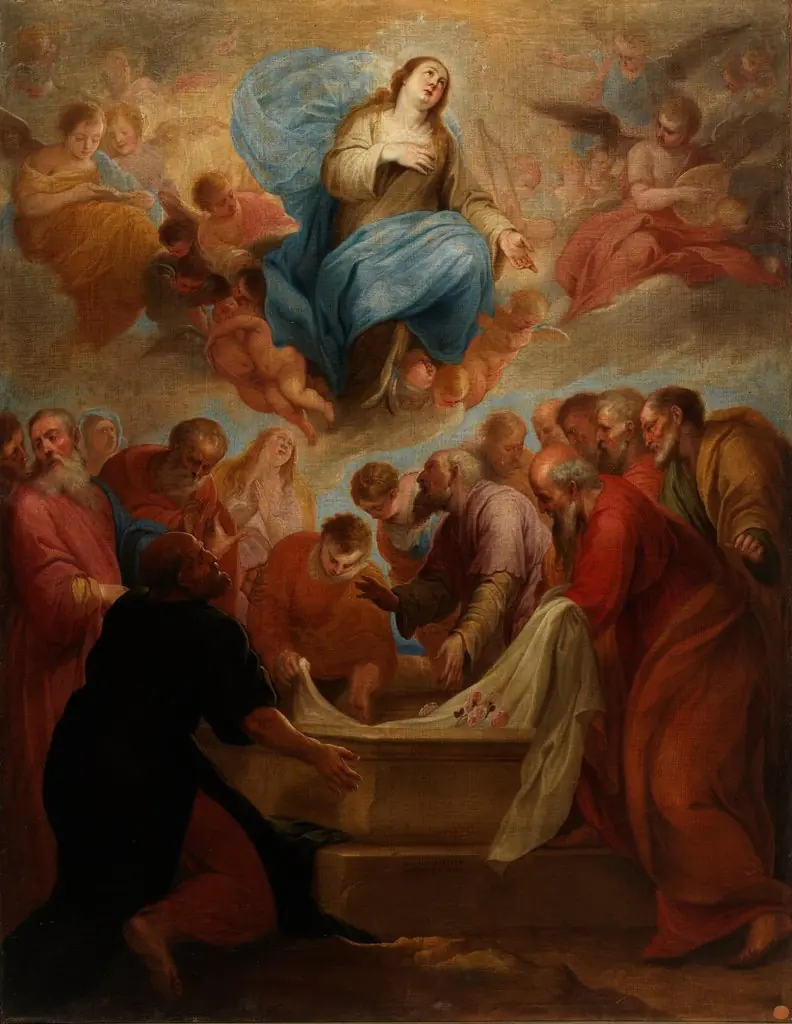 The Assumption of the Virgin
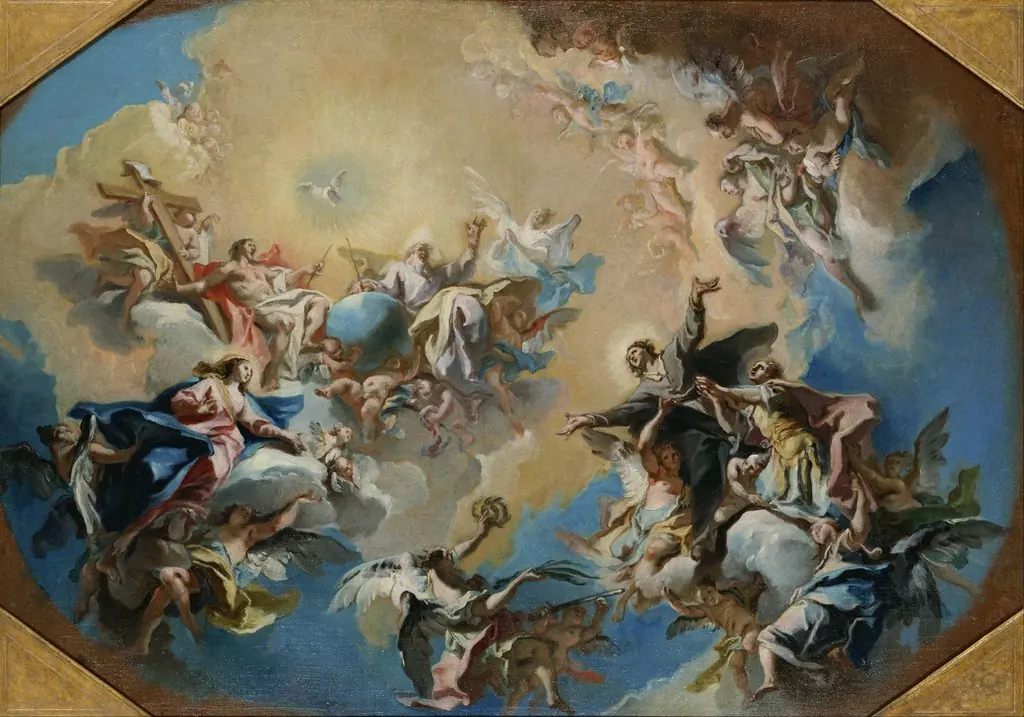 The Glorification of St. Felix and St. Adauctus
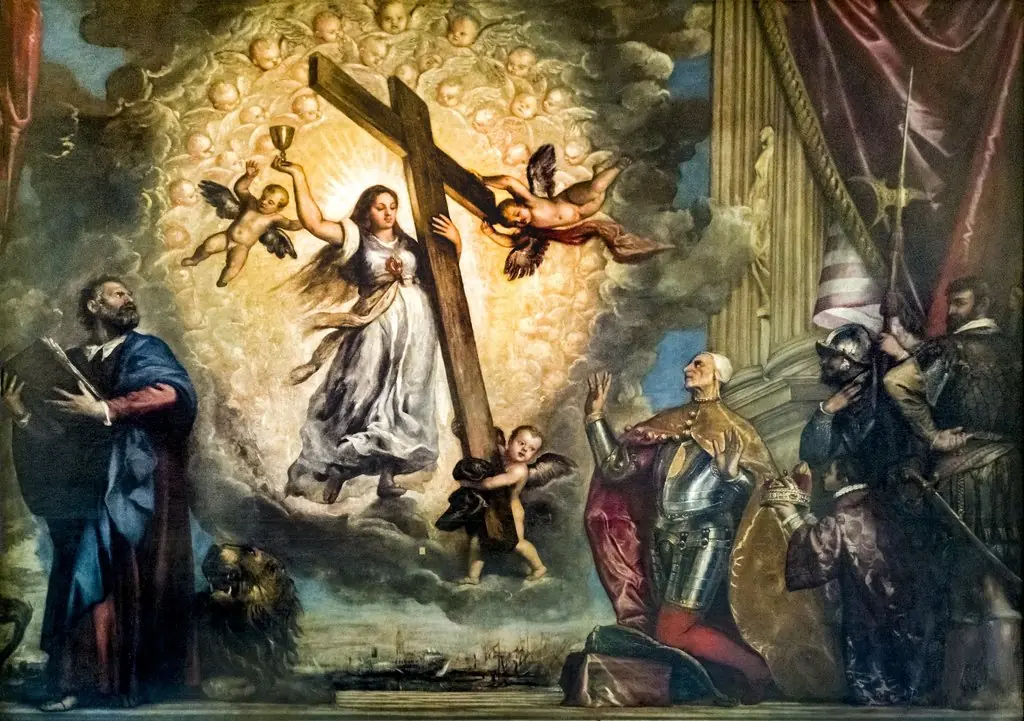 Doge Antonio Grimani Kneeling Before the Faith
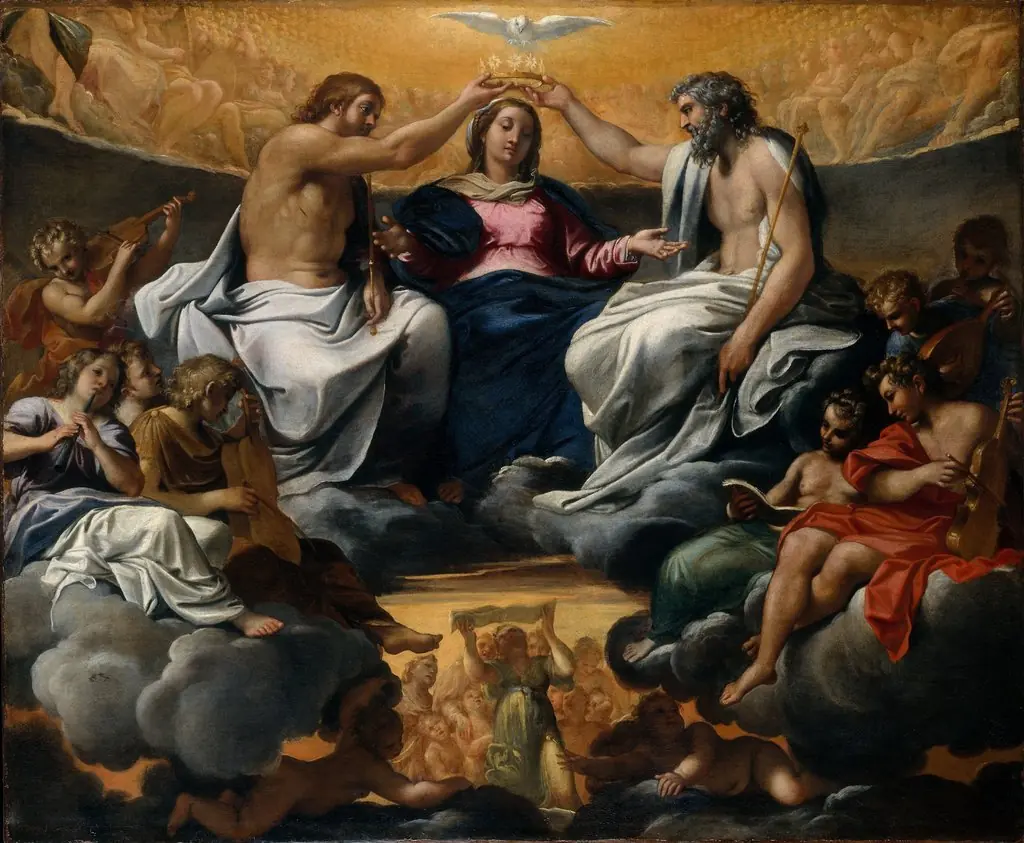 The Coronation of the Virgin
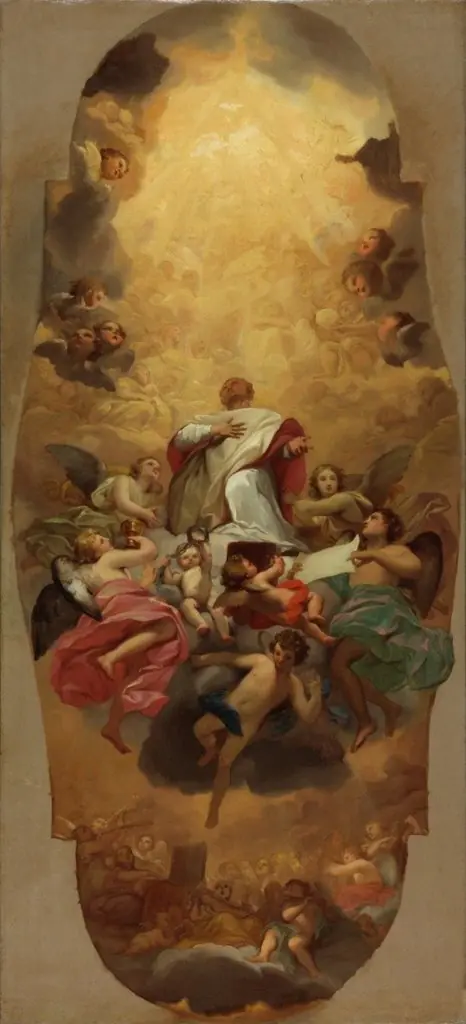 The Glory of St. Eusebius of Rome
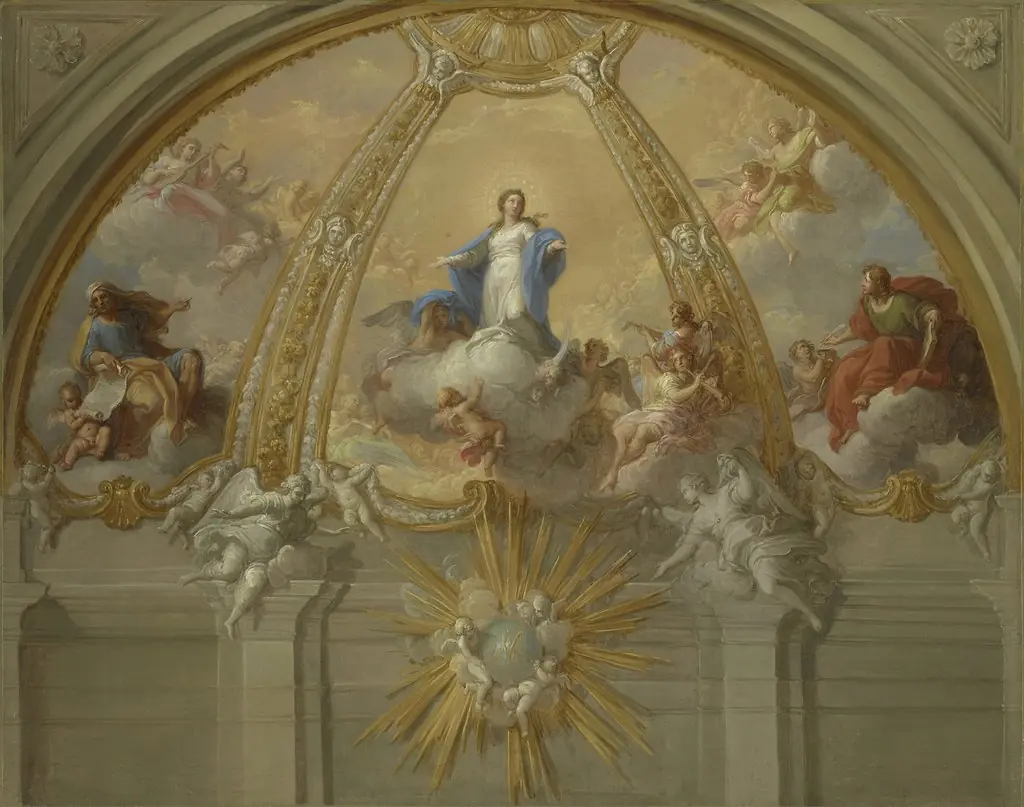 Immaculate Conception
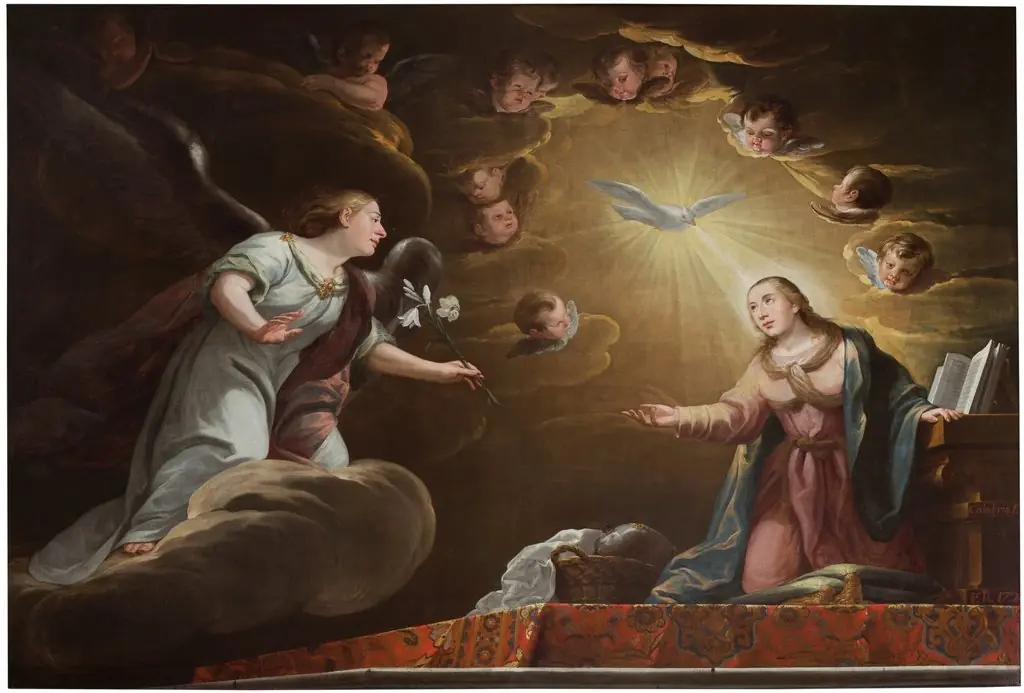 The Annunciation
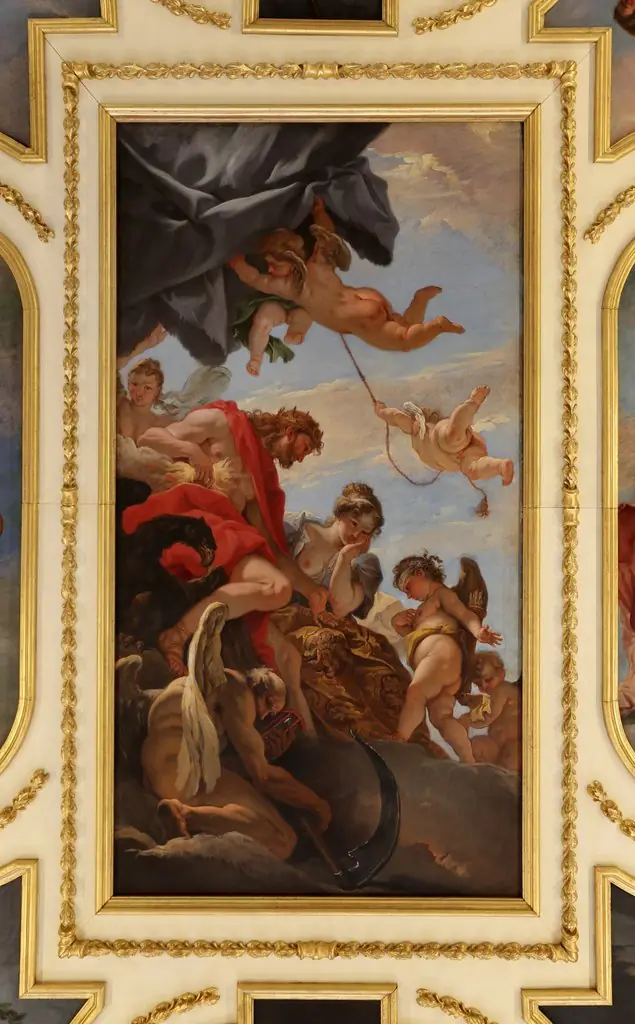 Amor vor Jupiter und Juno