Artwork
Sappho and Phaon
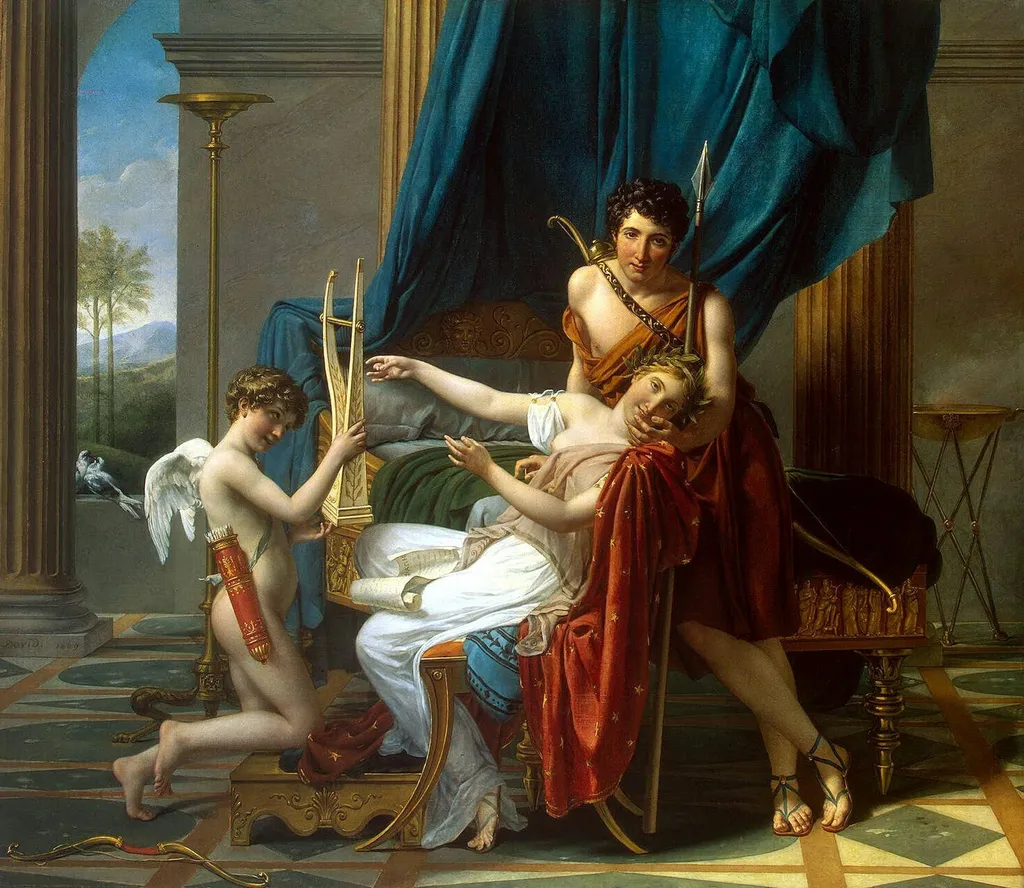
Sappho and Phaon is an oil painting by the Neoclassicist artist Jacques-Louis David. It dates from 1809 and is held in the collection of the Hermitage Museum. Created in 1809, this oil painting by Jacques‑Louis David depicts the legendary poet Sappho, her lover Phaon, and the god Cupid.
About this work
Overview
3 by 262 centimeters, the work was created in France and depicts a mythological scene featuring the poet Sappho, her lover Phaon, and Cupid.
Sappho and Phaon is an 1809 neoclassical oil on canvas painting by the French artist Jacques-Louis David. Measuring 225.3 by 262 centimeters, the work was created in France and depicts a mythological scene featuring the poet Sappho, her lover Phaon, and Cupid. Commissioned by Prince Nikolai Yusupov, the painting eventually entered the State Hermitage Museum in Saint Petersburg, where it remains the only painting by David in the museum's collection.
Subject & Meaning
The painting illustrates the legendary Greek love story of the poet Sappho and Phaon. Sappho sits in an ornate chair at the foot of a bed, turning her head backward so Phaon can cradle it in his left arm. She is distracted from her art by love, attempting to play her lyre with her right hand while an older, ephebic Cupid kneels before her, presenting the instrument. A scroll bearing her verses in praise of Phaon rests on her knee. Phaon stands behind the chair holding a spear and bow, draped in an orange and red garment with a star-patterned cloak. Two doves, the birds of Venus, perch on a balustrade outside, reinforcing the amorous theme.
Technique & Style
Executed in oil on canvas, the painting features a highly finished surface characterized by precise brushwork and smooth modeling of flesh. The composition is structured within a classically decorated interior featuring fluted columns, a checkered marble floor, and heavy blue drapery. A tall brass candelabrum and a view through a columned archway into a rural landscape anchor the scene. The palette is dominated by deep blues, warm oranges and reds, creamy whites, and gold accents. Light falls evenly across the scene, illuminating the rich textures of the drapery folds, metal, and marble. The work embodies the anacreontic style of the Empire period, combining theatrical gestures with erotic roundness.
History & Provenance
Prince Nikolai Yusupov, a Russian patron and collector of French art, commissioned the painting during his stay in Paris between 1808 and 1811 for his Moika Palace. The canvas was subsequently housed at Yusupov's Arkhangelskoye Castle. In 1917 the work was seized by the Soviet state and placed in a Moscow museum, later named the Pushkin Museum of Fine Arts in 1937. In 1925 the painting was transferred to the State Hermitage Museum in Saint Petersburg, where it is currently held.
Context
The work was David's second major painting to treat a mythological love story, following his 1788 Loves of Paris and Helen. The two compositions are so visually similar that a preparatory drawing for Sappho and Phaon was traditionally misidentified as a sketch for the earlier Paris and Helen. The painting may also recall a lost work on a similar theme by David's tutor, Joseph-Marie Vien. Created during the First Empire, the painting marked David's return to a graceful, anacreontic antiquity after producing works celebrating imperial festivals. Critics noted the shift, observing that the former censor of a libertine society had aligned himself with the refined tastes of the new ruling class. David himself may not have valued the work highly, writing to Yusupov in 1814 to request a sketch of it and admitting he had kept no record of the painting in Paris.
Legacy
Sappho and Phaon initiated a series of galant works by David depicting mythological couples, a theme he continued with Love and Psyche and The Farewell of Telemachus and Eucharis. Despite its place within this broader narrative of the artist's career, the painting has remained poorly known and has suffered severe critical judgment regarding its anacreontic conventions and perceived concession to imperial tastes. Its isolated provenance in Russia contributed to this obscurity, leaving the work as a singular, if debated, example of David's mythological production within the Hermitage's holdings.
Artist & collection
Artist
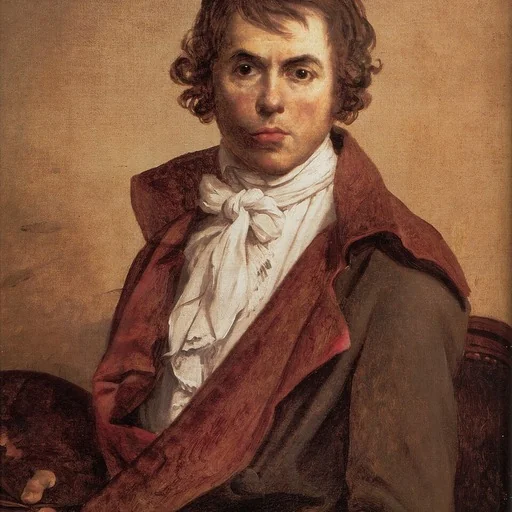
Jacques-Louis David was born in Paris on 30 August 1748 into a bourgeois family; his father died in a duel when the boy was nine, and a maternal uncle guided his education.

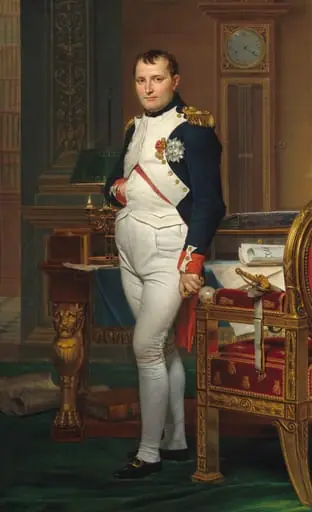 The Emperor Napoleon in His Study at the Tuileries
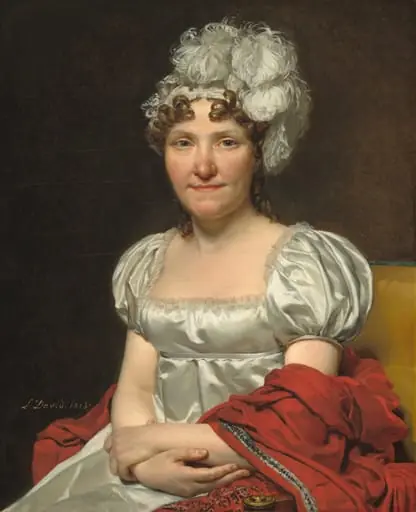 Madame David
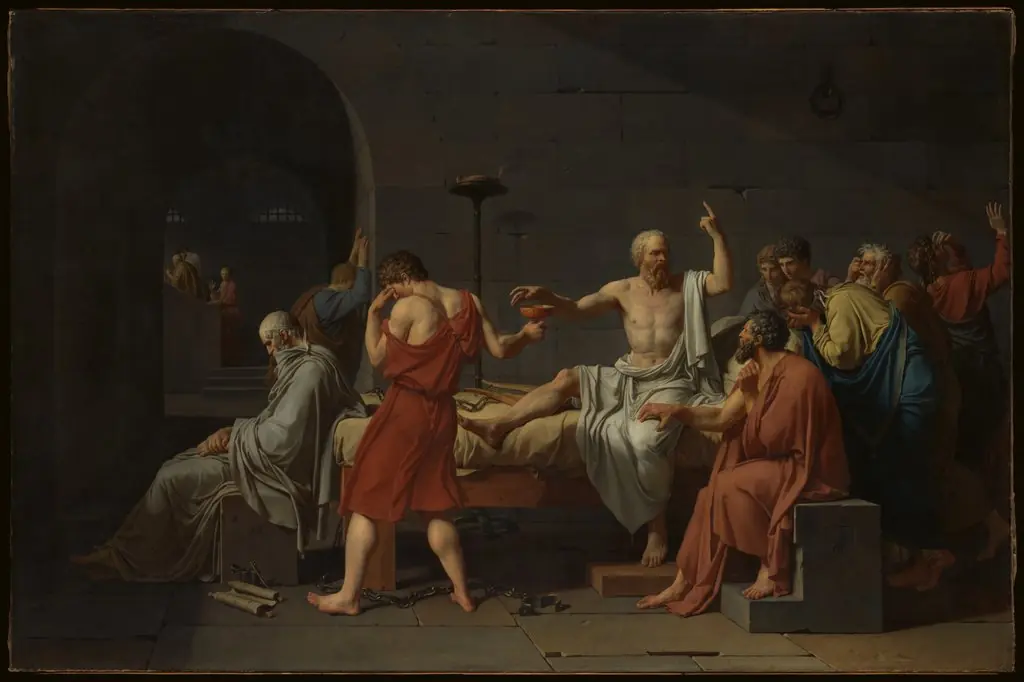 The Death of Socrates
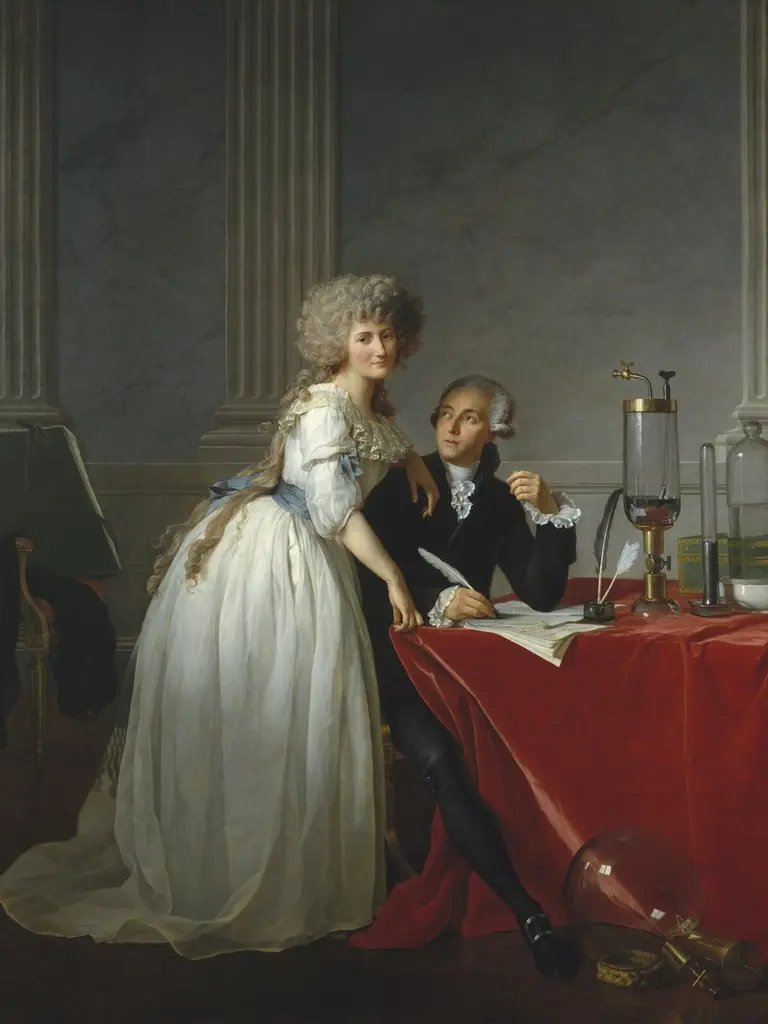 Portrait of Antoine-Laurent Lavoisier and his wife
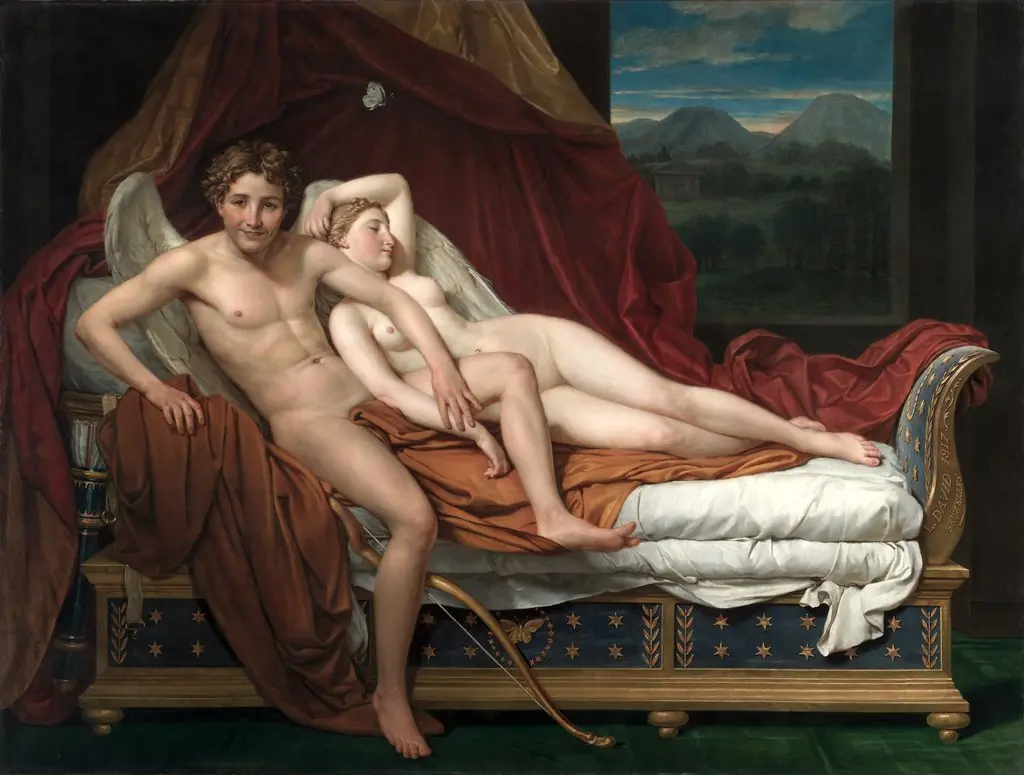 Cupid and Psyche
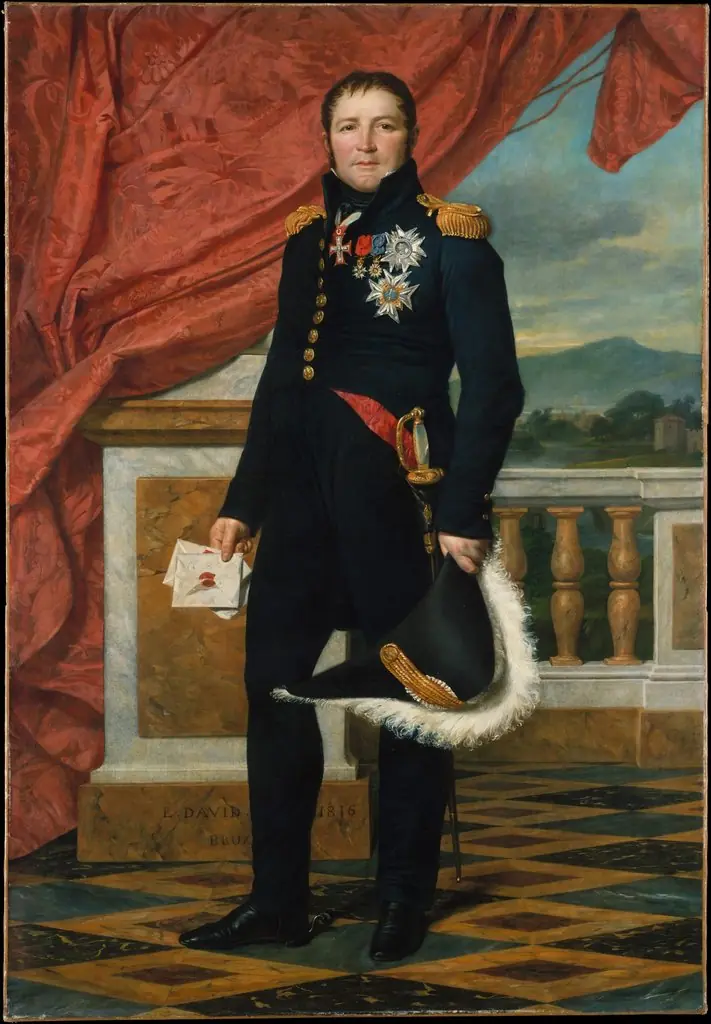 General Étienne-Maurice Gérard (1773–1852), Marshal of France
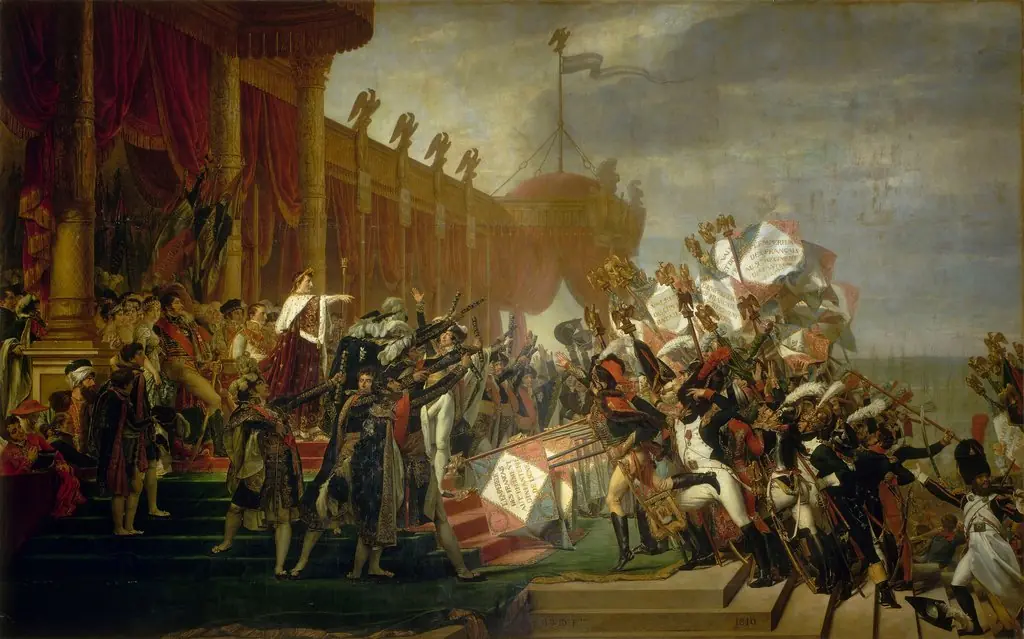 The Distribution of the Eagle Standards
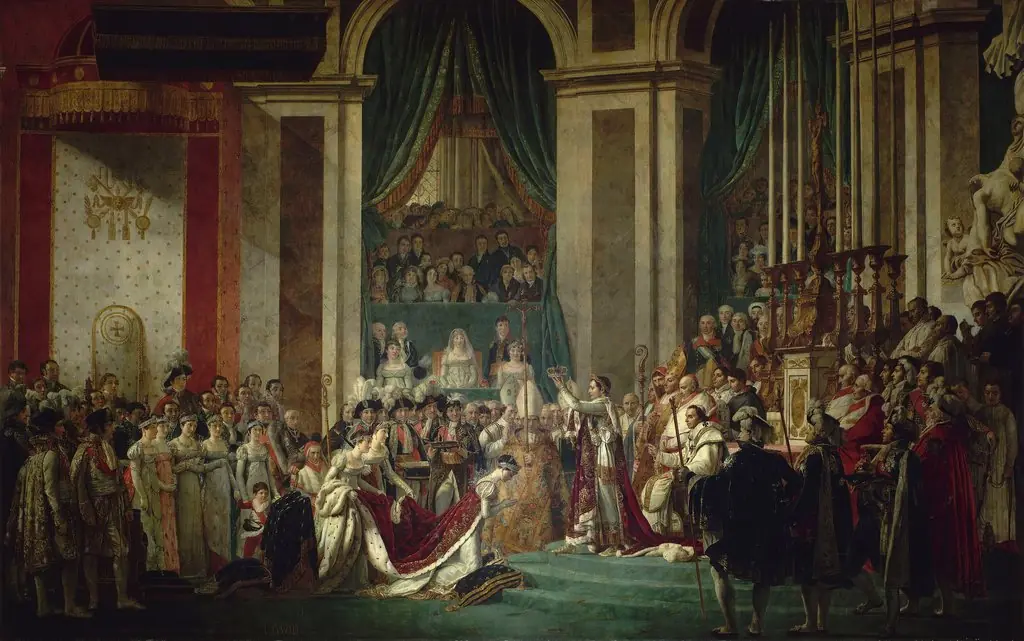 Coronation of Emperor Napoleon I and Coronation of the Empress Josephine
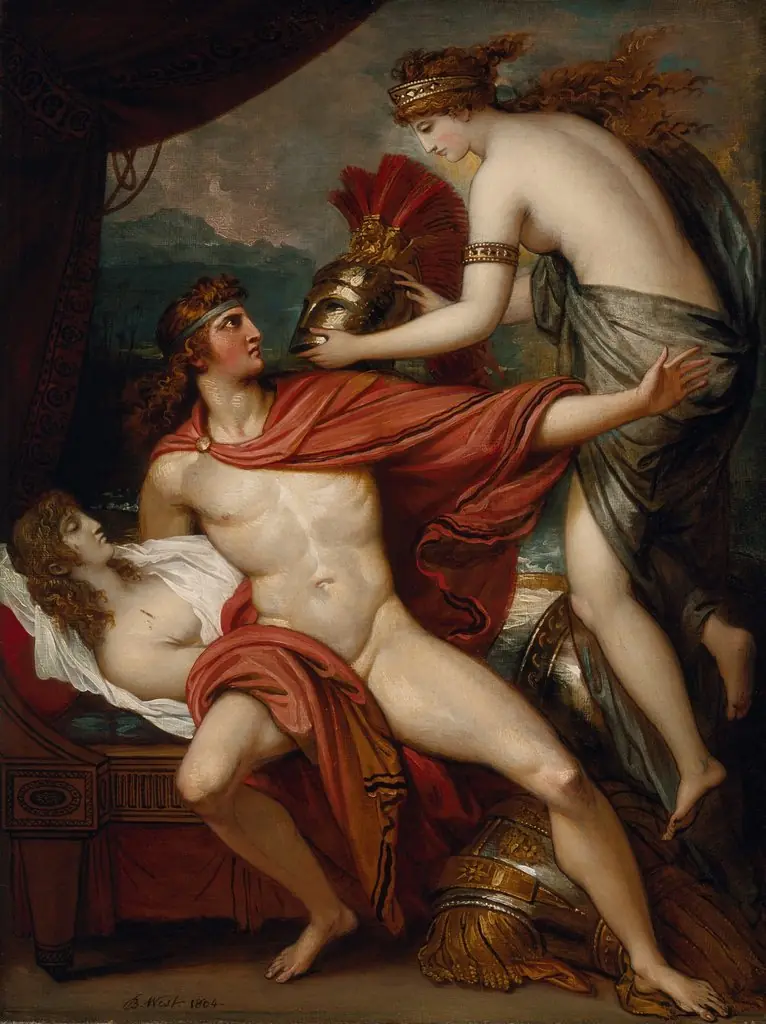 Thetis Bringing the Armor to Achilles
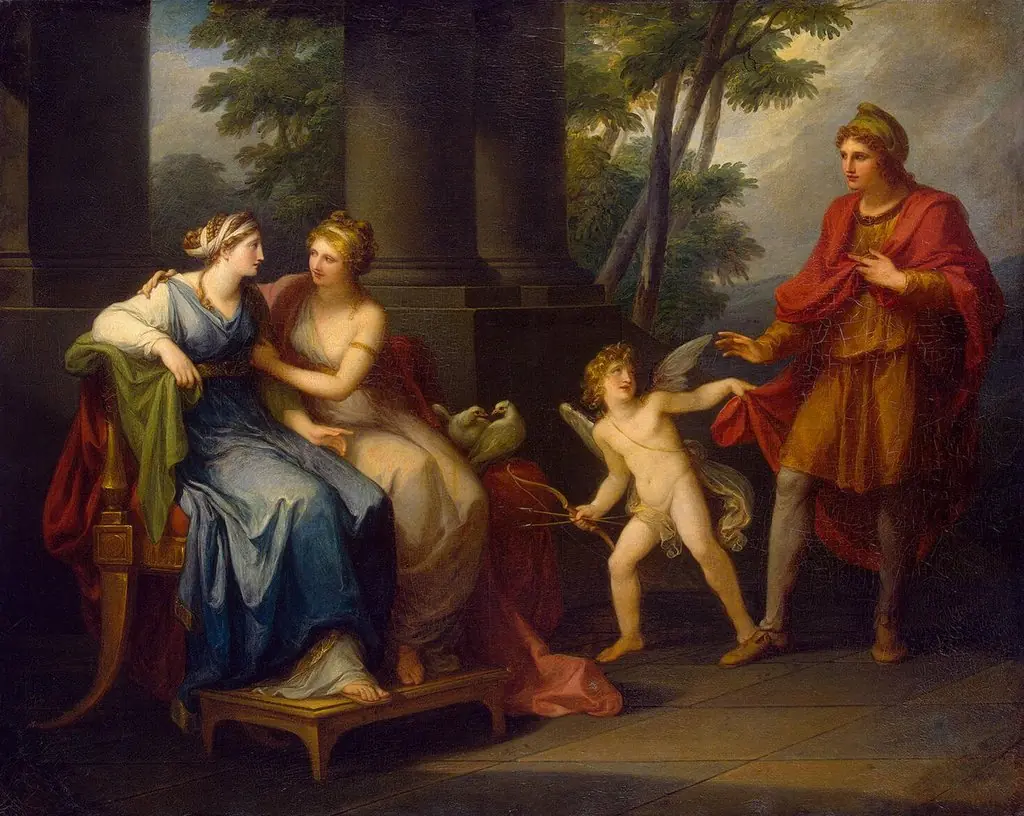 Venus Induces Helen to Fall in Love with Paris
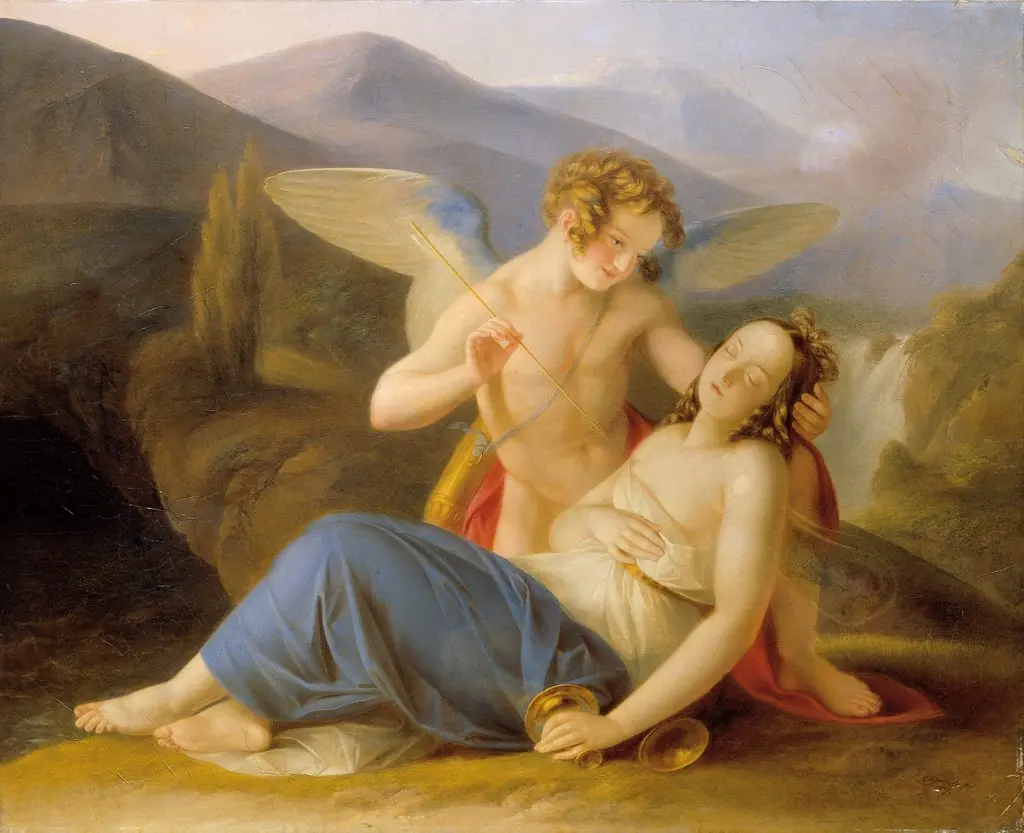 Psyche is awakened from fainting by Cupid's arrow
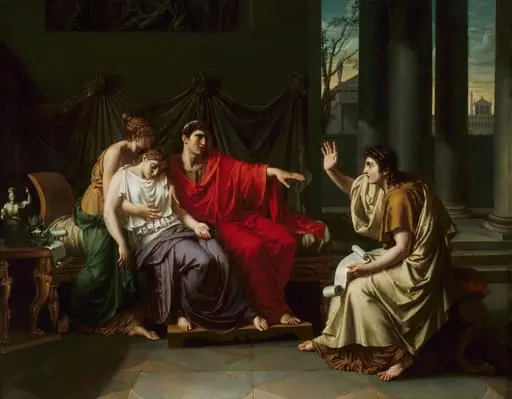 Virgil Reading the "Aeneid" to Augustus, Octavia, and Livia
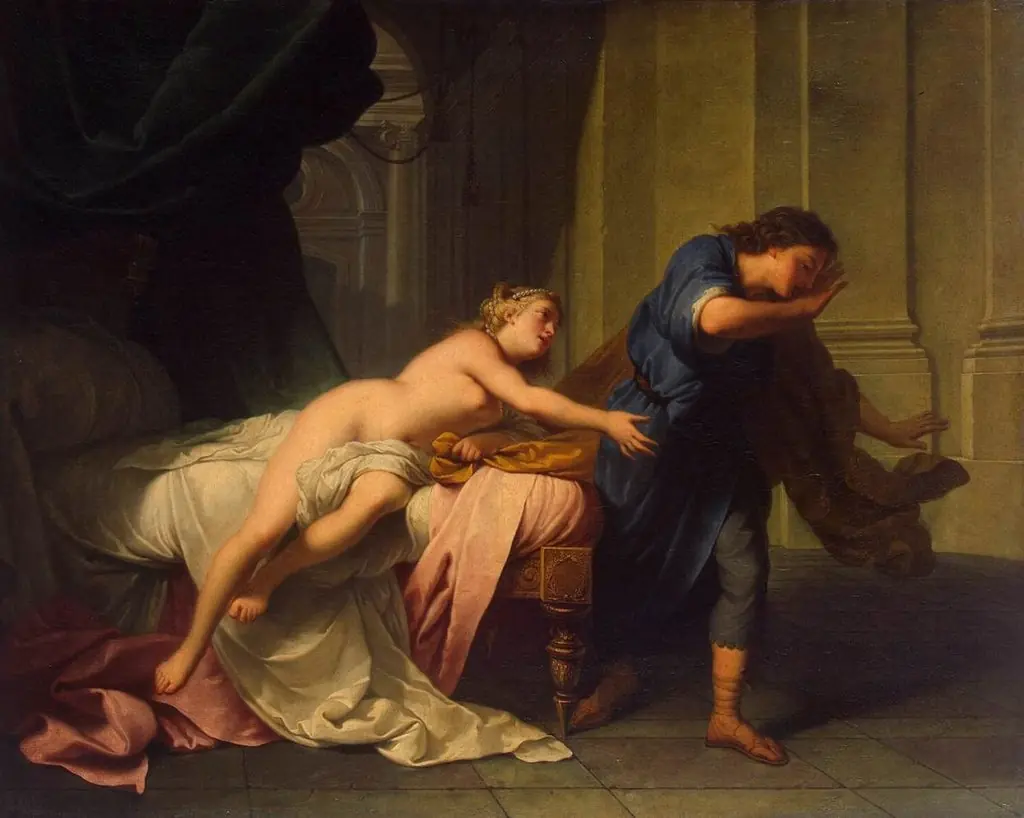 Joseph and Potiphar's Wife
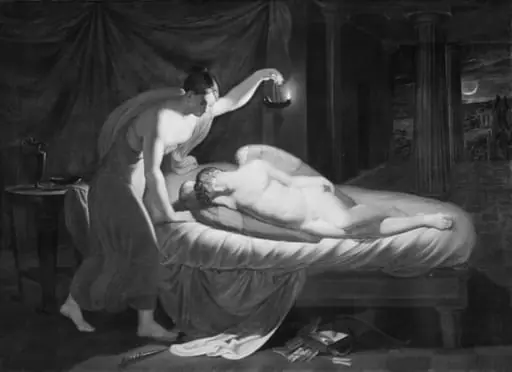 Psyke, der nærmer sig den sovende Amor
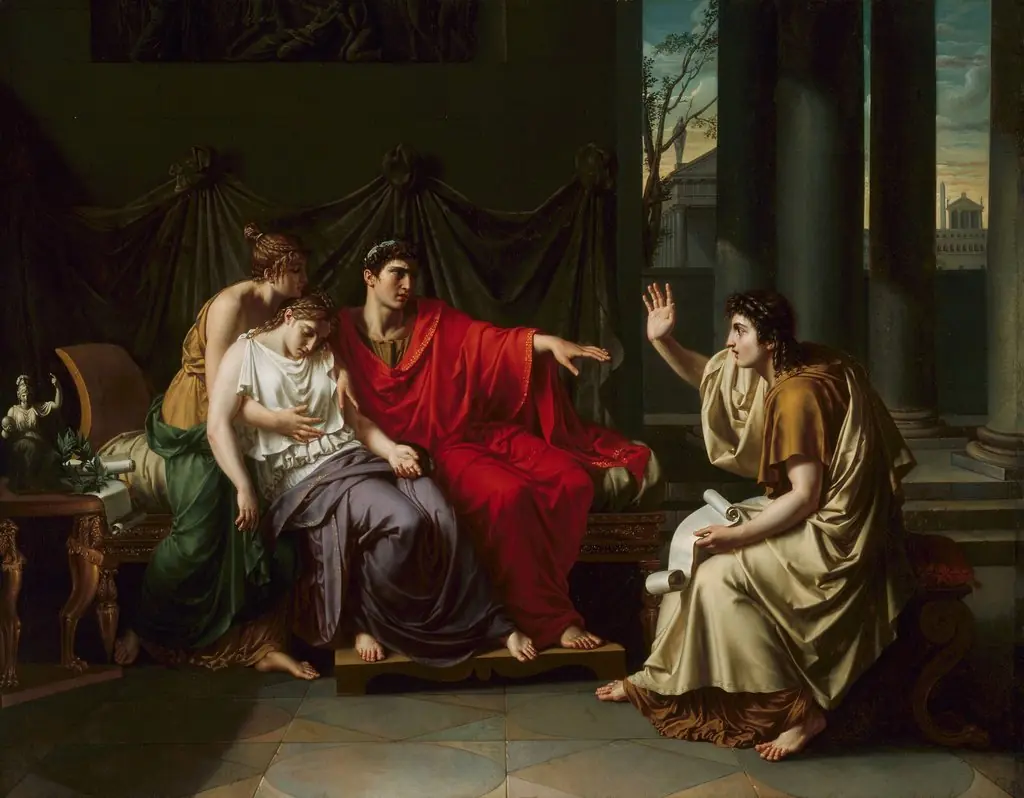 Virgil Reading the "Aeneid" to Augustus, Octavia, and Livia
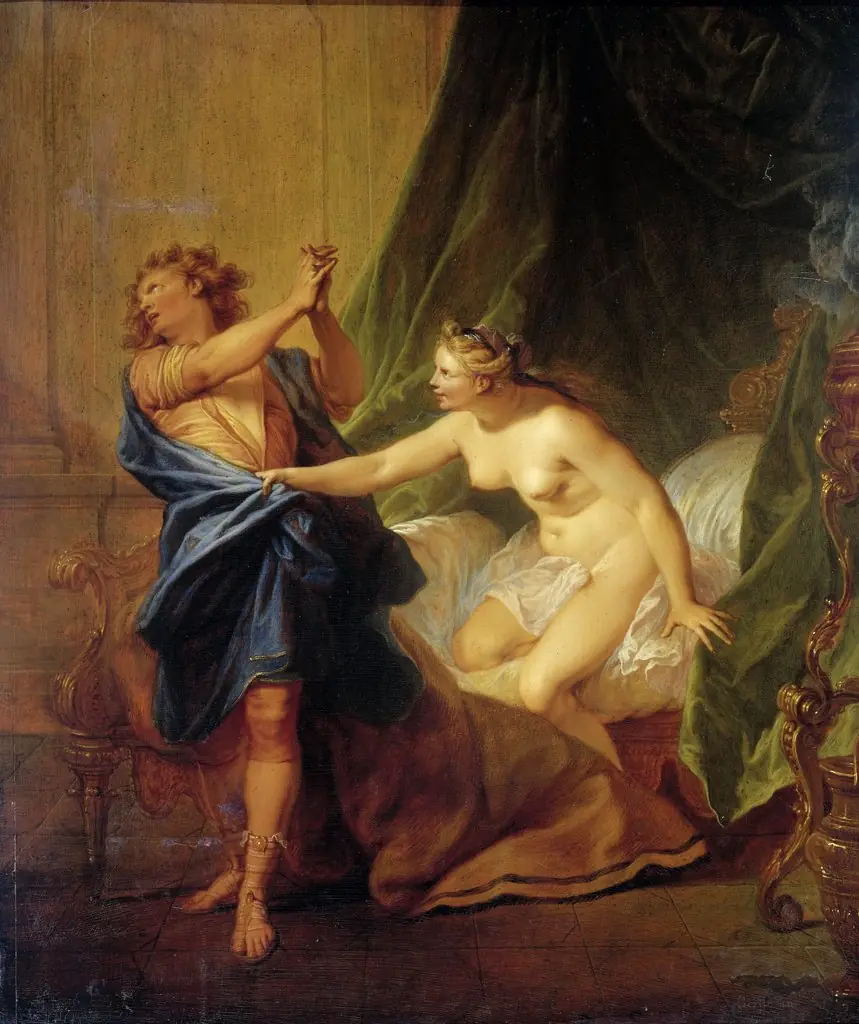 Joseph and Potiphar's Wife
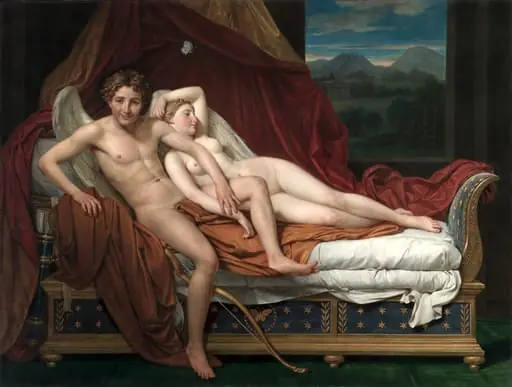 Cupid and Psyche
 The Death of Belisarius' Wife
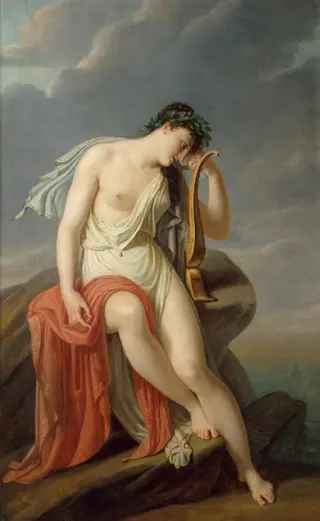
- Sappho on the Leucadian Cliff