Artwork
Portrait of Antoine-Laurent Lavoisier and his wife
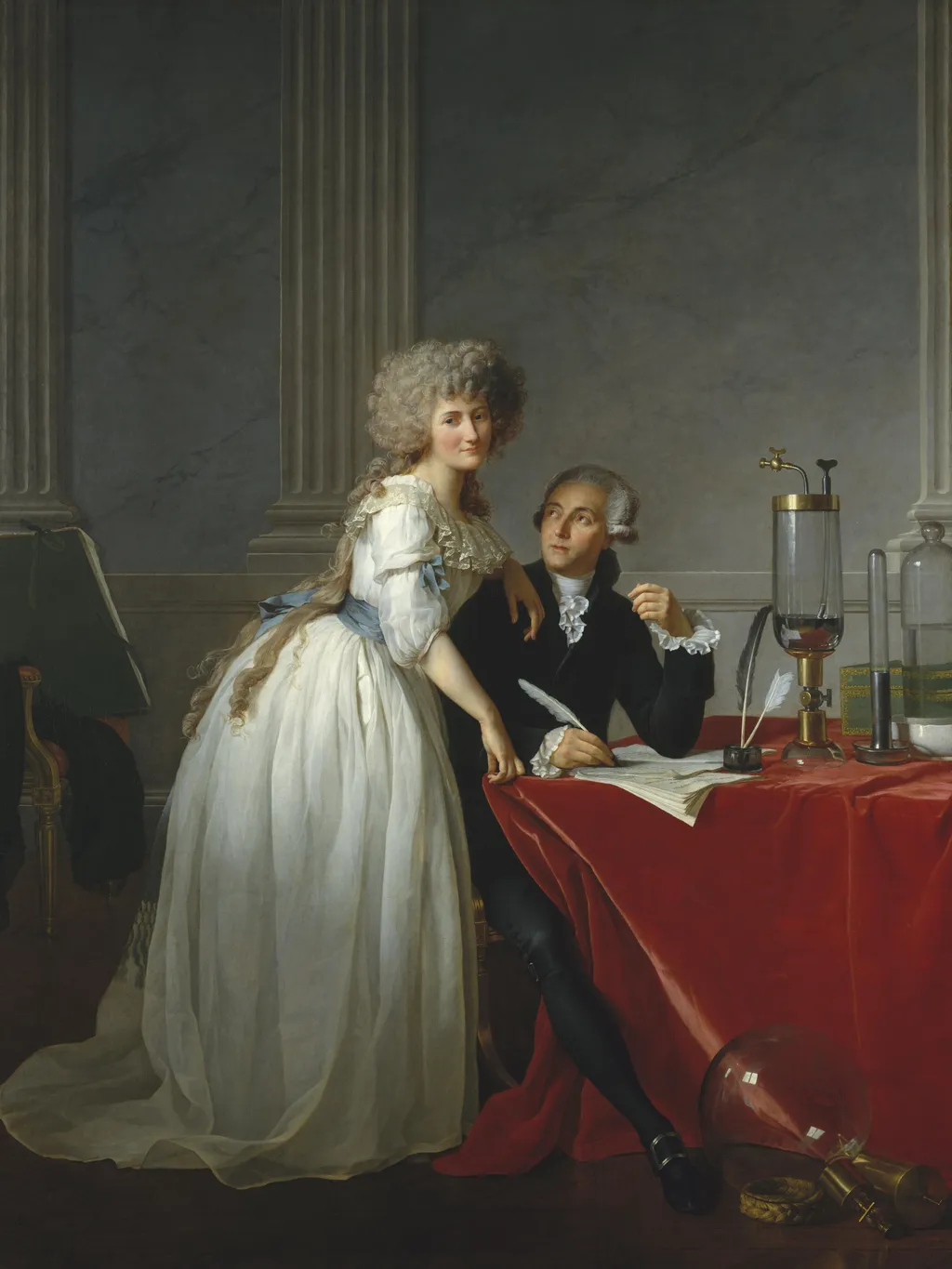
Portrait of Antoine-Laurent Lavoisier and his wife is an oil painting by the Academic Art artist Jacques-Louis David. It dates from 1794 and is held in the collection of the Metropolitan Museum of Art.
About this work
Jacques-Louis David was paid 7,000 livres in 1788 to paint Antoine-Laurent Lavoisier and his wife Marie-Anne Pierrette Paulze at a table of gasometers, bell jars, and quills. The chemist looks up from his writing as his wife rests a hand on his shoulder. Upheaval forced them to withdraw it from the 1789 Paris Salon, and it stayed unseen for a century.
Subject & Meaning
Notably, Marie-Anne stands physically above her seated husband, an unconventional posture for the period that suggests her active intellectual contribution.
The double portrait depicts Antoine Lavoisier and his wife Marie-Anne, who commissioned the work from David. Iconographically, the couple is shown in Lavoisier's office surrounded by scientific instruments, barometer, gasometer, water still, that reference his chemical research, while Marie-Anne's document case alludes to her role as his illustrator and David's former student. The composition emphasizes a left-to-right symmetry: scientific objects on Lavoisier's side, artistic materials on Marie-Anne's, symbolizing their collaborative partnership.
Notably, Marie-Anne stands physically above her seated husband, an unconventional posture for the period that suggests her active intellectual contribution. Originally, David depicted the pair as wealthy aristocrats, but later replaced tally books and fashionable clothes with scientific apparatus, recasting Lavoisier as a modest man of science. The neoclassical portrait thus projects Enlightenment rationality and virtue, a crafted public image to distance Lavoisier from his tax-farming past on the eve of the French Revolution.
Technique & Style
Executed in oil paint on canvas, the portrait measures 259.7 x 194.6 cm, a large format typically reserved for royalty. The style is Neoclassical, evident in the formal, balanced composition with classical pilasters and faux-marble walls. The couple are depicted in three-quarter profile, with Marie-Anne standing above her seated husband, a deliberate spatial hierarchy.
David's handling of materials is meticulous: the red velvet tablecloth, intricate lace, and polished scientific instruments display his facility with varied textures. Infrared reflectography and macro X-ray fluorescence have revealed significant underdrawing changes, indicating David initially portrayed the couple as fashionable aristocrats before overpainting the setting and costumes to emphasize scientific partnership. The work is signed at lower left 'L DAVID, PARISIIS ANNO, 1788'.
History & Provenance
The painting is held at the Metropolitan Museum of Art in New York, where it was donated in 1977 by the Wrightsman family. It had previously been owned by John D. Rockefeller, who gave it to the Rockefeller Institute for Medical Research in 1927, and before that by the Comtesse de Chazelles and her descendants from 1836 until 1924. The portrait was not exhibited at the Paris Salon of 1789 and was not publicly displayed until 1889.
Context
The painting was not publicly displayed until 1889, as Lavoisier feared anti-aristocratic sentiment would target his image; consequently, it exerted no influence on David's contemporaries. Despite this delayed reception, it is now hailed as a masterwork of neoclassical portraiture, with the Metropolitan Museum of Art declaring it the finest ever produced. Scholarship has deepened through technical analysis using infrared reflectography and macro X-ray fluorescence, which revealed that David initially portrayed the couple as wealthy tax collectors with fashionable attire and a gilded table, later repainting the scene to emphasize their scientific partnership.
This alteration reflects David's responsiveness to the political climate on the eve of the French Revolution. The work's experimental composition, with Marie-Anne standing above her seated husband, and its meticulous rendering of chemical instruments, place it as an outstanding example of Enlightenment-era portraiture that bridges art and science.
Legacy
Because the painting was not publicly displayed until 1889, having been withheld from the 1789 Salon for fear of anti-aristocratic reaction, it exerted no influence on David's contemporaries. In retrospect, however, it has come to be celebrated as a supreme example of neoclassical portraiture and one of the most iconic visual representations of science in art. The work is particularly noted for its experimental postural arrangement, the meticulous rendering of chemical apparatus, and its sensitivity to the dawning French Revolution. The Metropolitan Museum of Art describes it as "the finest neoclassical portrait in the world."
Overview
Jacques-Louis David's 1788 oil painting, Portrait of Antoine-Laurent Lavoisier and his wife, depicts the renowned French chemist and his wife, Marie-Anne Pierrette Paulze. The double portrait presents the couple within their study, surrounded by the tools of scientific inquiry. Lavoisier is shown engaged in his work, while Marie-Anne stands beside him, her presence suggesting both support and intellectual partnership. This significant work captures a moment in the lives of two influential figures.
Own this work as a print
Artist & collection
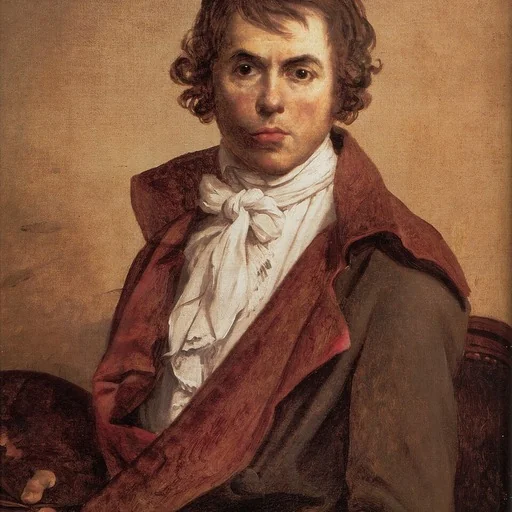
Artist
Jacques-Louis David was born in Paris on 30 August 1748 into a bourgeois family; his father died in a duel when the boy was nine, and a maternal uncle guided his education.

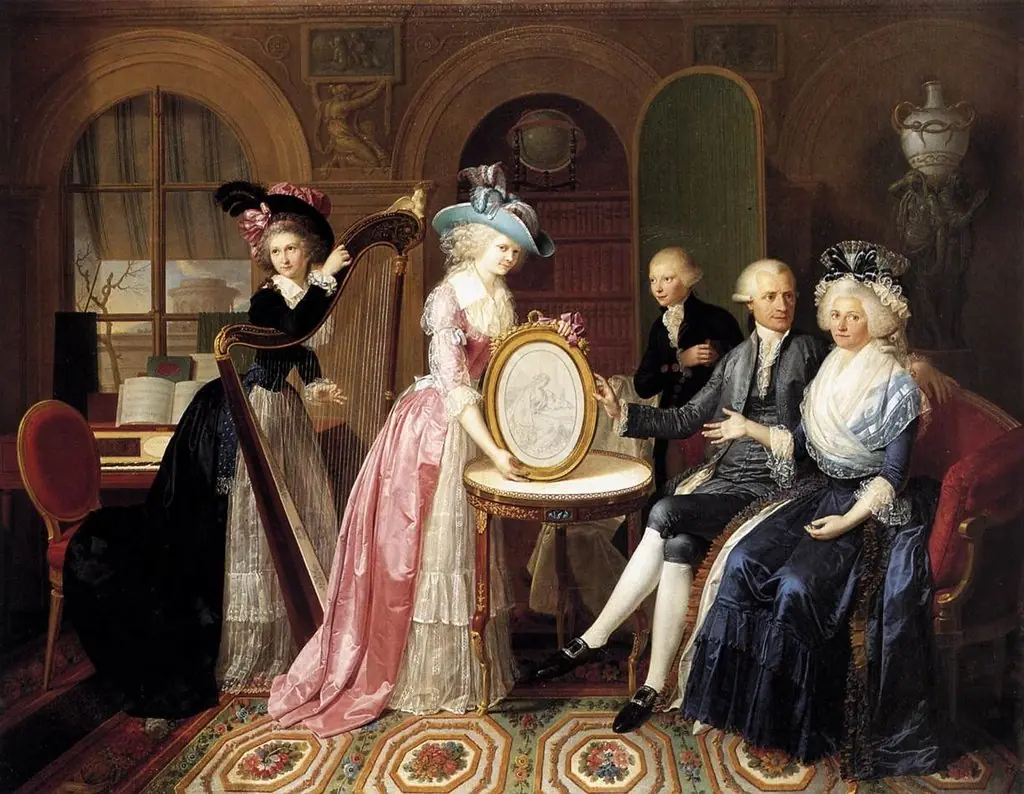
- Portret van de familie Villers
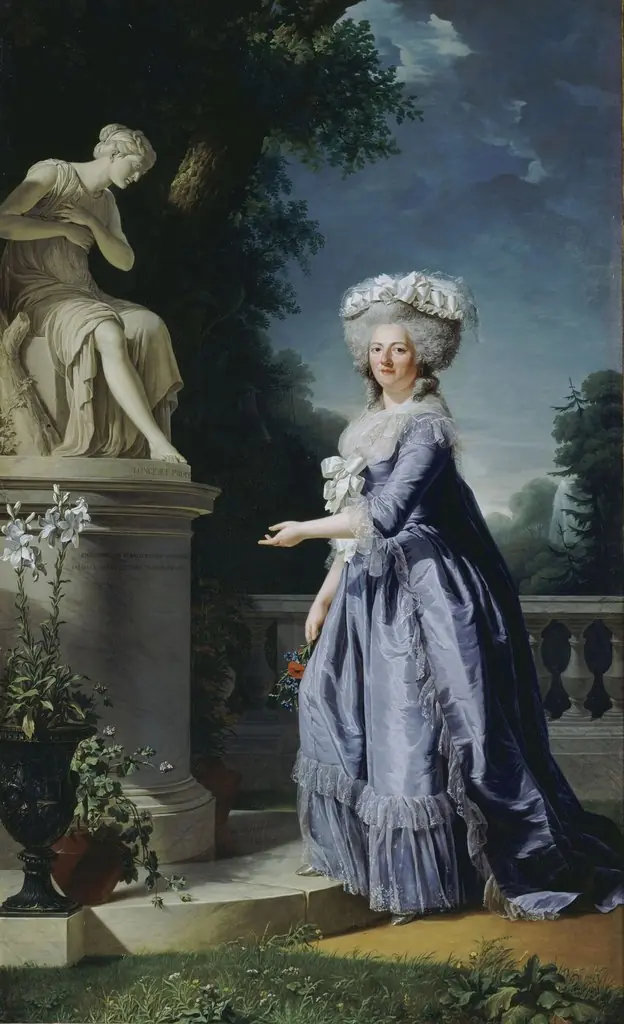 Madame Victoire of France
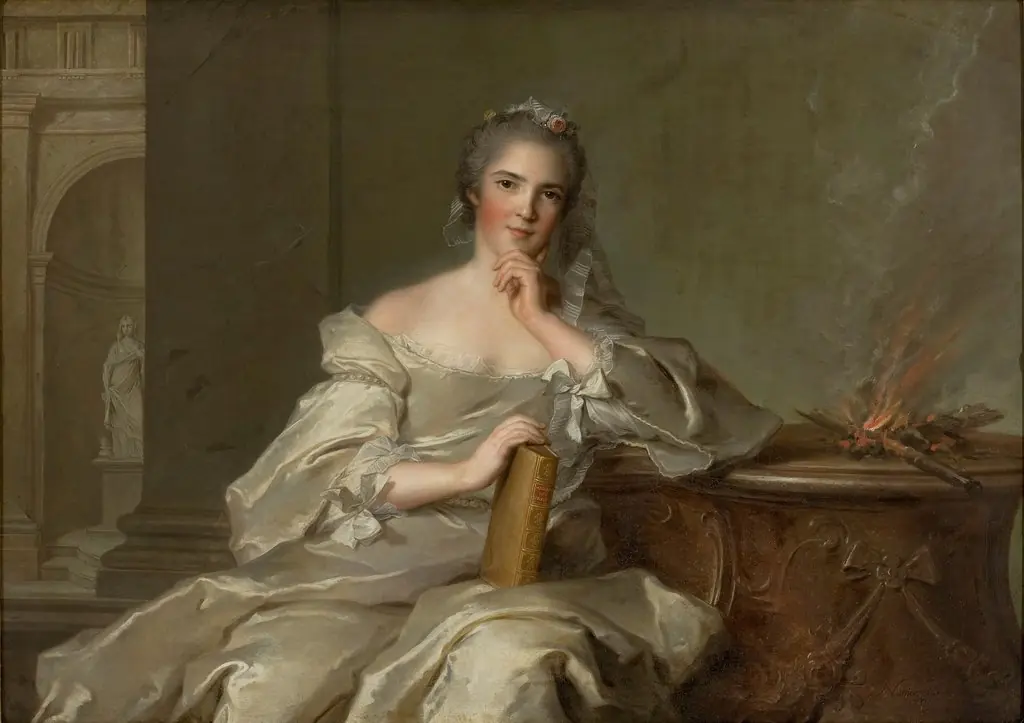 Princess Anne-Henriette of France - The Fire
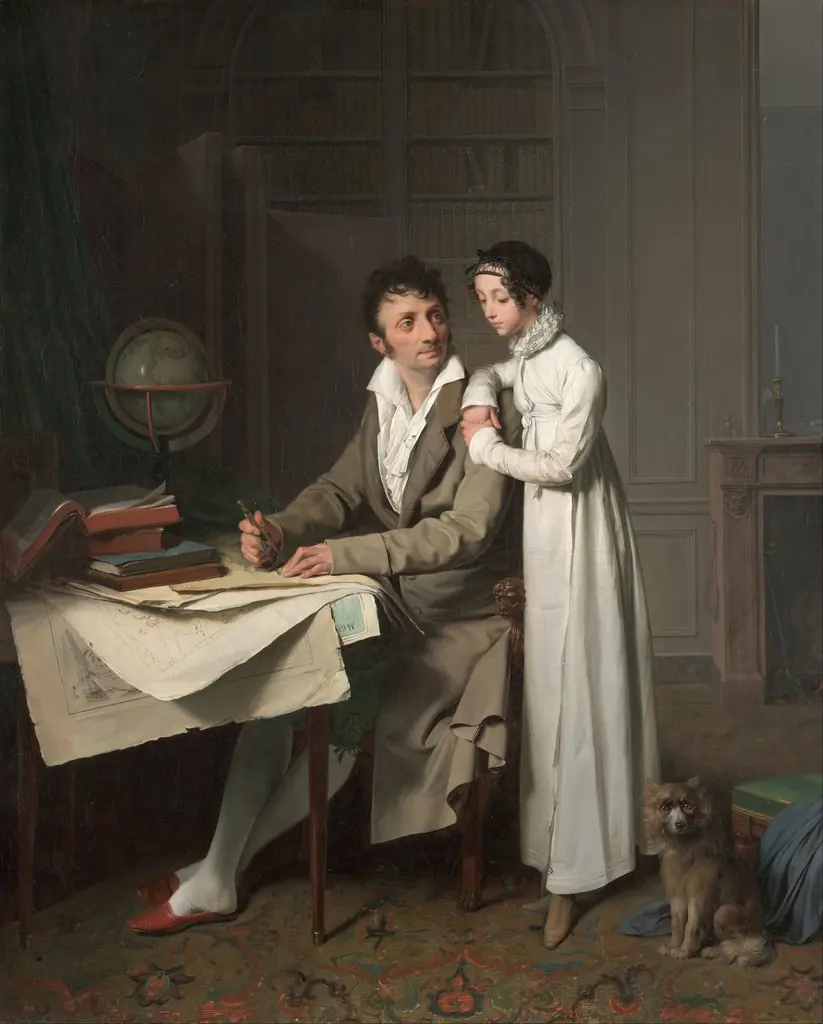 The Geography Lesson (Portrait of Monsieur Gaudry and His Daughter)
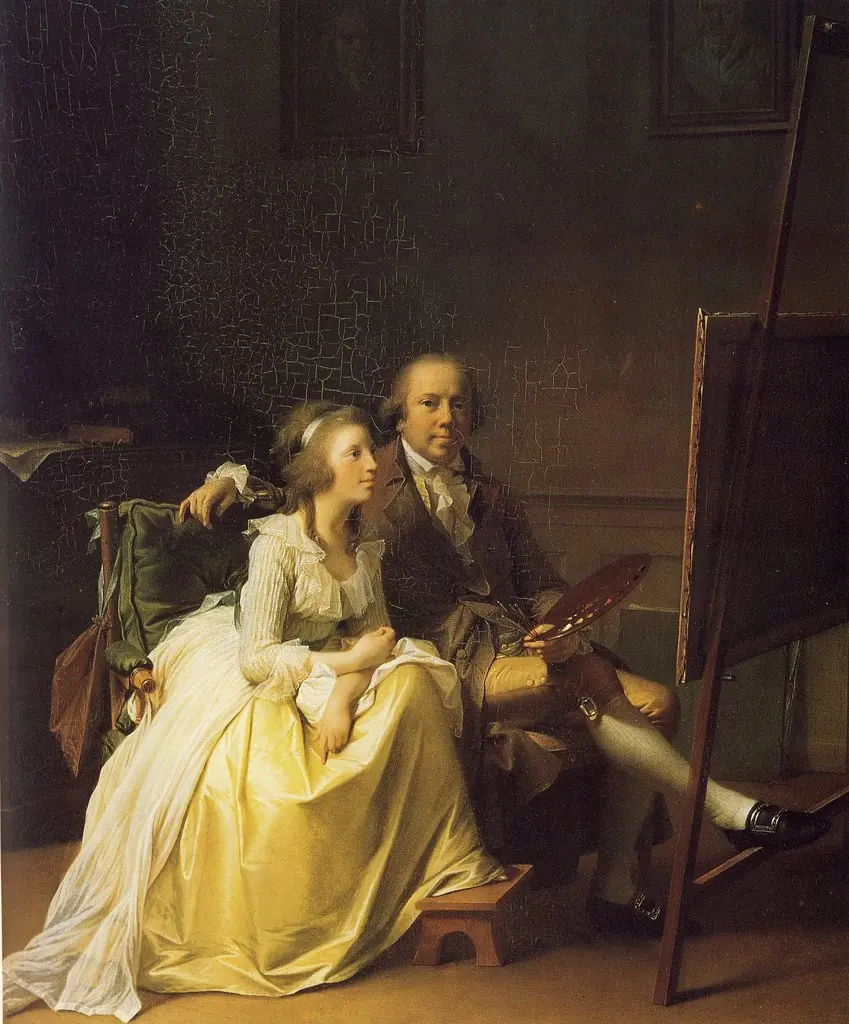 The Artist and his Wife Rosine, née Dørschel
 Portrait of Jacob Feitama (1726-1797) and his Wife, Elisabeth de Haan (1735-1800)
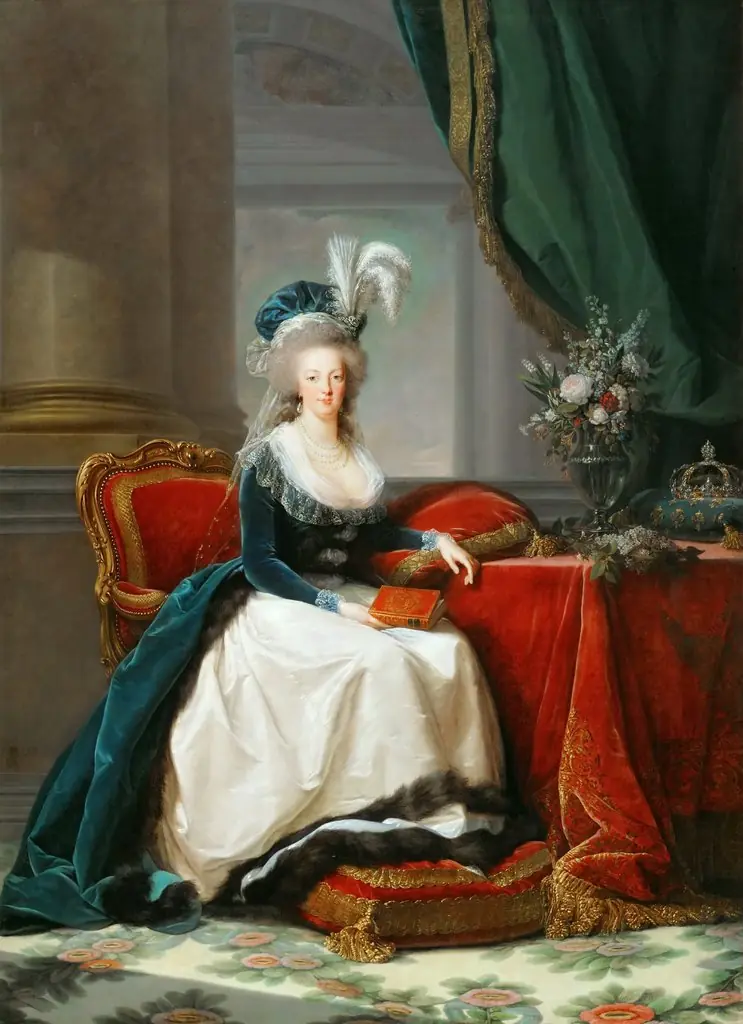 Marie-Antoinette seated, in blue coat and white dress, holding a book in her hand
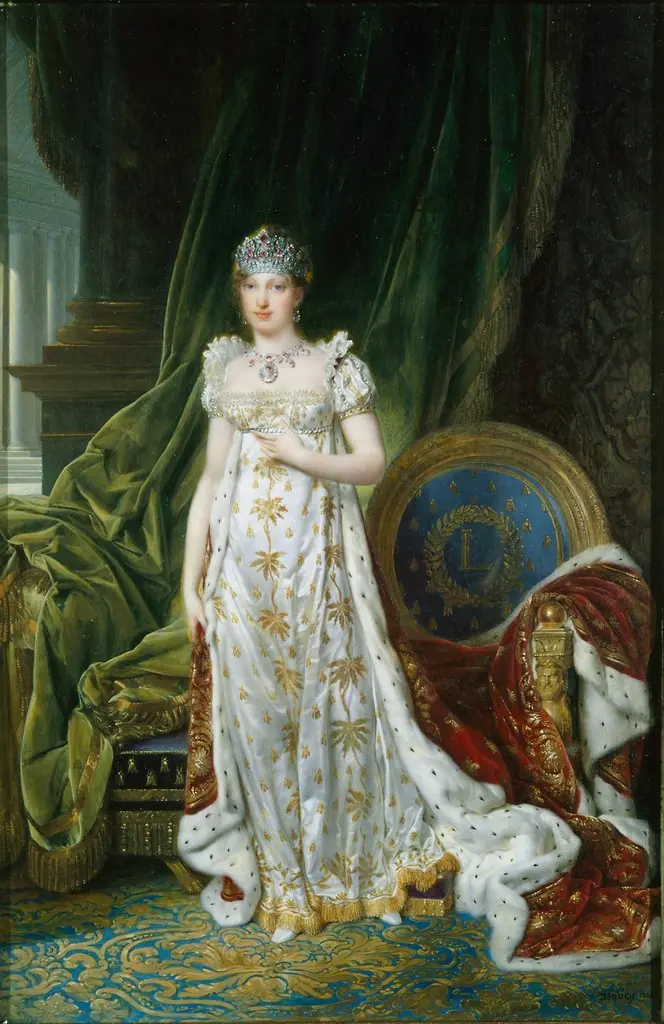 Portrait of Empress Marie-Louise
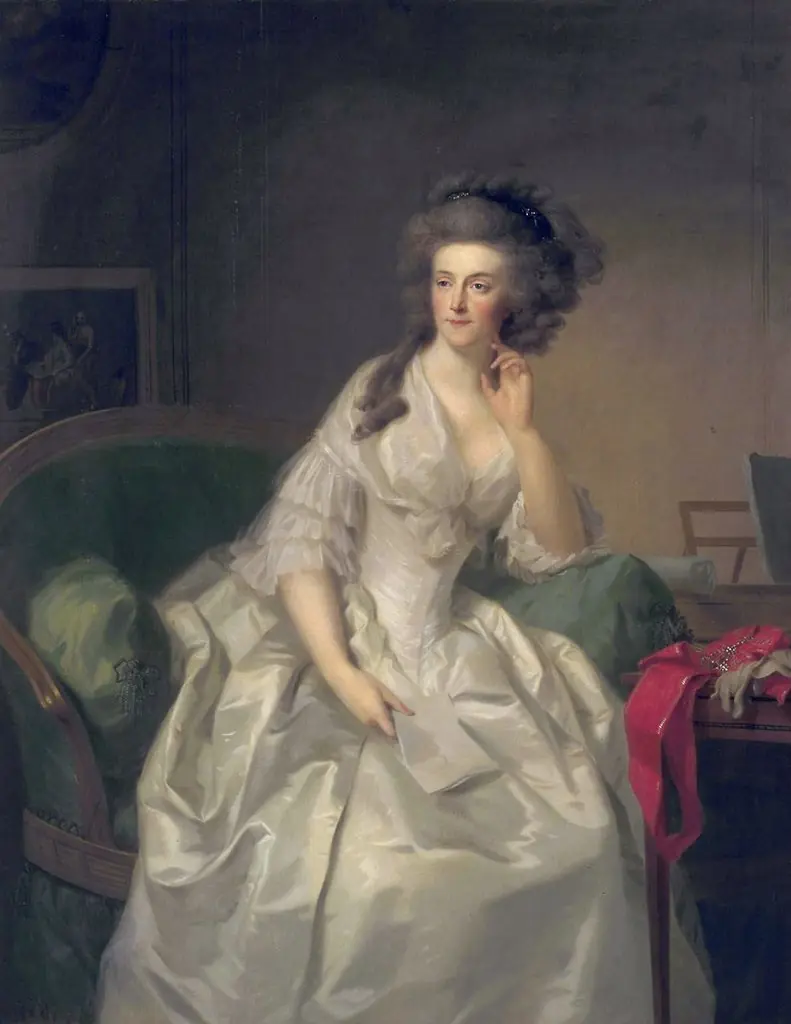 Portrait of Princess Frederika Sophia Wilhelmina (1751-1820)
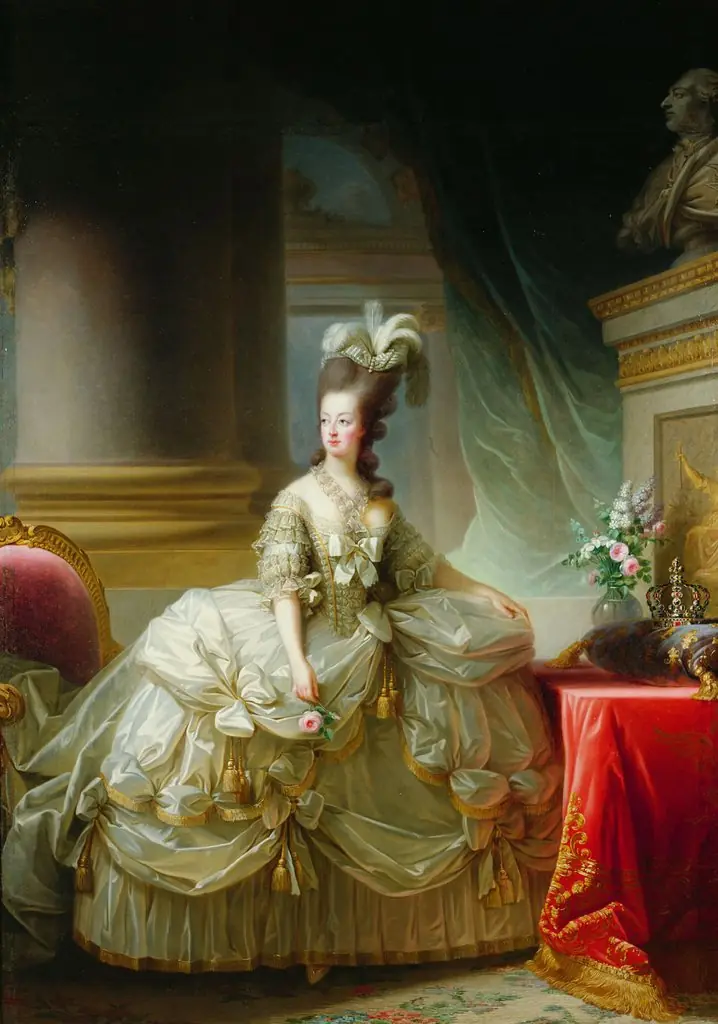 Marie Antoinette in Court Dress
 Untitled
 The Stolen Kiss