Artwork
The Tennis Court Oath
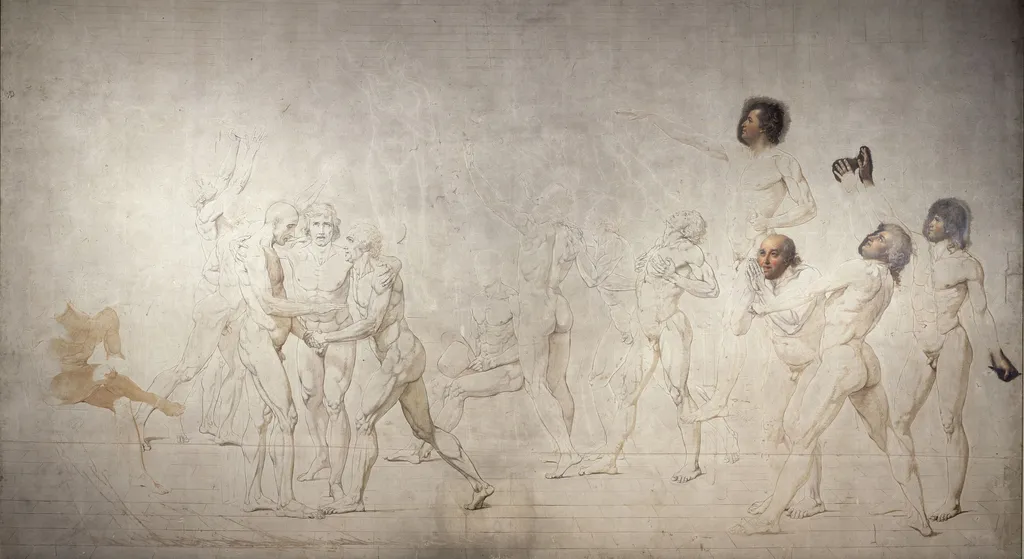
The Tennis Court Oath is an ink painting by the Neoclassicist artist Jacques-Louis David. It dates from 1796 and is held in the collection of the Palace of Versailles.
About this work
Subject & Meaning
The scene also places the Carthusian monk Dom Gerle beside the Protestant pastor Jean-Paul Rabaut Saint-Étienne, symbolizing a dawn of religious tolerance.
The painting depicts the Tennis Court Oath of 20 June 1789 at Versailles, in which the deputies of the Third Estate, locked out of their meeting hall by Louis XVI, swore not to disperse until a constitution was established. To convey collective unanimity, David directs the gaze of nearly every deputy toward Jean Sylvain Bailly, while the lone dissenter, Joseph Martin-Dauch, stands motionless in the lower right as a deliberate counterpoint. Each face was drawn in detail so that individual participants could be recognized.
In the eighteenth century an oath carried a sacred guarantee of fidelity to one's word, recalling David's earlier Oath of the Horatii, and collective oaths were treated as instruments of national unity. The scene also places the Carthusian monk Dom Gerle beside the Protestant pastor Jean-Paul Rabaut Saint-Étienne, symbolizing a dawn of religious tolerance. Wind billowing through the high windows and curtains represents the revolutionary wind sweeping across France.
Technique & Style
The Tennis Court Oath is an unfinished oil and ink drawing on canvas measuring 400 cm by 660 cm. Jacques‑Louis David employed ink, white chalk, black stone and oil on canvas to render the scene, following the academic practice of first sketching figures in the nude before dressing them. The composition shows all deputies gazing toward Bailly, with Martin‑Dauch positioned in the lower right as the sole opponent; individual faces are rendered with enough detail to be identifiable, and large windows above are depicted with billowing curtains that convey a revolutionary wind. Symbolically, the work juxtaposes collective oath‑taking, a sacred act in the 18th century, with a nascent sense of national unity, and includes a small group of clergy from different faiths to suggest religious tolerance.
The unfinished state arose from financial shortfalls and political upheaval; David could only complete the lower portion of the canvas, and the painting remained in the Palace of Versailles collection until its acquisition by the royal museums in 1836 for the Louvre, where it has been exhibited since 1880.
History & Provenance
Commissioned through a national subscription launched in 1790 by the Jacobin Club, Jacques‑Louis David’s painting was conceived to commemorate the Tennis Court Oath of 20 June 1789. The National Constituent Assembly subsequently underwrote the project from the public treasury, supplementing funds with sales of engravings after the work. David exhibited a pen and brown‑ink drawing of the planned composition at the Salon of 1791 in the Louvre but abandoned the canvas by 1793 as political conditions shifted; financial shortfalls and the subscription’s minimal uptake had already hindered progress.
The unfinished oil sketch remained in the artist’s possession until 1836, when it entered the royal museums and entered the Louvre’s collection, where it was first exhibited in 1880.
The Tennis Court Oath is held in the collection of the Palace of Versailles, Louvre Department of Prints and Drawings, and is exhibited at the Musée national du Château de Versailles. Its inventory number is MV 5841 (also recorded as LP 1177 and RF 1914-D). The work was first shown at the Salon of 1791 and later entered the royal museums in 1836, becoming part of the Louvre exhibition from 1880 onward.
The painting measures 400 cm by 660 cm and is executed in ink on canvas. It was created between 1790 and 1794 but remained unfinished; David produced only preparatory studies and a pen-and-ink drawing exhibited in 1791. Funding difficulties limited the subscription to about 10 % of the intended amount, leading the National Constituent Assembly to finance the piece from the public treasury and supplement it with sales of engravings.
In 1820 David transferred engraving rights to Daniel Isoard de Martouret, and the canvas was finally acquired by the royal museums in 1836.
The composition depicts the deputies gathered in the indoor tennis court at Versailles, with Jean Sylvain Bailly at the center. Only one figure, Martin-Dauch, declined to take the oath, providing a visual counterpoint. The unfinished state reflects political upheaval: by 1793, key supporters such as Honoré Gabriel Riqueti, comte de Mirabeau, were labeled traitors, prompting David to abandon the project.
The work subsequently influenced later paintings by David and was adapted by artists including Auguste Couder (1848) and Luc-Olivier Merson (1883).
Context
The Tennis Court Oath is an unfinished painting by Jacques-Louis David, conceived between 1790 and 1792 to commemorate the 1789 revolutionary event in which deputies of the Estates-General gathered in a royal tennis court and proclaimed themselves the National Assembly. Executed in ink on canvas, the work measures 400 cm by 660 cm and was exhibited at the Salon of 1791 as a pen and brown ink drawing before financial shortfalls left it incomplete. Contemporary scholarship notes its Neoclassical style, its depiction of a near‑unanimous middle‑class assembly, and its symbolic use of collective oaths, sacredness, and revolutionary wind as motifs of national unity.
David’s unfinished state, documented by early engravings and later reproductions by artists such as Auguste Couder (1848) and Luc‑Olivier Merson (1883), reflects both political reversals during the Revolution and ongoing scholarly interest in its role as a precursor to modern conceptions of sovereignty. The painting now resides in the Musée national du Château de Versailles, where it has been displayed since 1880.
Legacy
Although left unfinished due to political reversals and financial shortfalls, The Tennis Court Oath profoundly influenced subsequent French art and republican propaganda. David’s later works, specifically The Distribution of the Eagle Standards (1810) and Leonidas at Thermopylae (1814), drew direct compositional and thematic inspiration from this early revolutionary sketch. The unfinished canvas itself became a recurring model for other artists adapting the scene for new political contexts, including Auguste Couder in 1848 and Luc-Olivier Merson in 1883, who recreated the composition based on David’s studies and Jean-Pierre-Marie Jazet’s engraving.
Engraved reproductions circulated widely after David ceded the rights in 1820, ensuring the image remained a staple of revolutionary iconography. The original sketch entered the royal collections in 1836 and was publicly exhibited at the Louvre from 1880, cementing its status as a foundational, albeit incomplete, document of the French Revolution.
Overview
Jacques‑Louis David’s large‑scale work, titled The Tennis Court Oath, was begun in the early 1790s and remains unfinished. Executed in ink on canvas, the piece measures roughly four metres by six and a half metres. It portrays the pivotal 1789 gathering of the National Assembly in a Versailles tennis hall, an event that helped launch the French Revolution. The unfinished canvas now hangs in the Musée national du Château de Versailles.
Artist & collection
Artist
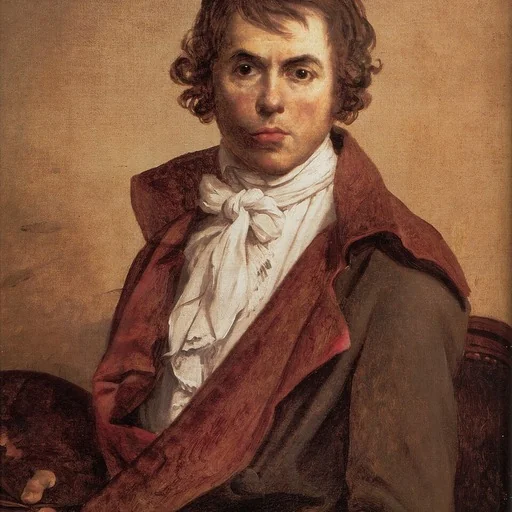
Jacques-Louis David was born in Paris on 30 August 1748 into a bourgeois family; his father died in a duel when the boy was nine, and a maternal uncle guided his education.

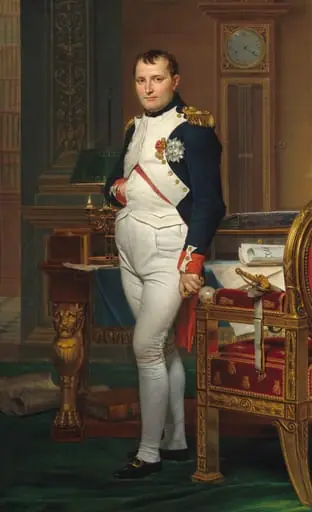 The Emperor Napoleon in His Study at the Tuileries
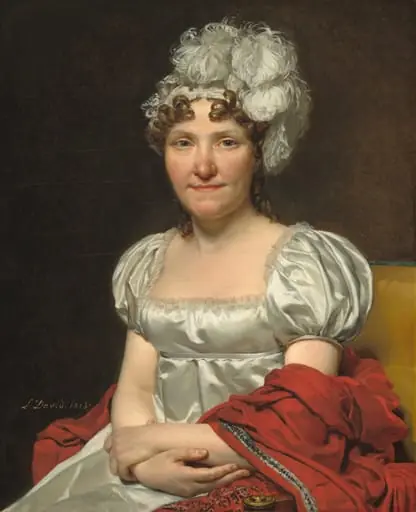 Madame David
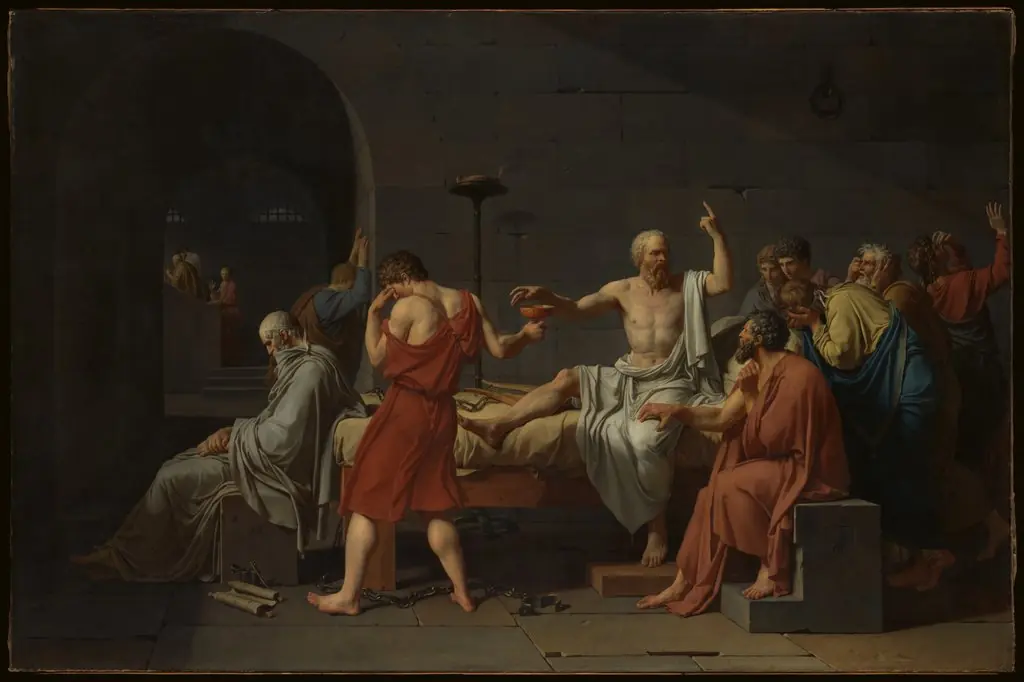 The Death of Socrates
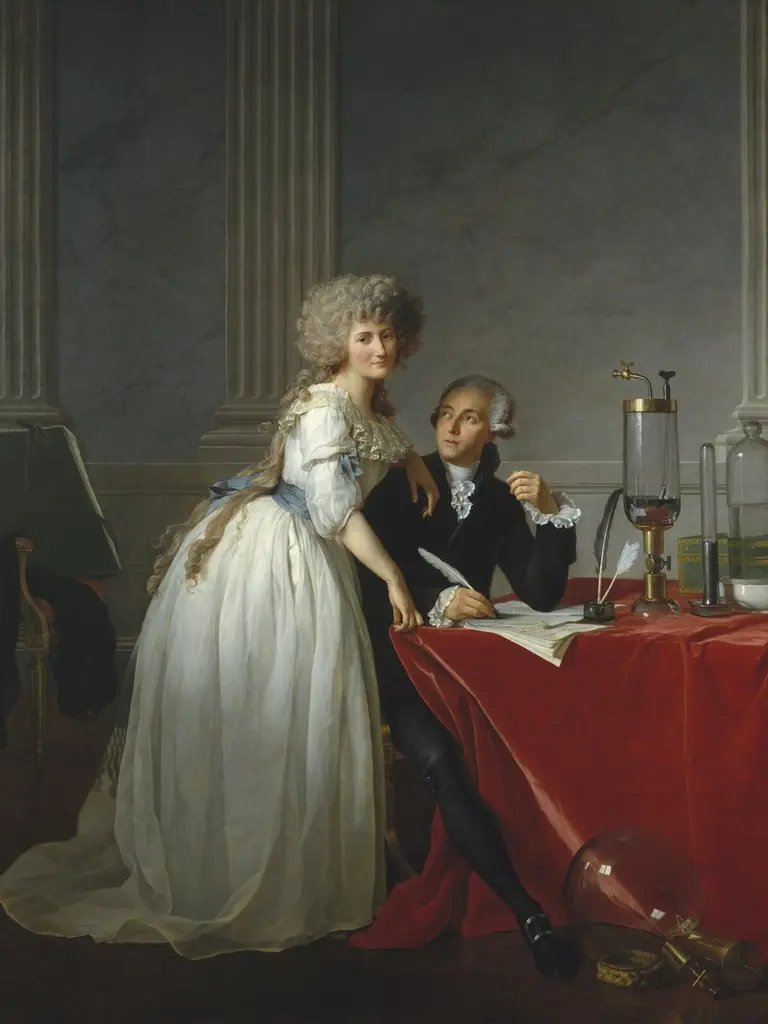 Portrait of Antoine-Laurent Lavoisier and his wife
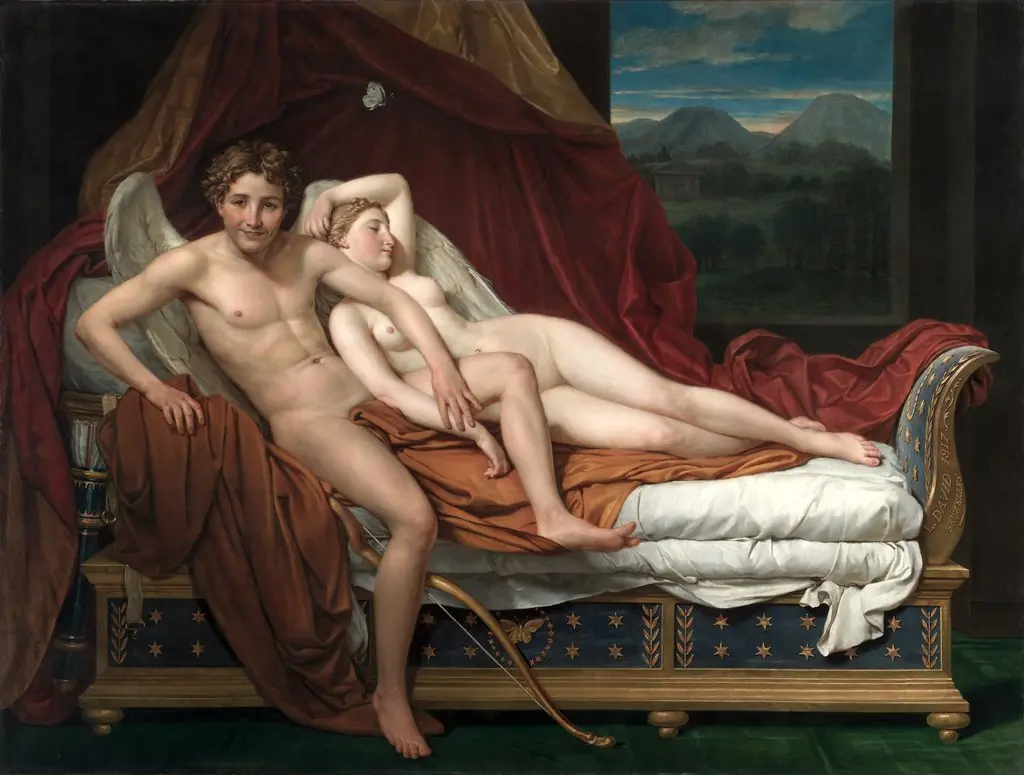 Cupid and Psyche
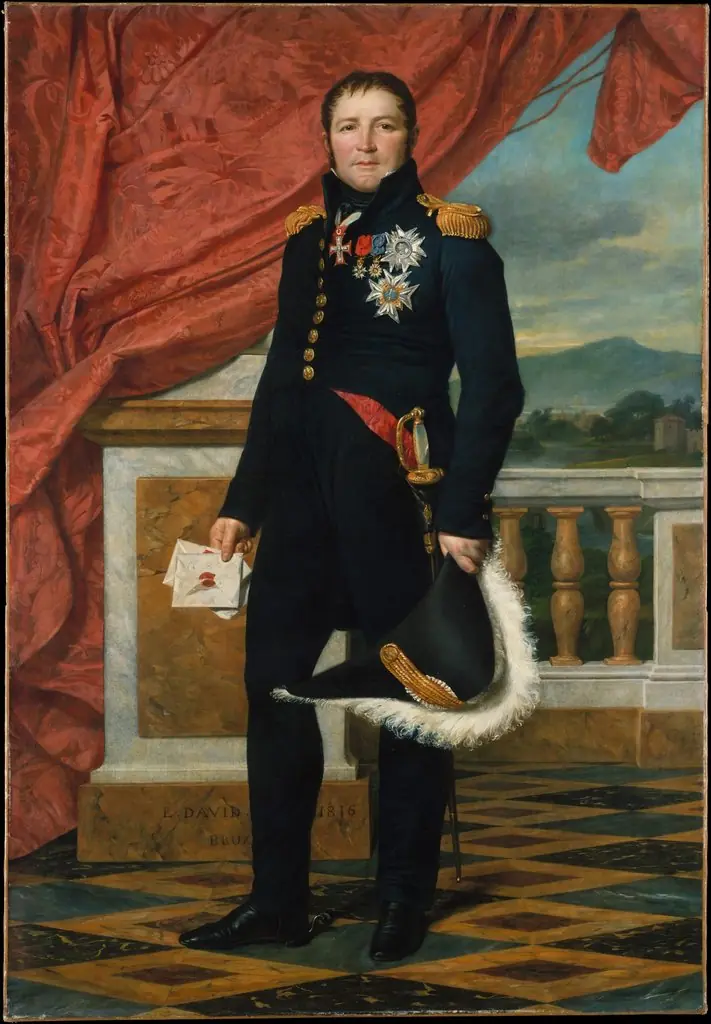 General Étienne-Maurice Gérard (1773–1852), Marshal of France
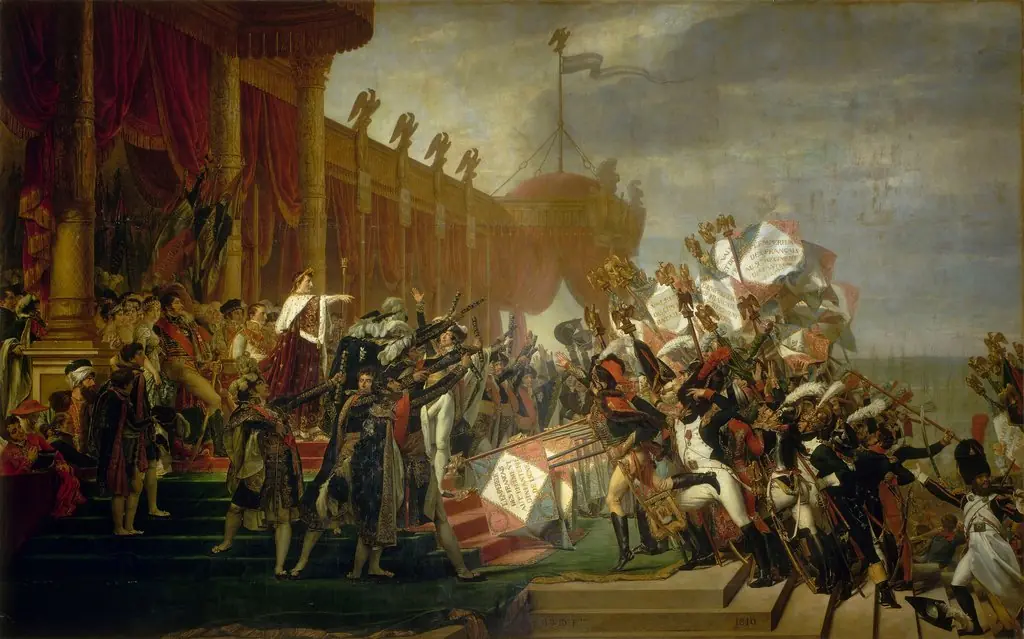 The Distribution of the Eagle Standards
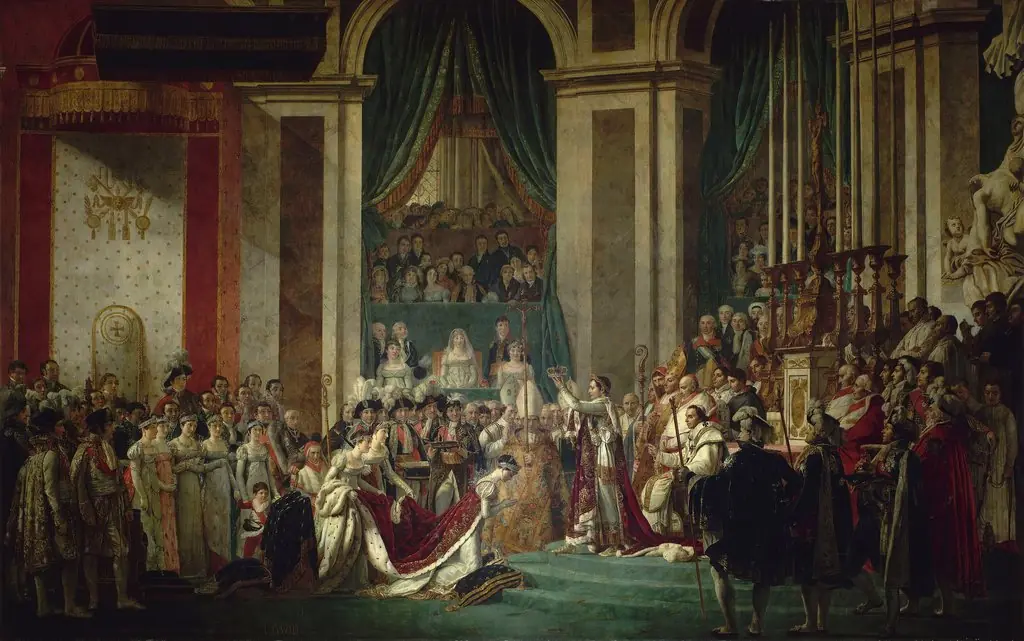 Coronation of Emperor Napoleon I and Coronation of the Empress Josephine
- Studies of a Sower (Illustration for Thomson's _Seasons_)
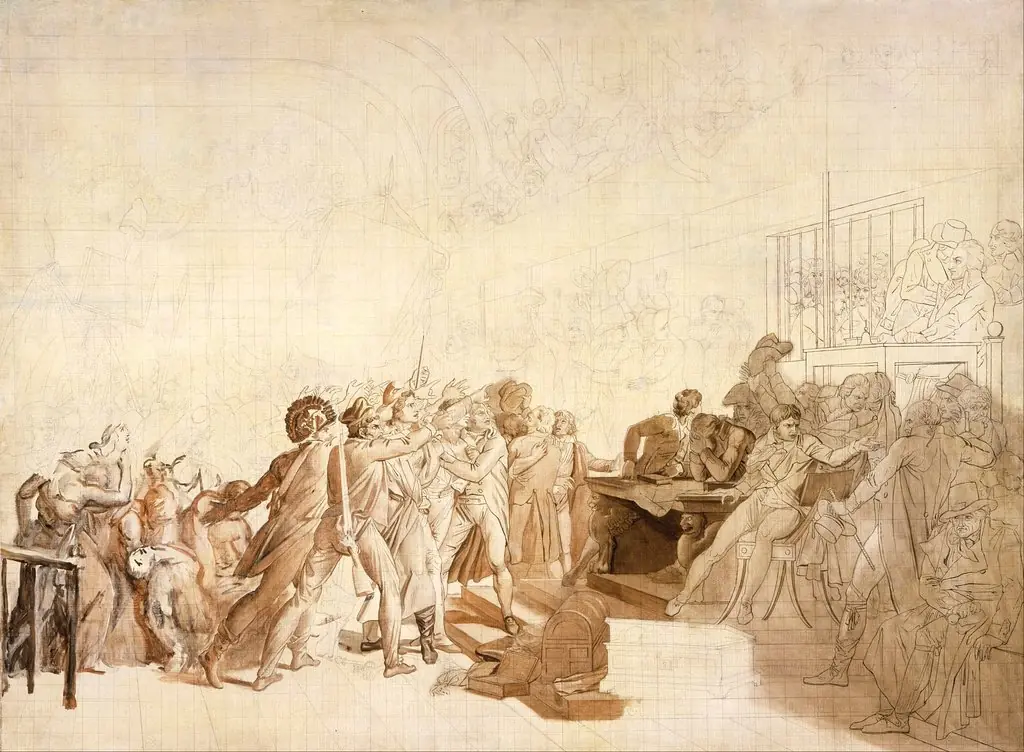 The 10th of August, 1792
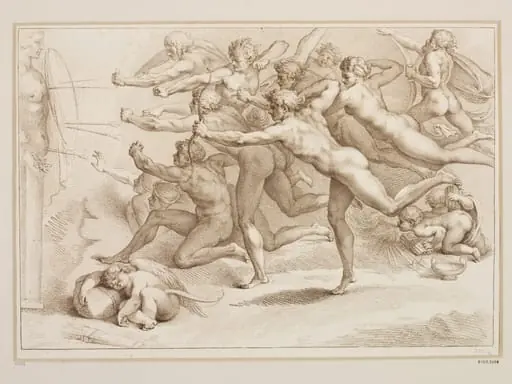 The Archers
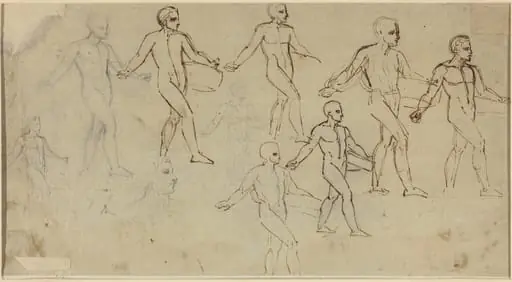
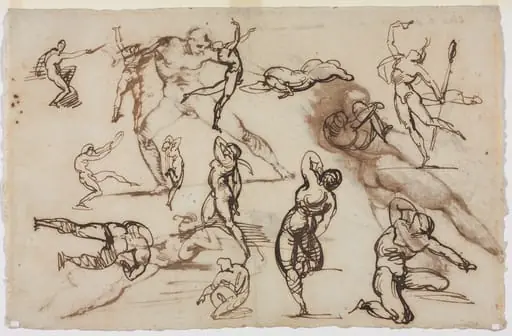 Sheet of Sketches (verso)
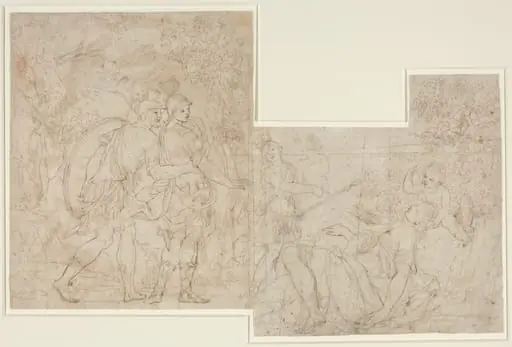 Three Soldiers Discovering a Sleeping Woman
![Two Studies of the Statue of Alexander and Bucephalus [verso], by Hubert Robert](https://artifactworldgallery.com/img/hubert-robert--two-studies-of-the-statue-of-alexander-and-bucephalus-verso--c8baec3f622cceea-w320.webp) Two Studies of the Statue of Alexander and Bucephalus [verso]
Two Studies of the Statue of Alexander and Bucephalus [verso]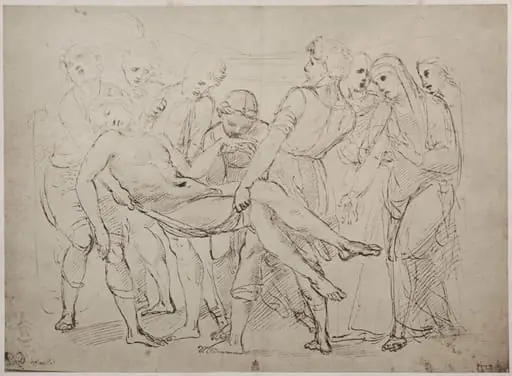 Drawing by Raphael Sanzio in the British Museum
![Head of a Woman and Studies of a Male Nude [verso], by Francesco Fontebasso](https://artifactworldgallery.com/img/francesco-fontebasso--head-of-a-woman-and-studies-of-a-male-nude-verso--bba81b0c130c2863-w320.webp) Head of a Woman and Studies of a Male Nude [verso]
Head of a Woman and Studies of a Male Nude [verso]![Three Figures [verso], by Mather Brown](https://artifactworldgallery.com/img/mather-brown--three-figures-verso--d67cc3e7c0d36b3b-w320.webp) Three Figures [verso]
Three Figures [verso]!["And Saul Said unto David, Go, and the Lord be with Thee" [recto], by William Blake](https://artifactworldgallery.com/img/william-blake--and-saul-said-unto-david-go-and-the-lord-be-with-thee-recto--473fd0243b43e9c4-w320.webp) "And Saul Said unto David, Go, and the Lord be with Thee" [recto]
"And Saul Said unto David, Go, and the Lord be with Thee" [recto] Sheet of Studies, including a Man Battling a Centaur
 Christ Driving the Money Changers from the Temple