Artwork
Krishna
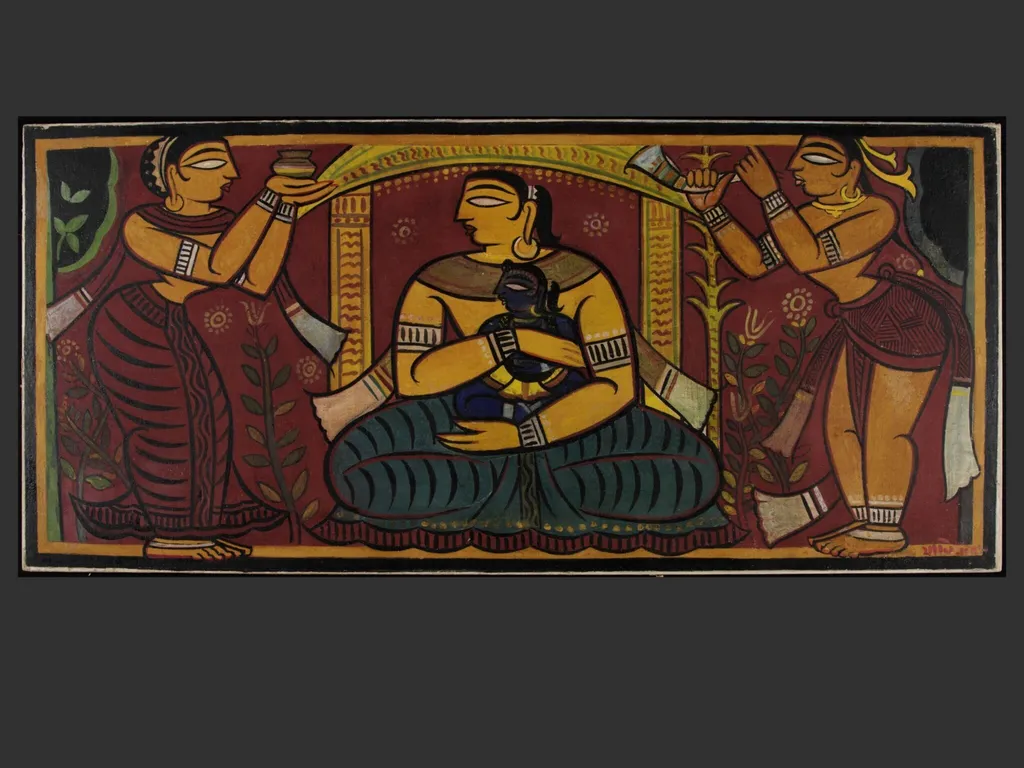
Krishna is a paint painting by the Bengal School artist Roy Jamini. It dates from 1930 and is held in the collection of the Victoria and Albert Museum.
About this work
Overview
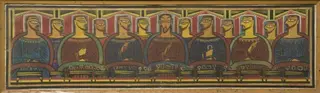
This painting by Jamini Roy depicts the infant Krishna seated on the lap of his foster-mother, Yashoda, within a structured rectangular format.
This painting by Jamini Roy depicts the infant Krishna seated on the lap of his foster-mother, Yashoda, within a structured rectangular format. The scene is flanked by two attendants, one offering a bowl, the other blowing a trumpet, creating a balanced, ceremonial arrangement. Roy’s approach blends Hindu iconography with compositional echoes of Western triptychs, yet his visual language remains rooted in Bengali folk traditions, rejecting academic realism in favor of stylized simplicity.
Subject & Meaning
The scene captures a tender moment from Krishna’s childhood, emphasizing divine intimacy through the bond between mother and child. The attendants symbolize devotion and celebration, reinforcing the sacredness of the moment. By placing Krishna, traditionally depicted as blue-skinned, within a domestic setting, Roy humanizes the divine while preserving its spiritual weight. The composition invites contemplation, framing the infant as both a child and a deity worthy of reverence.
Technique & Style
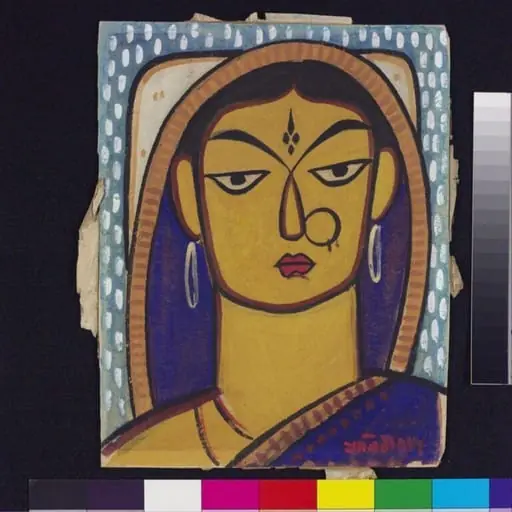
Roy employed indigenous materials, lamp black for outlines, and pigments derived from earth and minerals, applied with tempera on hand-prepared fabric. His style features bold, sweeping contours and flat, unmodulated colors, avoiding shading or perspective. The figures are rendered with large, pupil-less eyes, a signature trait that lends an otherworldly stillness.
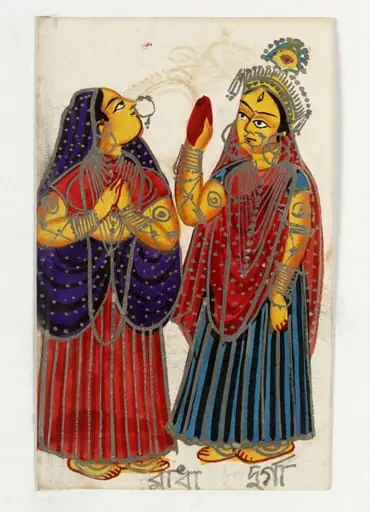
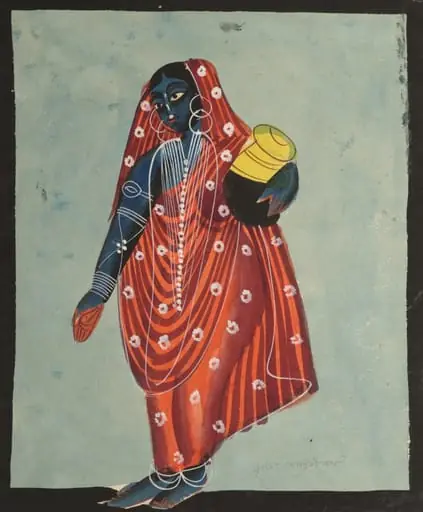
This deliberate simplification draws from Kalighat pat paintings and rural Bengali folk art, rejecting Western naturalism in favor of symbolic clarity.
History & Provenance
Created during the early 20th century, this work emerged from Roy’s conscious shift away from academic painting toward indigenous aesthetics. He sought to make art accessible by rejecting expensive imported materials and embracing local techniques. The painting entered the Victoria and Albert Museum’s collection as part of a broader effort to document modern Indian art that honored regional traditions.
Its presence there reflects its significance in the evolution of India’s artistic identity during the colonial and post-colonial periods.
Context
Roy worked amid a cultural movement that reevaluated Indian identity through art, distancing itself from colonial academic norms. His choice to depict Hindu myths alongside Santhal life and Christian themes reflected a pluralistic vision of Indian spirituality. By adapting the triptych format, a structure familiar from European altarpieces, he created a visual dialogue between Eastern and Western traditions, not as imitation, but as reclamation and reinterpretation rooted in Bengali visual culture.
Legacy
Jamini Roy’s synthesis of folk aesthetics and spiritual subject matter influenced generations of Indian artists seeking alternatives to Western-dominated art education. His use of local materials and rejection of oil paint and canvas helped revive interest in traditional crafts. This painting exemplifies his enduring contribution: a visual language that honored rural heritage while asserting a distinct modern Indian identity, one that continues to inform contemporary discussions on cultural authenticity and artistic sovereignty.
Artist & collection
Artist
Roy Jamini spent years painting the same crowded corner of Varanasi, until the street itself started talking back.