Artwork
Schapen op de heide
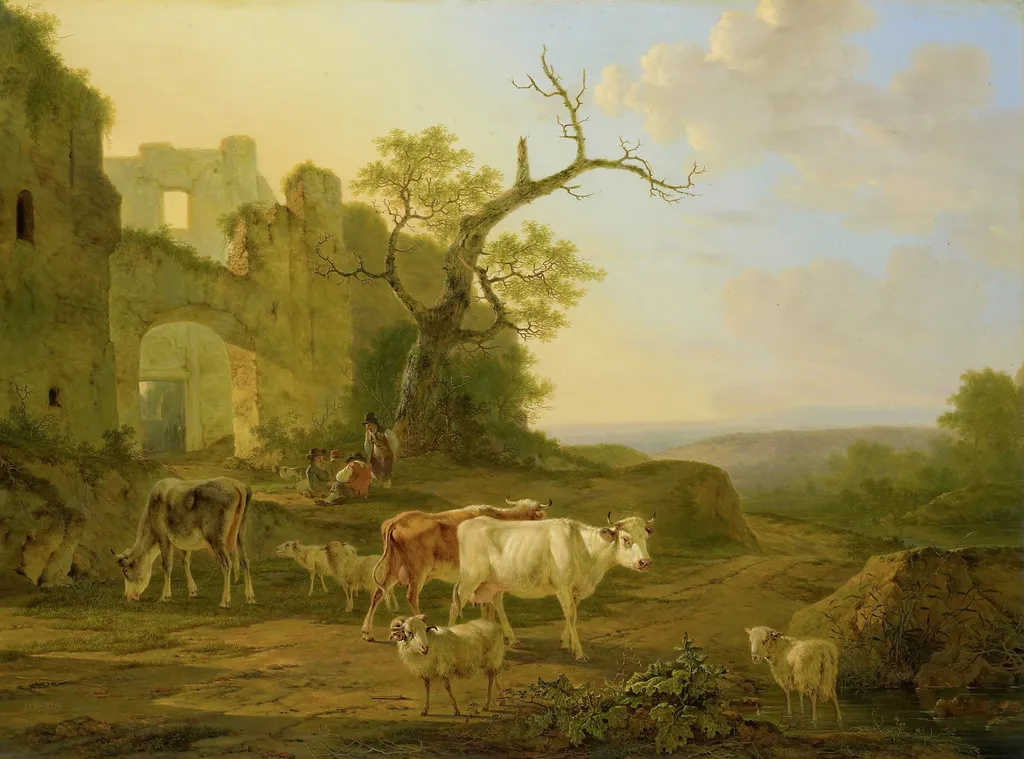
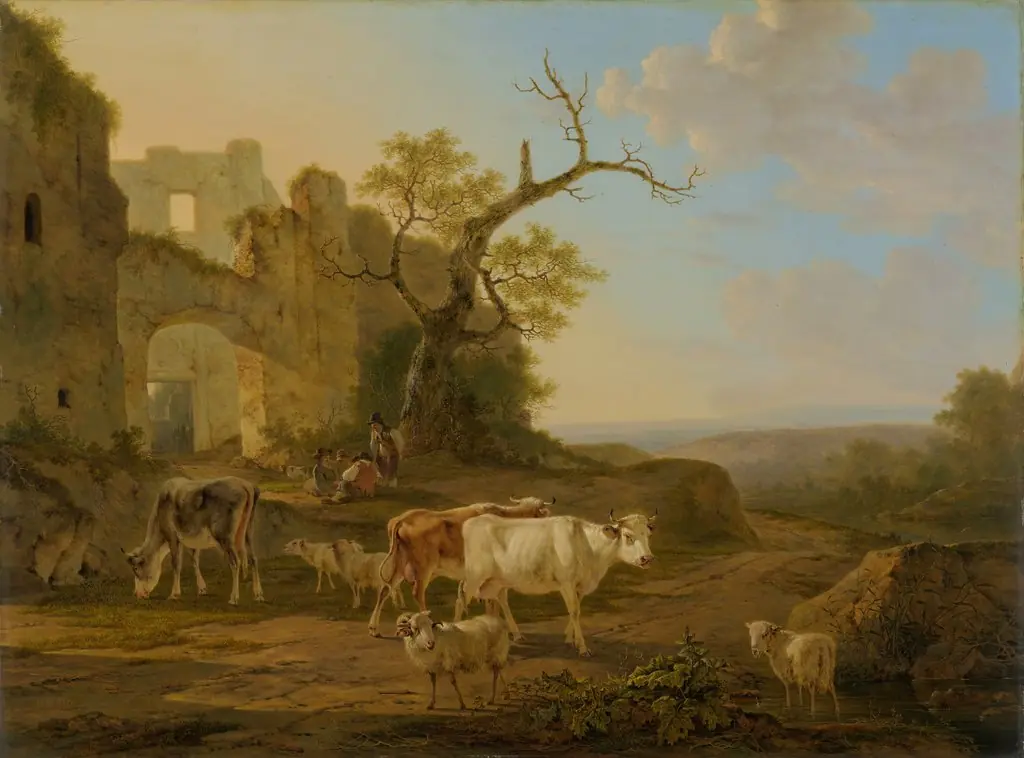
Schapen op de heide is an oil painting by Jan Bedijs Tom. It dates from 1866 and is held in the collection of the Rijksmuseum.
About this work
Subject & Meaning
The composition centers on the animals and their low-lying, open terrain, conveying the quiet rhythms of rural life in the Dutch landscape.
The painting depicts a flock of sheep grazing on a heath, framed by a solitary tree and expansive sky. The composition centers on the animals and their low-lying, open terrain, conveying the quiet rhythms of rural life in the Dutch landscape. By emphasizing the sheep and heath, the work evokes the traditional Dutch pastoral ideal, where domesticated animals and nature coexist in a serene, unspoiled setting.
The scene’s sparse composition and muted palette underscore the quietude and isolation of the countryside, suggesting a timeless moment rather than a specific narrative. The lone tree and distant horizon contribute to a sense of boundlessness, aligning with mid-19th-century Dutch landscape traditions that idealized the relationship between agriculture and the land.
Technique & Style
Executed in 1866, Schapen op de heide is a landscape painting created by Jan Bedijs Tom using oil paint applied to a wooden panel. The work measures 75 cm in height and 107.5 cm in width. Stylistically, the composition focuses on a naturalistic depiction of the heathland, prominently featuring a tree within the scene.
The piece is currently held in the depot of the Cultural Heritage Agency of the Netherlands, managed in association with the Rijksmuseum.
History & Provenance
Schapen op de heide is an oil painting on panel by Jan Bedijs Tom, dated 1866. No commission information or earlier ownership history is documented in the available sources. The work is held in the collection of the Rijksmuseum and the Cultural Heritage Agency of the Netherlands Art Collection, and is currently located in the depot RCE.
Overview
Jan Bedijs Tom’s 1866 oil painting, Schapen op de heide, presents a tranquil rural tableau. The composition centers on a solitary tree beside the remnants of a stone ruin, while livestock, sheep and a cow, dot the surrounding meadow. A few figures are perched on a grassy ledge in the distance, and the sky is rendered in soft, hazy tones that merge with distant hills.
Context
During the mid‑1800s, Dutch painters often turned to the countryside to record the nation’s agrarian heritage. Tom’s inclusion of both livestock and a dilapidated ruin aligns with contemporary interests in realism and the romantic allure of historic sites, situating the piece within broader trends of Dutch naturalist landscape art.
Own this work as a print
Artist & collection

- Landscape with Cows near a Ruin
 Landscape with Cattle
 Milking Time
 Landschaft mit Tieren an der Tränke
 Landscape with Cattle near Darthuizen
 Cattle in a Meadow
 Landscape with a Peasant and His Flock
 Landscape with a Peasant and His Flock
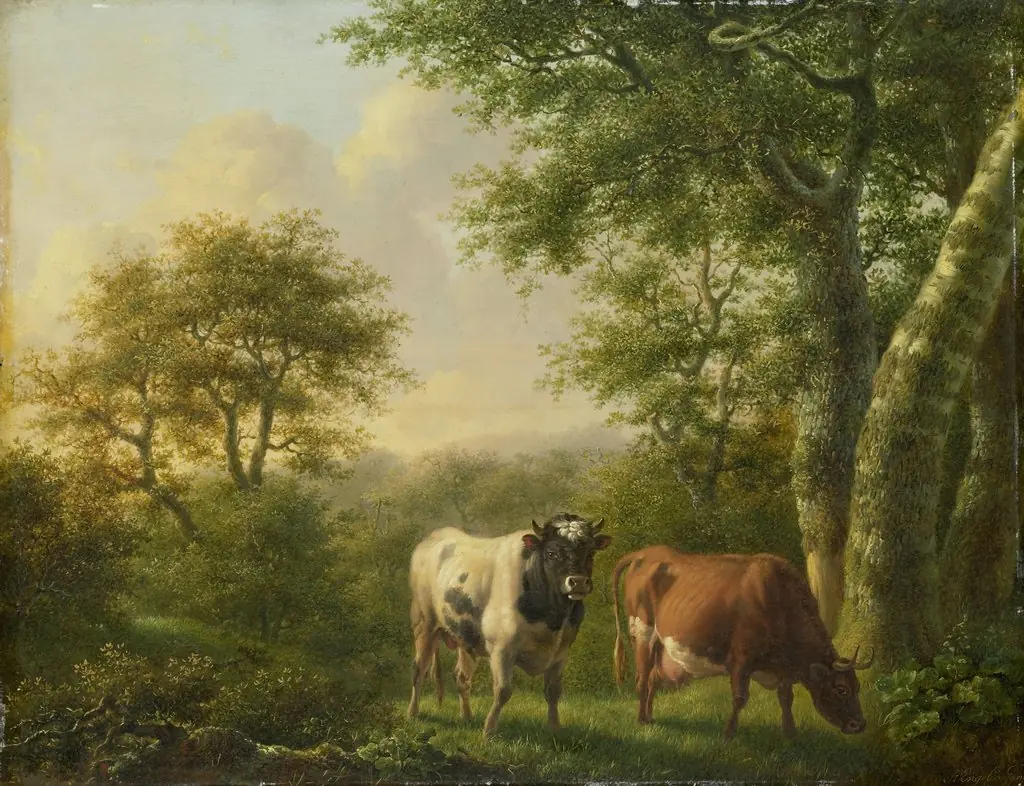 Landscape with Cows
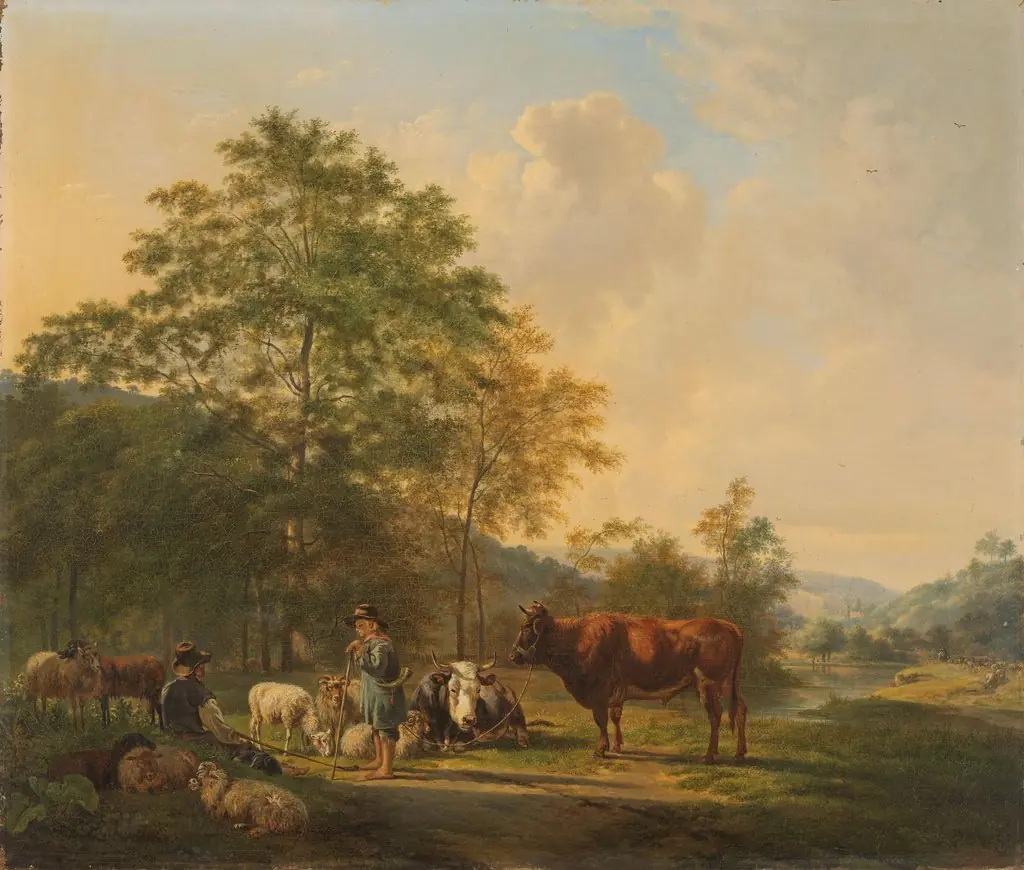 Hilly Landscape with Shepherd, Drover and Cattle
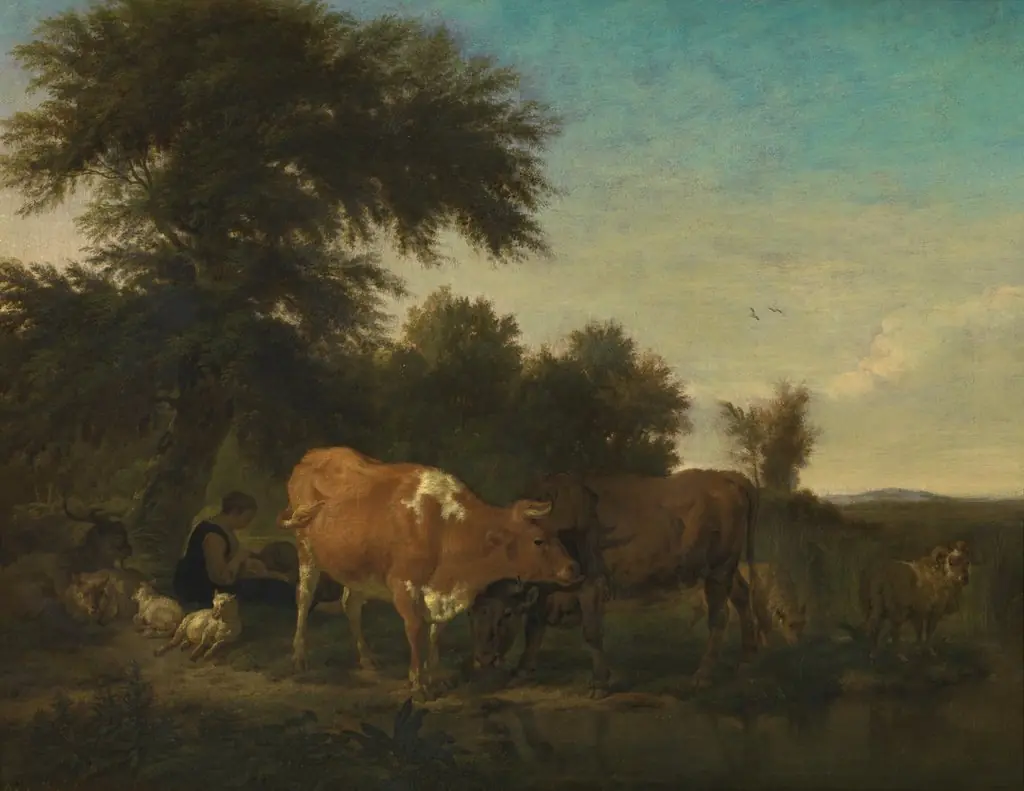 Landscape
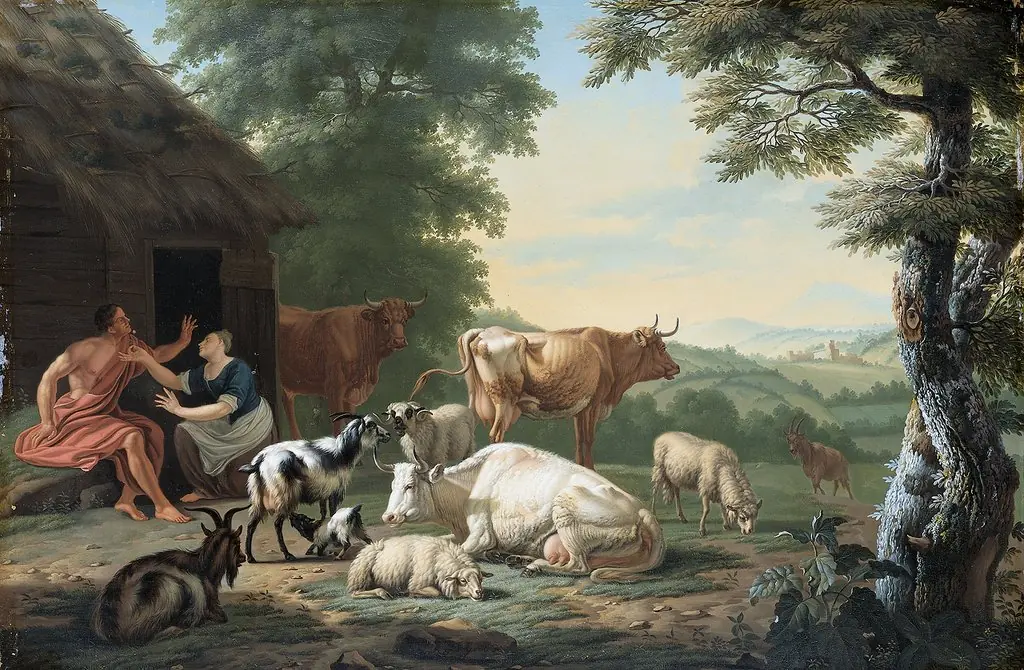 Arcadian Landscape with Shepherds and Animals