Artwork
The Sense of Sight
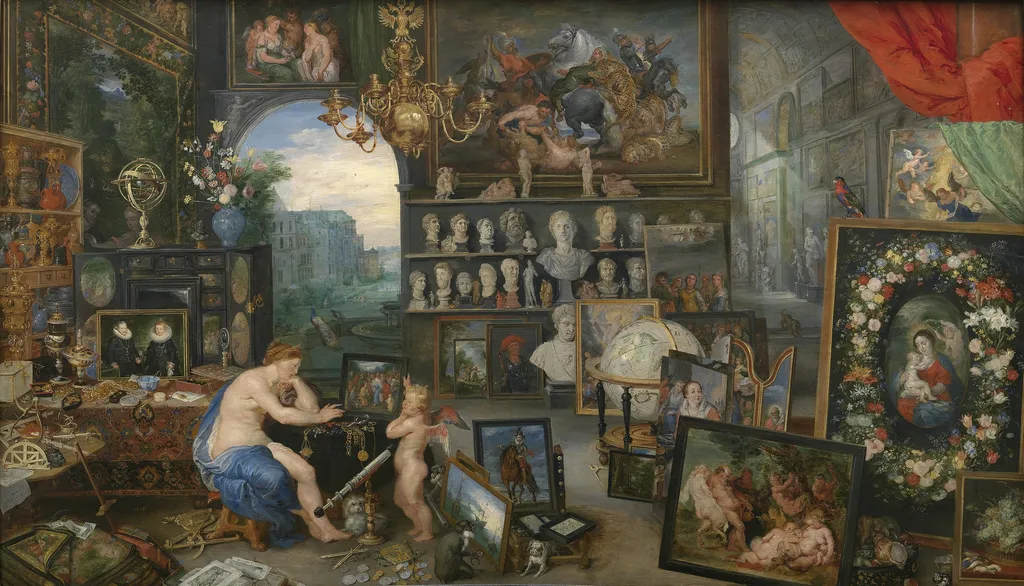
The Sense of Sight is an oil painting by the Flemish Baroque painting artist Peter Paul Rubens. It dates from 1617 and is held in the collection of the Museo del Prado.
About this work
Subject & Meaning
The Sense of Sight is an allegory of visual perception, the first in a series of five paintings devoted to the senses.
The Sense of Sight is an allegory of visual perception, the first in a series of five paintings devoted to the senses. At its center, Cupid presents to Venus a small Christian-themed picture of the Healing of the Blind Man, directing the goddess's gaze toward an act of miraculous seeing. Surrounding this encounter is a densely furnished cabinet of curiosities: paintings, sculpted busts, terrestrial globes, sextants, vases, gemstones, and an orb, all displayed within an opulent interior.
The depicted artworks include a Rubens Bacchanal in the foreground and The Tiger Hunt in the background, the latter's inclusion helping establish a chronological reference for that composition. The objects shown are thought to reflect the art and curiosity collections of Archduke Albert of Austria and Infanta Isabella Clara Eugenia of the Spanish Netherlands, transforming the painting into both a celebration of sight and a visual inventory of princely taste.
Technique & Style
The Sense of Sight is an oil painting executed on a wooden panel. It forms part of the series of the Five Senses, painted circa 1617 for the Habsburg court. The composition presents a richly decorated interior filled with busts, globes, sextants, and other objects that evoke a cabinet of curiosities.
In the scene Cupid displays a small picture to Venus, a motif drawn from Christian iconography, and the artist's signature appears on a paper near Venus. The work measures 64.7 × 109.5 cm and is housed in the Museo del Prado, where it remains on public view. Its formal qualities include meticulous rendering of texture, balanced spatial arrangement, and a vibrant use of colour to suggest depth.
History & Provenance
The Sense of Sight (c. 1617) is a collaborative painting by Jan Brueghel the Elder and Peter Paul Rubens, dated to 1617 based on inscriptions within the composition. The work belongs to a series of five allegories representing the senses, commissioned as a coherent decorative ensemble. Early scholarship by Max Rooses proposed that the depicted artifacts, including paintings and objects, derive from the collections of Archduke Albert of Austria and his wife, Isabella Clara Eugenia, situating their display in Brussels.
The painting entered the Spanish royal holdings and was inventoried under Ferdinand VII, later transferring to the Museo del Prado in Madrid, where it remains.
Context
Created circa 1617 as part of a five-painting series on the senses, this collaboration between Jan Brueghel the Elder and Peter Paul Rubens serves as a significant allegory of visual perception. Scholarly analysis, initiated by Max Rooses, identifies the depicted artifacts as representations of the art collections belonging to Archduke Albert and Isabella Clara Eugenia in Brussels. This identification provides a terminus ante quem for Rubens's background painting, The Tiger Hunt, while the foreground features a Bacchanal.
The work is notable for its meta-referential inclusion of various paintings and sculptures by Rubens and his workshop. Art historian Arnout Balis has examined the hunting scenes within the composition in the Corpus Rubenianum. Currently held by the Museo del Prado in Madrid, the painting remains a key example of the cabinet of curiosities genre and the artistic partnership between the two masters.
Legacy
The Sense of Sight has shaped scholarly understanding of Baroque allegorical cycles and the representation of collections, serving as a key reference point for studies of Rubens-Brueghel collaborations and cabinet-of-curiosities iconography. Its inclusion in the five-sense series, documented by contemporary inventories and later catalogues, enabled Max Rooses to establish terminus ante quem dates for related works such as The Tiger Hunt, a method now standard in Rubens scholarship. The painting's long-term display at the Museo del Prado and its extensive documentation have reinforced its reputation as a benchmark for the visual personification of perception.
Overview
Peter Paul Rubens, a prominent Flemish Baroque painter, completed The Sense of Sight in 1617. This oil painting is an allegorical work, depicting a richly appointed room filled with various artworks and objects, including sculptures and a globe. It exemplifies Rubens's characteristic dynamic style and engagement with classical themes. The painting is currently housed in the collection of the Museo del Prado in Madrid.
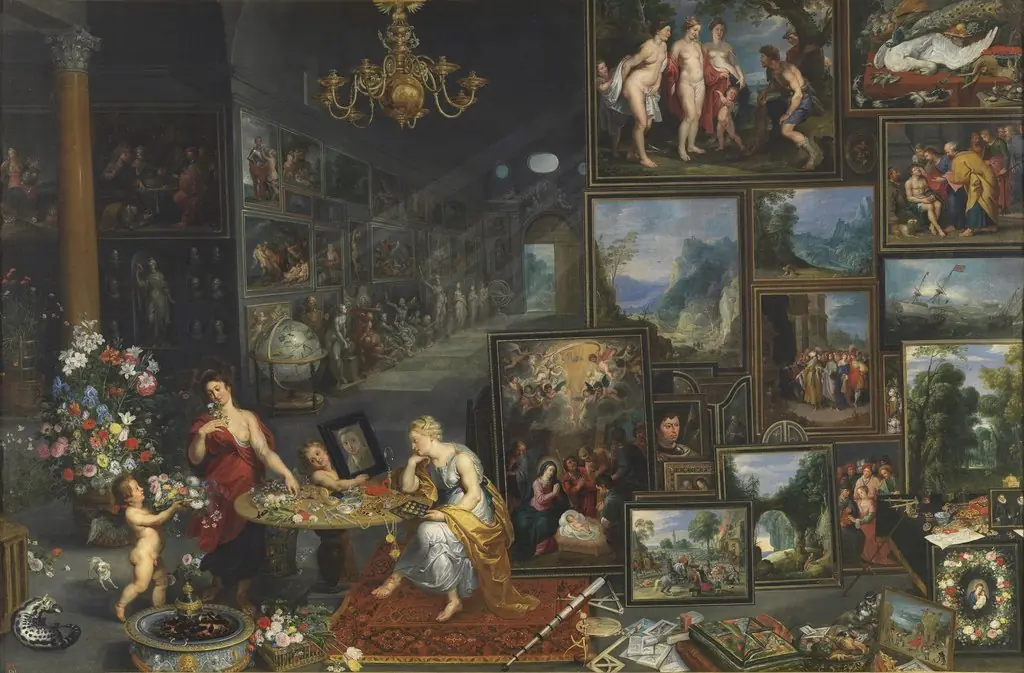
Artist & collection
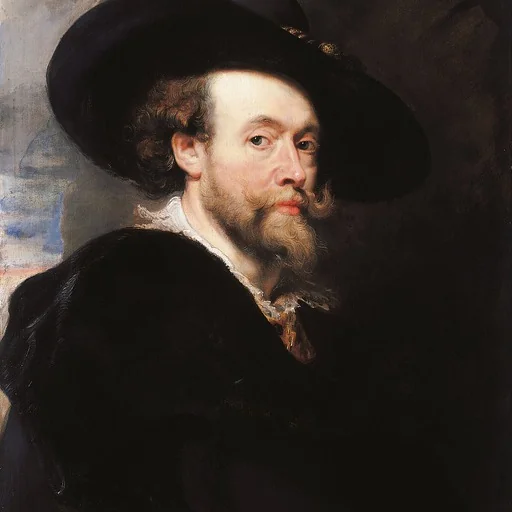
Artist
Sir Peter Paul Rubens ( ROO-bənz; Dutch:; 28 June 1577 – 30 May 1640) was a Flemish artist and diplomat.

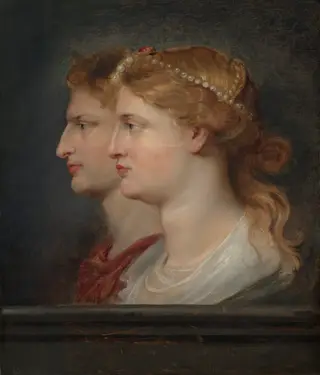
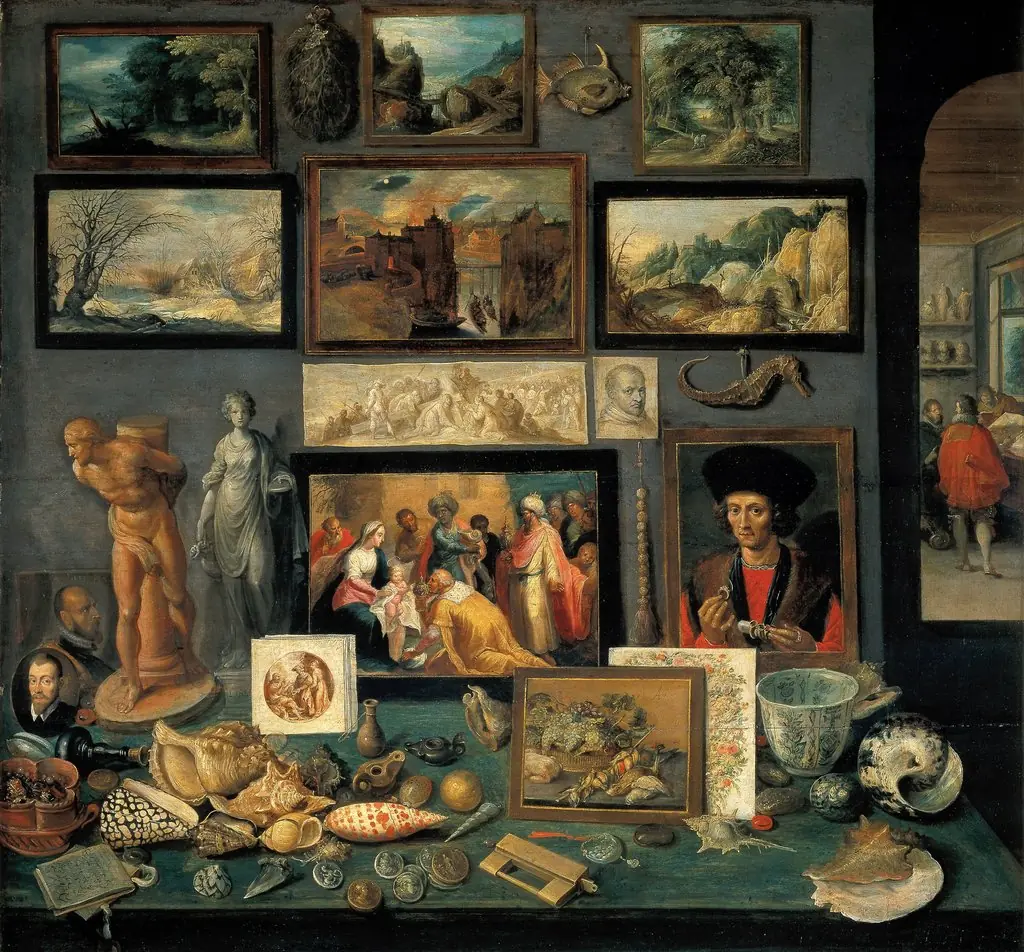 Chamber of Art and Curiosities
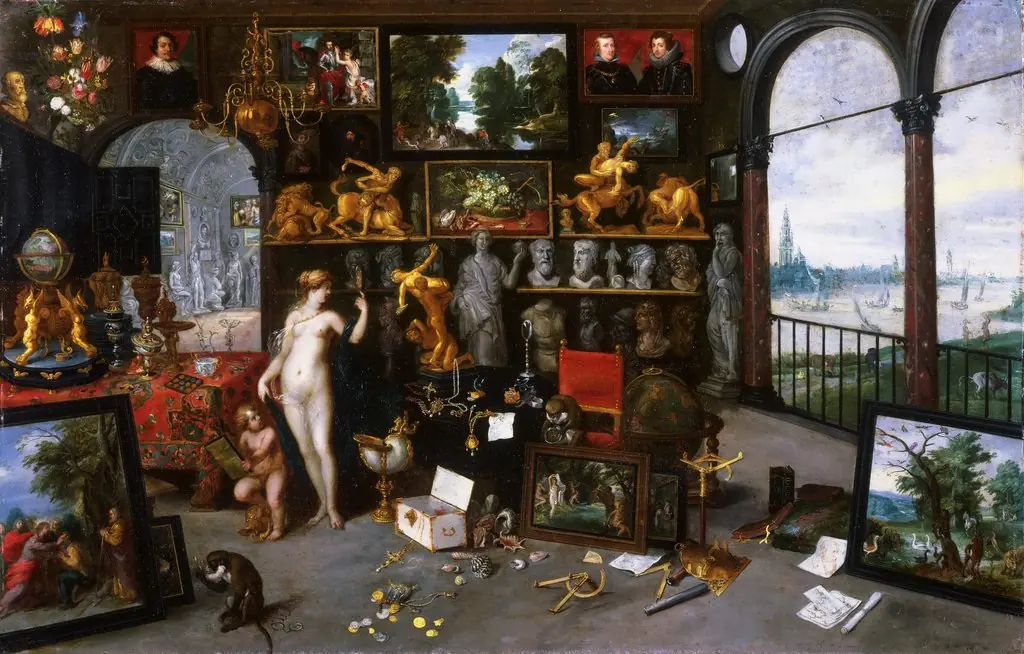 Allegory of Sight (Venus and Cupid in a Picture Gallery)
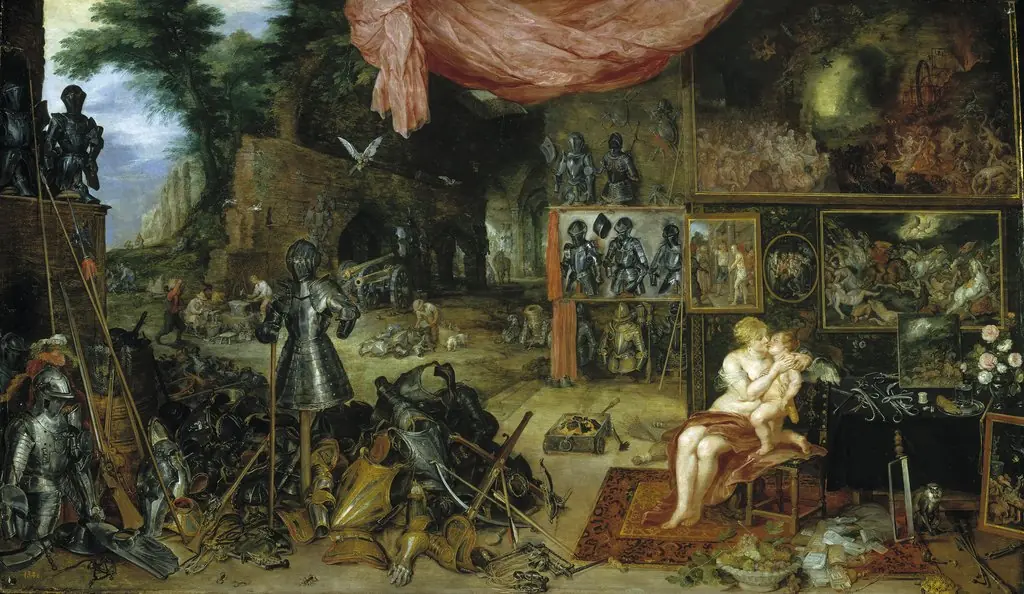 Touch
Touch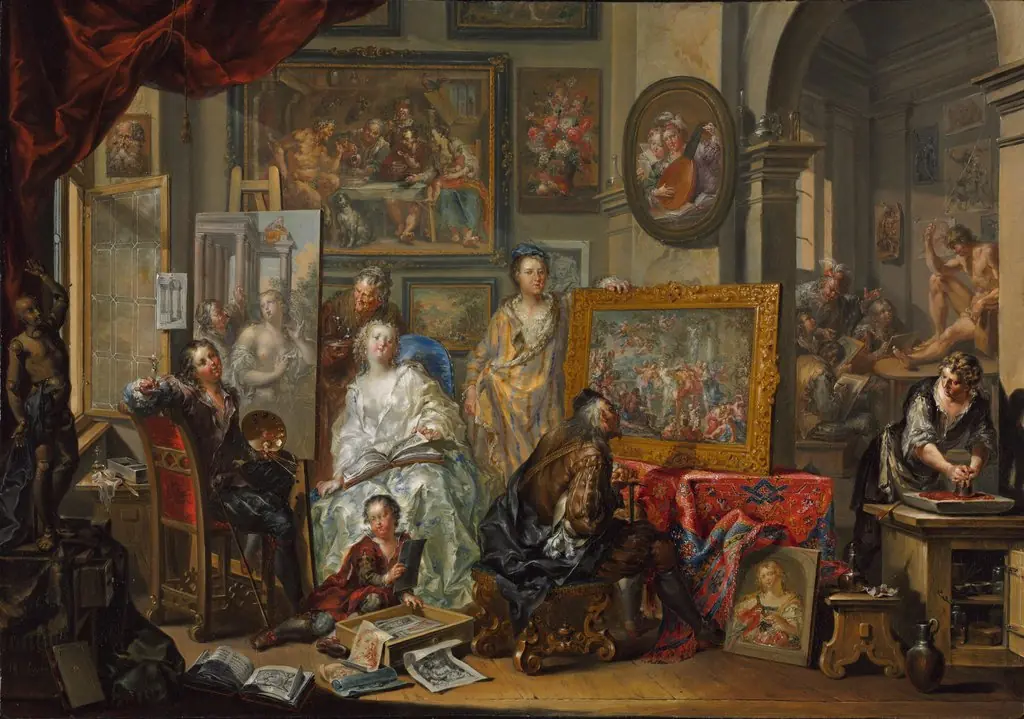 The Artist's Studio
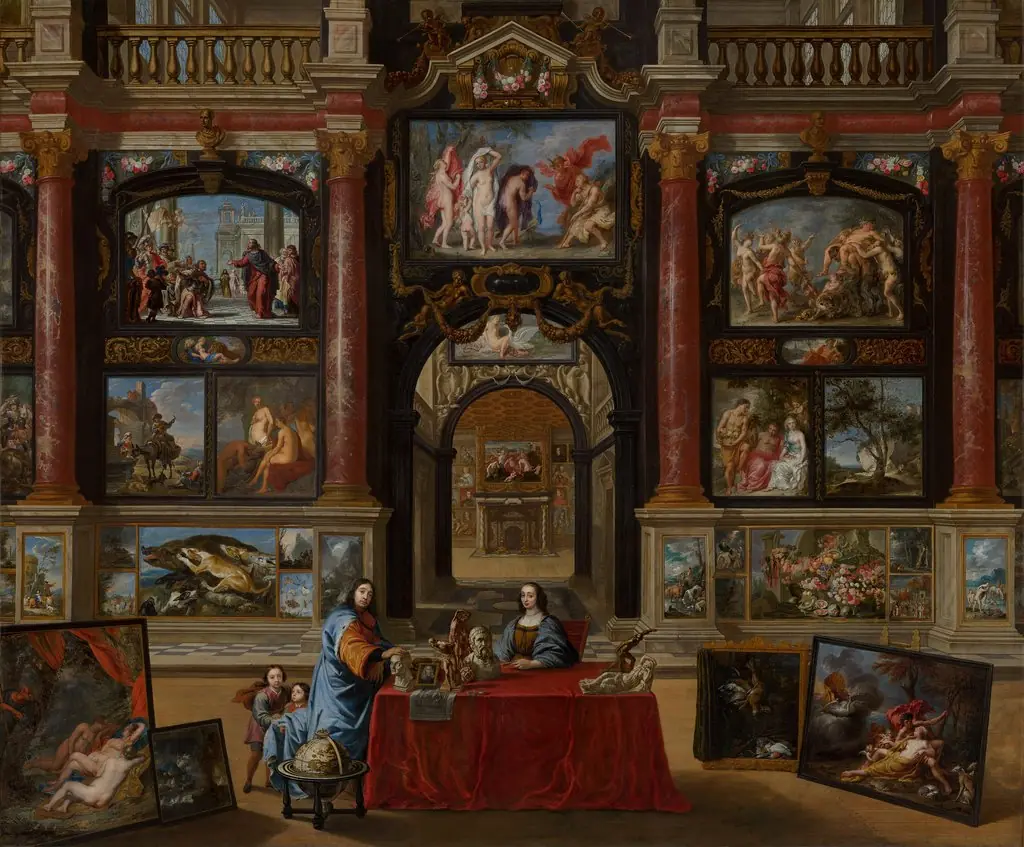 Intérieur avec personnages devant une collection de peintures
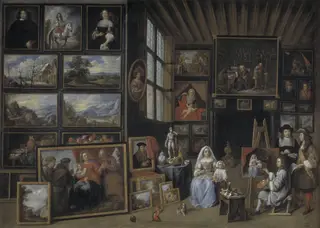 A Picture Gallery with an Artist Painting a Woman and a Girl. Allegory of the Art of Painting
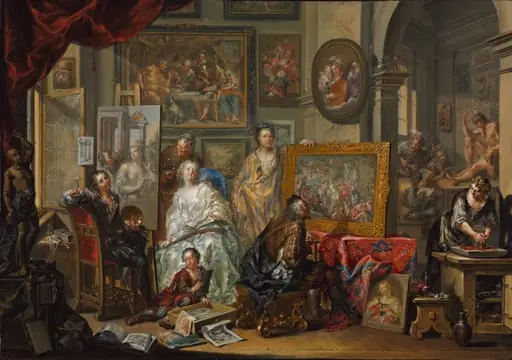 The Artist's Studio
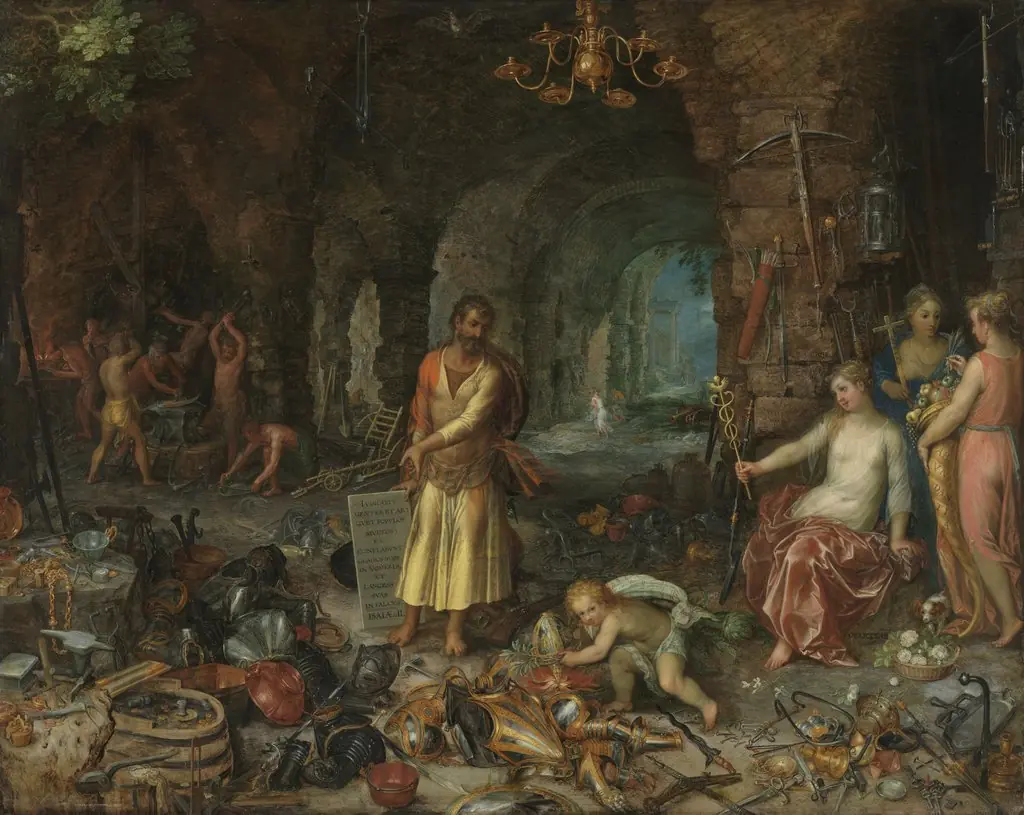 The Prophecy of Isaiah
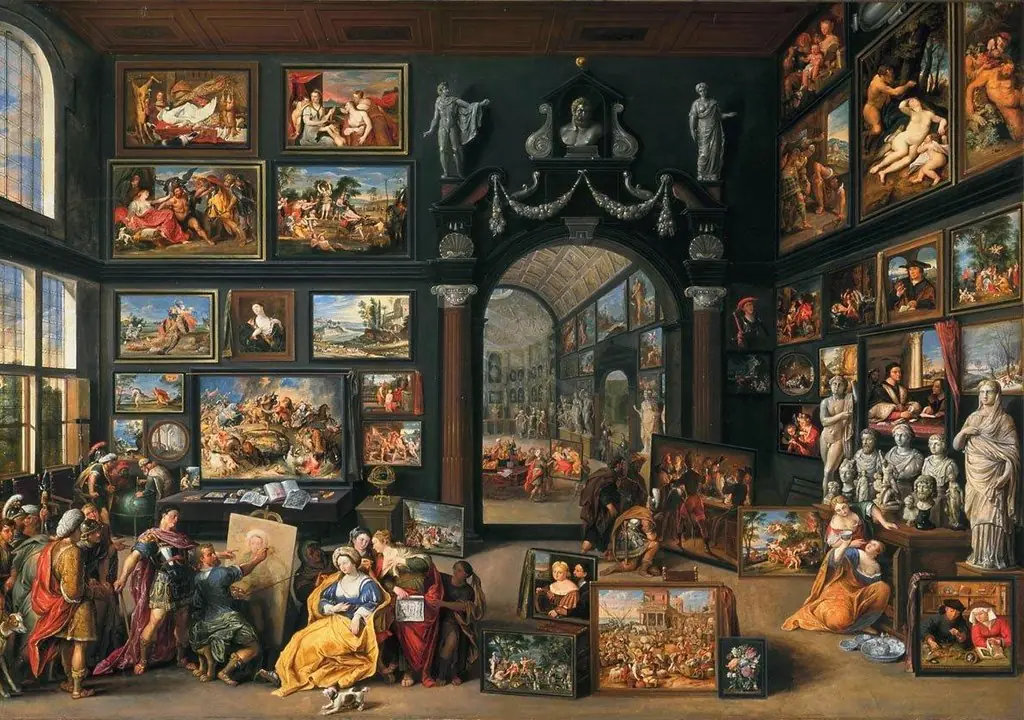 Appelles painting Campaspe
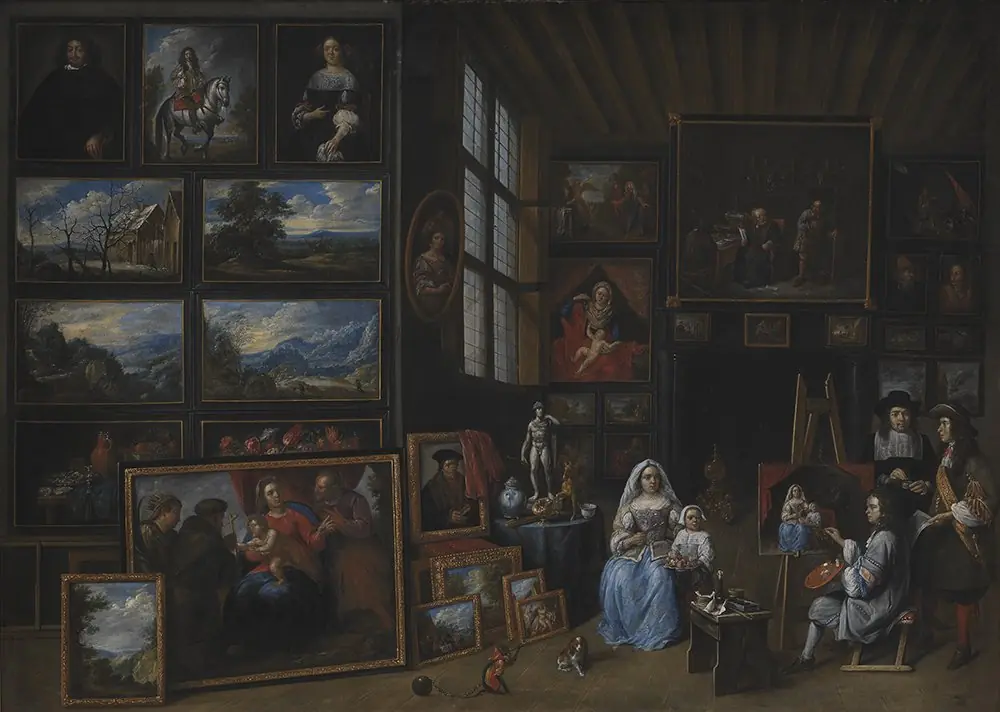 Et billedgalleri med en kunstner, der maler en kvinde og en pige. Allegori over malerkunsten