Artwork
Latona and the Lycian Peasants
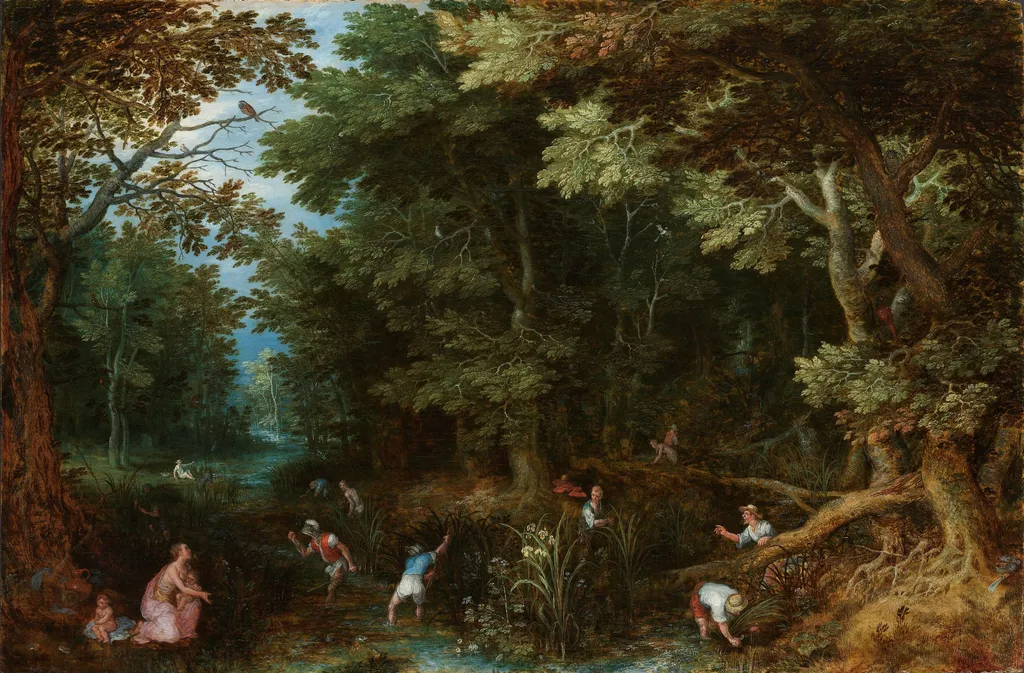
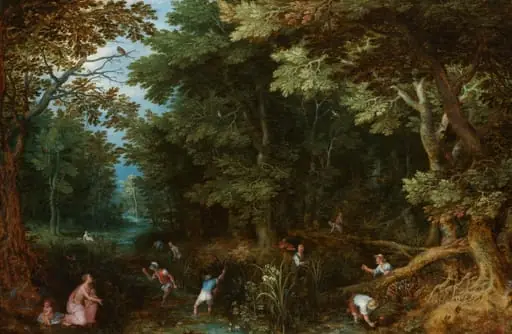
Latona and the Lycian Peasants is an oil painting by the Flemish Baroque painting artist Jan Brueghel, the elder. It dates from 1605 and is held in the collection of the Rijksmuseum.
About this work
Subject & Meaning
Local peasants gathering reeds refuse her access, stir the water to make it undrinkable, and insult her; in her wrath she transforms them into frogs.
The painting depicts the Ovidian myth of Latona (the Roman name for Leto) and the Lycian peasants, a scene from Book VI of Ovid's Metamorphoses. After giving birth to Diana and Apollo, Latona flees Juno's persecution and arrives in Lycia, where she seeks water at a pond. Local peasants gathering reeds refuse her access, stir the water to make it undrinkable, and insult her; in her wrath she transforms them into frogs.
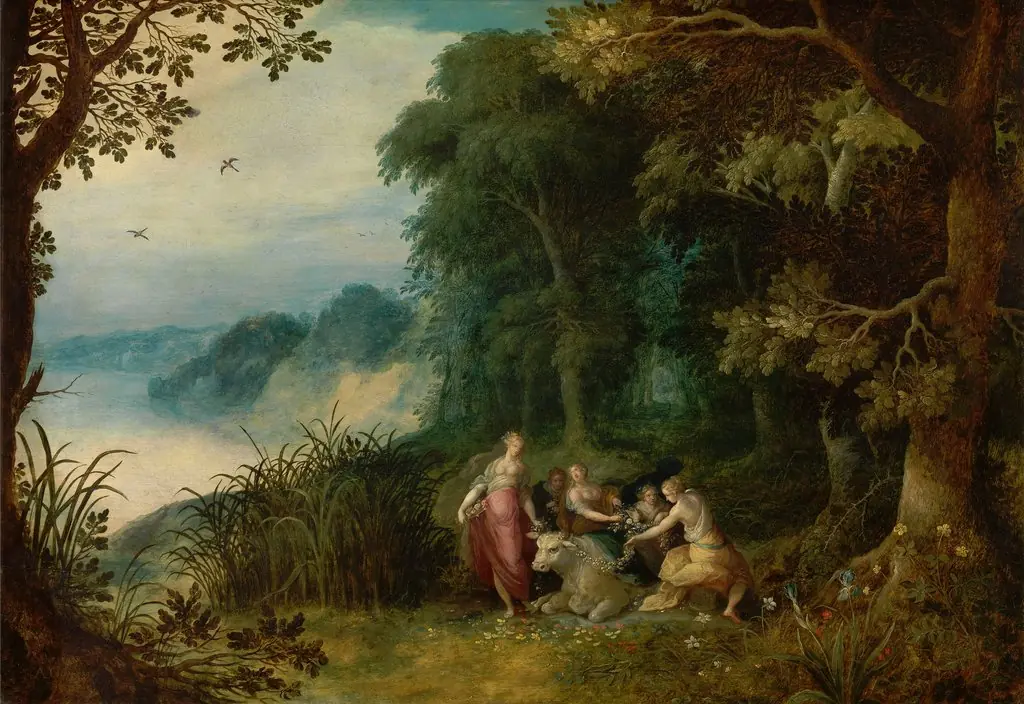
Brueghel renders the decisive moment of the curse, with some figures already sprouting frog heads and one shaking a fist at Latona while a startled man looks up and others remain unaware. The scene merges history painting with genre and landscape, a hallmark of Brueghel's approach to mythological subjects.
Technique & Style
Executed in 1605, this mythological painting by Jan Brueghel the Elder is rendered in oil paint on a wooden panel. The work measures 37 cm in height and 56 cm in width. Stylistically, the composition synthesizes history, genre, and landscape painting to illustrate Ovid's narrative of transformation.
Brueghel depicts the moment Latona curses the peasants, showing figures in mid-metamorphosis with frog heads emerging from human bodies. While most peasants remain unaware of their fate, one semi-nude figure reacts with terror and another raises a fist at the goddess. The artist includes actual frogs in the water alongside the transforming men, and adds a forest setting not present in the original literary source.
History & Provenance
Latona and the Lycian Peasants was created in 1605 by Jan Brueghel the Elder as an oil painting on panel, depicting the mythological episode of Latona's vengeance on the Lycian peasants drawn from Ovid's Metamorphoses. The painting entered the collection of Adriaan Leonard van Heteren in The Hague around 1752 and remained in the family, passing to his son Adriaan Leonard van Heteren Gevers. On 8 June 1809 the younger Van Heteren sold the work, together with the rest of the Kabinet van Heteren Gevers (136 works), to the Rijksmuseum in Amsterdam, where it remains.
The work measures 37 by 56 cm. No participation in specific temporary exhibitions is recorded in the available sources.
Context
The 1605 oil on panel by Jan Brueghel the Elder illustrates the Ovidian episode of Latona's confrontation with the Lycian peasants, a moment of divine wrath that transforms the men into frogs. The composition merges mythological narrative with genre scenes of rural labor and a detailed landscape, exemplifying the Northern European tendency to blend history painting, genre, and naturalistic scenery.
The work entered the Kabinet van Heteren Gevers collection in the eighteenth century and was acquired by the Rijksmuseum in 1809, a trajectory documented in the museum's provenance records. It is regarded as a representative example of Brueghel's thematic versatility and of the interplay of myth, moral allegory, and visual storytelling in early modern art.
Overview
Latona and the Lycian Peasants, painted by Jan Brueghel the Elder in 1605, is an oil painting that exemplifies the Flemish Baroque movement. This work depicts a scene from classical mythology, featuring the goddess Latona. Brueghel, a prominent Flemish artist, created detailed landscapes and narrative compositions, often collaborating with other significant painters of his era. The painting is presently housed in the collection of the Rijksmuseum.
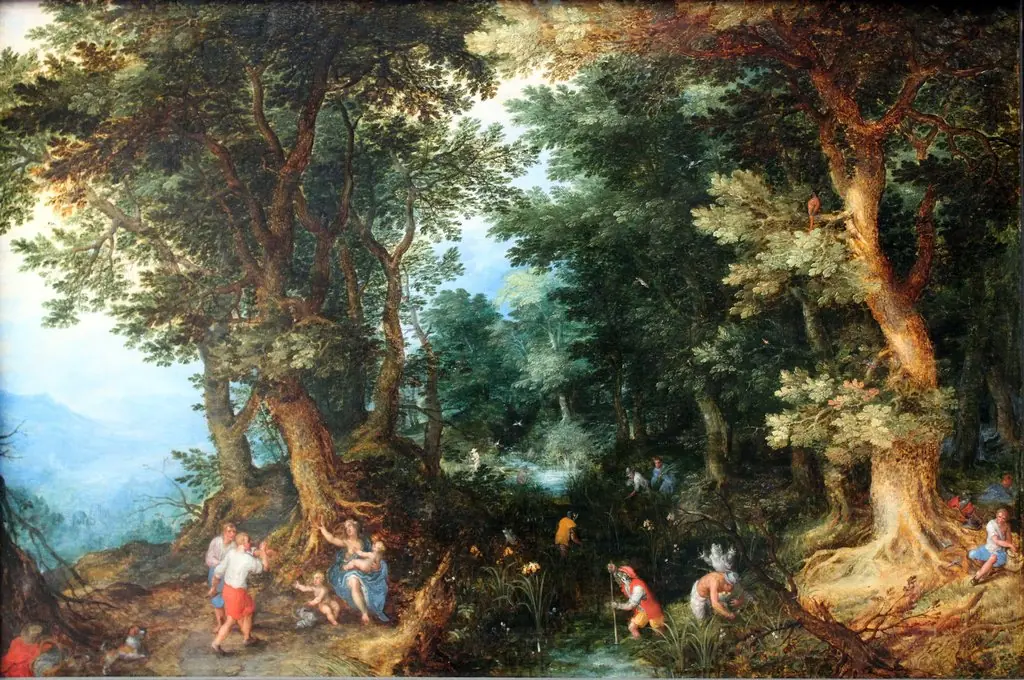
Own this work as a print
Artist & collection
Artist
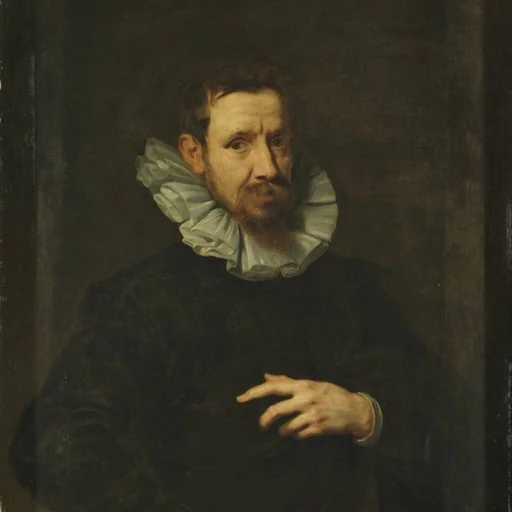
Jan Brueghel the Elder ( BROY-gəl, US also BROO-gəl; Dutch:; 1568 – 13 January 1625) was a Flemish painter and draughtsman.