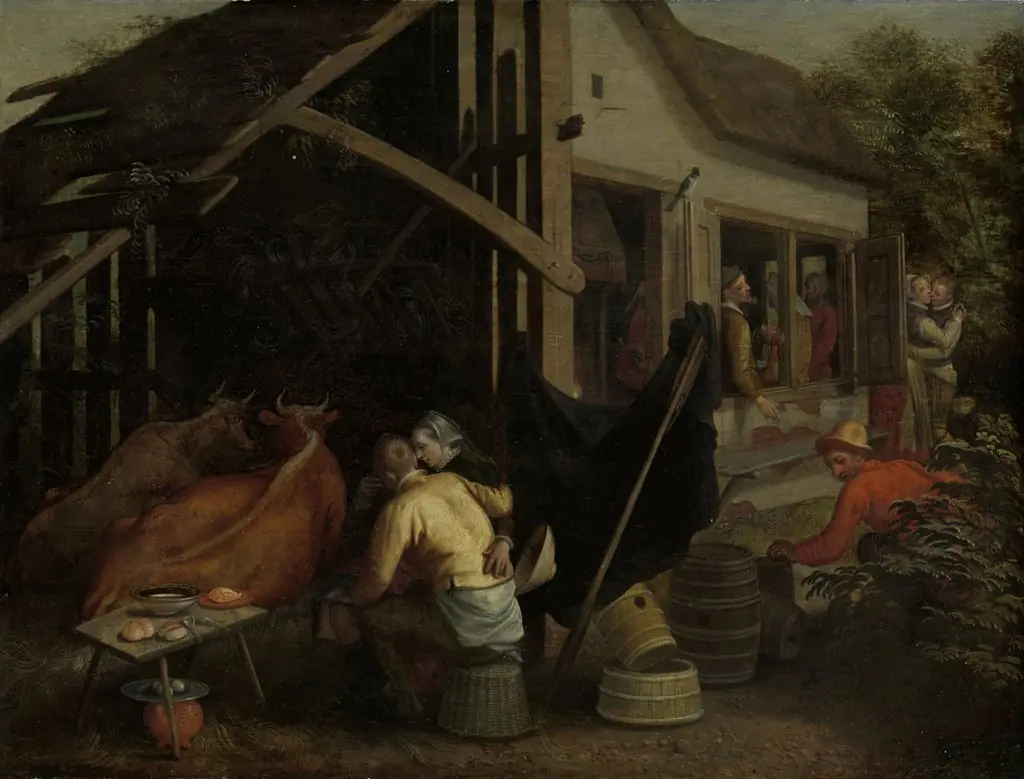
Artwork
Visit to the Farm
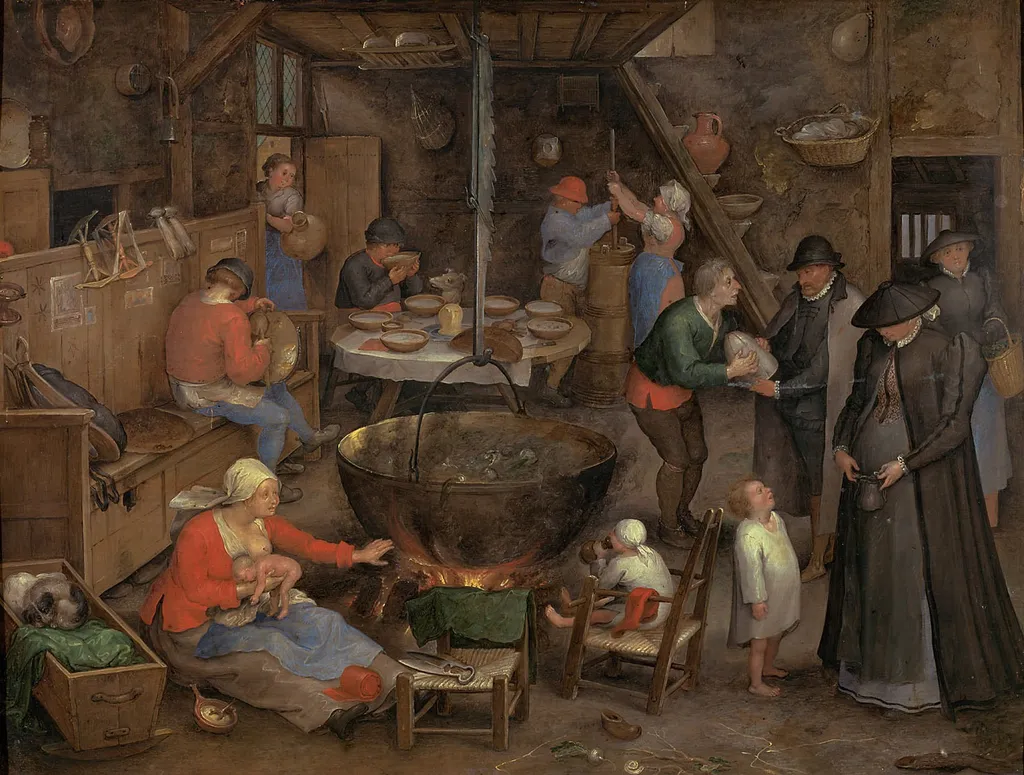
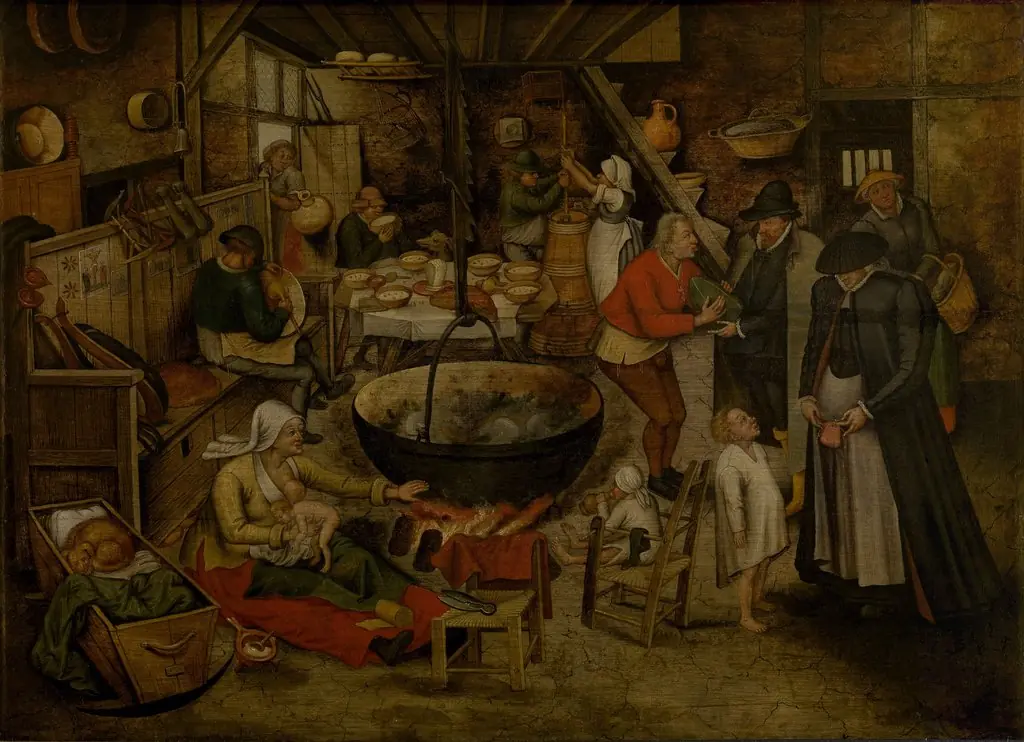
Visit to the Farm is an oil painting by the Flemish Baroque painting artist Jan Brueghel, the elder. It dates from 1599 and is held in the collection of the Kunsthistorisches Museum.
About this work
Subject & Meaning
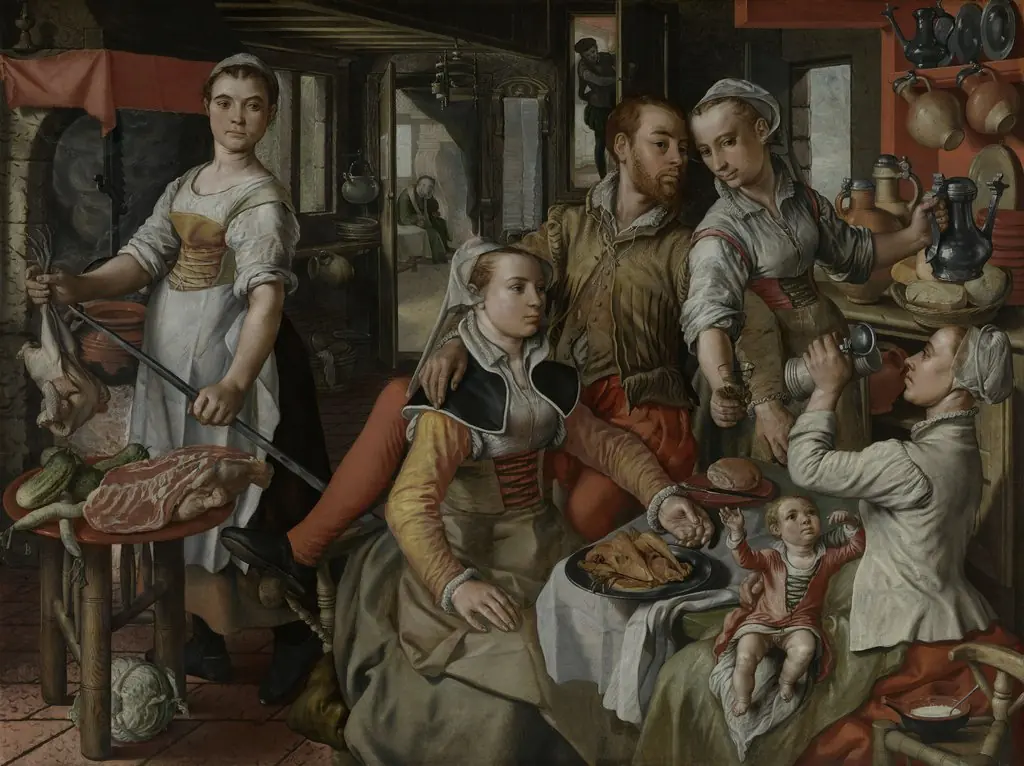
The painting depicts a domestic interior with figures including a mother, infant, and a visitor, symbolizing everyday rural life and social interaction.
The painting depicts a domestic interior with figures including a mother, infant, and a visitor, symbolizing everyday rural life and social interaction. It may represent themes of agricultural labor and the relationship between landowners and tenant farmers, reflecting contemporary understandings of rural economy. The work has been interpreted as a visual allegory of 'good poor' individuals striving to improve their circumstances through diligent work.
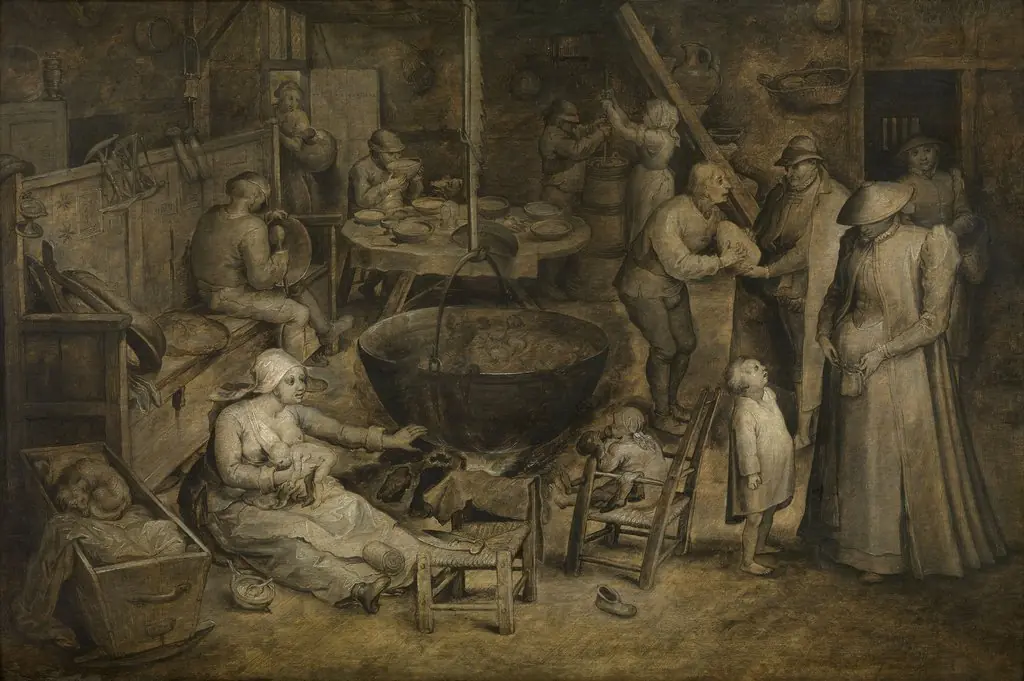
Additionally, a possible historical connection to a lost Boschian subject is suggested by a 1642 record of a 'Bosch feeding master' owned by an Antwerp dealer, though this link remains speculative. The composition was later associated with a grisaille version housed in the Fondation Custodia in Paris, and the painting was previously known by the title 'De aalmoesgevers'.
Technique & Style
The painting was executed on a copper support using oil paint, a technique typical of late 16th‑century Flemish genre scenes. Its dimensions are 27 cm in height by 36 cm in width, and the surface shows the smooth handling characteristic of Brueghel’s meticulous brushwork, with fine detail in the interior furnishings and the figures’ gestures. The composition balances a bustling domestic interior with carefully rendered textures, reflecting the formal stylistic qualities of the genre scene.
History & Provenance
Visit to the Farm was painted by Jan Brueghel the Elder in 1597, executed in oil on copper and measuring 27 by 36 cm. The Dutch-language source notes that the painting is a copy after a grisaille now held by the Fondation Custodia in Paris, which was long attributed to Pieter Bruegel the Elder but is now thought to be by Jan Brueghel the Elder as well. That same source further suggests a possible link to a lost secular composition by Hieronymus Bosch, referencing a 1642 record of "a foster-father by Bosch on panel" in the possession of the Antwerp dealer Herman de Neyt.
By 1747 the painting was already in the Schatkamer (Treasury) of the Hofburg in Vienna, where it has remained in the imperial collection that today forms part of the Kunsthistorisches Museum, its present location.
The painting Visit to the Farm is held in the collection of the Kunsthistorisches Museum in Vienna. Historical records indicate the work was already located in the Treasury of the Hofburg in Vienna by 1747. While the piece was formerly attributed to Pieter Bruegel the Elder and carried the title The Almsgivers, it is now recognized as a work by Jan Brueghel the Elder.
The current understanding suggests the scene depicts a wealthy landowner purchasing goods from a tenant farmer rather than an act of charity. No specific exhibition history or modern accession numbers are provided in the available sources.
Context
The painting has been studied as an example of Jan Brueghel the Elder’s genre scenes that blend everyday rural activity with allegorical undertones, situating it within the broader trajectory of 16th‑century Flemish painting. Scholars note its technical innovation on copper and its role in the artist’s exploration of domestic interiors, linking it to both his collaborations with Peter Paul Rubens and his influence on later Dutch genre painters. The work’s provenance in the Kunsthistorisches Museum in Vienna and its appearance in French and Dutch reference works underscore its recognized significance in art‑historical discourse.
Overview
Jan Brueghel the Elder’s Visit to the Farm is a small‑scale copper panel painted in 1599. Executed during the height of the Flemish Baroque, the work measures roughly a foot across and is part of the permanent collection of the Kunsthistorisches Museum in Vienna. It exemplifies Brueghel’s prolific output across religious, landscape, and genre subjects.
Artist & collection
Artist
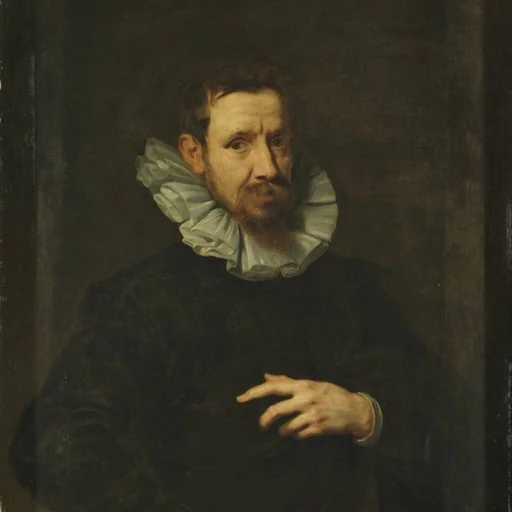
Jan Brueghel the Elder ( BROY-gəl, US also BROO-gəl; Dutch:; 1568 – 13 January 1625) was a Flemish painter and draughtsman.