Artwork
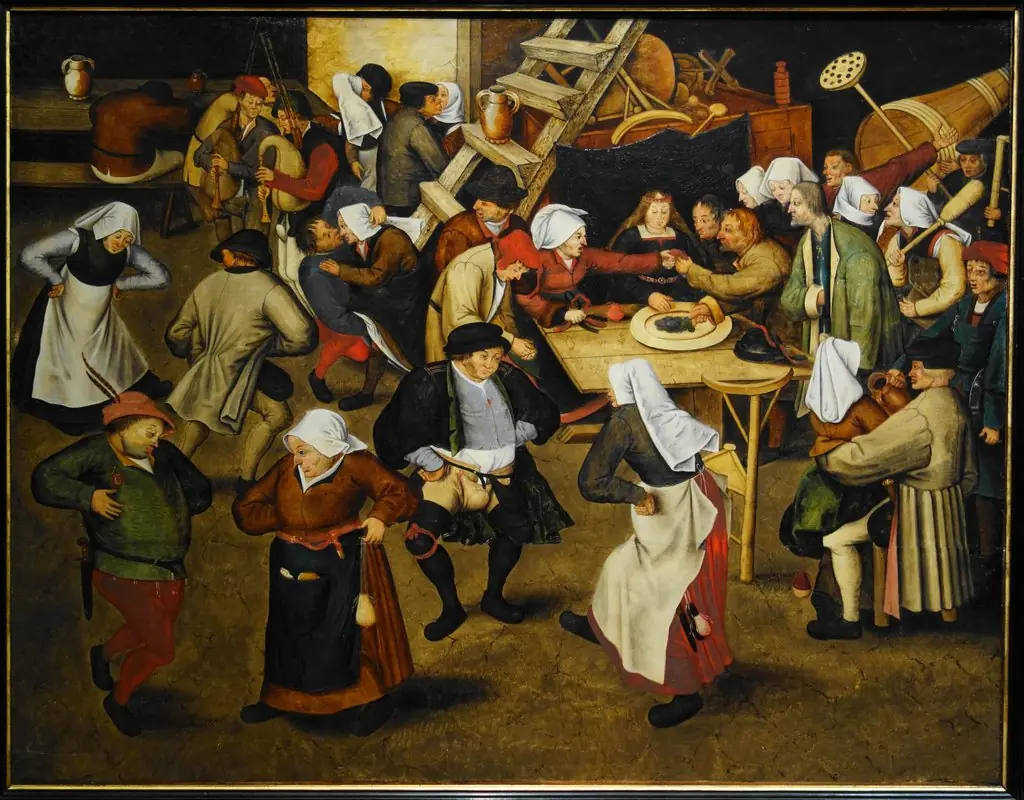
The Peasant Wedding
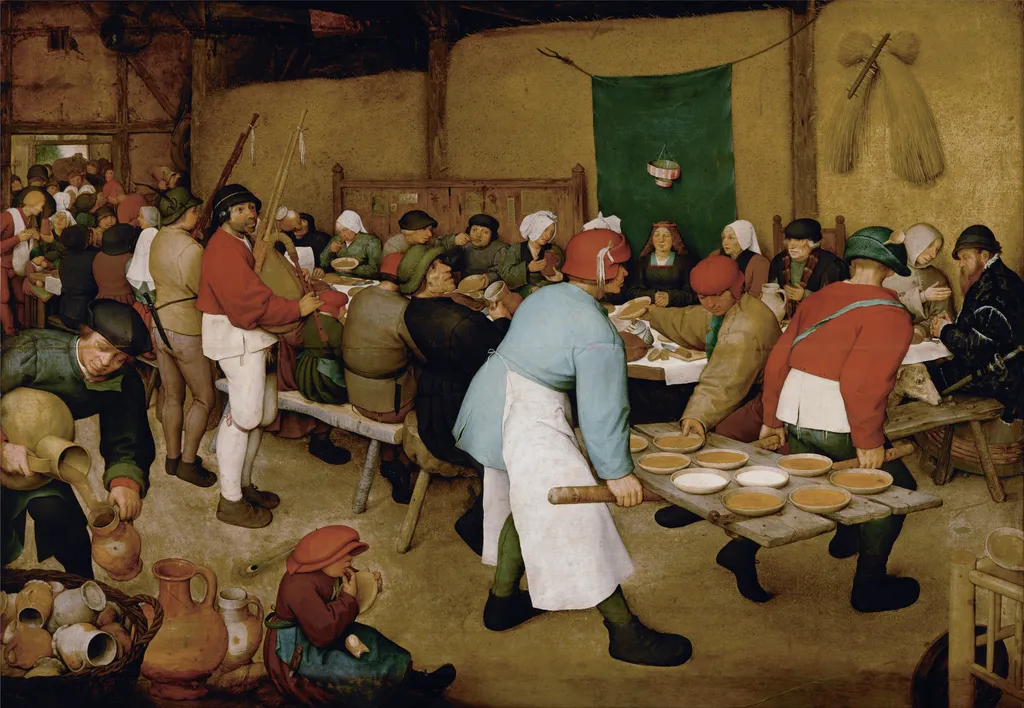
The Peasant Wedding is an oil painting by the Northern Renaissance artist Pieter Brueghel I. It dates from 1568 and is held in the collection of the Kunsthistorisches Museum.
About this work
Pieter Brueghel the Elder painted The Peasant Wedding in 1567. It shows a lively scene of rural life from long ago. The work is oil paint on a wooden panel.
Brueghel liked to paint peasants and their customs. He often hid deeper meanings in his scenes. This one mixes joy with quiet wisdom.
Look up the artist Pieter Brueghel the Elder next.
Subject & Meaning
The painting's influence extends to popular culture, inspiring parodies in Asterix comics and Belgian cultural references.
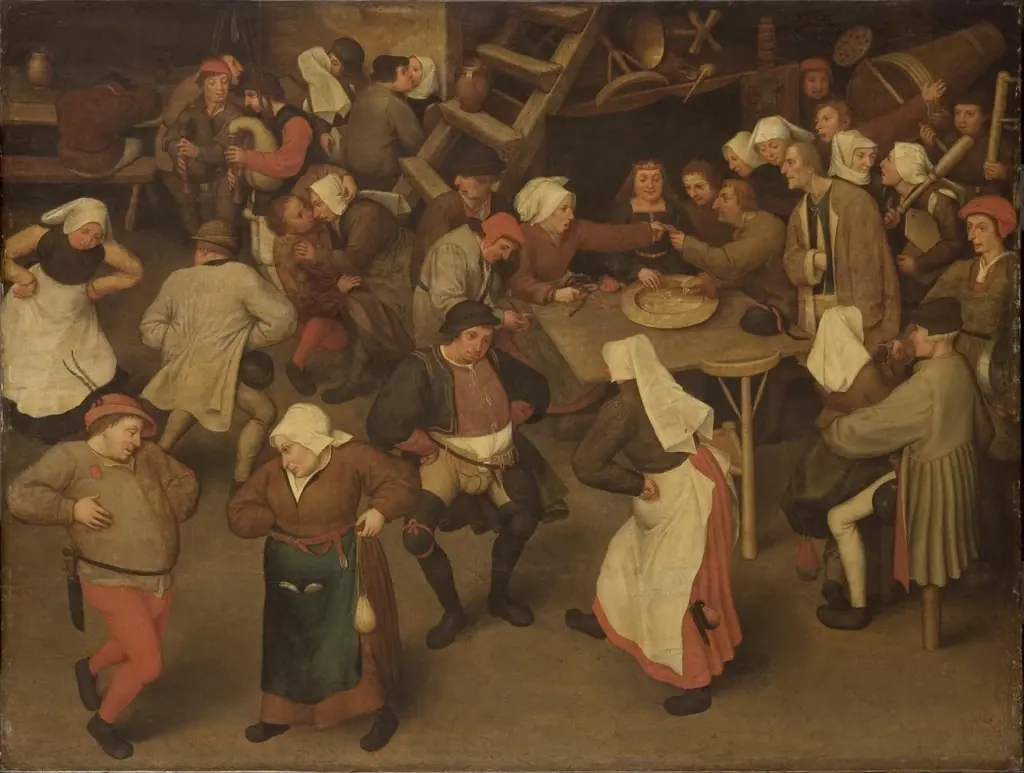
The painting depicts a bustling 16th-century peasant wedding feast inside a barn, showing a bride seated before a green wall-hanging with a paper crown above her head, while the bridegroom is not clearly identifiable and traditionally absent from the banquet table. The scene includes bread, porridge, soup, a dog stealing bread, two pipers playing bagpipes, and symbolic elements such as sheaves of grain and a rake referencing harvest work. Interpretations suggest moral or symbolic meanings, including critiques of social corruption or religious allegory, though the groom's identity remains debated among scholars.
The work is housed in the Kunsthistorisches Museum in Vienna and was acquired by Archduke Ernest of Austria in 1594, later surviving World War II in Altaussee before returning to Vienna.
Symbolic details include the bride's passivity reflecting traditional customs where she neither eats nor speaks at the feast, and the presence of phallic imagery interpreted by some as representing marital union. The painting's influence extends to popular culture, inspiring parodies in Asterix comics and Belgian cultural references.
Technique & Style
Executed in oil paint on an oak panel, this work measures 113 cm by 164 cm. Bruegel abandons the elevated, panoramic perspective typical of his earlier compositions in favor of a direct, eye-level viewpoint that immerses the viewer within the crowded barn setting. The composition is structured across four distinct spatial planes, utilizing converging lines that draw attention toward the doorway in the background. A warm color palette dominates the scene, featuring red caps and garments that contrast against the dull yellow tones of the interior walls and the green textile hanging behind the bride.
The handling of form includes a notorious ambiguity where a servant appears to possess three legs, an effect some analysis attributes to the obscured foot of a crouching figure rather than an error. The panel was trimmed at the bottom at an unknown date and subsequently restored.
History & Provenance
The Peasant Wedding is dated 1567–68 and attributed to Pieter Brueghel the Elder based on contemporary sources and technical analysis of the oak panel support.
The painting’s commission and early ownership are documented through Antwerp’s art market. By 1572 it belonged to Jan Noirot, Antwerp’s mintmaster, who likely commissioned the work around five years earlier; Noirot’s collection, including four now-lost Brueghel paintings, was forcibly sold. The panel fetched eighty guilders at auction, and in July 1594 it was purchased for 160 guilders by Archduke Ernest of Austria, who also acquired Brueghel’s Twelve Months series.
After Ernest’s death the work entered the imperial collections: it formed part of Emperor Rudolf II’s Prague holdings and later passed to Archduke Leopold Wilhelm of Austria by 1659. At the close of the Second World War it was safeguarded in the Altaussee salt mine and returned to Vienna in October 1945, entering the Kunsthistorisches Museum where it remains.
The painting is held by the Kunsthistorisches Museum in Vienna, where it has been since its acquisition in 1594 by Archduke Ernest of Austria. It entered the imperial collection and later was stored during World War II in a salt mine before returning to Vienna in 1945. The work is displayed in Saal X alongside other Bruegel pieces.
It was originally commissioned or owned by Jan Noirot, Antwerp mint master, and purchased in 1594 for 160 gulden by Archduke Ernest, who had received it as a gift from the Antwerp city council. The painting has been exhibited in Vienna since its return after the war, and remains part of the museum's permanent collection.
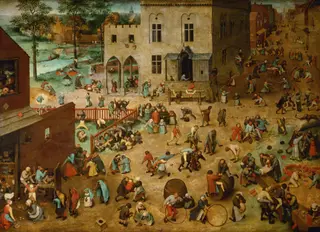
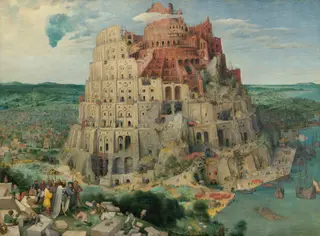
Exhibition history includes its display at the Kunsthistorisches Museum as part of a group of Bruegel works, including the Tower of Babel and Children's Games, and its appearance in special exhibitions such as the 1979 Belgian Eurovision entry promotional material and the Asterix in Belgium comic parody. It was also featured in the 1998 Höhner album cover as a retouched version.
The work has been part of the museum's collection since 1594, with documented ownership by Archduke Ernest of Austria and Archduke Leopold Wilhelm of Austria prior to imperial transfer.
Context
Pieter Bruegel the Elder's The Peasant Wedding (1567–1568) is a seminal work of the Northern Renaissance that cemented his reputation as "Peasant-Bruegel." While the artist was an intellectual who imbued his scenes with moral and symbolic depth, this painting is celebrated for its realistic, non-condescending depiction of rural life, a perspective unprecedented in art history at the time. Scholars have extensively debated the identity of the groom, with theories ranging from the man pouring beer to the absent figure suggested by Flemish proverbs, or even a Christian allegory of the corrupted Church.
The work's composition, which abandons the high vantage point of earlier works for a direct eye-level view, emphasizes the chaotic vitality of the feast. Art historical analysis also addresses technical anomalies, such as the famous "third foot" on a serving figure, which Bruegel's son later corrected in a copy, and interpretations of the scene as a parody of the biblical Wedding at Cana.
Legacy
The Peasant Wedding secured Pieter Bruegel the Elder's reputation as "Peasant-Bruegel," a moniker earned through his unique, non-condescending depiction of rural life that was unprecedented in art history. The work's visual complexity, particularly the debated "third foot" of a servant, prompted his son Pieter Brueghel the Younger to produce a 1620 copy that deliberately corrected this perceived error. Over centuries, the painting has maintained a significant presence in popular culture, serving as the basis for parodies in the Asterix comic book Asterix in Belgium and the 1979 Eurovision Song Contest postcard for Belgium.
It also inspired scenes in the Flemish comic series Suske en Wiske and the De Geuzen album De wildeman van Gaasbeek. Additionally, the 1998 album cover by the Cologne band Höhner features a retouched version of the scene, demonstrating the work's enduring adaptability and recognition.
Overview
Created in 1567, The Peasant Wedding is a genre work by Pieter Bruegel the Elder, a leading figure of the Dutch‑Flemish Renaissance. Executed in oil on a wooden panel, the painting captures a bustling rural celebration and is presently housed in Vienna’s Kunsthistorisches Museum.
Own this work as a print
Artist & collection

Artist
Pieter Bruegel (also Brueghel or Breughel) the Elder ( BROY-gəl, US also BROO-gəl; Dutch: ; c.