Artwork
Allegorical Family Portrait
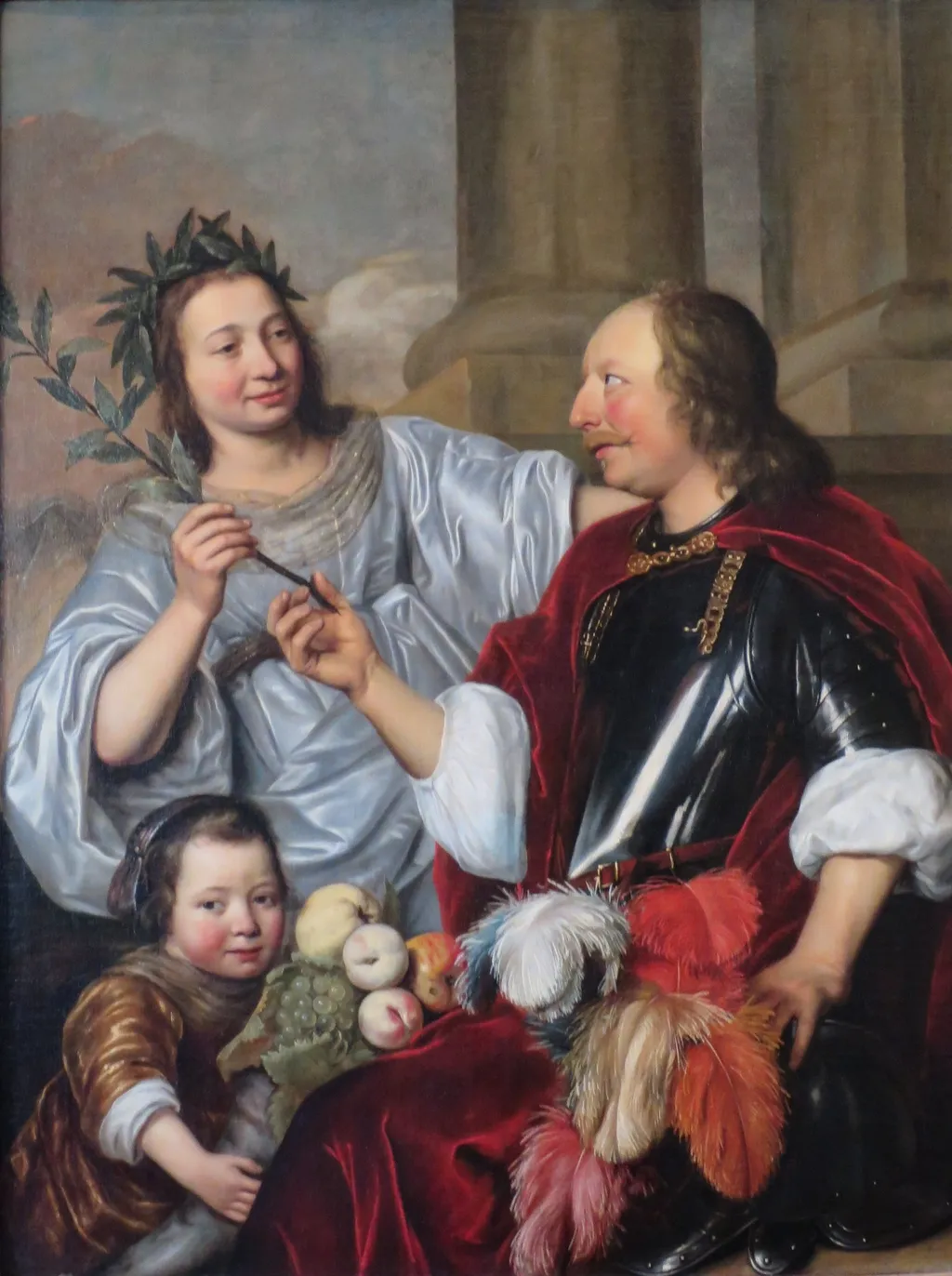
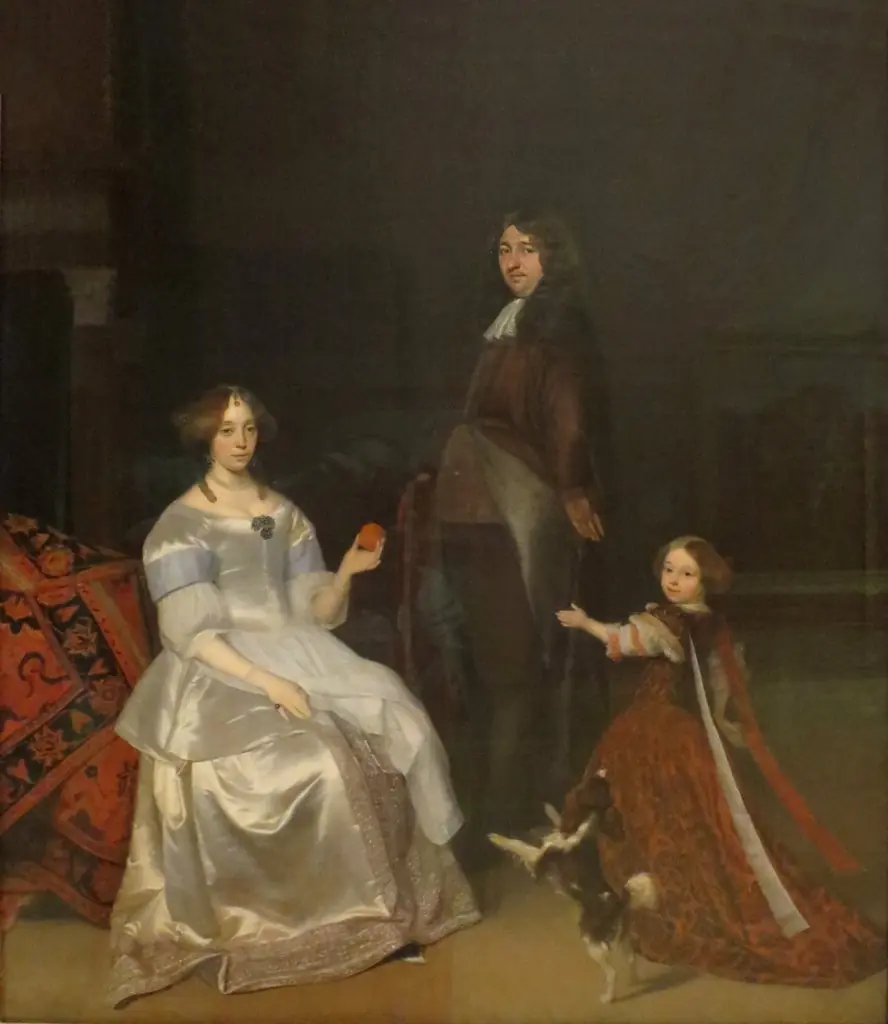
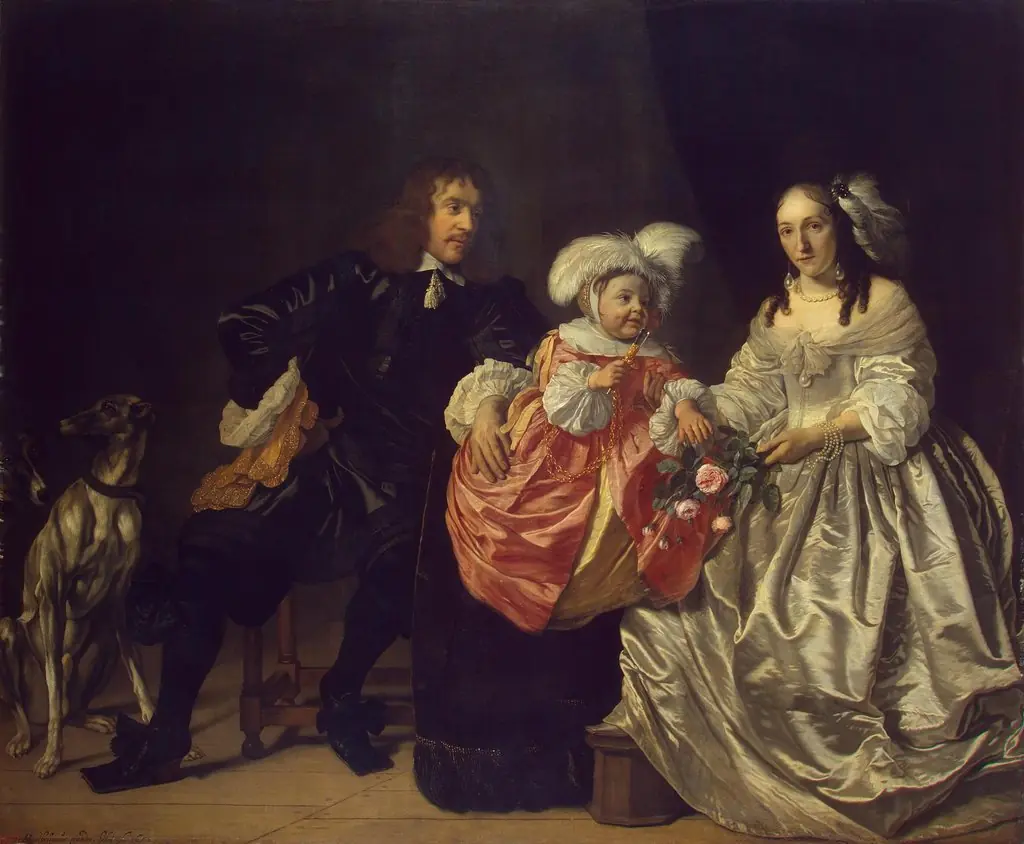
Allegorical Family Portrait is an oil painting by the Dutch Golden Age artist Jan de Bray. It dates from 1670 and is held in the collection of the Hermitage Museum.
About this work
Subject & Meaning
The composition functions as a visual allegory for the idealized household, reflecting 17th‑century Dutch ideals of lineage and civic responsibility.
The Allegorical Family Portrait depicts a family group that includes a man in body armor, a woman, and a child, symbolizing unity and social order within a domestic context. The inclusion of armor suggests martial virtue, while the intimate arrangement conveys familial harmony and moral virtue. The composition functions as a visual allegory for the idealized household, reflecting 17th‑century Dutch ideals of lineage and civic responsibility.
Technique & Style
Jan de Bray executed Allegorical Family Portrait in 1670 using oil paint on a canvas support. The artwork measures 138 cm in height and 101 cm in width. Stylistically, the painting operates as a historiated portrait, blending the portraiture genre with allegorical and historical elements.
This formal approach is evident in the depiction of a family, a man, woman, and child, where the adult male figure is shown wearing body armor, lending a classical or heroic quality to the familial grouping.
History & Provenance
The painting is dated 1670 and is associated with Haarlem, where Jan de Bray worked during the late seventeenth century.
It is recorded in the collection of the Hermitage Museum, where it remains located. The work’s dimensions are 138 cm in height and 101 cm in width.
Allegorical Family Portrait by Jan de Bray, dated 1670, is held in the collection of the Hermitage Museum. The painting, executed in oil on canvas, was produced in Haarlem and measures 138 by 101 cm. The work is classified as a historiated portrait depicting a family group comprising a man, a woman, and a child, with body armor included among the depicted elements.
No specific inventory or accession number is recorded in the available sources, and no exhibition history is documented.
Legacy
The work's legacy rests on its role in shaping 17th-century historiated portraiture. Its composition influenced later family group paintings in Dutch Golden Age art, particularly through the integration of symbolic elements like body armor with domestic settings. The painting's presence in the Hermitage Museum collection has ensured continued scholarly attention to de Bray's techniques in rendering familial relationships within historical contexts.
The work remains a reference point for studies of portraiture that blend private and public narratives.
Overview
Jan de Bray, a Haarlem‑based painter of the Dutch Golden Age, completed the oil painting Allegorical Family Portrait in 1670. The canvas presents a domestic grouping that combines portraiture with symbolic elements, a hallmark of de Bray’s historié approach. Today the work belongs to the collection of the State Hermitage Museum in St. Petersburg.
Context
De Bray worked in a period when Dutch artists often merged portraiture with historical or allegorical references, a practice encouraged by his father Salomon de Bray and contemporaries such as Bartholomeus van der Helst and Frans Hals. The inclusion of martial and civic symbols reflects the post‑Thirty Years’ War emphasis on civic pride and the rising status of the merchant class in Haarlem.
Own this work as a print
Artist & collection

Artist
Jan de Bray (c. 1627 – April 4, 1697) was a Dutch Golden Age painter. He lived and worked in Haarlem until the age of 60, when he went bankrupt and moved to Amsterdam. Jan de Bray was influenced by his father Salomon…