Artwork
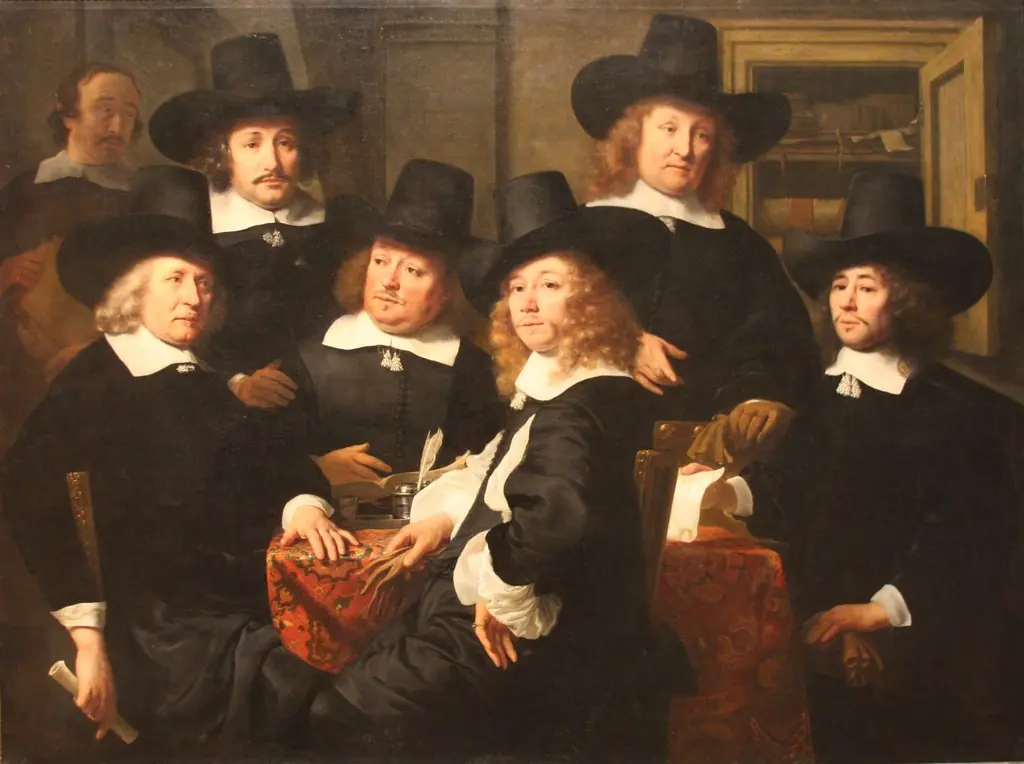
The governors of the guild of St. Luke, Haarlem, 1675
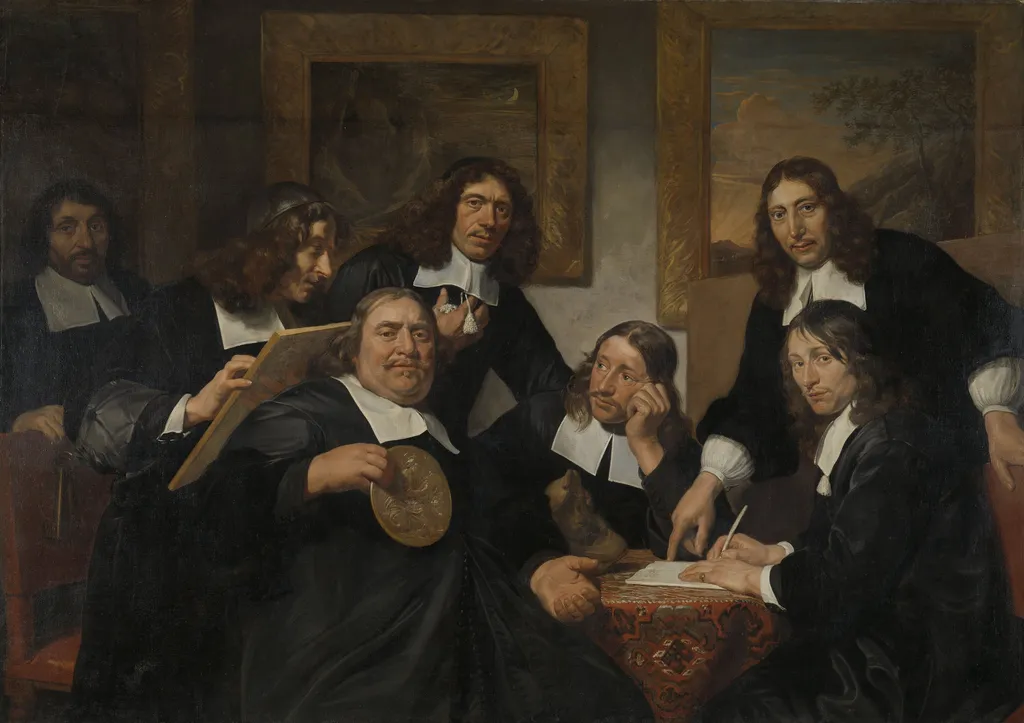
The governors of the guild of St. Luke, Haarlem, 1675 is an oil painting by the Dutch Golden Age artist Jan de Bray. It dates from 1675 and is held in the collection of the Rijksmuseum.
About this work
They are seated or standing, engaged in various activities such as writing, holding objects, or leaning on a table.
This painting shows a group of seven men in dark attire with white collars, gathered in a room. They are seated or standing, engaged in various activities such as writing, holding objects, or leaning on a table. The room has a few paintings on the wall and a patterned tablecloth.
One of the men is holding a circular object with an intricate design, while another is writing on a piece of paper. The atmosphere appears to be one of discussion or meeting, with the men focused on their tasks.
The painting is a representation of the governors of the guild of St. Luke in Haarlem, created by Jan de Bray in 1675. You can explore more works by the artist, Jan de Bray.
Subject & Meaning
The painting portrays the governors of the Haarlem Guild of St. Luke, the civic body that regulated painters, engravers, and other visual artists in Haarlem. Painted by Jan de Bray in 1675, it is a group portrait depicting the seated and standing regents of the guild, identified among them Jan de Bray, Dirck de Bray, and Wouter Knijff. As a regents' portrait, the work functions as a record of institutional governance, presenting the officials collectively to assert the guild's corporate identity and continuity.
The choice to depict the leadership of the painters' guild reflects the artists' own self-representation, situating the craft of painting within the framework of a regulated civic profession. The group format, with multiple sitters arranged around a table, follows the established Dutch tradition of portraying the boards of charitable institutions and trade bodies, lending the image an air of administrative authority.
Technique & Style
Created in 1675 by Jan de Bray, possibly with assistance from Dirck de Bray and Jan van Gotingh, the work is an oil painting executed on a canvas support. Measuring 130 cm in height and 184 cm in width, the piece belongs to the portrait genre and depicts the governors of the Haarlem Guild of St. Luke. The formal composition presents the group within a traditional portrait arrangement, characteristic of the artist's style during this period.
History & Provenance
The painting was created in 1675 in Haarlem by Jan de Bray, with assistance from his brother Dirck de Bray and Jan van Gotingh. Executed in oil on canvas, the work depicts the governors of the local Guild of St. Luke. The piece has been part of the collection of the Rijksmuseum since at least the time of the recorded data, where it remains housed. The artwork measures 130 cm in height and 184 cm in width.
Overview
Jan de Bray's oil painting, The governors of the guild of St. Luke, Haarlem, 1675, captures a significant moment from the Dutch Golden Age. Completed in 1675, this work serves as a group portrait of the governing body of Haarlem's Guild of St. Luke. The artist, active in Haarlem, was known for his distinctive approach to portraiture, often infusing contemporary subjects with a sense of historical narrative. The painting is now housed in the Rijksmuseum.
Context
The Guild of St. Luke was a vital institution during the Dutch Golden Age, overseeing artists, artisans, and related trades. This group portrait, commissioned in 1675, underscores the guild's importance and the status of its leadership within Haarlem society. Such commissions were common, serving both as official records and as affirmations of the guild's authority and the collective identity of its members, often depicting them in a manner that conveyed their professional gravitas.
Own this work as a print
Artist & collection

Artist
Jan de Bray (c. 1627 – April 4, 1697) was a Dutch Golden Age painter. He lived and worked in Haarlem until the age of 60, when he went bankrupt and moved to Amsterdam. Jan de Bray was influenced by his father Salomon…

 Six regents and the beadle of the Nieuwe Zijds institute for the outdoor relief of the poor
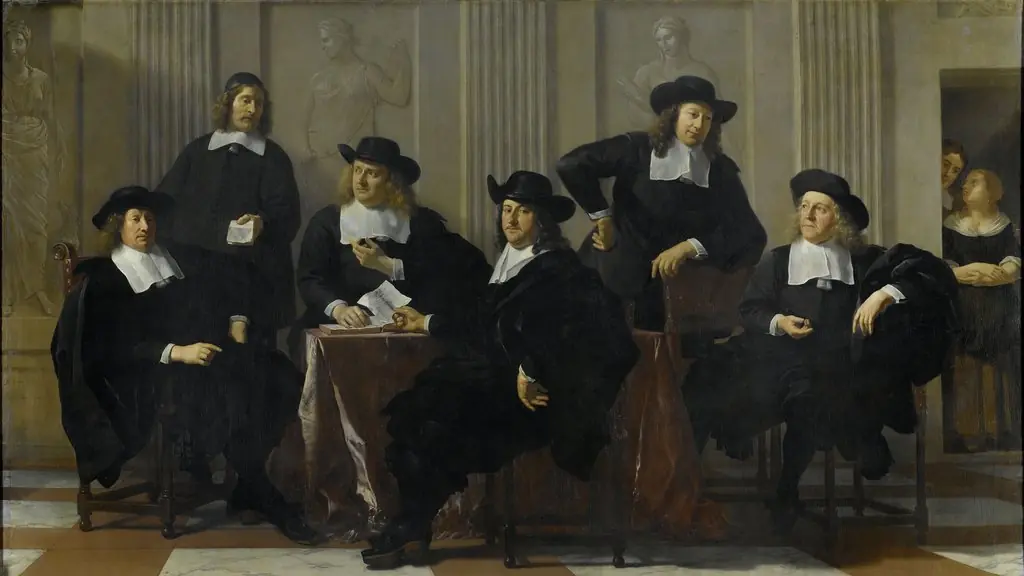 The Regents of the Spinhuis and Nieuwe Werkhuis, Amsterdam
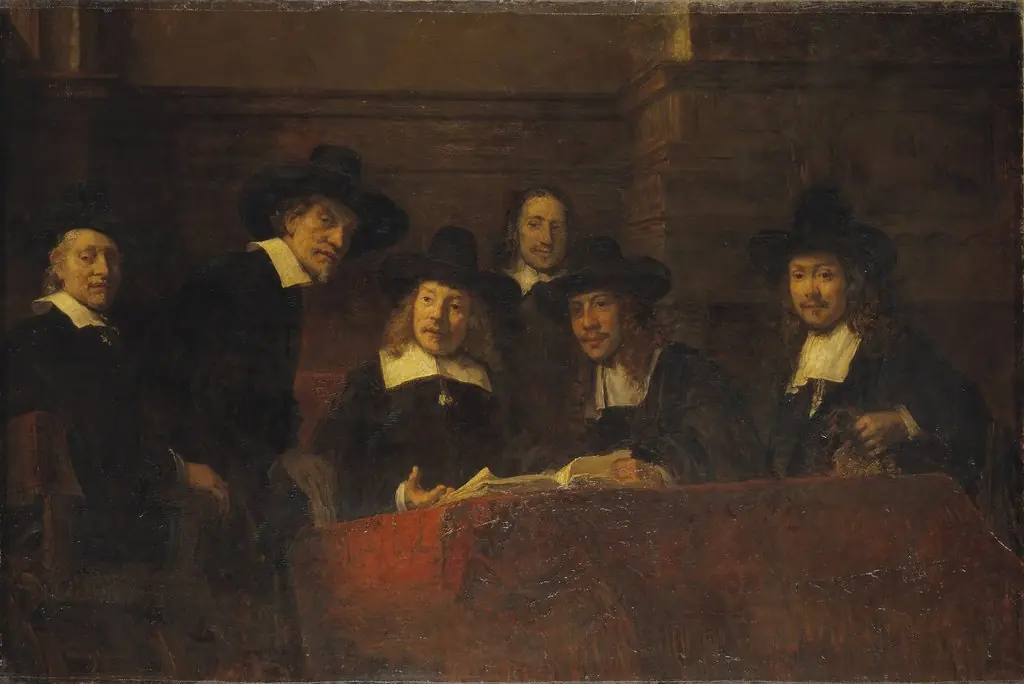 Staalmeesters. After Rembrandt
 Syndics of the Drapers' Guild
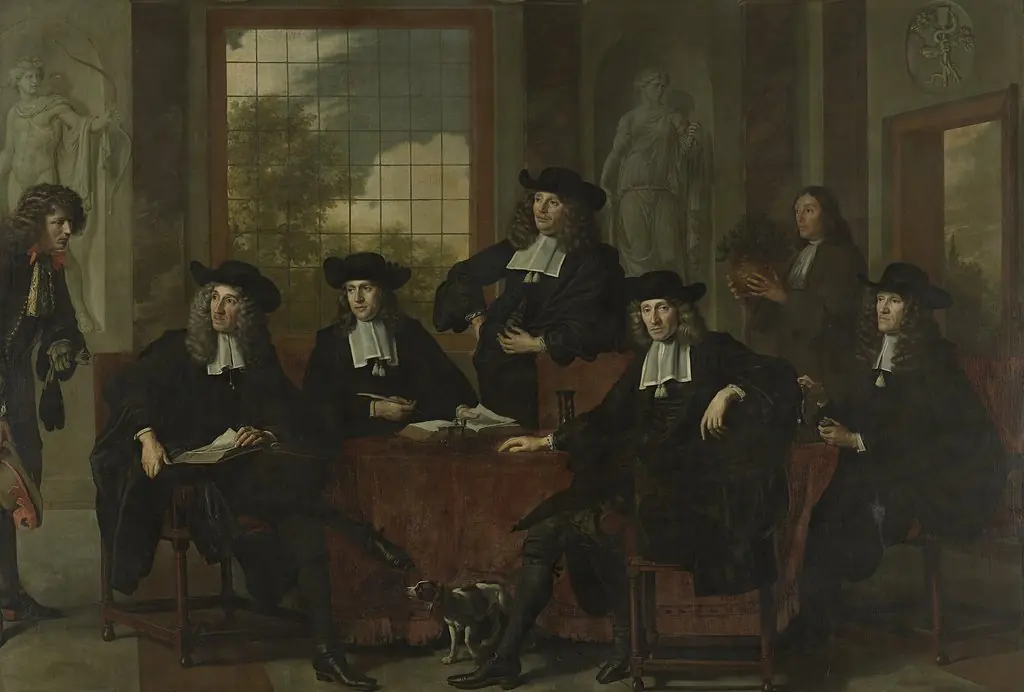 The superintendents of the Collegium Medicum in Amsterdam
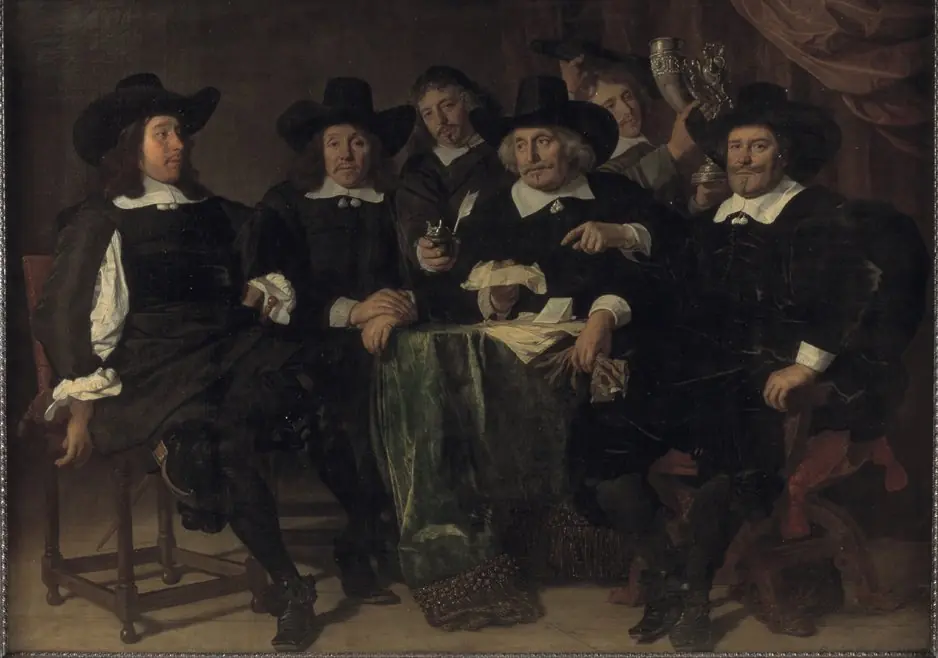 The directors of the Amsterdam civic guard of St. George in 1656
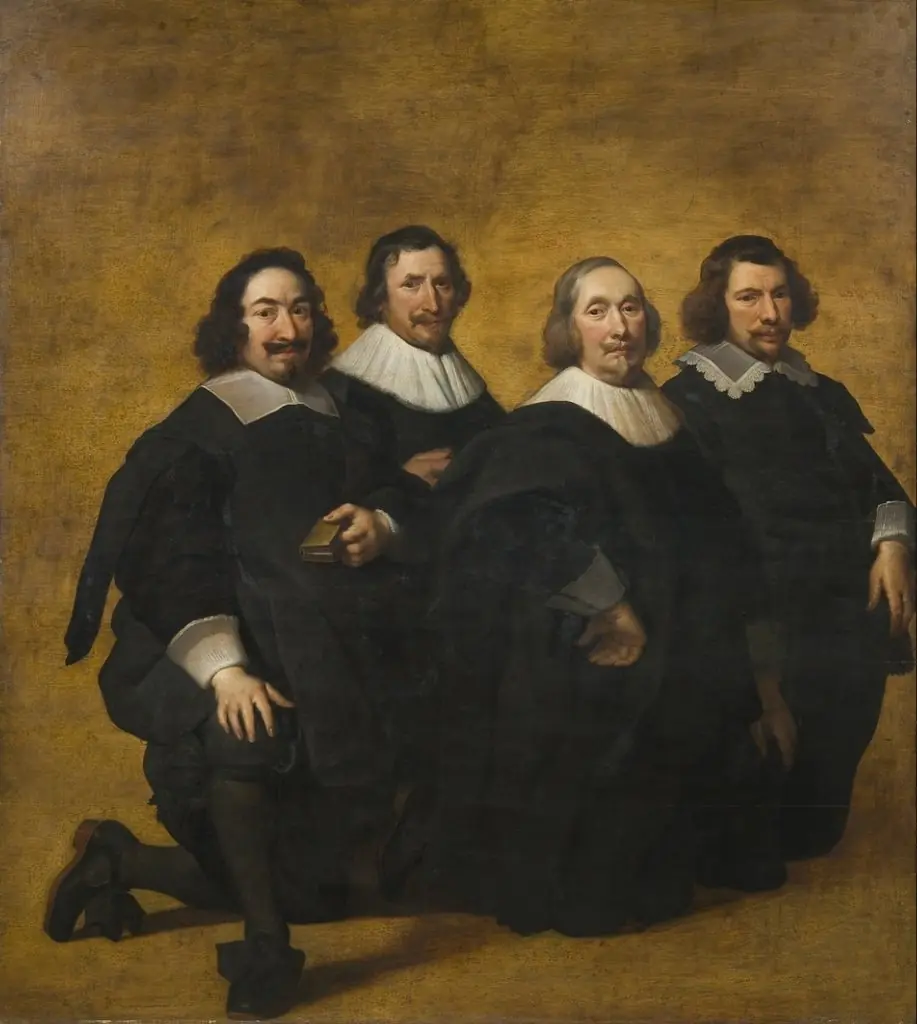 Portrait of four kneeling men
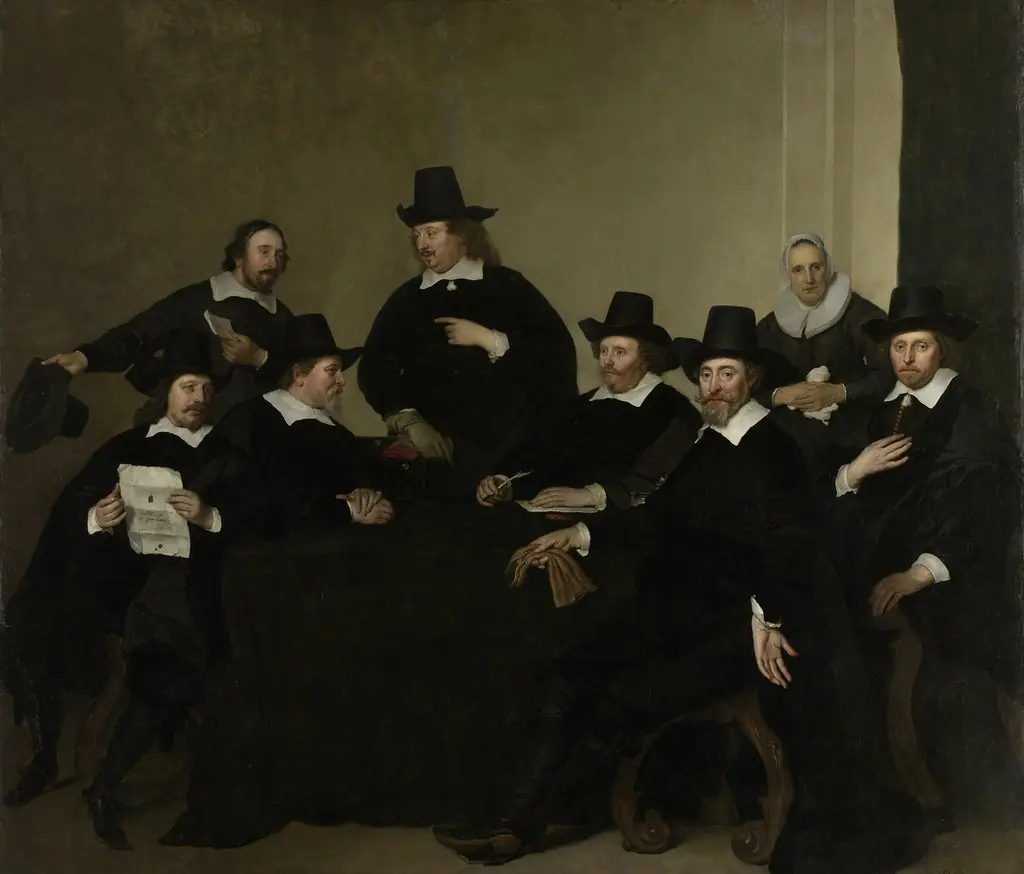 The regents of the Nieuwe Zijds institute for the outdoor relief of the poor, Amsterdam, ca 1650
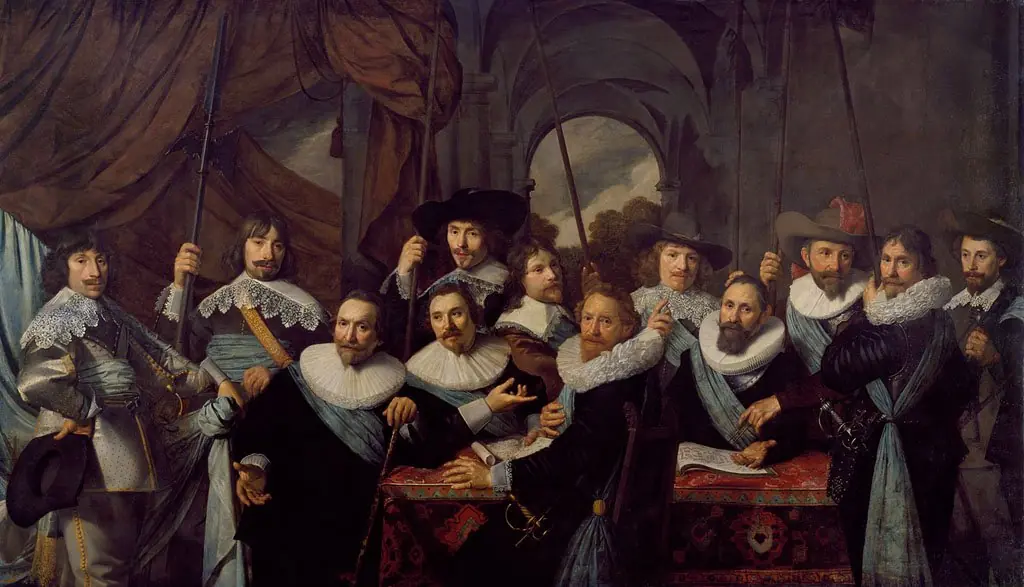 Members of the civic guard company of Captain Dirck Tholinx and Lieutenant Pieter Adriaenszn Raep