Artwork
Portrait of the Artist's Parents, Salomon de Bray and Anna Westerbaen
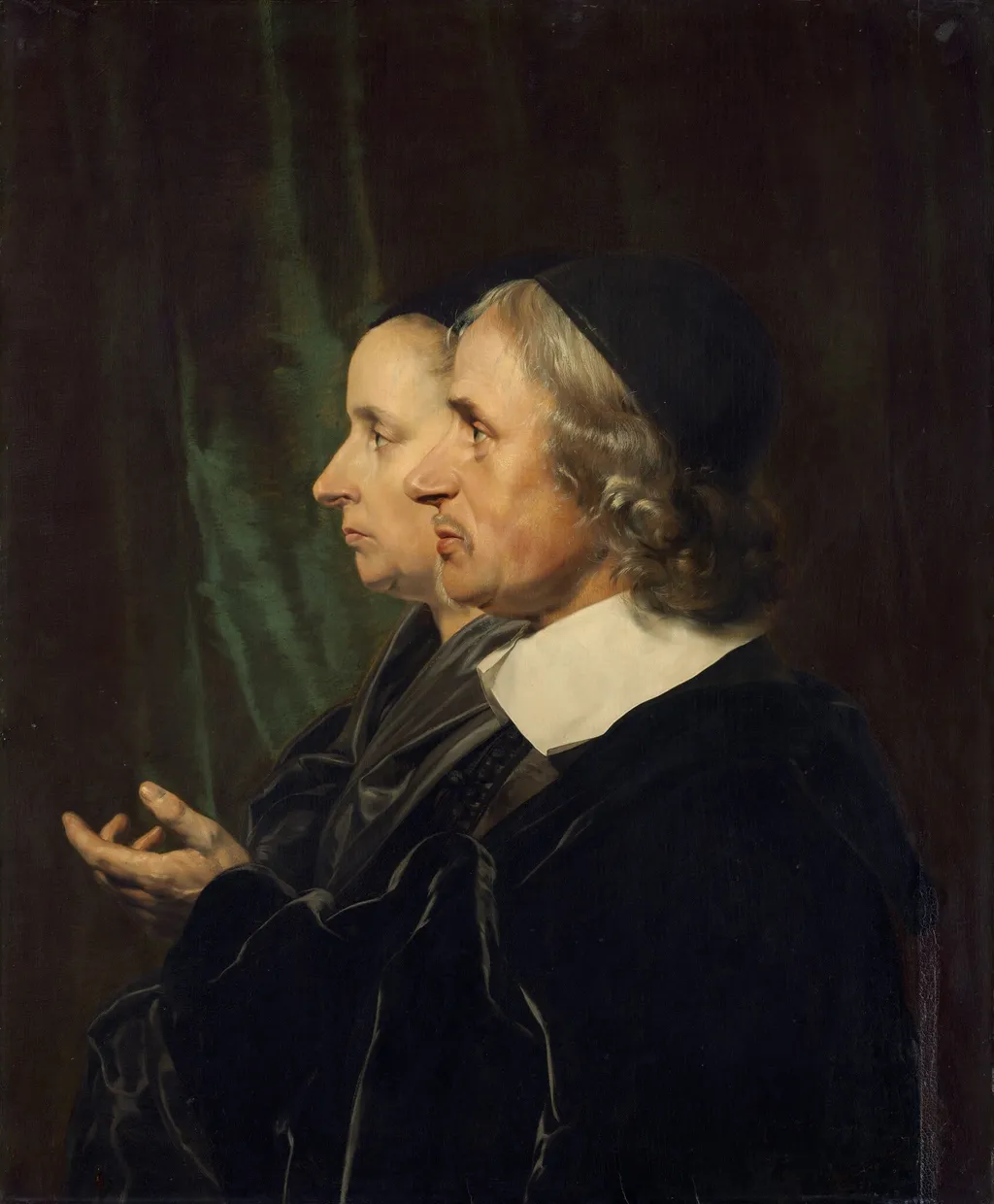
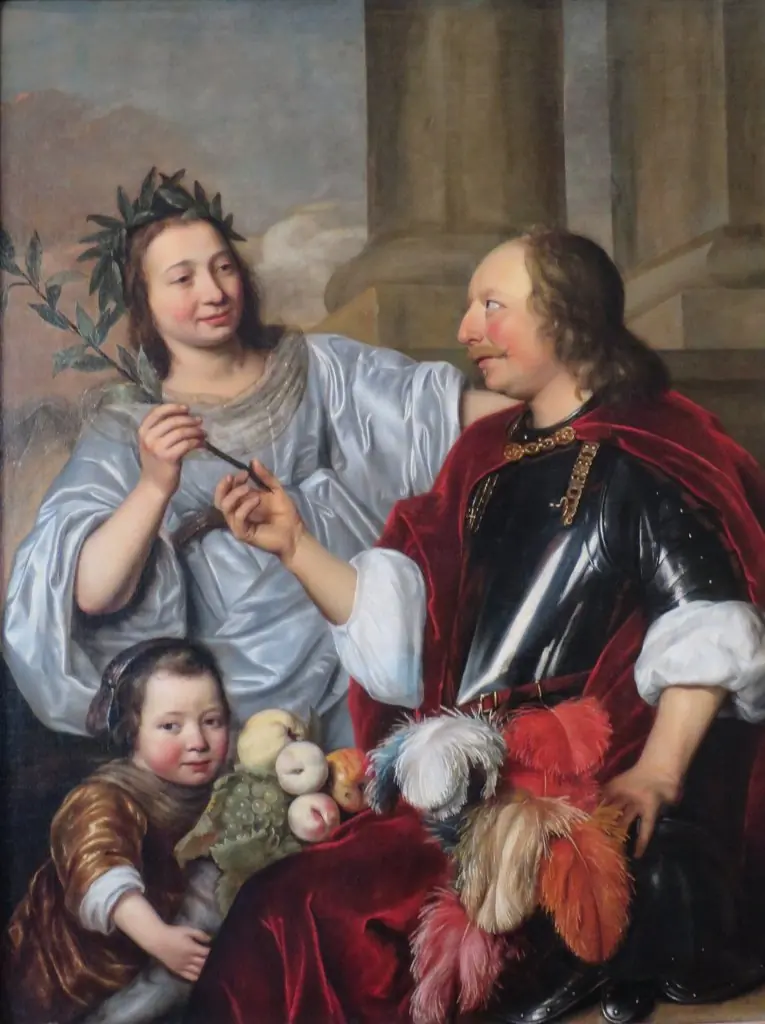
Portrait of the Artist's Parents, Salomon de Bray and Anna Westerbaen is an oil painting by the Baroque artist Jan de Bray. It dates from 1664 and is held in the collection of the National Gallery of Art.
About this work
Subject & Meaning
The painting's significance is deeply tied to its function as a memorial; Anna Westerbaen was deceased at the time of execution.
Painted in 1664, this work depicts Salomon de Bray, the father of the artist Jan de Bray. While the title identifies the subject as a joint portrait of the artist's parents, Salomon de Bray and Anna Westerbaen, surviving records specifically confirm the depiction of Salomon. The painting's significance is deeply tied to its function as a memorial; Anna Westerbaen was deceased at the time of execution.
In his will dated June 17, 1664, Jan de Bray referred to the piece as a portrait of his "late father and mother," indicating the work serves as a posthumous commemoration rather than a record of living sitters. The artist intended the painting to act as a civic bequest, stipulating that it, along with his own portrait, should eventually pass to the city of Haarlem, thereby transforming a private family image into a public testament of lineage and local history.
Technique & Style
Jan de Bray's Portrait of the Artist's Parents, Salomon de Bray and Anna Westerbaen (1664) is executed in oil on a wooden panel, a common support for Dutch Golden Age portraits. The medium's luminous properties allow for meticulous detailing, evident in the rendering of textiles, flesh tones, and facial features. The handling is precise yet fluid, with smooth transitions between light and shadow, characteristic of de Bray's refined technique.
Stylistically, the work adheres to the conventions of Dutch portraiture, emphasizing naturalism and psychological presence. The figures are depicted in three-quarter length, posed slightly turned toward the viewer, with a restrained palette dominated by earthy tones and subtle contrasts.
History & Provenance
Jan de Bray created this oil on panel portrait in 1664 in Haarlem. On June 17, 1664, the artist drafted his first will, bequeathing the double portrait of his late parents, Salomon de Bray and Anna Westerbaen, to Gaeff Fabritius, a former burgomaster of Haarlem, with the stipulation that both paintings ultimately pass to the city of Haarlem. The work's subsequent ownership chain includes John Charles Robinson in London, who sold it at Hôtel Drouot in Paris in May 1868.
Princess Mathilde of Paris acquired it before her estate sale in May 1904. It then passed to Agénor, duc de Gramont (sold May 1925), followed by Joseph Fuller Feder in New York. Feder's daughter, Mrs. George Monroe Moffett, inherited it, and it subsequently passed to her son, Joseph F. McCrindle, who gifted it to the National Gallery of Art in 2001.
Overview
Jan de Bray's 1664 oil on panel, Portrait of the Artist's Parents, Salomon de Bray and Anna Westerbaen, captures a personal moment from the Dutch Golden Age. The painting features his father, Salomon de Bray, a notable painter and architect, alongside his mother, Anna Westerbaen. This work exemplifies Jan de Bray's skill in portraiture, a genre he frequently practiced in Haarlem, where he spent most of his career.
Context
Created during the flourishing Dutch Golden Age, this painting situates Jan de Bray within a vibrant artistic environment, particularly in Haarlem. The city was a hub for painters specializing in various genres, including portraiture. De Bray's work reflects the period's emphasis on detailed realism and the growing demand for commissioned portraits, while also showcasing the familial connections that often underpinned artistic careers.
Own this work as a print
Artist & collection

Artist
Jan de Bray (c. 1627 – April 4, 1697) was a Dutch Golden Age painter. He lived and worked in Haarlem until the age of 60, when he went bankrupt and moved to Amsterdam. Jan de Bray was influenced by his father Salomon…

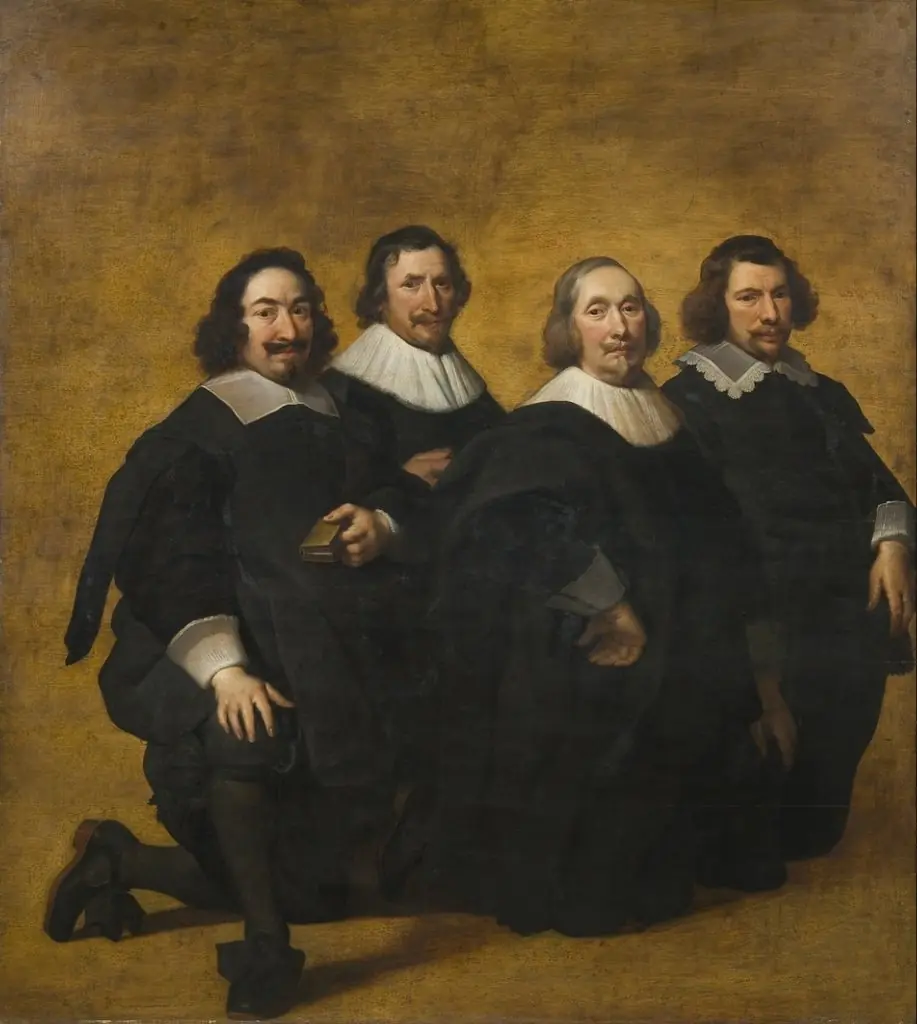 Portrait of four kneeling men
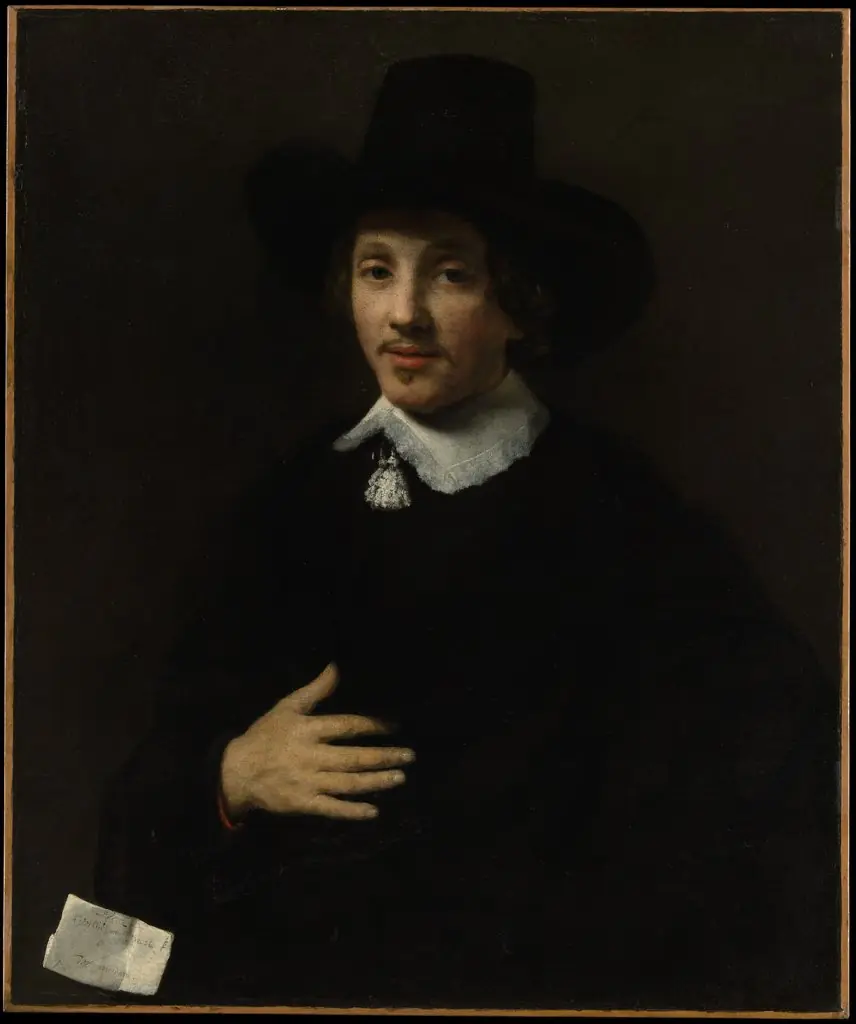 Portrait of a Man (Self-Portrait?)
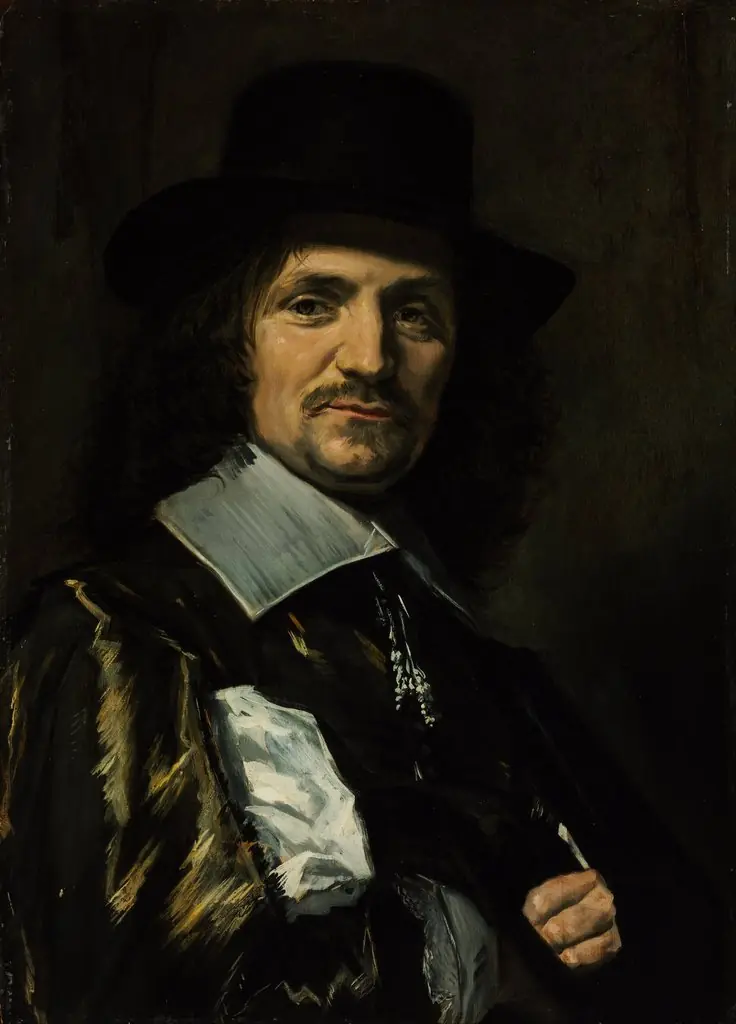 Portrait of a man
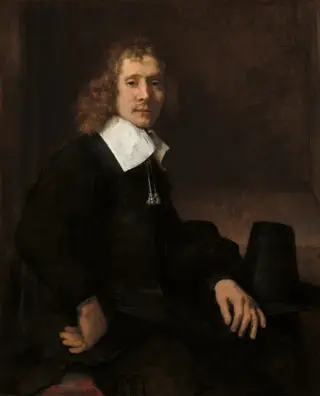 A Young Man Seated at a Table (possibly Govaert Flinck)
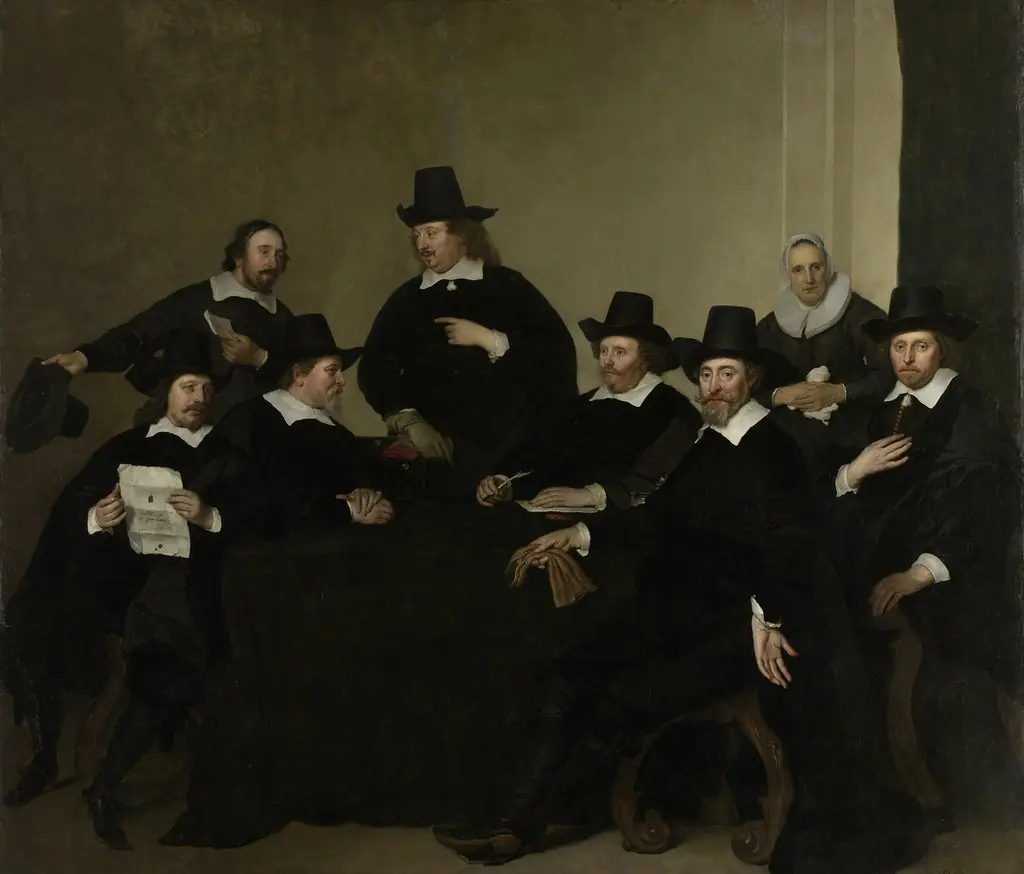 The regents of the Nieuwe Zijds institute for the outdoor relief of the poor, Amsterdam, ca 1650
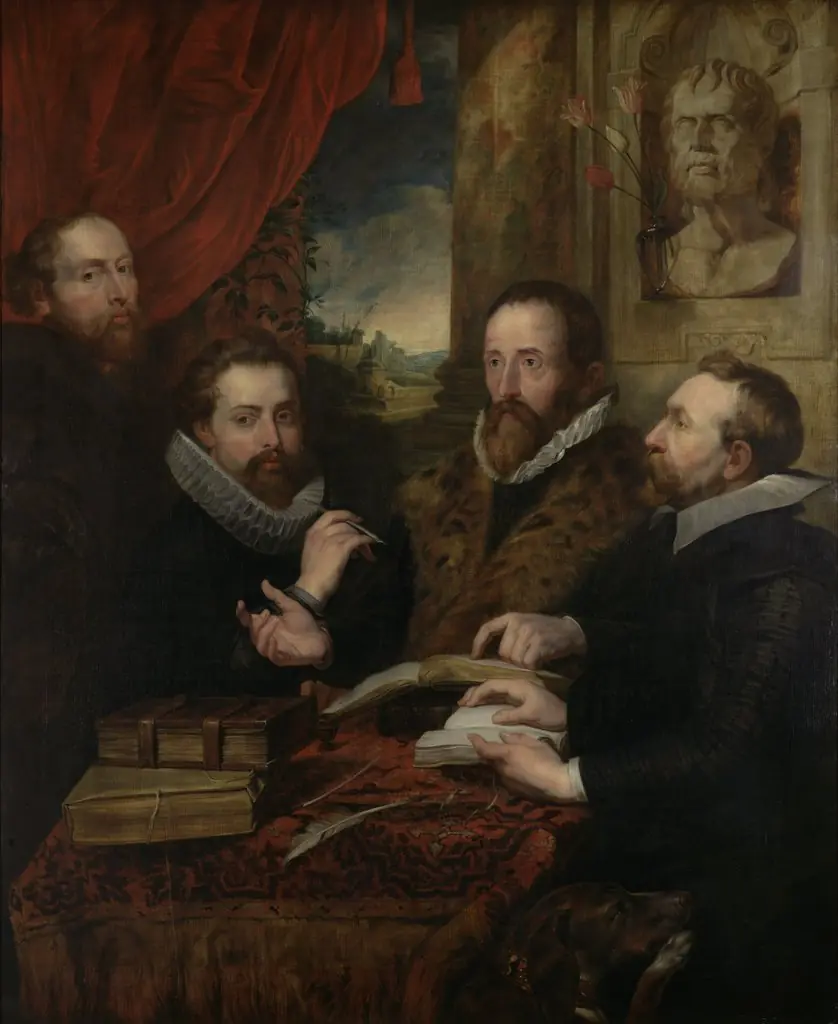 Four Philosophers
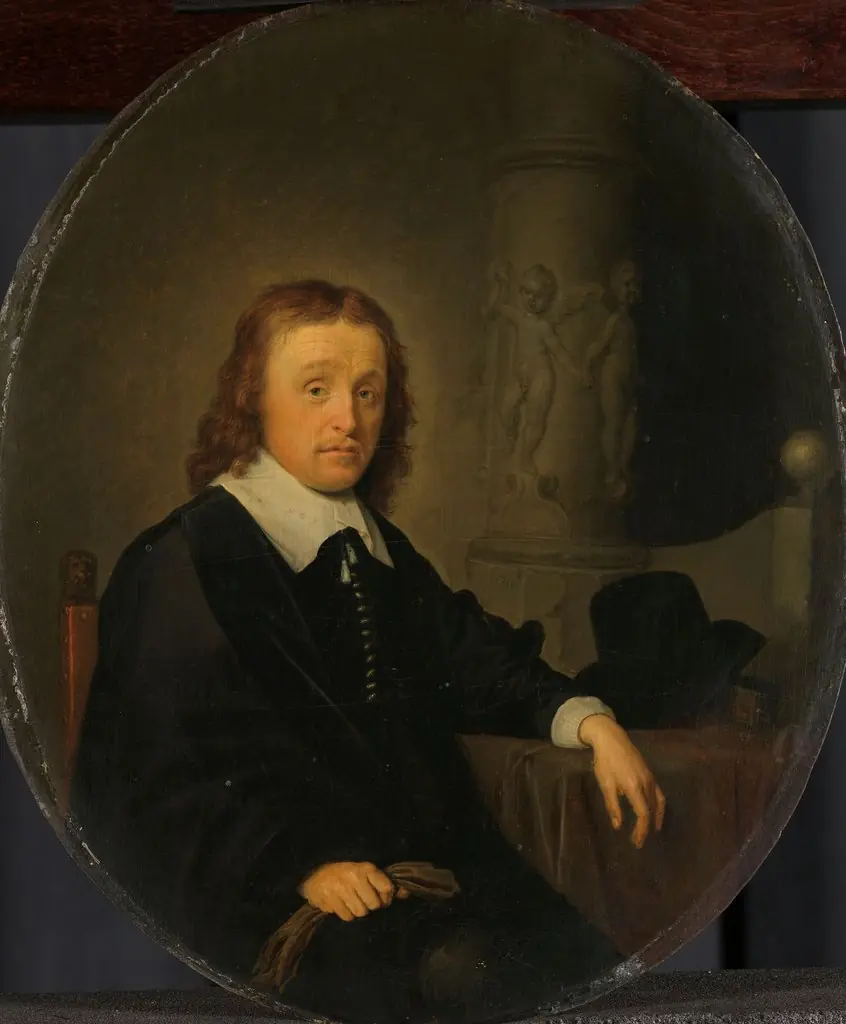 Johan Wittert van der Aa (1604-70)
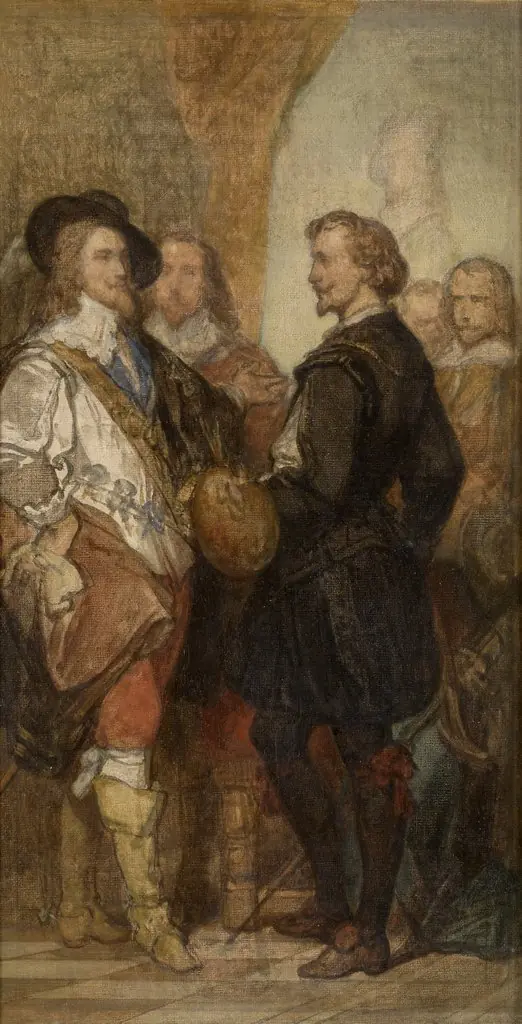 The Painter Anthony van Dyck in London
 The Superintendents of the Collegium Medicum in Amsterdam, 1683
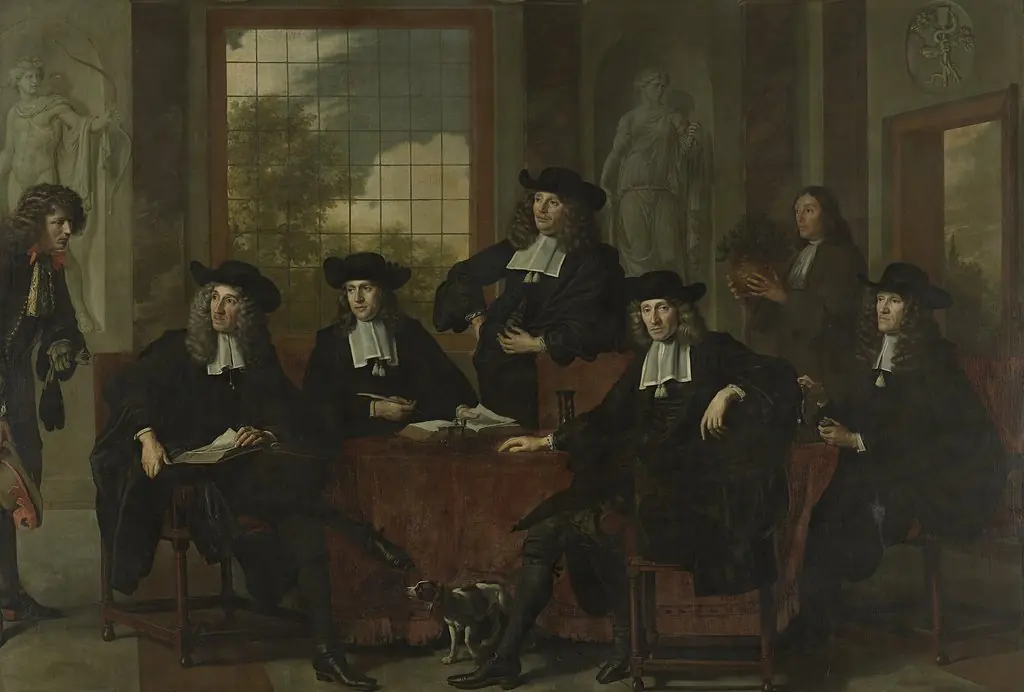 The superintendents of the Collegium Medicum in Amsterdam
 The Regents of the Spinhuis and Nieuwe Werkhuis, Amsterdam