Artwork
Saint Luke painting the Virgin
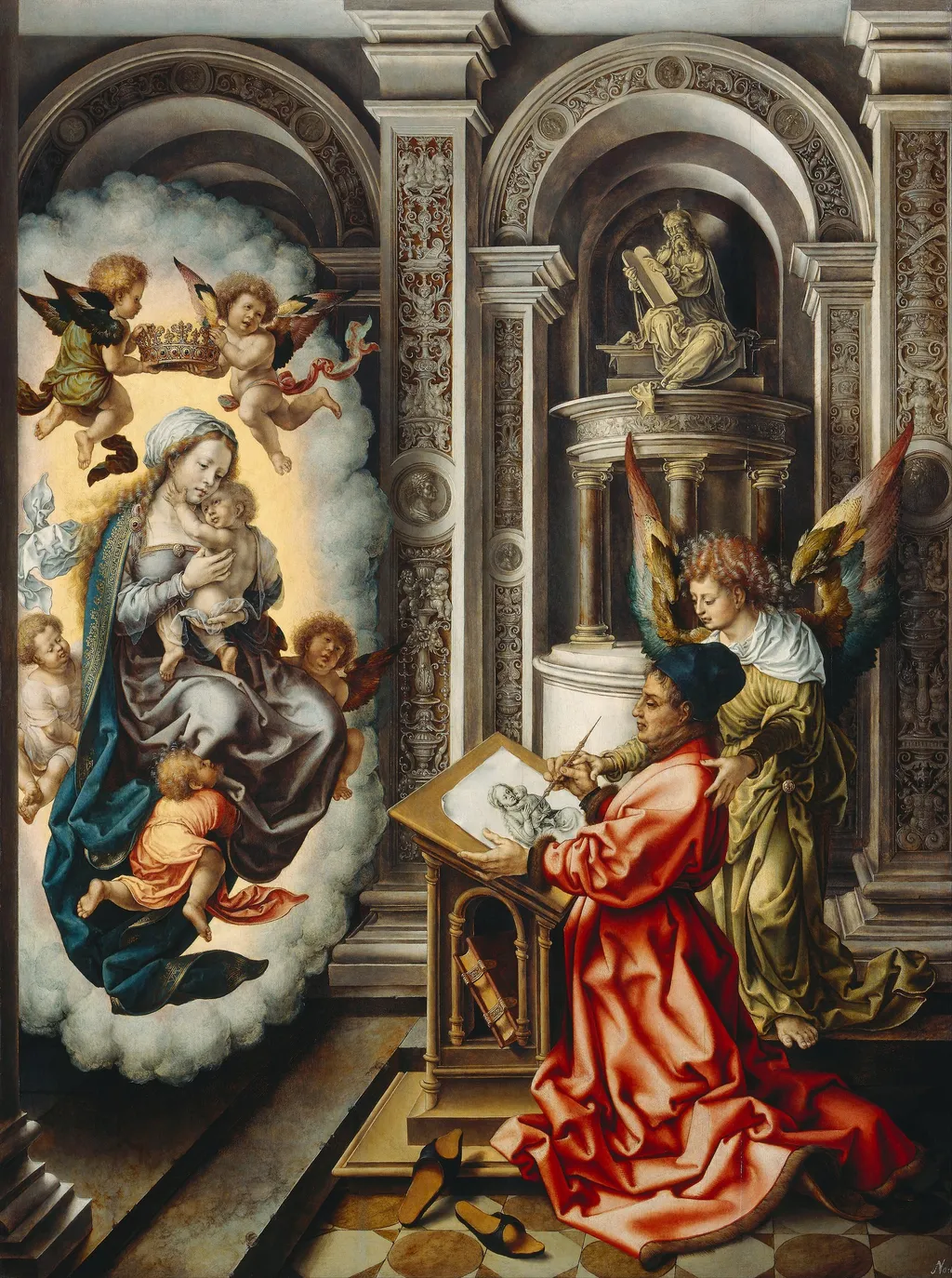
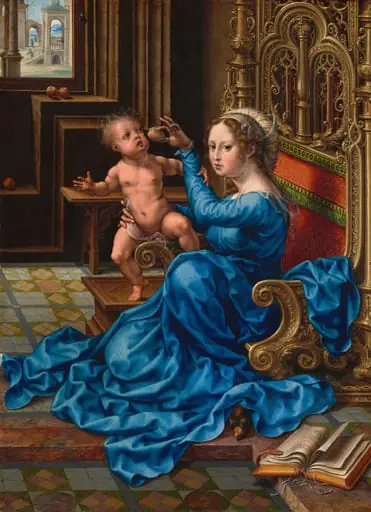
Saint Luke painting the Virgin is an oil painting by the Northern Renaissance artist Jan Gossaert. It dates from 1520 and is held in the collection of the Kunsthistorisches Museum.
About this work
Subject & Meaning
The painting shows Saint Luke engaged in the act of painting the Virgin Mary, presenting the evangelist as both a witness to the sacred and an artist creating a devotional image. This dual portrayal underscores the idea that artistic creation can be a form of spiritual testimony, linking the act of painting with the evangelical mission to portray and spread the holy. By depicting Luke in the process of rendering the Virgin, the work highlights the sanctity of the artist’s role and the reverence owed to the subject being portrayed.
Technique & Style
The work depicts Saint Luke the Evangelist painting the Virgin Mary, a traditional subject in Northern Renaissance art.
Jan Gossaert executed this religious painting in oil on oak panel, measuring 110.5 × 83.5 cm. The work depicts Saint Luke the Evangelist painting the Virgin Mary, a traditional subject in Northern Renaissance art. Gossaert's handling of the oil medium demonstrates the refined technique characteristic of early sixteenth-century Netherlandish painting, with careful attention to surface detail and color saturation. The choice of oak panel as support was standard for panel paintings of this period in the Low Countries, providing a stable ground for the layered application of oil glazes.
The composition's formal arrangement centers on the sacred encounter between the evangelist and the Virgin, rendered with the naturalistic detail and rich tonal qualities that oil paint on panel enabled.
History & Provenance
Jan Gossaert created the oil painting Saint Luke painting the Virgin in 1520. Executed on an oak panel, the work measures 1105 cm in height and 835 cm in width. The piece depicts the Evangelist Luke portraying the Virgin Mary, a subject rooted in religious tradition.
Today, the painting is held in the collection of the Kunsthistorisches Museum, which remains its current owner and location.
Context
Jan Gossaert's 'Saint Luke painting the Virgin' (1520) exemplifies Northern Renaissance emphasis on meticulous detail and devotional realism. The work's religious genre and depiction of Luke as a scribe-attendant reflect evolving artistic representations of evangelists within Catholic reformist contexts. As a cornerstone of the Kunsthistorisches Museum's collection since its creation, the painting's provenance underscores the institution's role in preserving Netherlandish masterworks, while its material execution in oil on oak panel demonstrates technical innovations of the period.
Scholarship often contextualizes this piece within Gossaert's broader synthesis of Italianate compositional influences and Northern naturalism, highlighting its significance in transitional moments of early modern art history.
Overview
Jan Gossaert, also known as Jan Mabuse, painted Saint Luke Painting the Virgin in 1520 with oil on panel. The work belongs to the Northern Renaissance and is part of the Kunsthistorisches Museum’s collection in Vienna. It presents a dual narrative that juxtaposes a devotional scene with an artist’s studio.
Own this work as a print
Artist & collection
Artist
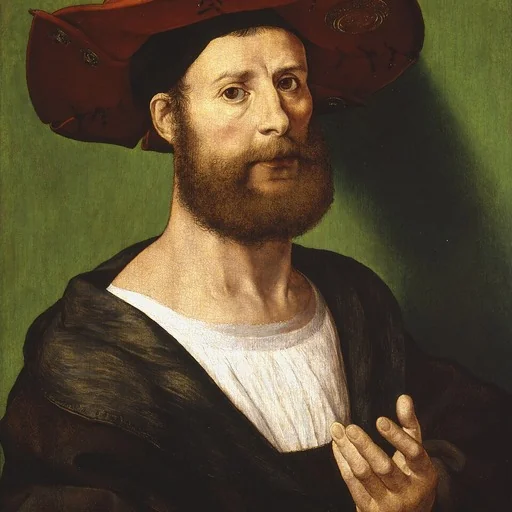
Jan Gossaert (c. 1478 – 1 October 1532) was a French-speaking painter from the Low Countries also known as Jan Mabuse (the name he adopted from his birthplace, Maubeuge) or Jennyn van Hennegouwe (Hainaut), as he called…

![Saint Jerome Penitent [right panel], by Jan Gossaert](https://artifactworldgallery.com/img/jan-gossaert--saint-jerome-penitent-right-panel--0d4ac14f44de87b1-w320.webp)
![Saint Jerome Penitent [left panel], by Jan Gossaert](https://artifactworldgallery.com/img/jan-gossaert--saint-jerome-penitent-left-panel--3d396afbb0f8e738-w320.webp)