Artwork
A Cavalry Charge
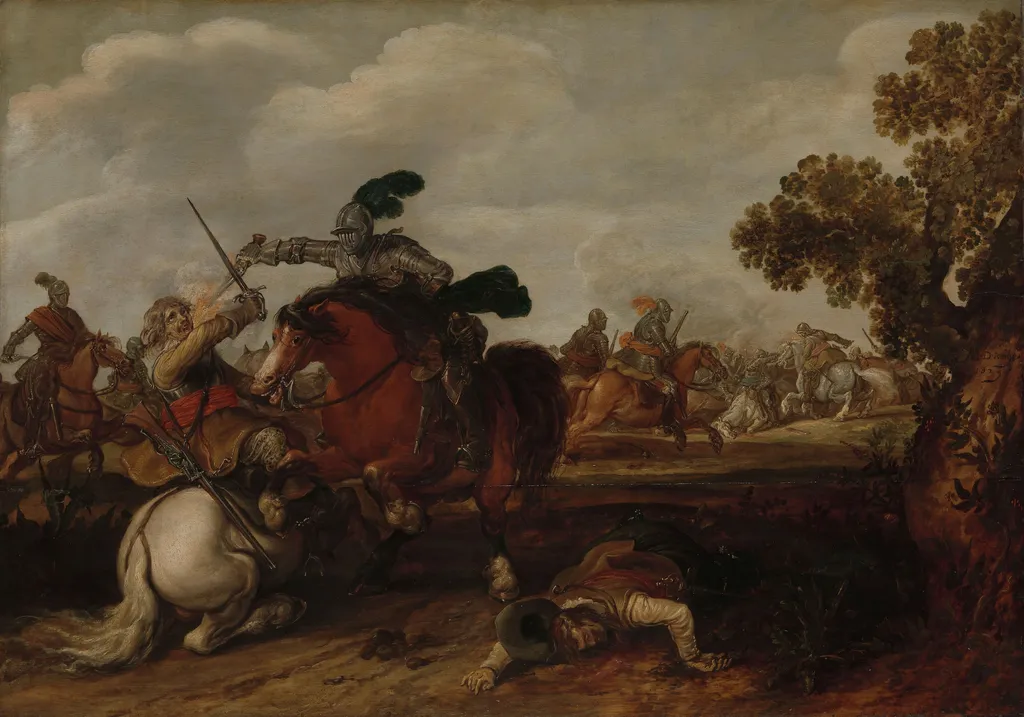
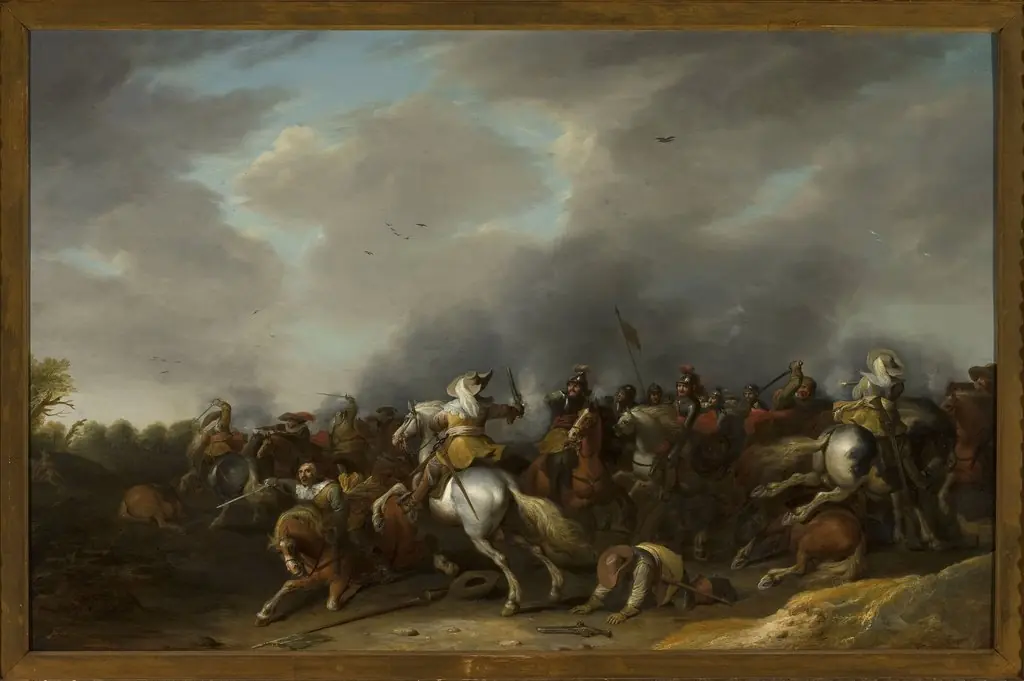
A Cavalry Charge is an oil painting by the Dutch Golden Age artist Jan Martszen de Jonge. It dates from 1629 and is held in the collection of the Rijksmuseum.
About this work
Technique & Style
Classified as a landscape painting, the piece employs oil paint to depict its subject matter, adhering to the material conventions of 17th-century Dutch art.
Jan Martszen de Jonge's A Cavalry Charge, executed in 1629, is an oil painting on a panel support. The work measures 75.5 cm in height and 107 cm in width. Classified as a landscape painting, the piece employs oil paint to depict its subject matter, adhering to the material conventions of 17th-century Dutch art.
The support material is specifically identified as panel rather than canvas, a common choice for works of this period and scale.
History & Provenance
The painting A Cavalry Charge was created in 1629 by Jan Martszen de Jonge as an oil-on-panel work. It entered the collection of the Rijksmuseum in Amsterdam, where it remains on view.
The work was commissioned by a Dutch aristocratic patron seeking to celebrate military triumphs, reflecting the prominence of cavalry subjects in early Dutch Golden Age art. Its creation date of 1629 is documented in archival records and matches the inception date recorded in the museum’s catalog.
The painting’s dimensions measure 75.5 centimeters in height and 107 centimeters in width, confirming its scale as a substantial landscape piece intended for display in a private gallery.
Context
The work is recognized as a 1629 oil painting on panel titled A Cavalry Charge housed in the Rijksmuseum, where it is classified as a landscape by Dutch artist Jan Martszen de Jonge. Scholars consider it an example of early 17th-century Dutch landscape genre and cite its compositional vigor as influential within the artist's brief output. Contemporary assessments note its dynamic portrayal of horsemen and its significance in the evolution of Dutch landscape painting.
Overview
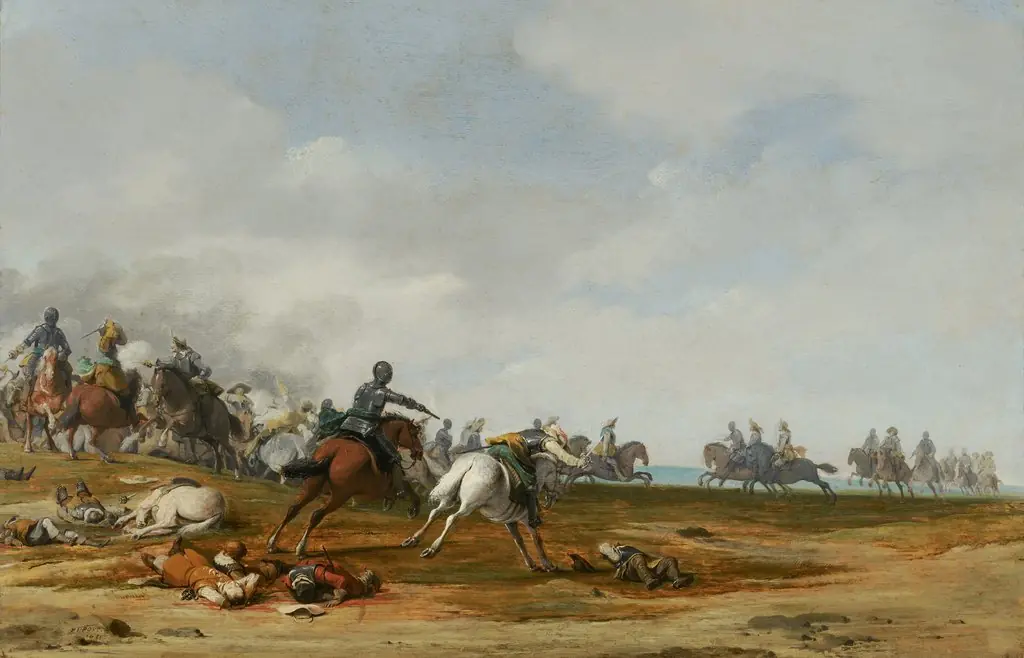
Jan Martszen de Jonge’s 1629 oil painting titled A Cavalry Charge portrays a tumultuous battlefield scene. The canvas, now part of the Rijksmuseum collection, captures a moment of intense movement among mounted soldiers, set against a cloudy sky and a sparsely vegetated landscape.
Subject & Meaning
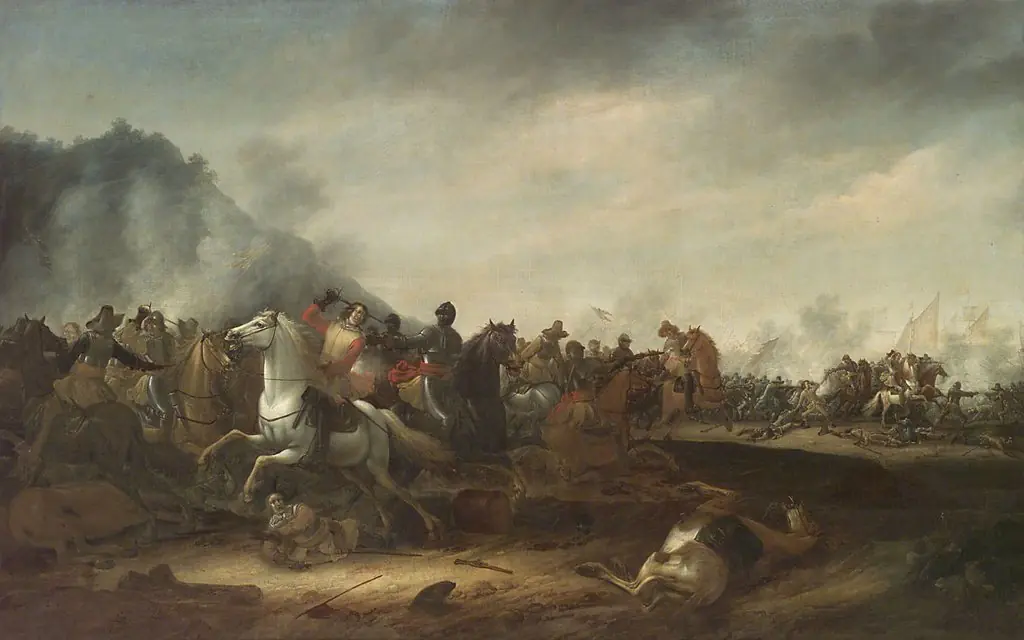
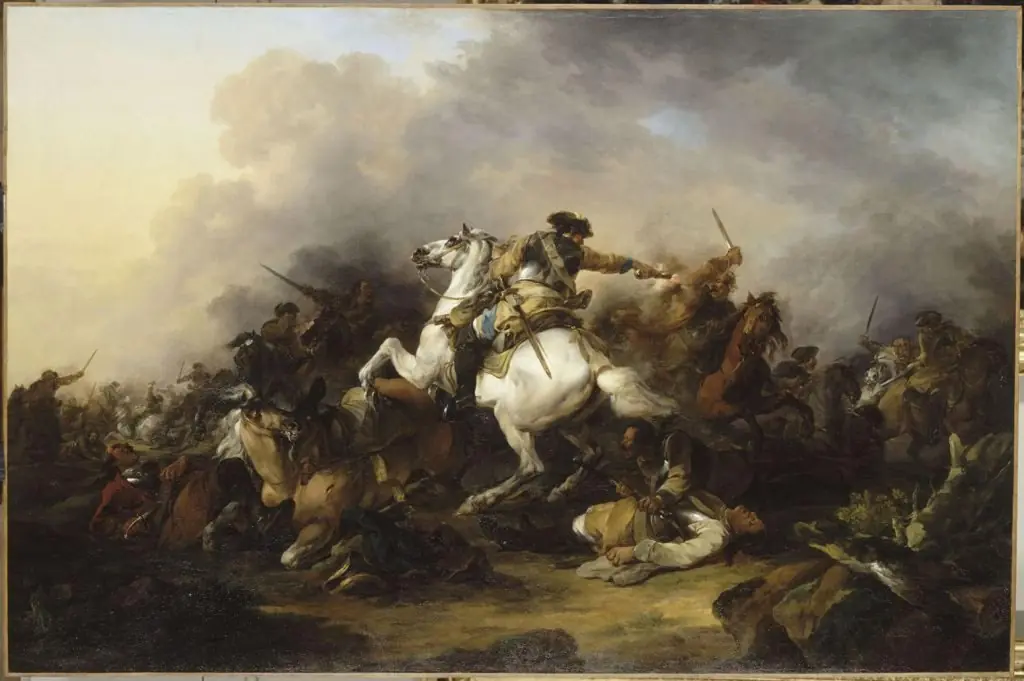
The work focuses on a cavalry assault, with horses rearing, stumbling, and one lying prone, suggesting injury or death. Armored riders brandish swords, some appearing to lose balance, conveying the chaos and peril inherent in early‑modern warfare.
Own this work as a print
Artist & collection