Artwork
Judith with the Head of Holofernes
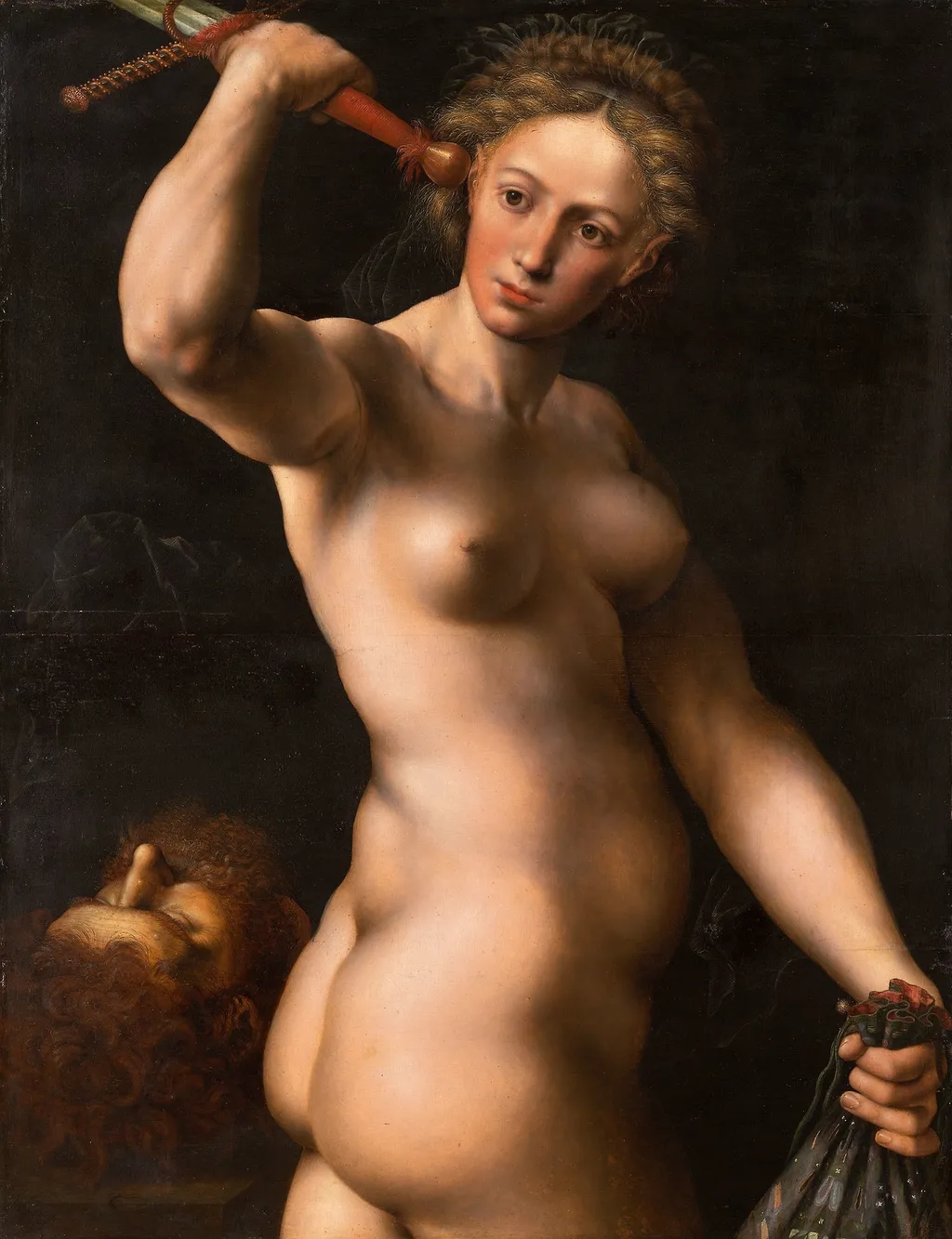
Judith with the Head of Holofernes is an oil painting by the Northern Renaissance artist Jan Sanders van Hemessen. It dates from 1540 and is held in the collection of the Art Institute of Chicago.
About this work
Subject & Meaning
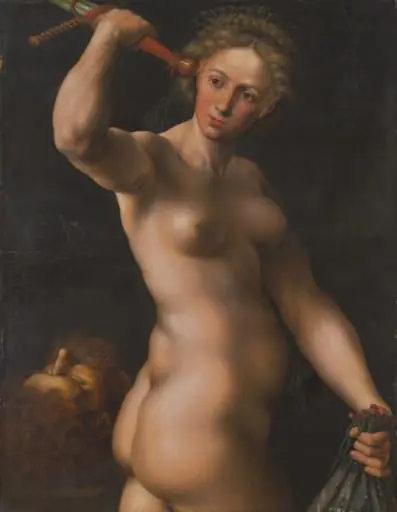
Her torso executes an extreme twisting pose, presenting both breast and buttocks to the viewer simultaneously.
The painting depicts the Old Testament heroine Judith, a young widow from the besieged city of Bethulia, who beheaded the Assyrian general Holofernes after gaining his trust and taking advantage of his drunkenness, then returned with his head to save her people. The subject belongs to the Northern European iconographic tradition known as the "power of women" (Weibermacht in German-speaking lands), in which biblical and classical female figures demonstrate superiority over men.
Jan Sanders van Hemessen departs from convention by portraying Judith fully nude, exposing a muscular body, rather than dressing her in luxurious or exotic garments as was common. Her right hand grips the sword used to decapitate Holofernes, whose severed head appears at the lower left, while her other hand holds a brocade sack intended to receive the head. Her torso executes an extreme twisting pose, presenting both breast and buttocks to the viewer simultaneously.
According to scholar Burr Wallen, Hemessen drew on classical statuary and on Michelangelo's serpentine Genius of Victory, with Judith's face echoing the V-shaped chin, large eyes, and elongated ears of Michelangelo's figure.
Technique & Style
Created circa 1540, this work is executed in oil paint on a panel support. The composition depicts Judith completely nude, a stylistic choice by Jan Sanders van Hemessen that emphasizes her muscular physique rather than the luxurious or exotic garments often associated with the subject. The figure is rendered with an extreme torso torsion, allowing the simultaneous visibility of her breasts and buttocks, a pose reflecting the artist's engagement with classical statuary and the serpentine forms of Michelangelo.
Specific facial features, including a V-shaped chin, large eyes, and elongated ears, are noted to recall the Geno della Vittoria. The scene captures the moment after the decapitation of Holofernes, showing Judith gripping a sword in her right hand while holding a brocade sack in her left to contain the severed head.
History & Provenance
The painting Judith with the Head of Holofernes was created around 1540 by Jan Sanders van Hemessen as an oil on panel work. It entered the collection of the Art Institute of Chicago, where it remains on display. The composition draws on biblical narrative from the Book of Judith and reflects a northern European 'power of women' motif.
Stylistic influences from Michelangelo’s Genio della Vittoria have been noted in scholarly analysis. The work measures 99.1 cm in height and 77.2 cm in width.
Jan Sanders van Hemessen's oil painting Judith with the Head of Holofernes, executed in 1540, is held in the collection of the Art Institute of Chicago. The work is painted on a panel measuring 99.1 cm in height and 77.2 cm in width. While the piece is documented as part of the museum's holdings, the available records do not list a specific inventory or accession number for the object.
Furthermore, no details regarding past exhibitions or loan history for this specific painting are provided in the current sources.
Context
Painted circa 1540, this work exemplifies the Northern European "Weibermacht" (power of women) tradition, where biblical heroines demonstrate superiority over men. While the subject was frequently depicted in luxurious or exotic attire, Jan Sanders van Hemessen diverged by portraying Judith completely nude to emphasize her muscular physique and extreme torsion.
Scholarship by Burr Wallen identifies a direct artistic lineage to Italian Renaissance sculpture, specifically Michelangelo's Genius of Victory. Wallen argues that Judith's facial features, including a V-shaped chin, large eyes, and elongated ears, closely mirror the Michelangelo figure. This synthesis of classical statuary and local genre conventions situates van Hemessen as an Antwerp painter actively engaging with reformist and counter-reformist visual cultures.
Overview
Jan Sanders van Hemessen, a Flemish painter active in the early 1500s, executed the oil painting Judith with the Head of Holofernes around 1540. The work belongs to the Northern Renaissance and is presently housed in the Art Institute of Chicago. It presents a dramatic biblical scene rendered with a strong contrast of light and dark.
Own this work as a print
Artist & collection
Artist
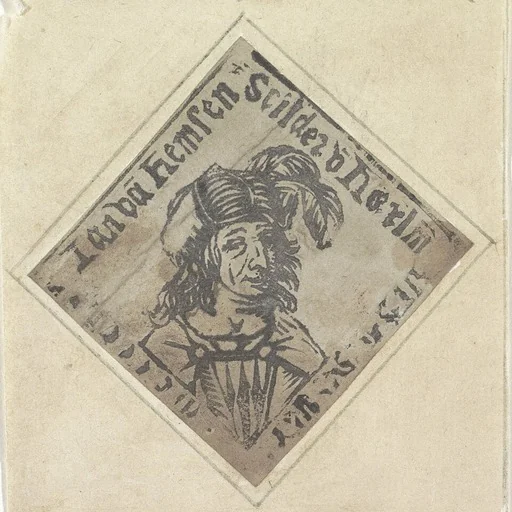
Jan Sanders van Hemessen (c. 1500 – c. 1566) was a leading Flemish Renaissance painter, belonging to the group of Italianizing Flemish painters called the Romanists, who were influenced by Italian Renaissance painting.…