Artwork
The Greeting
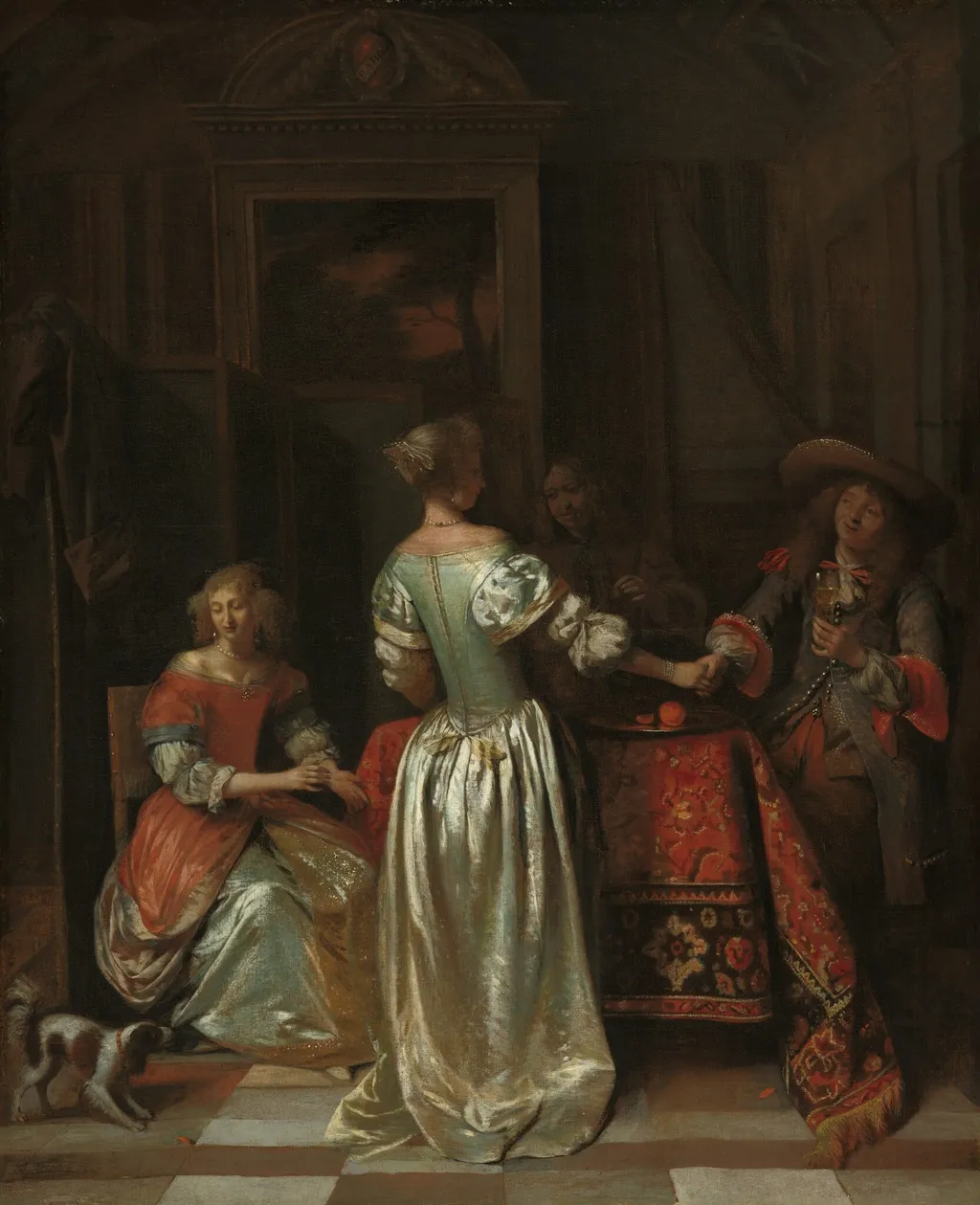
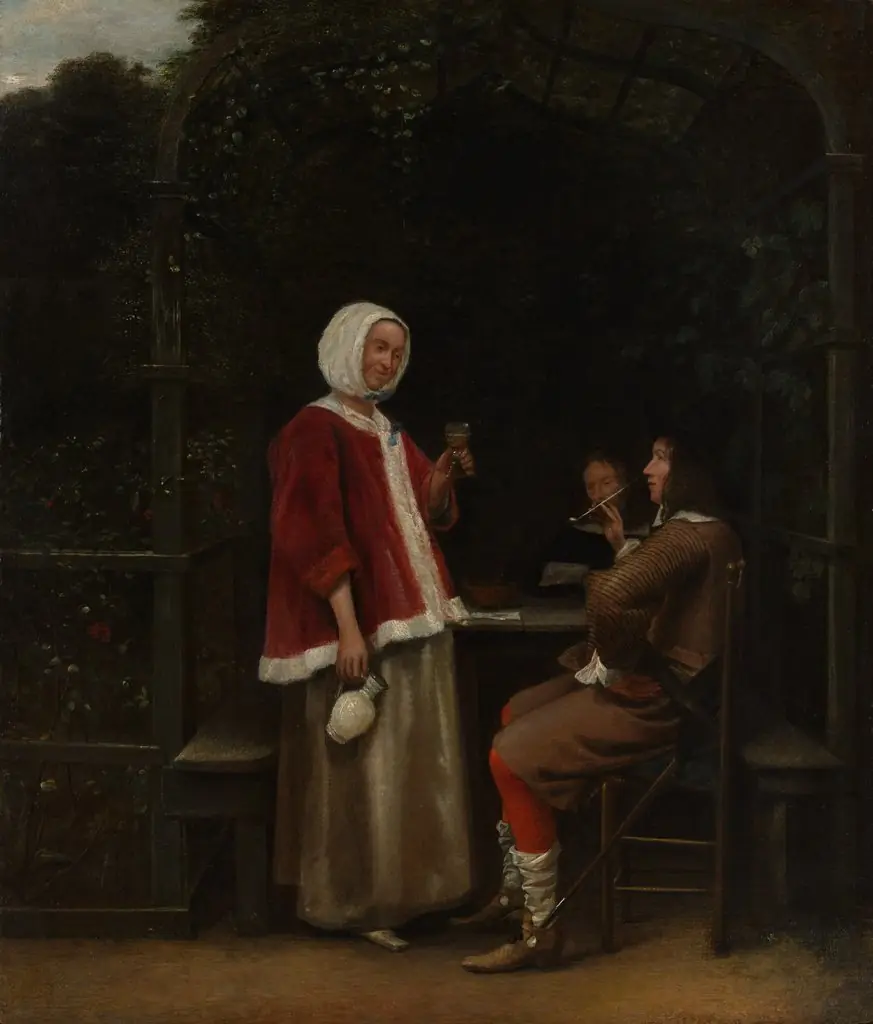
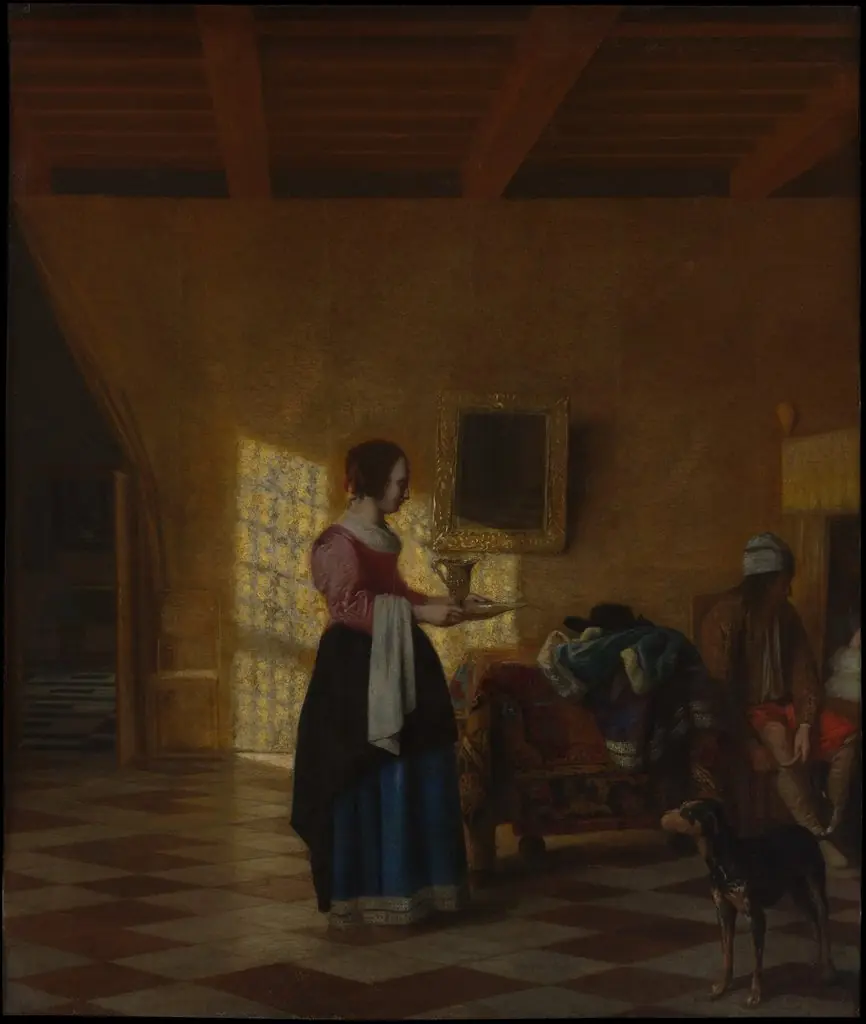
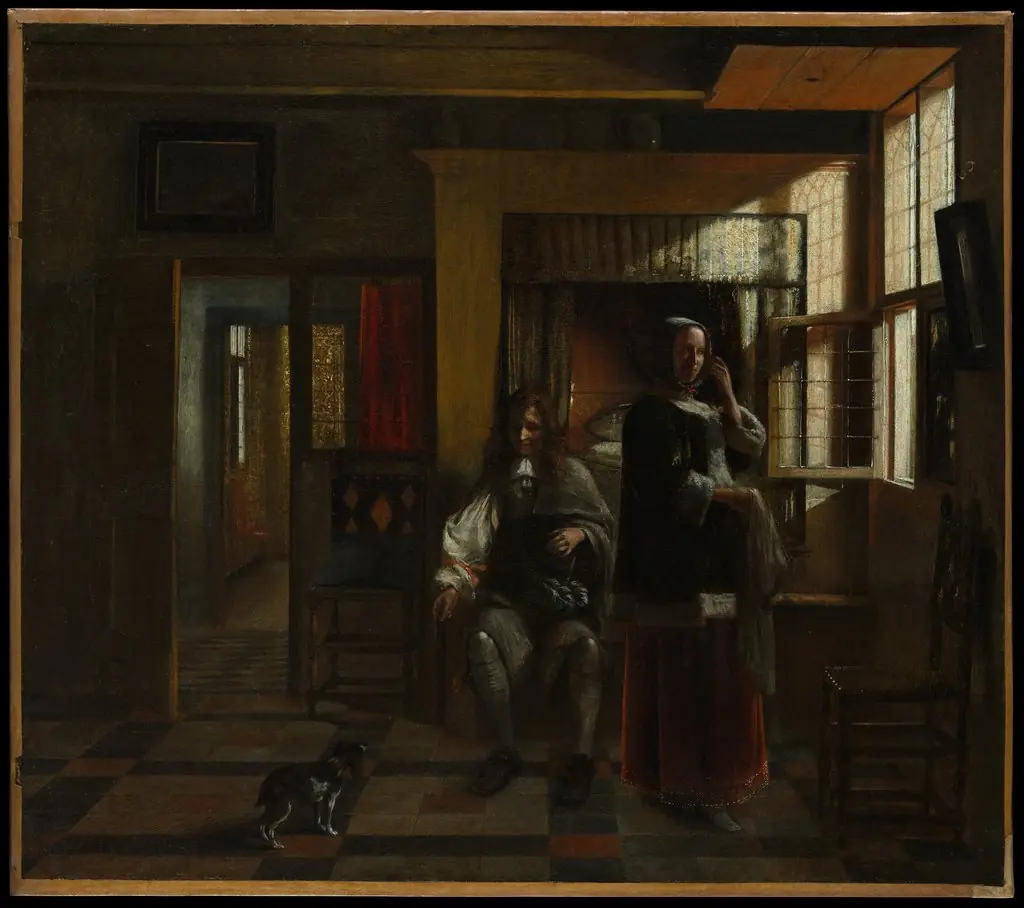
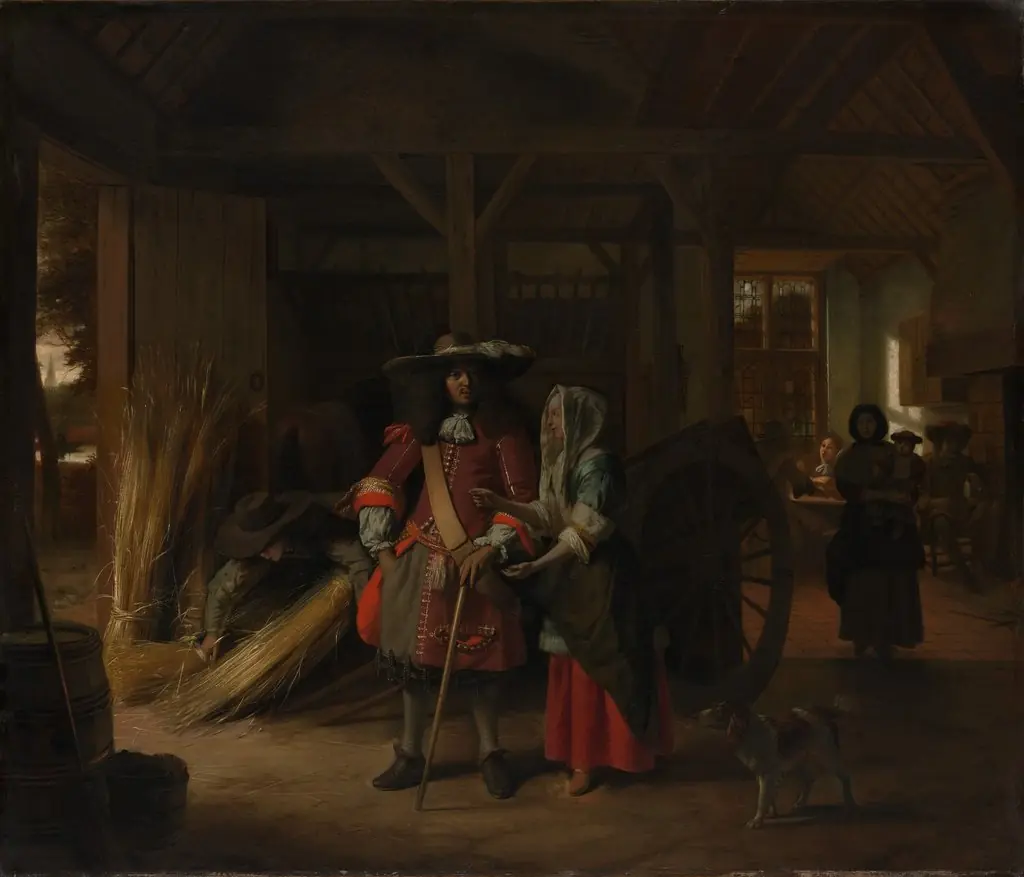
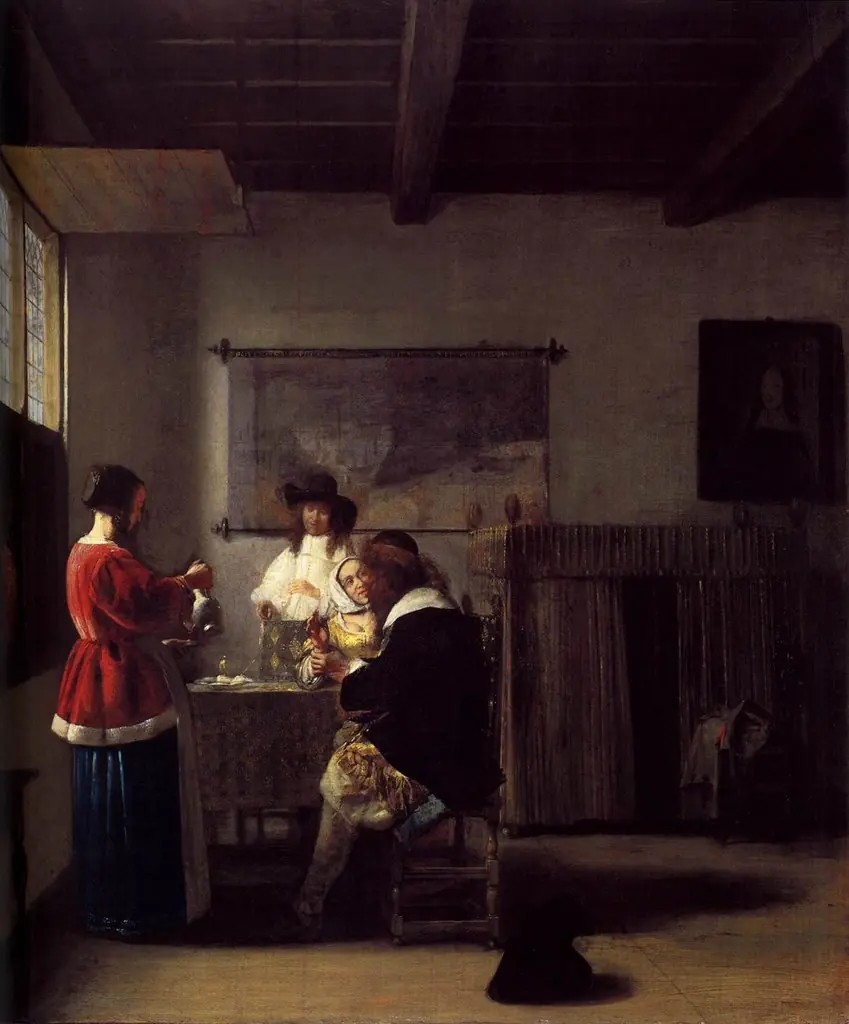
The Greeting is an oil painting by the Baroque artist Pieter de Hooch. It dates from 1675 and is held in the collection of the National Gallery of Art.
- Inscription
- Inscribed:in the architectural detail over doorway: P [D?] Hoo
About this work
Technique & Style
The painting belongs to the genre‑scene tradition of the Dutch Golden Age, depicting a modest interior in which two figures exchange a greeting.
The Greeting is executed in oil on canvas, measuring approximately 73 cm in height by 62 cm in width. The painting belongs to the genre‑scene tradition of the Dutch Golden Age, depicting a modest interior in which two figures exchange a greeting. Its composition relies on careful spatial planning, soft chiaroscuro, and a restrained palette that emphasizes the quiet domestic moment.
The work has been part of major collections since the late nineteenth century and, after a bequest to the Corcoran Gallery of Art, entered the National Gallery of Art’s holdings, where it is preserved and displayed under standard museum conditions.
History & Provenance
Pieter de Hooch completed this oil on canvas in 1676. The painting was in the collection of Richard von Kaufmann in Berlin by 1890, when he lent it to an exhibition of seventeenth-century Dutch art. By 1892, ownership had passed to Berthold Richter, also of Berlin.
The work subsequently entered the Vienna collection of Gottfried von Preyer before being purchased in 1902 by the American industrialist William A. Clark of New York.
Upon Clark's death, the painting was bequeathed to the Corcoran Gallery of Art in Washington, D.C., in April 1926. It remained in that institution until 2016, when it was acquired by the National Gallery of Art.
The painting is held by the National Gallery of Art, Washington, D.C., accessioned as part of the Corcoran Gallery of Art bequest in 2016.
It was first exhibited in Berlin in 1890 at the _Ausstellung von Werken der Niederländischen Kunst des Siebzehnten Jahrhunderts_, while in the collection of Richard von Kaufmann.
Context
Pieter de Hooch’s The Greeting (1676) is a quintessential interior genre scene that illustrates the artist’s mastery of light and spatial composition during the Dutch Golden Age.
The work entered the collection of Richard von Kaufmann, who displayed it at the 1890 Berlin exhibition of 17th‑century Dutch art, and later passed through the holdings of Berthold Richter and Gottfried von Preyer before being acquired by William A. Clark in 1902; it was bequeathed to the Corcoran Gallery of Art in 1926 and transferred to the National Gallery of Art in 2016.
Overview
Pieter de Hooch's The Greeting, an oil on canvas created around 1675, exemplifies the Dutch Golden Age's focus on domestic life. This genre scene captures a specific moment of social interaction within a private home. De Hooch, a painter renowned for his depictions of everyday activities, often explored the interplay of light and human presence in such intimate settings. The work reflects his characteristic attention to quiet, narrative moments.
Subject & Meaning
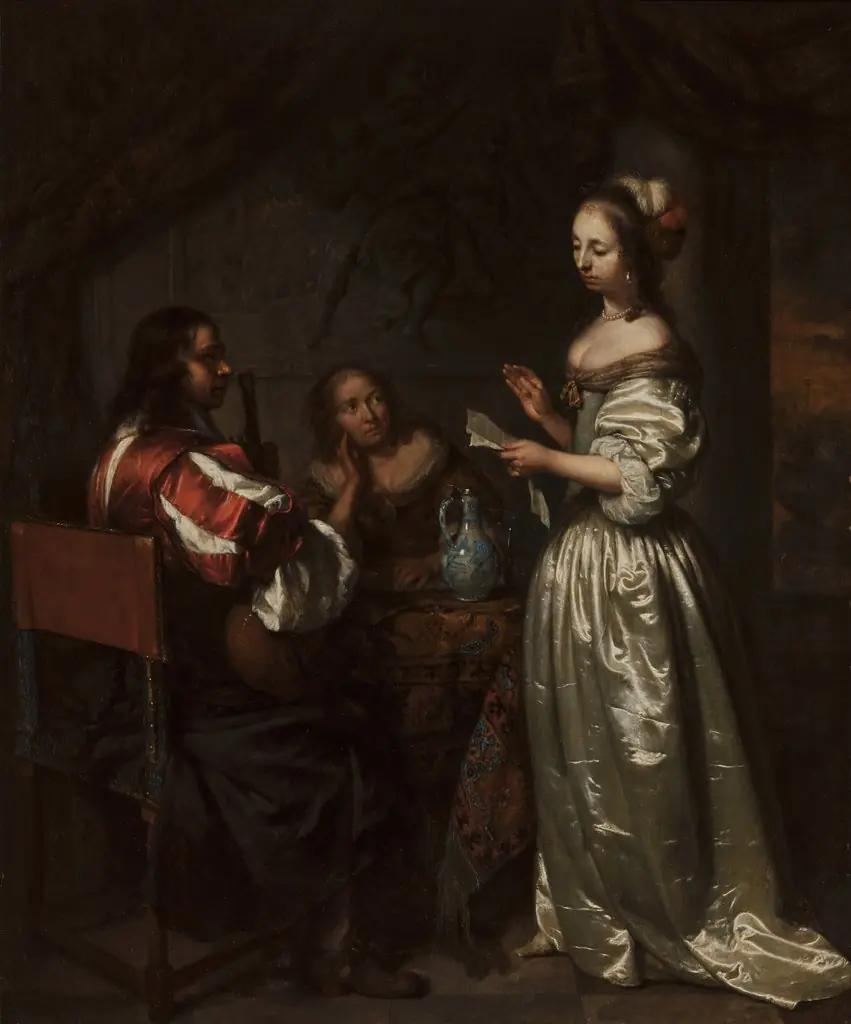
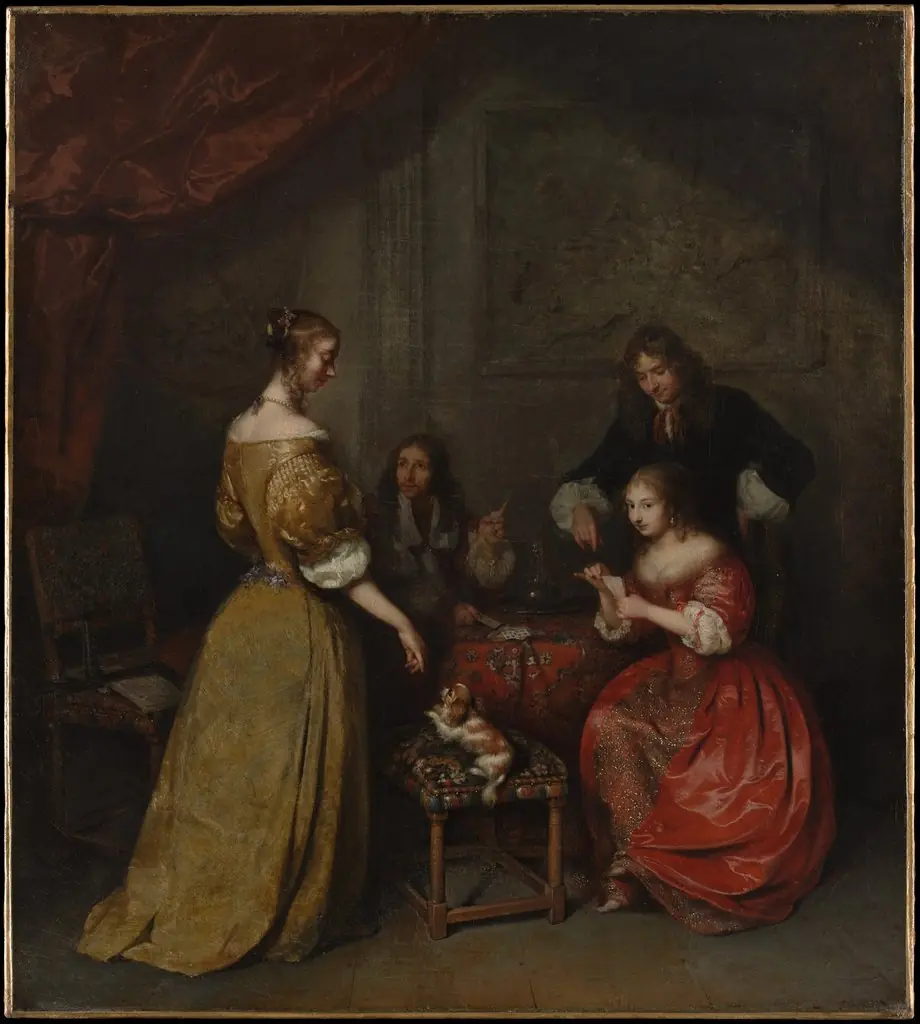
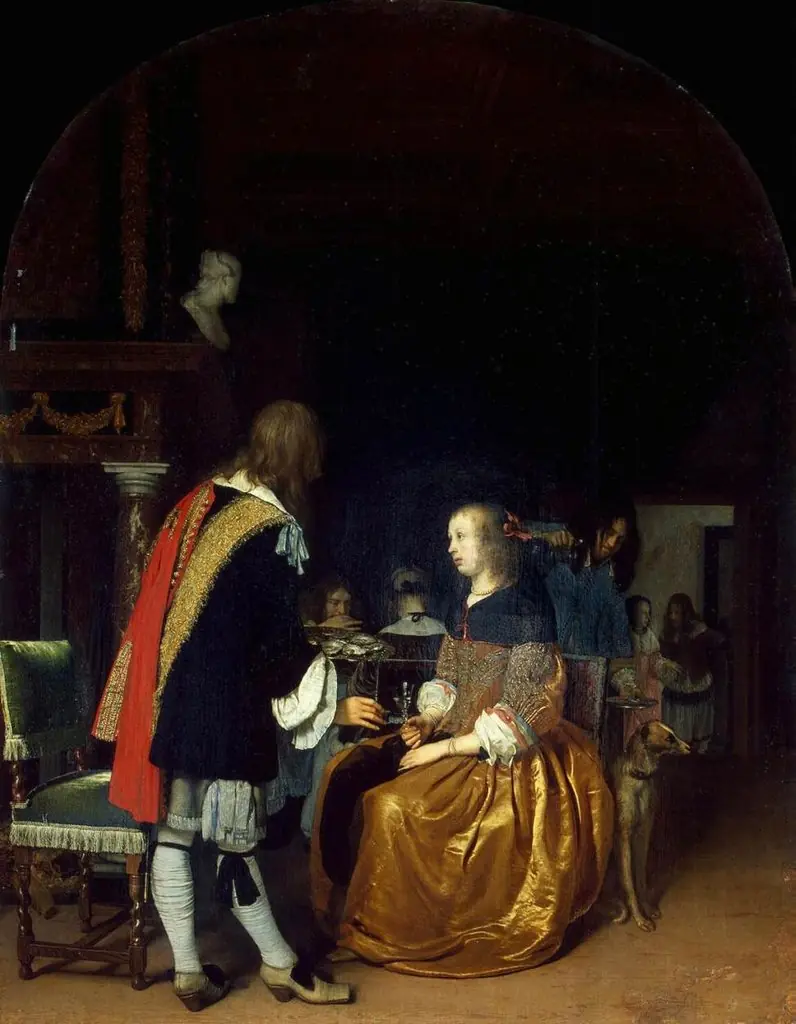
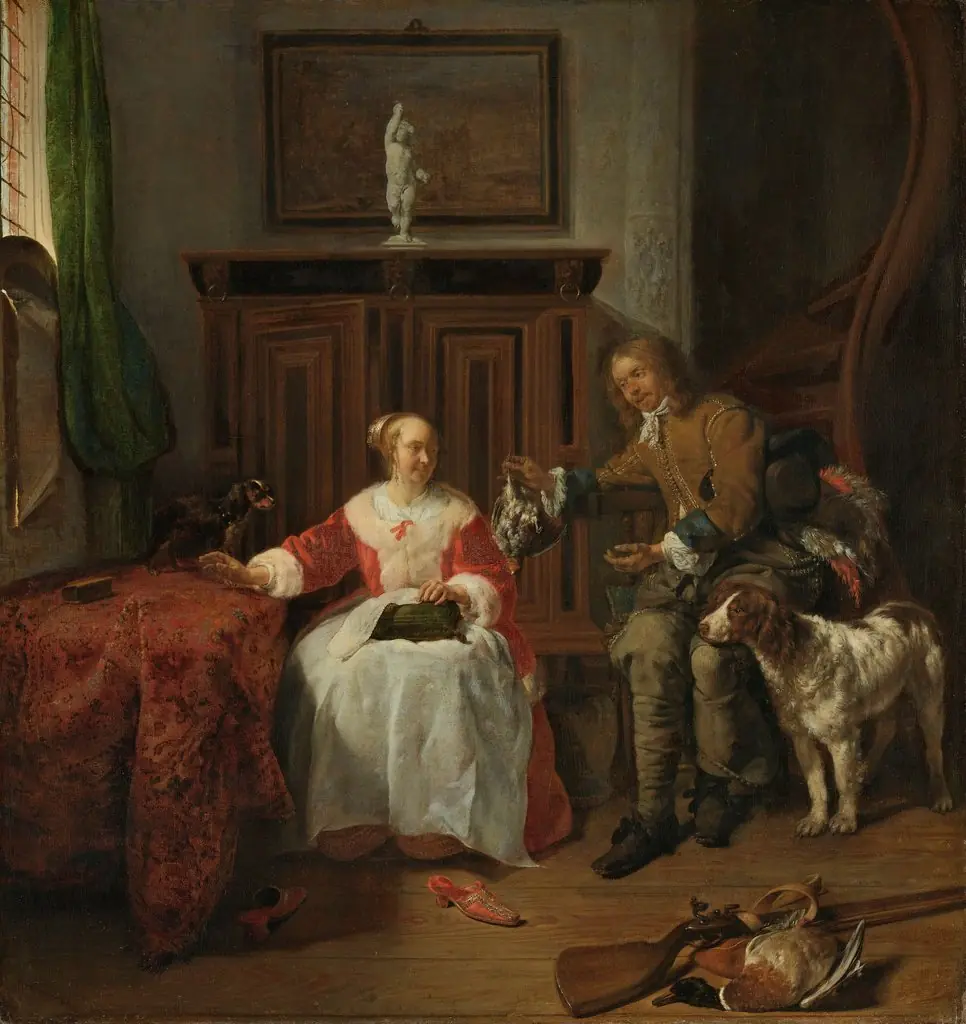
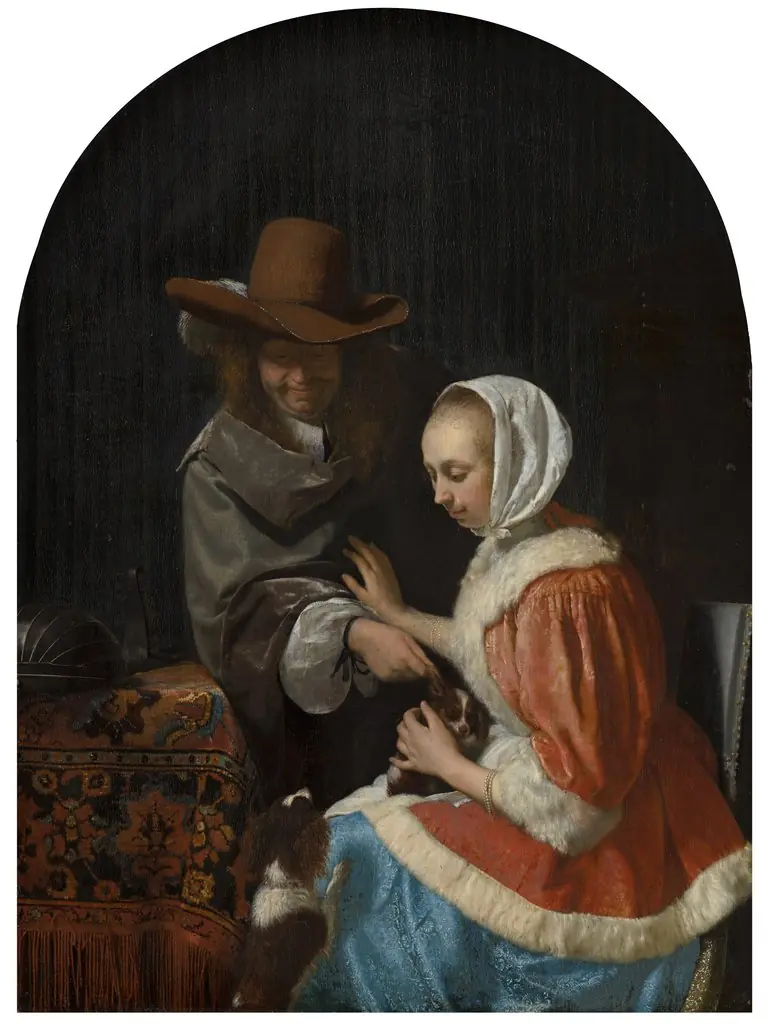
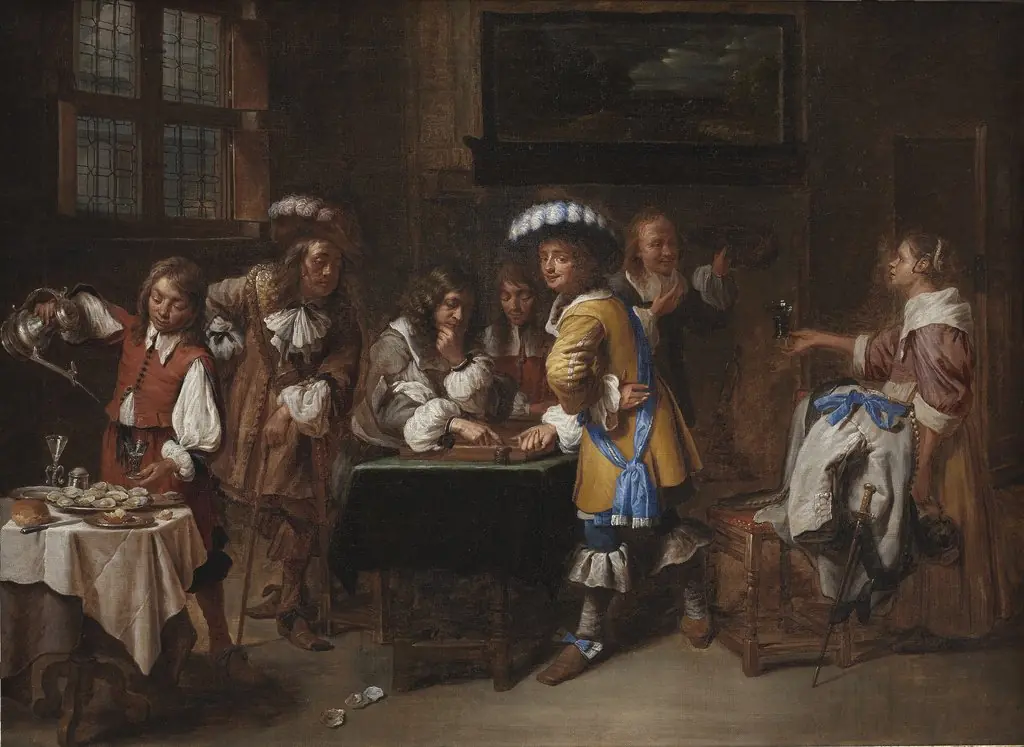
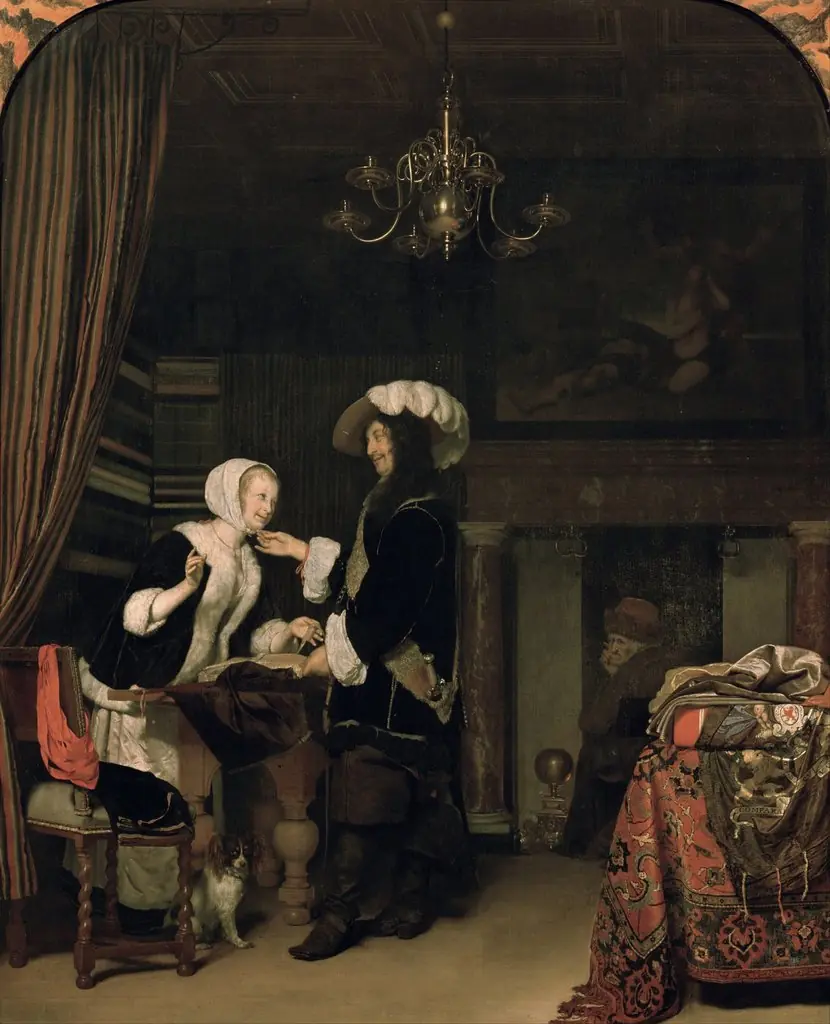
The painting portrays a domestic encounter involving four figures in a dimly lit room. A woman in a shimmering silver gown, seen from behind, engages with a man in a red coat and elaborate hat who extends an object toward her. Nearby, another woman in red sits with a child, while a small dog rests on the floor.
This arrangement suggests a moment of polite social exchange or a casual visit within a private home, a common theme in de Hooch's work.
Own this work as a print
Artist & collection
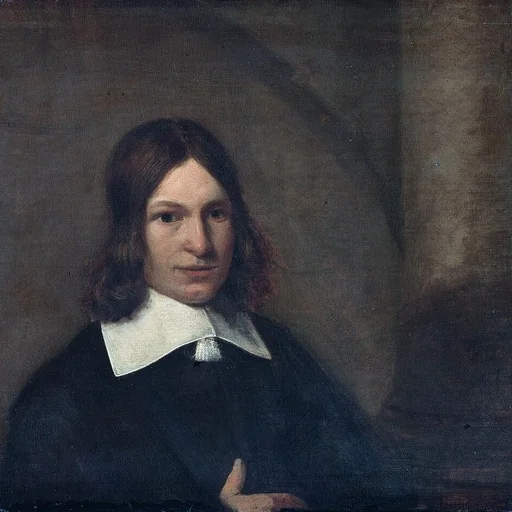
Artist
Pieter Hendricksz. de Hooch (Dutch:; also spelled Hoogh or Hooghe; bapt. 20 December 1629 – after 1683), was a Dutch Golden Age painter famous for his genre works of quiet domestic scenes with an open doorway. He was a…