Artwork
The Twelve Months: April
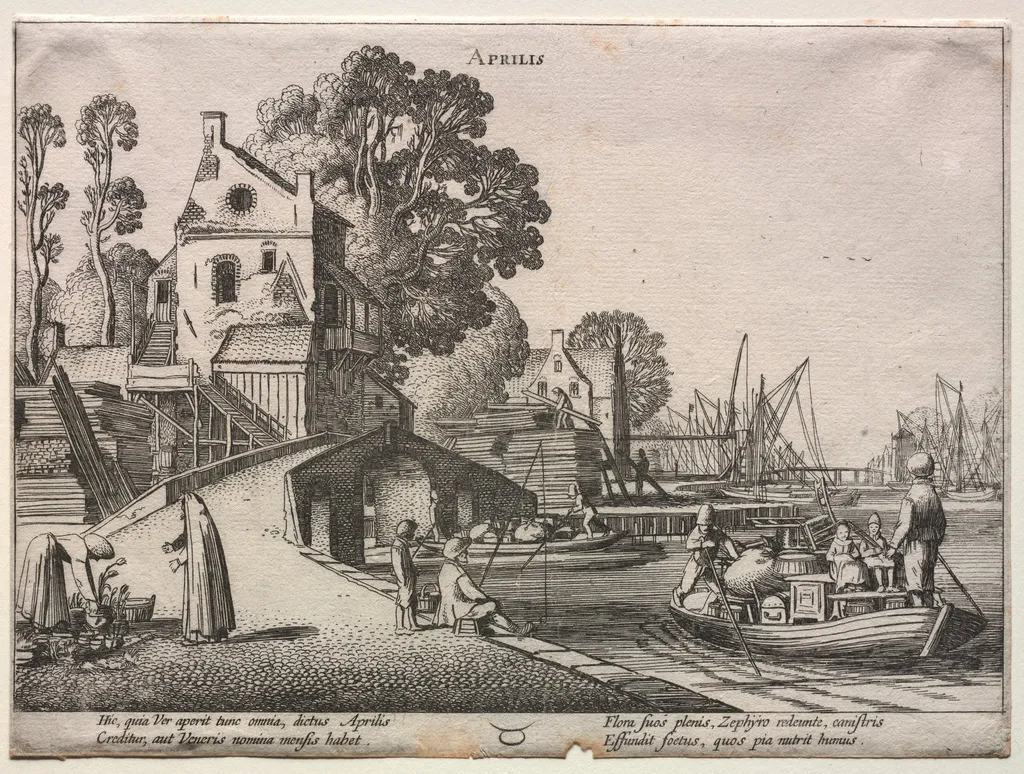
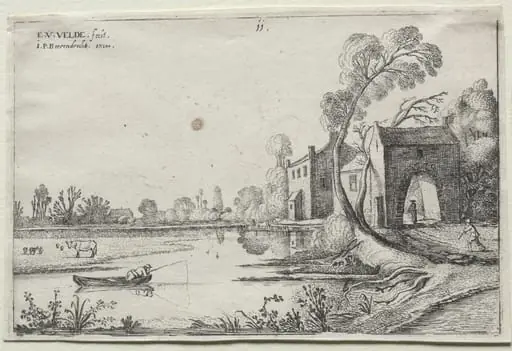
The Twelve Months: April is a print by the Baroque artist Velde, Jan van de, II. It dates from 1613 and is held in the collection of the Cleveland Museum of Art.
- Accession no.
- 1960.143.5
- Credit line
- Mr. and Mrs. Lewis B. Williams Collection
About this work
Overview
Created in 1613 by Jan van de Velde II, The Twelve Months: April is a single print from a series illustrating the months of the year.
Created in 1613 by Jan van de Velde II, The Twelve Months: April is a single print from a series illustrating the months of the year. A Dutch Golden Age artist known for his precise draftsmanship, van de Velde captured a quiet spring scene along a riverbank. The work reflects the era’s interest in seasonal cycles and daily labor, rendered with clarity and subtle spatial depth through linear perspective and careful tonal gradation.
Subject & Meaning
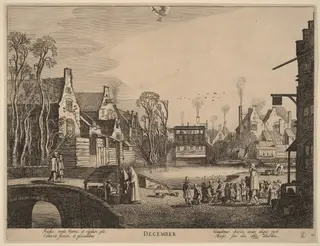
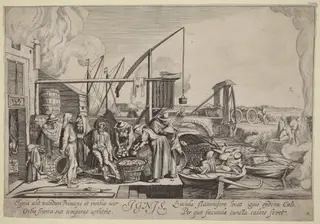
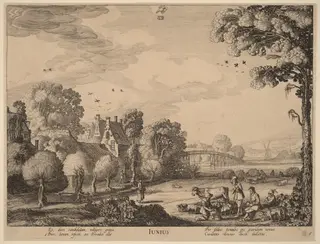
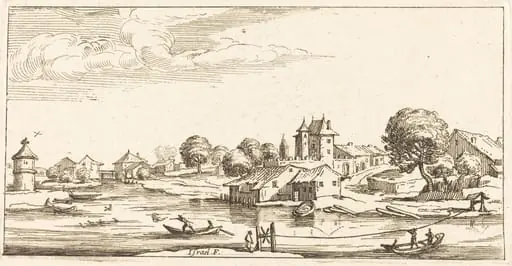
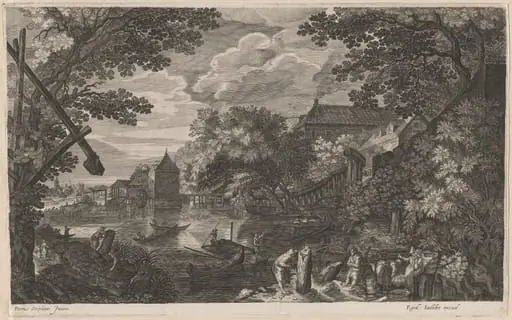
The scene depicts rural activity in early spring: workers load barrels onto a boat, figures rest by the water, and a small cart stands nearby. A church on a distant hill anchors the composition, suggesting community and continuity. The inclusion of ships on the river and scattered buildings implies regional trade and settlement.
The label 'APRILIS' confirms its place in a calendrical series, linking human labor to the rhythms of the natural year.
Technique & Style
Van de Velde employed fine, controlled lines typical of etching, using varying density to suggest form and distance. The tree’s gnarled roots and receding buildings demonstrate an understanding of atmospheric perspective. Figures are simplified yet distinct, their actions clearly readable.
The absence of heavy shading favors clarity over drama, aligning with Northern European traditions of observational realism rather than Baroque theatricality.
History & Provenance
The print was produced in 1613 during van de Velde’s active years in the Netherlands. It entered the collection of the Cleveland Museum of Art, where it remains today. As part of a larger series, it was likely intended for domestic display, reflecting the growing market for prints among middle-class households interested in seasonal themes and moralized depictions of labor.
Context
In early 17th-century Holland, prints of the months were popular for their blend of utility and aesthetic appeal. They connected domestic life to broader natural cycles, often carrying implicit moral or agricultural messages. Van de Velde’s work fits within a tradition of printmaking that emphasized accuracy and quiet observation, distinct from the grandeur of Italian Baroque but aligned with Dutch interests in the everyday.
Legacy
Though less celebrated than his contemporaries, van de Velde’s prints contributed to the development of Dutch topographical and seasonal imagery. His precise technique influenced later generations of printmakers who sought to document landscape and labor with fidelity. April endures as a quiet record of rural life, valued for its restraint and attention to detail rather than dramatic flair.
Own this work as a print
Artist & collection
Artist
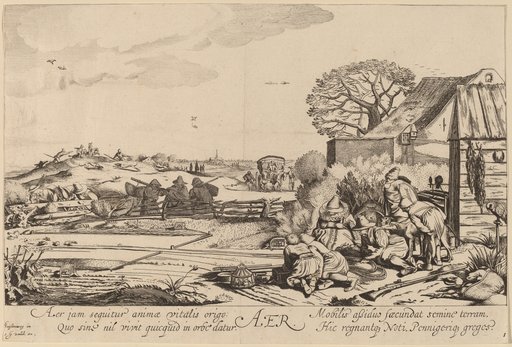
Jan van de Velde the younger (1593 – c. 1 November 1641) was a Dutch Golden Age painter and printmaker, mostly of animal, landscape and still-life subjects. He was the son of Jan van de Velde the Elder and the father of…