Artwork
Madonna and Child
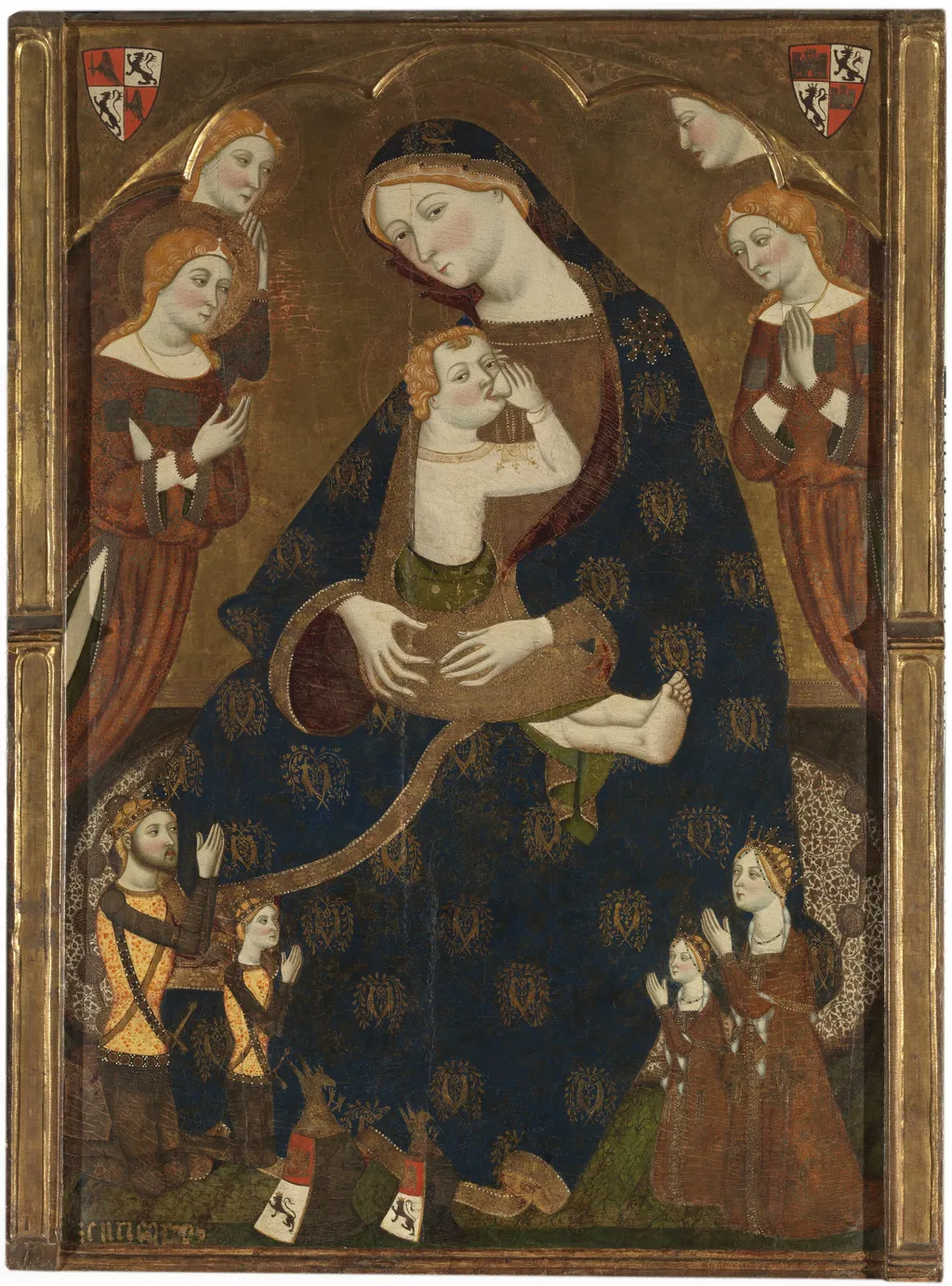
Madonna and Child is a tempera painting by the Byzantine icon painting artist Jaume Serra. It dates from 1359 and is held in the collection of the Museo del Prado.
About this work
Subject & Meaning
The painting depicts the Virgin Mary nursing the Christ Child, a type known as the Madonna lactans, emphasizing maternal nourishment and divine incarnation.
The painting depicts the Virgin Mary nursing the Christ Child, a type known as the Madonna lactans, emphasizing maternal nourishment and divine incarnation. The central panel includes the donors, Enrique de Trastámara (future Enrique II of Castile), his wife Juana Manuel, and their children, integrating historical portraiture into the sacred scene. Their presence elevates the work's significance, marking it as one of the earliest royal portraits in the Museo del Prado's collection.
The inclusion of heraldic and dynastic references underscores the political and familial context of the commission, linking sacred protection to the Trastámara lineage during the mid-fourteenth century.
Technique & Style
The work is executed in tempera on a wooden panel, characteristic of the Italo-Gothic Catalan style. Created around 1359–1362 by the workshop of Jaume Serra, the painting measures 161.4 cm in height and 117.8 cm in width. It originally served as the central panel of an altarpiece for the presbytery of the Church of Santa María in Tobed, flanked by side panels dedicated to Mary Magdalene and Saint John the Baptist.
The composition depicts the Virgin of the Milk nursing the Christ Child, accompanied by the donors Enrique de Trastámara and Juana Manuel with their children. As the sole surviving central panel from this specific commission, the piece retains its historical significance as the oldest royal portrait in the Museo del Prado's collection.
History & Provenance
The painting was created circa 1359–1362 by the workshop of Jaume Serra, a Catalan painter. It was commissioned by Henry of Trastámara (the future Henry II of Castile) and his wife Juana Manuel during their stay in Aragon, and depicts the couple with two of their children.
The work originated from the presbytery of the Church of Santa María de Tobed in Zaragoza, where it formed the central altarpiece dedicated to the Virgin; two side altarpieces dedicated to Mary Magdalene and Saint John the Baptist were also created for the church. While Carmen Lacarra attributed the three altarpieces to Jaume Serra, an attribution traditionally accepted, José Gudiol and Santiago Alcolea Blanch proposed in 1986 that Ramón Destorrents may have been the author.
The panel was donated to the Museo del Prado in 2013 by José Luis Várez Fisa and his family as part of a group of twelve medieval and early Renaissance Spanish works, and was considered the most valuable piece of the set. Housed in the Prado in Madrid, it is the oldest royal portrait in the museum's collection and is displayed among its Gothic and early Renaissance paintings.
Context
Scholarship on the work emphasizes its contested attribution and historical significance. Early attributions by Carmen Lacarra linked the three altarpiece panels to Jaume Serra, a view accepted until 1986 when José Gudiol and Santiago Alcolea Blanch proposed Ramón Destorrents as the author. The painting, a tempera panel dated to 1359, forms part of a group of twelve medieval and early-Renaissance Spanish works donated to the Prado in 2013, and is regarded as the most valuable of the donation.
Its depiction of the future Enrique II of Castile and his family marks it as the oldest royal portrait in the museum's collection, underscoring its importance within 14th-century Catalan Gothic art.
Legacy
The painting's entry into the Museo del Prado in 2013, as part of a donation of twelve medieval and early Renaissance Spanish works by José Luis Várez Fisa and his family, marked it as the most valuable piece in the group. Its inclusion also established it as the oldest royal portrait in the museum's collection, given the depiction of the future Henry II of Castile, his wife Juana Manuel, and their children.
Attribution of the Tobed altarpieces was established by Carmen Lacarra, who assigned them to Jaume Serra early in his career, an attribution traditionally accepted despite a 1986 reassessment by José Gudiol and Santiago Alcolea Blanch proposing instead the authorship of Ramón Destorrents.
Overview
Jaume Serra's "Madonna and Child" is a religious tempera painting completed in 1359. This artwork, currently housed at the Museo del Prado, presents a traditional Christian theme. It centers on the Virgin Mary holding the Christ Child, a common subject in medieval art, and also incorporates a coat of arms, suggesting a specific commission or patronage.
The use of tempera as a medium was characteristic of the period, contributing to its distinct visual qualities.
Own this work as a print
Artist & collection
Artist
Jaume Serra was a Catalan painter active in Barcelona during the second half of the fourteenth century, dying around 1395.

- Madonna and Child
 Madonna and Child
 Madonna and Child
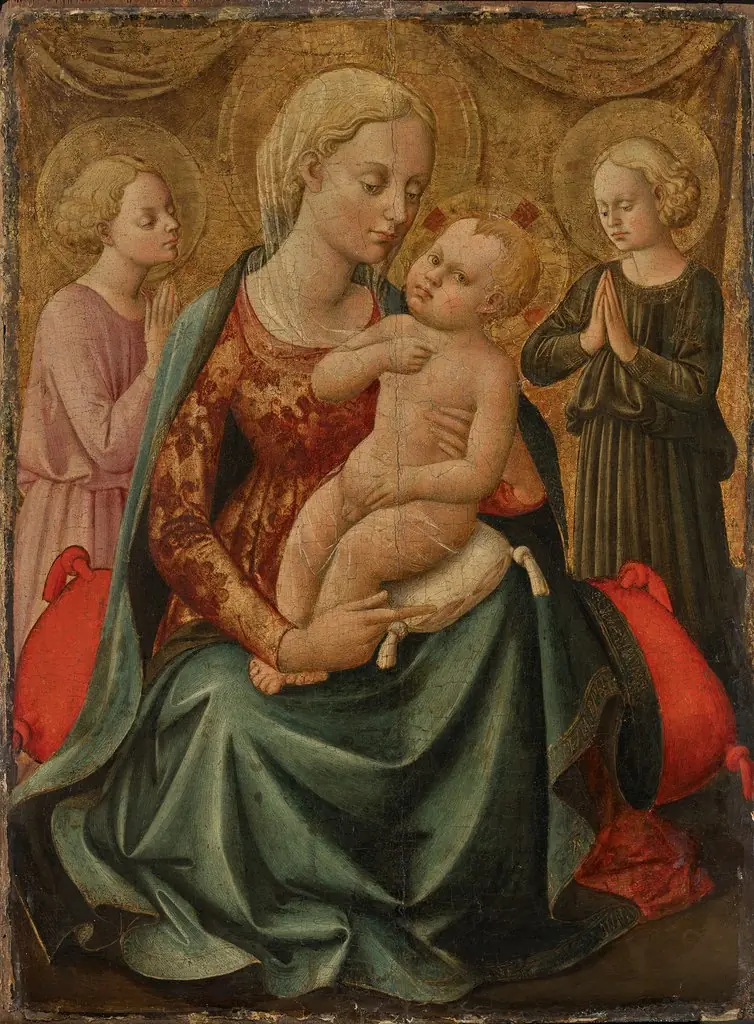 Madonna and Child
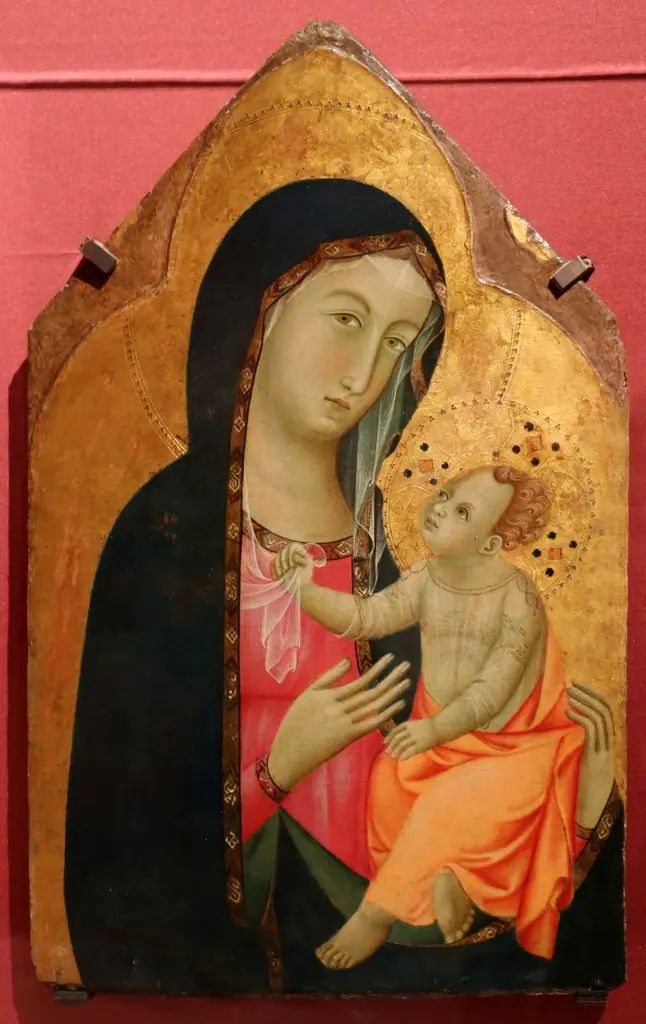 Madonna and Child
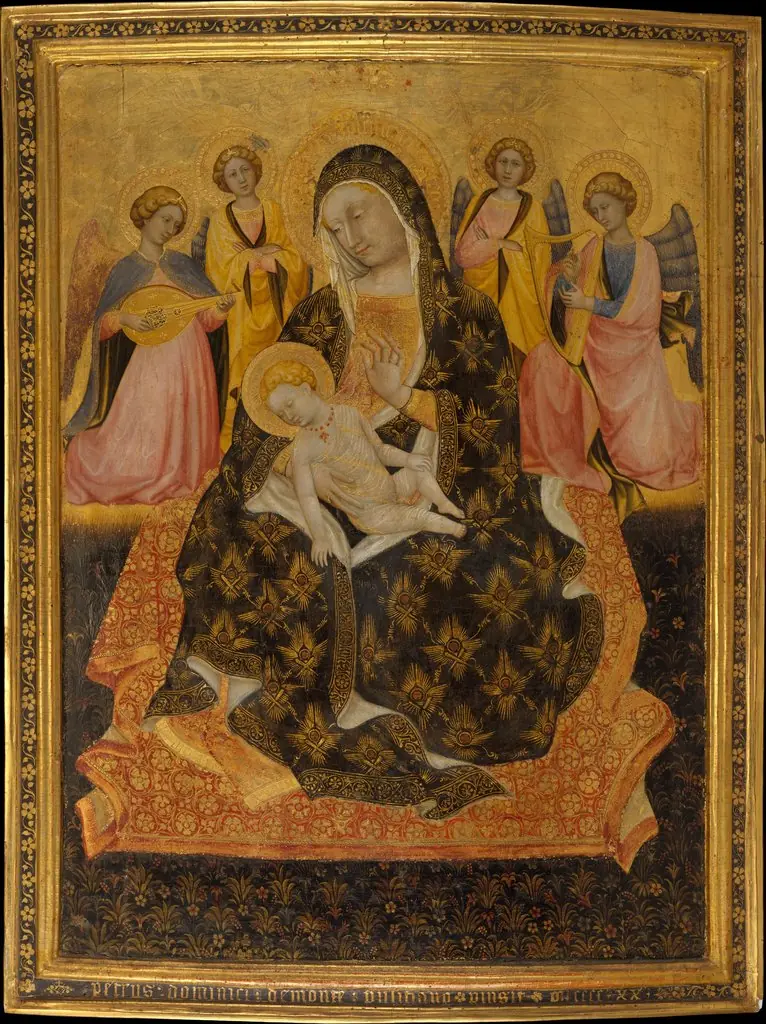 Madonna and Child with Angels
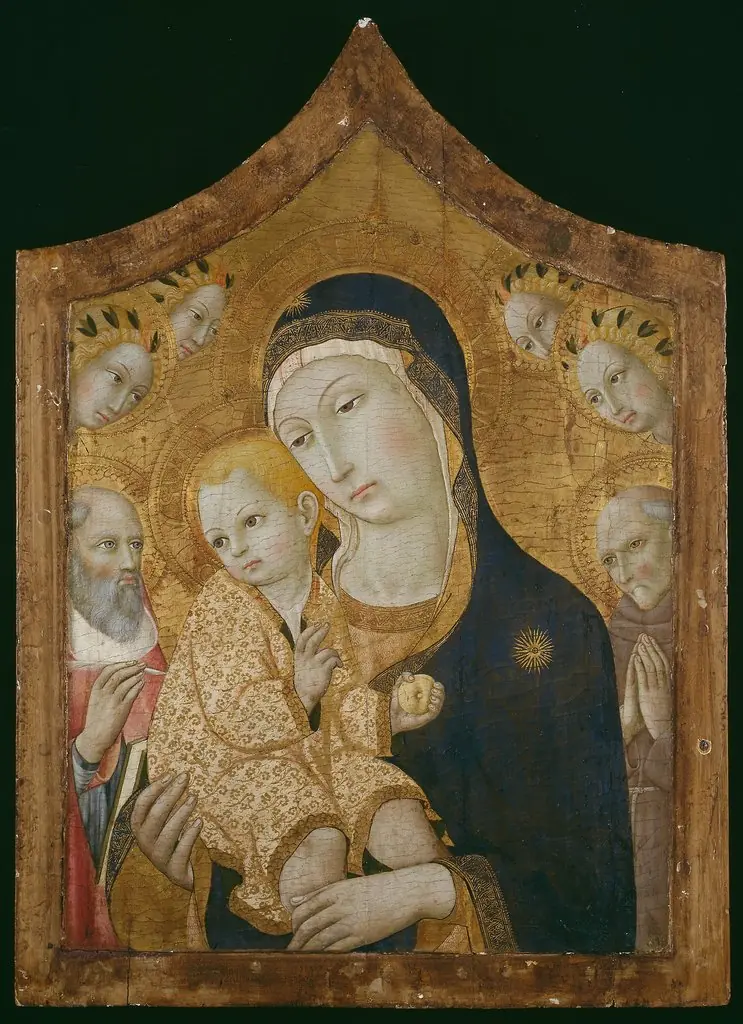 Virgin and Child with Saints Jerome, Bernardino of Siena, and Angels
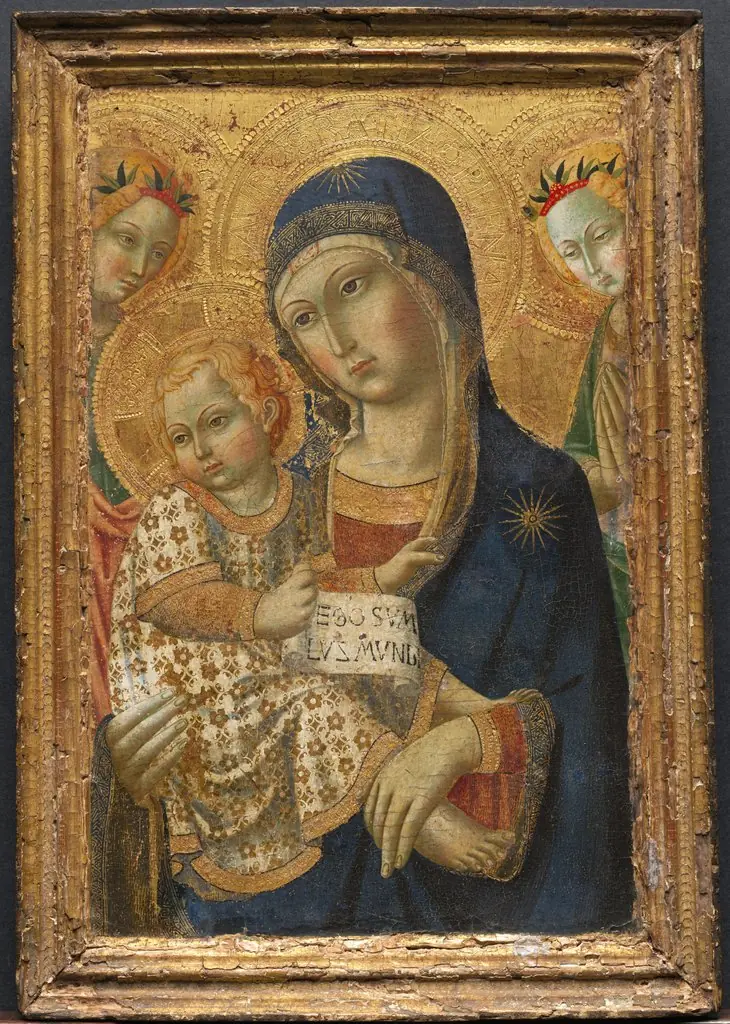 Virgin and Child Enthroned
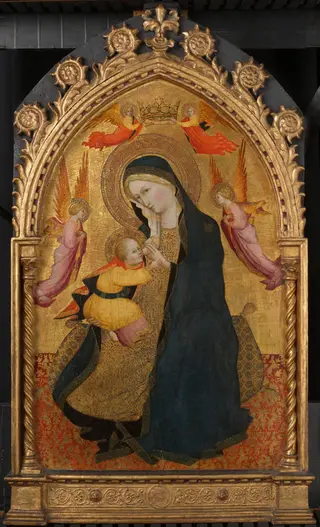 Madonna of Humility
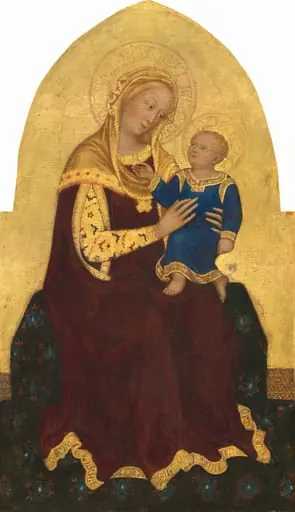 Madonna and Child Enthroned
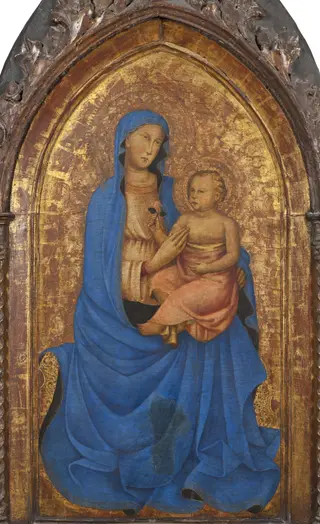 Madonna of Humility
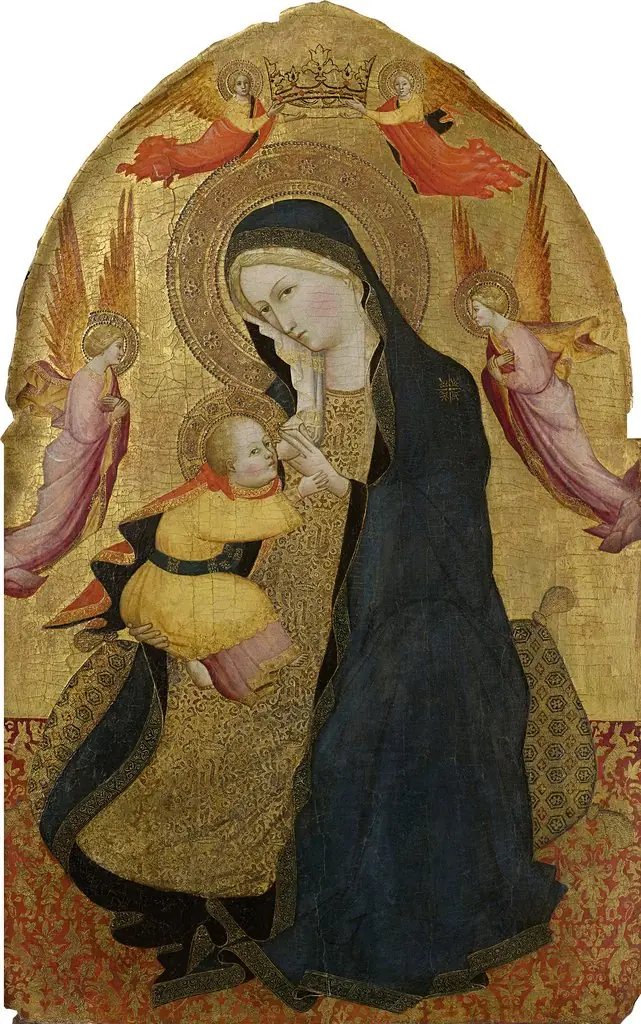 Madonna of Humility (Madonna dell'Umiltà)
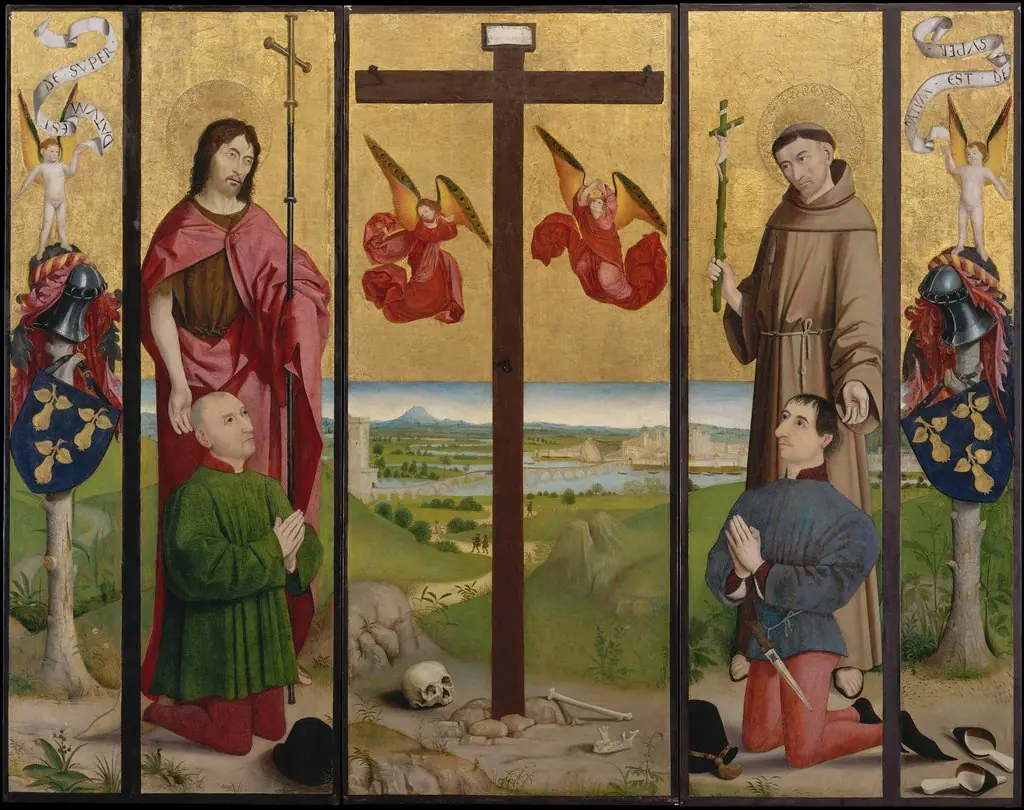 The Pérussis Altarpiece
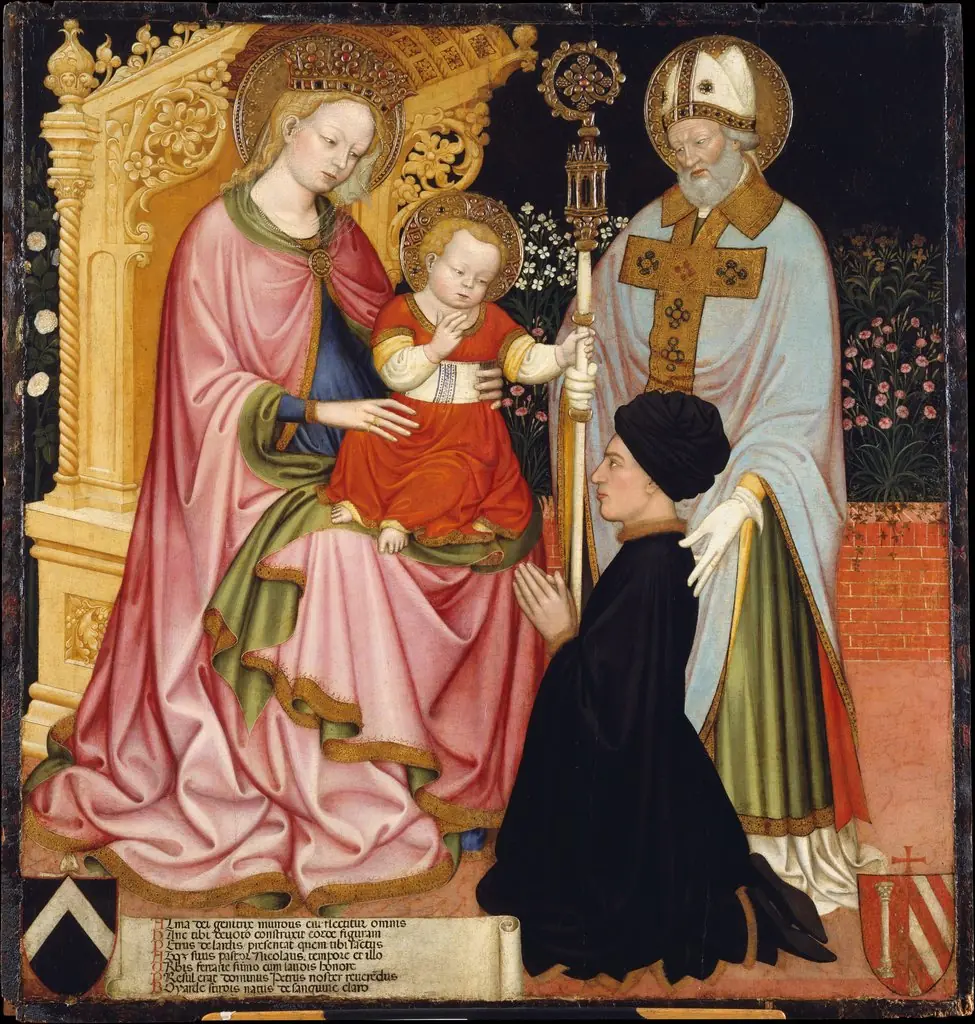 Madonna and Child with the Donor, Pietro de' Lardi, Presented by Saint Nicholas
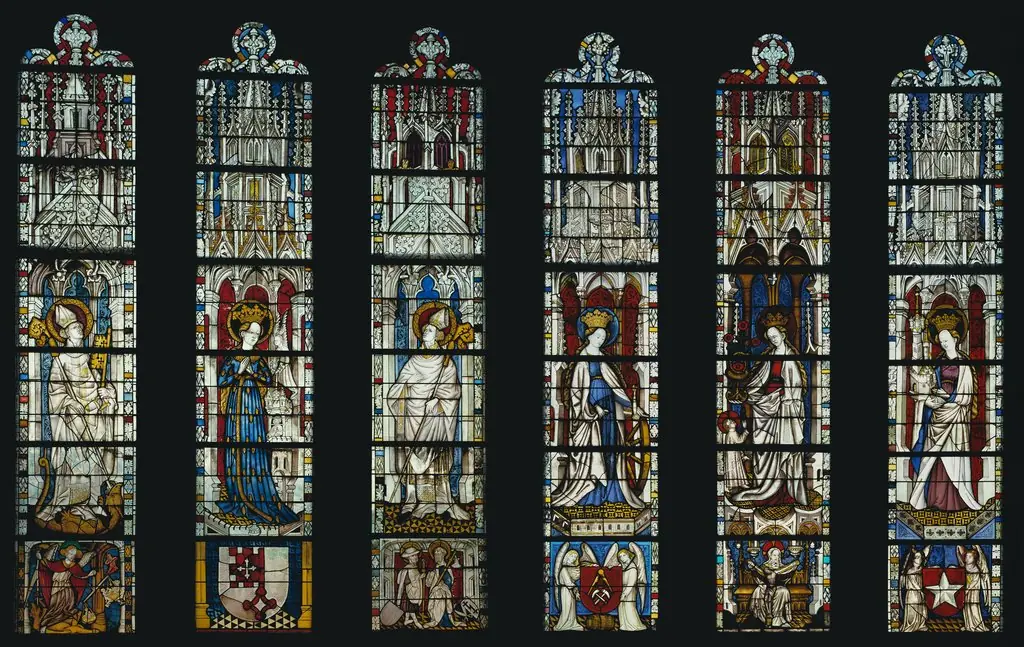 The Virgin Mary and Five Standing Saints above Predella Panels
 Portrait of a Woman, possibly Ginevra d'Antonio Lupari Gozzadini
 The Seven Sacraments
 Portrait of a Woman Holding a Book
 An Artist Painting a Heraldic Shield in a Cabinet of Curiosities
 Angel Supporting a Heraldic Shield