Artwork
The Clothes are Italian
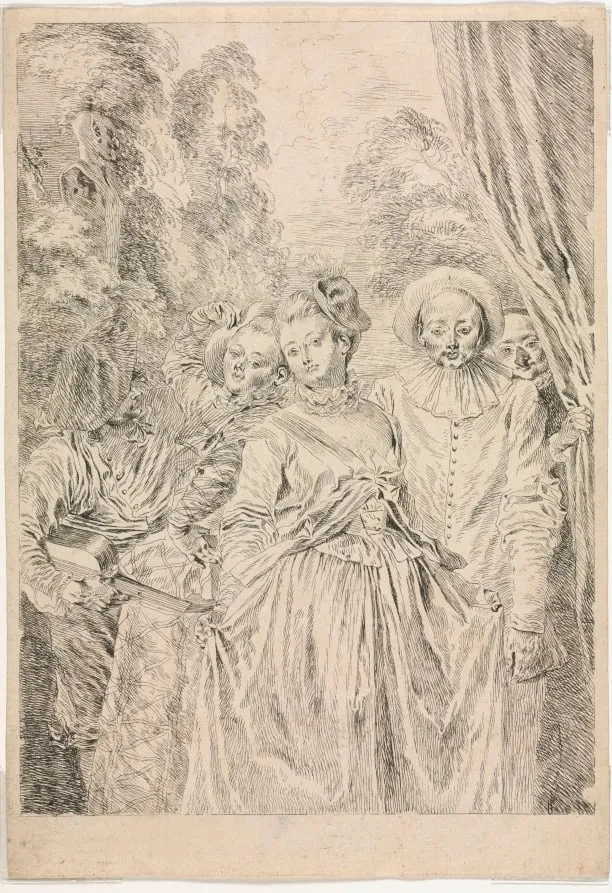
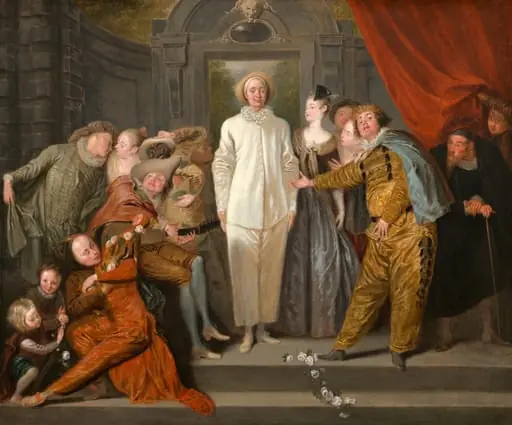
The Clothes are Italian is a print by the Baroque artist Jean Antoine Watteau. It dates from 1716 and is held in the collection of the Cleveland Museum of Art. The print depicts a troupe of performers taking a bow on a stage, their costumes vivid and varied.
- Accession no.
- 2008.3
- Credit line
- Severance and Greta Millikin Purchase Fund
About this work
Overview
The print depicts a troupe of performers taking a bow on a stage, their costumes vivid and varied. Some figures wear the traditional masks of Italian commedia dell’arte, while others appear without facial coverings, suggesting a blend of Italian and French popular theatrical traditions. The composition captures a moment of collective applause, emphasizing the lively atmosphere of the performance.
Subject & Meaning
The scene foregrounds stock characters drawn from the improvisational comedy of commedia dell’arte, alongside figures familiar to French popular theater.
The scene foregrounds stock characters drawn from the improvisational comedy of commedia dell’arte, alongside figures familiar to French popular theater. Though the image conveys a light‑hearted, whimsical mood, it also hints at the subversive nature of the repertoire, which often contained satirical commentary that could be politically sensitive. The performers’ bow underscores both entertainment and the precariousness of their art.
Technique & Style
Executed as an etched print, the work relies on spontaneous, fluid lines that echo the improvisational spirit of the theatrical genre it portrays. The artist’s hand is evident in the quick, confident strokes that define costumes and gestures, creating a sense of movement and immediacy. The contrast between sharply rendered masks and softer, unmasked faces enhances the visual playfulness.
History & Provenance
The characters illustrated were subject to a ban in France from 1697 to 1716 after a production was interpreted as a critique of King Louis XIV’s mistress. Despite the prohibition, the demand for such performances persisted, leading to adaptations that softened overt references while retaining familiar archetypes. The print reflects this transitional period, documenting how the art form survived regulatory constraints.
Artist & collection
Artist
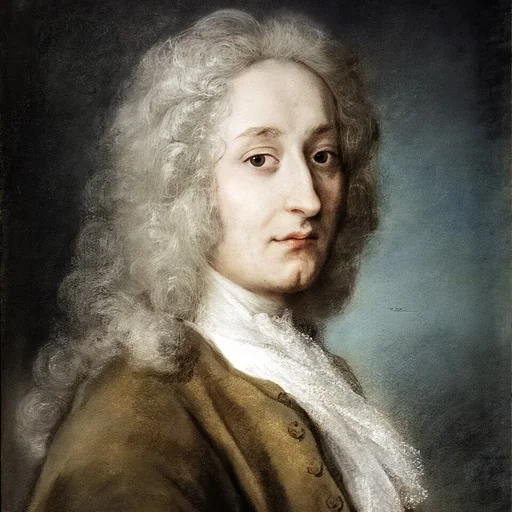
Jean-Antoine Watteau was a French painter and draughtsman whose brief career spurred the revival of interest in colour and movement, as seen in the tradition of Correggio and Rubens.

- Two Peasants
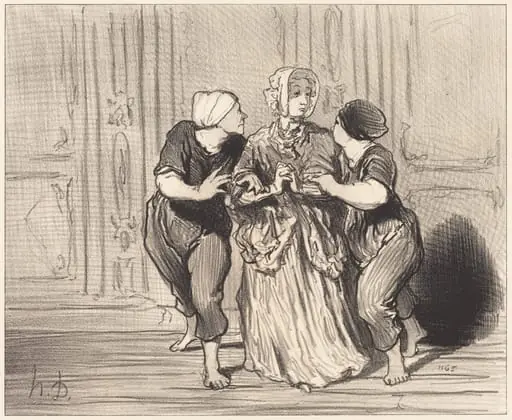 Le Beau sexe a l'école de natation
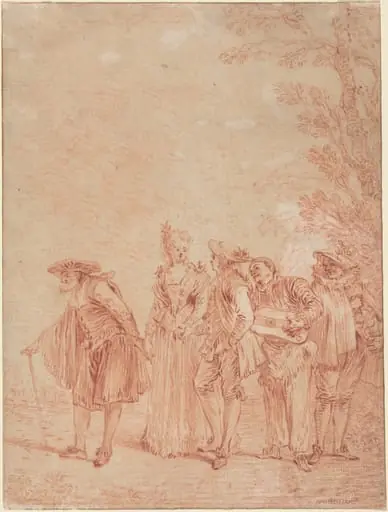 The Wedding Procession
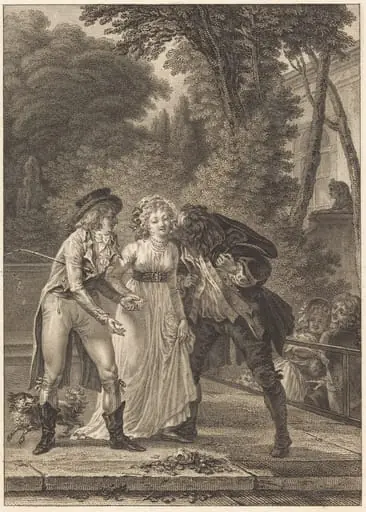 Le baiser rendu: Le baiser rendu
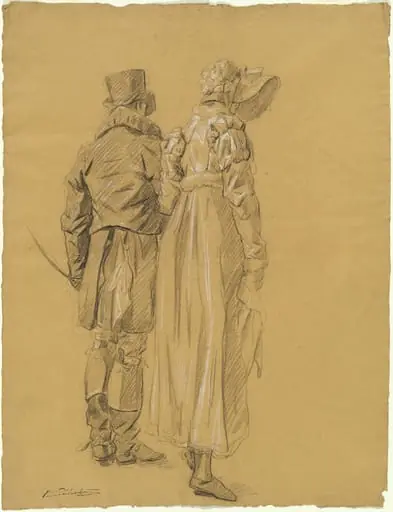 A Fashionable Couple Seen from Behind
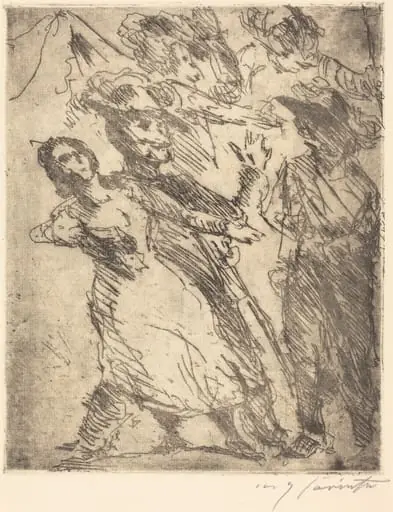 Kavaliere mit einer frau (Cavaliers with a Woman)
 Details from "The Adoration of the Magi" and "The Pool at Bethesda"
 At the Opera: Mme. Caron in "Faust" (A l'opéra: Mme. Caron dans "Faust")
 Réflection intime d'un épicier
 The Romancer
 Alexander in the Studio of Apelles
 Figures in Italia Costume