Artwork
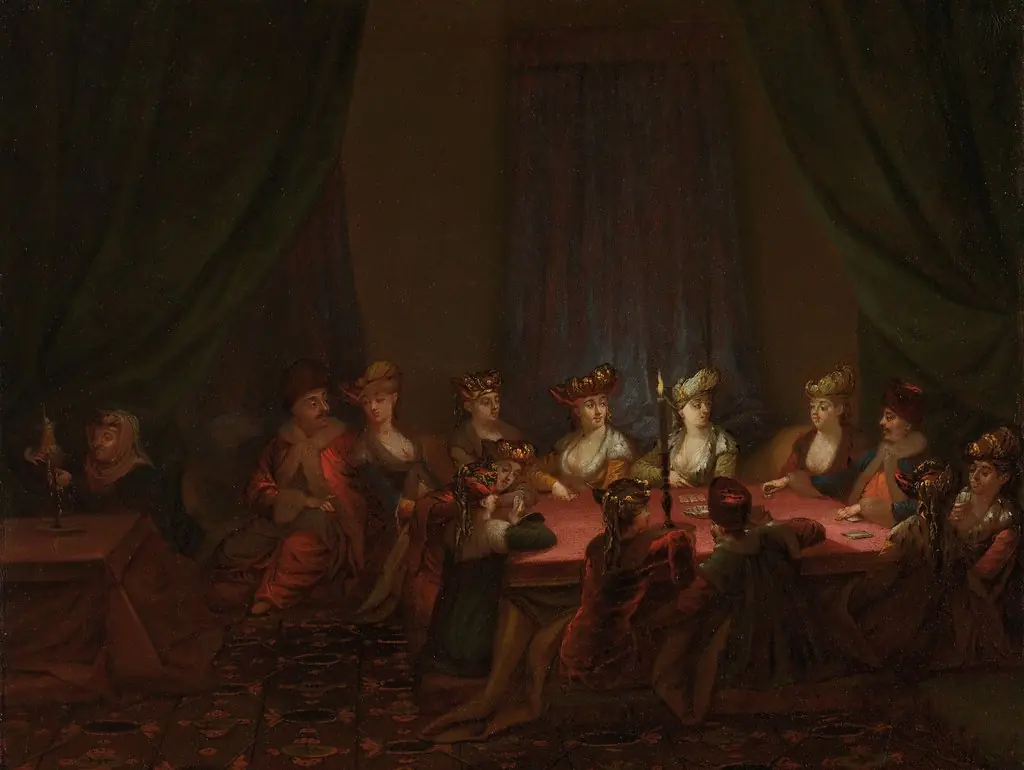
Fête champêtre with Turkish Courtiers under a Tent
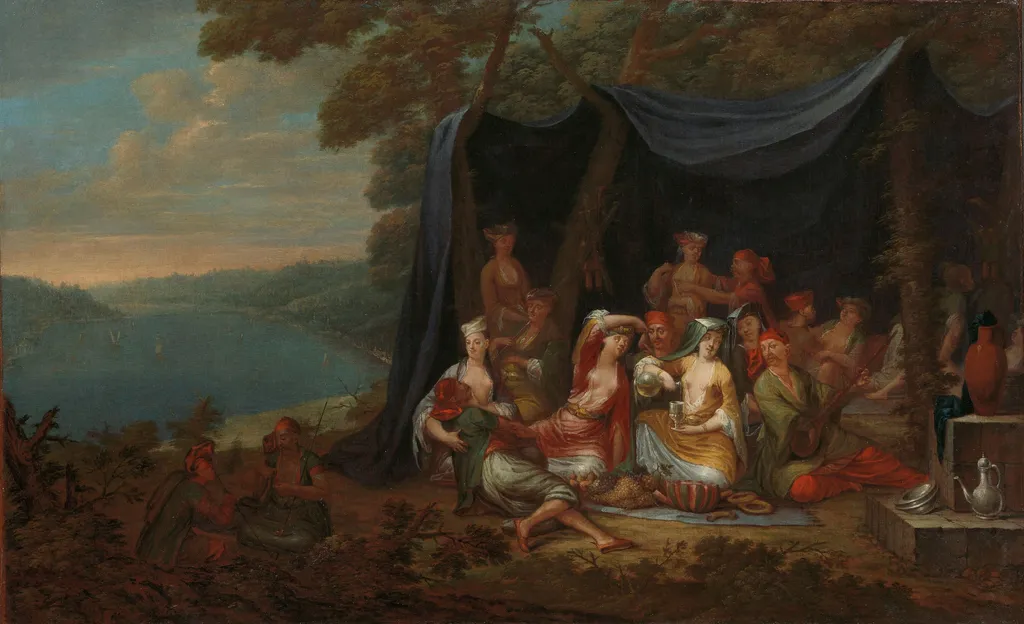
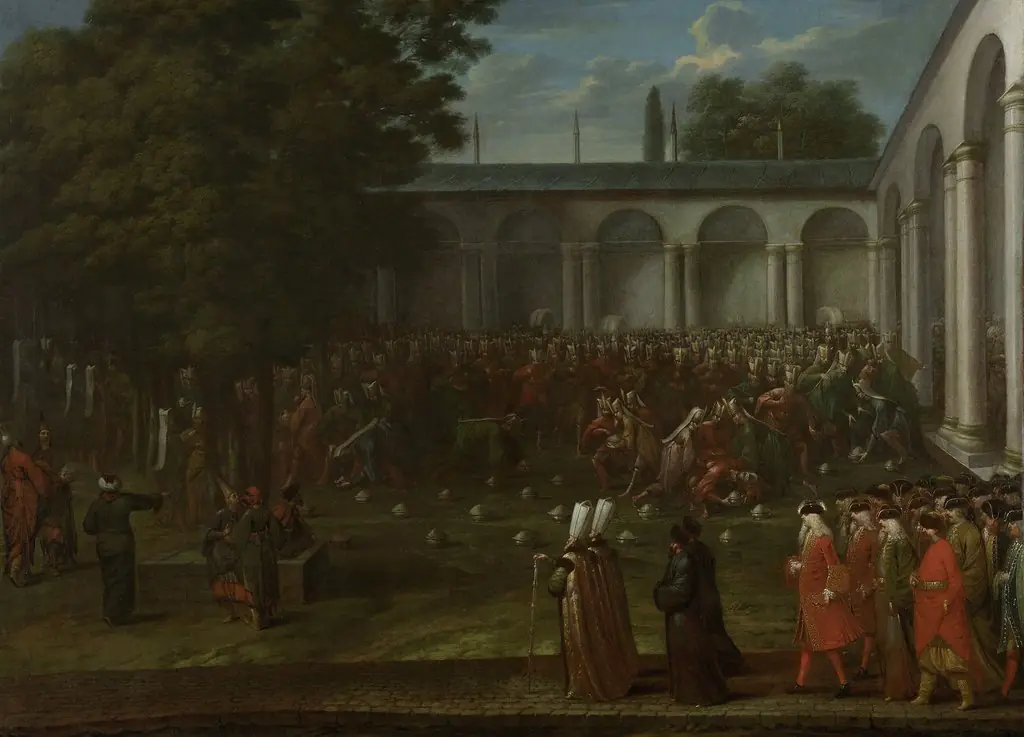
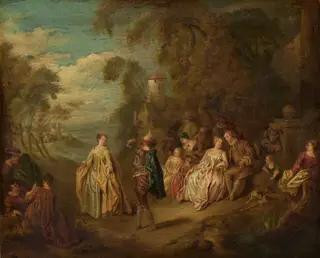
Fête champêtre with Turkish Courtiers under a Tent is an oil painting by the Orientalist artist Jean Baptiste Vanmour. It dates from 1728 and is held in the collection of the Rijksmuseum.
About this work
Technique & Style
Stylistically, the composition depicts a scene featuring a tree, situated within the broader context of a festive gathering with Turkish courtiers under a tent.
Created in 1728, Fête champêtre with Turkish Courtiers under a Tent is an oil painting executed on a canvas support. The work measures 90 cm in width. Stylistically, the composition depicts a scene featuring a tree, situated within the broader context of a festive gathering with Turkish courtiers under a tent.
The handling of the medium reflects the artist Jean Baptiste Vanmour's approach to capturing such Orientalist subjects during the early eighteenth century.
History & Provenance
Jean Baptiste Vanmour executed this oil on canvas painting in 1728. The work was originally owned by Cornelis Calkoen and subsequently passed to Nicolaas Calkoen. Over time, the painting entered several notable Dutch collections, including the Directie van de Levantse handel en de Navigatie op de Middellandse Zee, the Koninklijk Kabinet van Zeldzaamheden, and the Nederlandsch Museum voor Geschiedenis en Kunst. It is currently held in the collection of the Rijksmuseum.
The painting is held in the collection of the Rijksmuseum. Its institutional lineage traces through the Directorate of Levantine Trade and Navigation on the Mediterranean, the Royal Cabinet of Rarities, and the Netherlands Museum for History and Art. Historical ownership records indicate the work was previously possessed by Cornelis Calkoen and Nicolaas Calkoen. The provided sources do not contain specific inventory accession numbers or details regarding the work's exhibition history.
Context
Fête champêtre with Turkish Courtiers under a Tent (1728) by Jean Baptiste Vanmour exemplifies 18th-century European fascination with Orientalist themes within the grand tradition of pastoral and genre painting. Executed in oil on canvas (90 cm width), the work reflects Vanmour's specialization in Turkish and Levantine subjects, shaped by his residence in Constantinople and patronage from Dutch merchants involved in Levantine trade. Its inclusion in the Rijksmuseum's collection, originally owned by the Calkoen family connected to Dutch-Ottoman diplomatic and commercial networks, underscores its historical provenance within European art collecting practices of the period.
Scholarship highlights Vanmour's role in bridging Dutch Golden Age realism with emerging Orientalist aesthetics, positioning this painting as a key example of how European artists interpreted Ottoman culture through a lens of exoticism and diplomatic curiosity. The work's composition, blending European pastoral conventions with Turkish ceremonial elements, has been analyzed as both a technical achievement and a cultural artifact of 18th-century Franco-Dutch artistic exchange.
Legacy
The painting influenced later artists who depicted festive gatherings and exotic subjects, particularly in 18th‑century French and Dutch decorative schemes. Its portrayal of Turkish courtiers under a tent contributed to the European fascination with Orientalist themes in pastoral scenes, inspiring similar compositions in the Rococo decorative arts and subsequent genre paintings. The work remains part of the Rijksmuseum collection, preserving its legacy within the study of cross‑cultural representation.
Overview
Fête champêtre with Turkish Courtiers under a Tent is an oil painting created by Jean Baptiste Vanmour in 1728. The work depicts a serene outdoor gathering of Turkish courtiers under a tent, set amidst a natural landscape. It is part of the Rijksmuseum's collection.
Subject & Meaning
The painting captures a leisurely scene of Ottoman courtiers in a wooded, lakeside setting. Figures engage in relaxed activities, with some eating, drinking, or resting, conveying a sense of tranquil festivity. The scene reflects 18th-century European interest in Ottoman culture during the Tulip Era.
Own this work as a print
Artist & collection
Artist
Jean Baptiste Vanmour or Van Mour (9 January 1671 – 22 January 1737) was a Flemish-French painter, remembered for his detailed portrayal of life in the Ottoman Empire during the Tulip Era and the rule of Sultan Ahmed III.