Artwork
Woman from the Island of Tinos
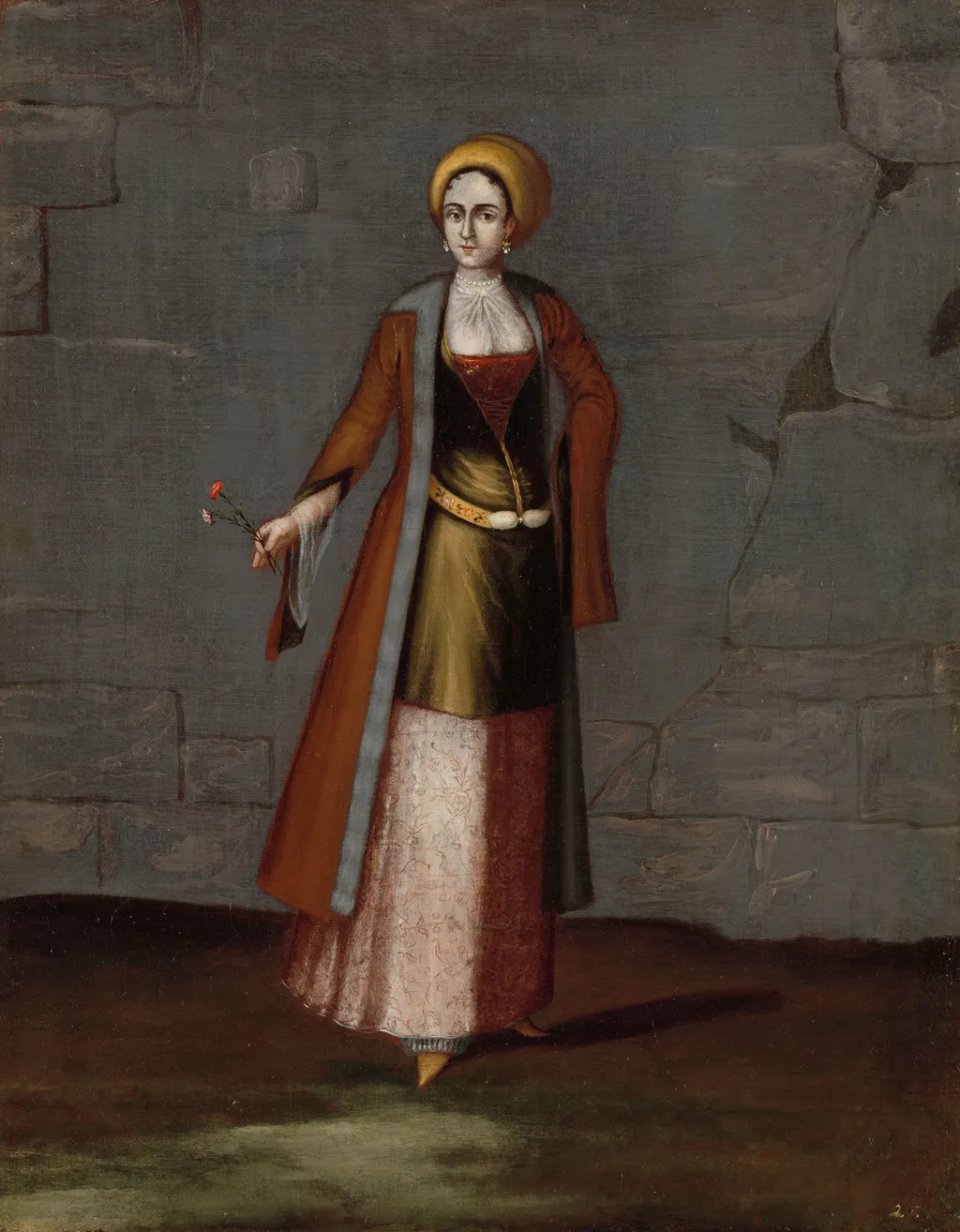
Woman from the Island of Tinos is an oil painting by the Rococo painting artist Jean Baptiste Vanmour. It dates from 1718 and is held in the collection of the Rijksmuseum.
About this work
Subject & Meaning
The work is a portrait depicting a woman originating from the Greek island of Tinos.
The work is a portrait depicting a woman originating from the Greek island of Tinos. Executed in Istanbul in 1718, the painting functions as an ethnographic record, capturing the specific regional identity of its subject through her presentation. The piece reflects the artist's broader project of documenting the diverse populations within the Ottoman Empire, serving as a visual study of Levantine culture for European audiences.
By focusing on an individual from a specific locale, the image represents the intersection of local tradition and the cosmopolitan environment of Constantinople where it was created.
Technique & Style
The painting is executed in oil on canvas, a medium commonly used by Vanmour for portraiture.
The handling emphasizes smooth modeling of the sitter’s features and drapery, with careful attention to the play of light on the face and the reflective quality of pearls and fabric. The composition is restrained, focusing on the figure’s calm expression and the delicate rendering of costume details.
Technical notes indicate the work’s stable condition, with dimensions of 39 cm in height and 30.5 cm in width, consistent with Vanmour’s small-scale studio practice.
History & Provenance
The painting Woman from the Island of Tinos was created in 1718 by Jean Baptiste Vanmour for Cornelis Calkoen, who served as Dutch consul in Constantinople. It remained in the Calkoen family collection before being acquired by the Rijksmuseum, where it has been part of the museum's holdings since acquisition. The work measures 39 cm in height and 30.5 cm in width and is executed in oil paint on canvas. Its subject is a woman depicted in Ottoman attire, reflecting Vanmour's interest in Levantine genre scenes.
Woman from the Island of Tinos has been held in the Rijksmuseum, where it is part of the collection associated with the Directie van de Levantse handel en de Navigatie op de Middellandse Zee, the Koninklijk Kabinet van Zeldzaamheden, and the Nederlandsch Museum voor Geschiedenis en Kunst. Earlier ownership traces to Cornelis Calkoen and Nicolaas Calkoen.
No exhibition history is documented in the available sources.
Overview
Jean Baptiste Vanmour painted Woman from the Island of Tinos in 1718. Executed in oil on canvas, the work presents a single figure against a plain stone wall, rendered with the lightness and decorative touch typical of early‑18th‑century Rococo portraiture. The painting is part of the Rijksmuseum’s collection.
Context
Vanmour, a Flemish‑born artist who worked in Constantinople, was known for portraying individuals from diverse cultural backgrounds. This portrait fits within his series of ethnographic studies, which served both as documentary records and as objects of curiosity for Western patrons fascinated by the Ottoman world and its peripheries.
Own this work as a print
Artist & collection
Artist
Jean Baptiste Vanmour or Van Mour (9 January 1671 – 22 January 1737) was a Flemish-French painter, remembered for his detailed portrayal of life in the Ottoman Empire during the Tulip Era and the rule of Sultan Ahmed III.