Artwork
Etienne Chevalier with St. Stephen
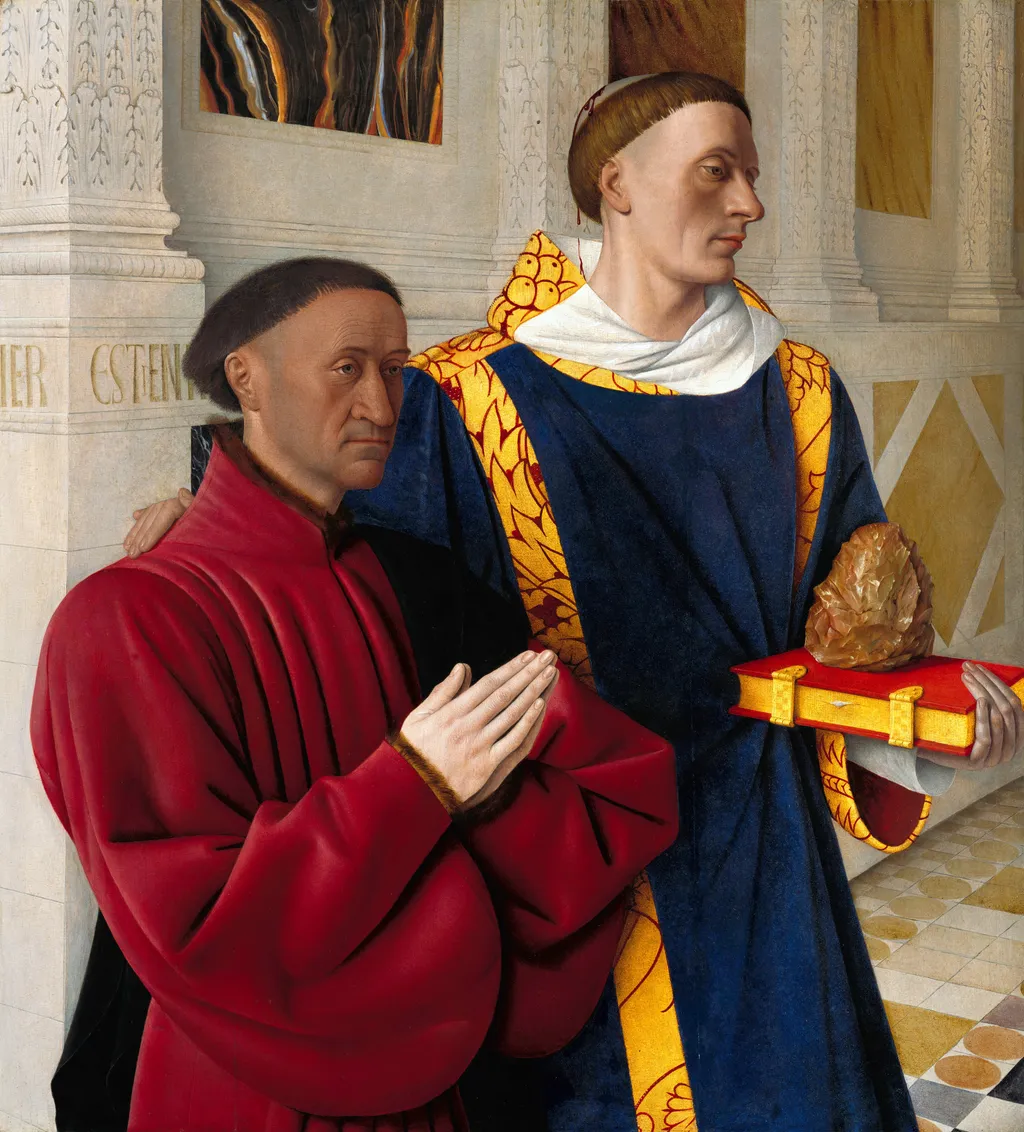
Etienne Chevalier with St. Stephen is an oil painting by the Early Renaissance artist Jean Fouquet. It dates from 1450 and is held in the collection of the Gemäldegalerie Berlin. Etienne Chevalier with St.
About this work
Technique & Style
The panel is executed in oil paint on oak, adhering to mid-fifteenth-century Northern European practice.
The panel is executed in oil paint on oak, adhering to mid-fifteenth-century Northern European practice. Fouquet’s handling emphasizes luminous, evenly applied glazes that render drapery and flesh with a cool, enamel-like sheen, while the gilded halo and patterned brocade of the deacon’s dalmatic use delicate stippling and fine hatching to articulate texture. The composition’s compressed space and symmetrical arrangement around the frontal saint recall manuscript illumination conventions, yet the individualized features of Chevalier and the precise modeling of Saint Stephen’s tonsured head introduce a sculptural presence characteristic of early Netherlandish influence.
The condition appears stable; the oak support shows minor planar distortions typical of the period, and the paint layer remains intact with only localized wear along the upper edge.
History & Provenance
Commissioned by Étienne Chevalier, this panel serves as the left wing of the Melun Diptych created by Jean Fouquet. Art historical analysis dates the work's inception to approximately 1450, with some records suggesting a completion window extending to 1452. Executed in oil paint on an oak panel, the painting measures 95.9 cm in height and 85 cm in width.
The work eventually entered the collection of the Gemäldegalerie in Berlin, where it remains housed. Its historical significance was highlighted during its inclusion in the Exposition des primitifs français.
Context
The work is recognized as the left wing of the Melun diptych, commissioned by the French treasurer Étienne Chevalier and originally displayed as part of the Exposition des primitifs français, situating it within the early French Renaissance painting tradition and the broader devotional art of the 15th century.
Scholarship highlights its significance as a pivotal example of Fouquet's synthesis of Burgundian naturalism with emerging Italian Renaissance techniques, influencing later court portraiture and diptych formats.
Its placement in the Gemäldegalerie Berlin collection underscores its enduring cultural value, where it remains studied for its intricate detail and narrative depth within the canon of early Netherlandish-inspired French art.
Legacy
Etienne Chevalier with St. Stephen, painted by Jean Fouquet around 1450, was commissioned by the treasurer of France and originally formed part of a double-panel diptych. The left wing depicting Étienne Chevalier and Saint Stephen entered the collection of the Gemäldegalerie Berlin, where it remains on view as part of the museum’s holdings of early Netherlandish works. The diptych was exhibited in the 1880 Exposition des primitifs français, marking one of the first public recognitions of Fouquet’s significance in French artistic heritage.
Today the painting is studied as a pivotal example of Burgundian court portraiture and a bridge between late Gothic symbolism and early Renaissance naturalism.
Overview
Etienne Chevalier with St. Stephen is a 15th-century oil painting attributed to Jean Fouquet, a French artist known for his work in both painting and miniatures.
Subject & Meaning
The painting depicts Étienne Chevalier, likely a patron, and Saint Stephen in a devotional scene. Chevalier is shown in a red robe with clasped hands, while Saint Stephen wears a blue robe and holds a book and another object, possibly stones symbolizing his martyrdom.
Own this work as a print
Artist & collection
Artist
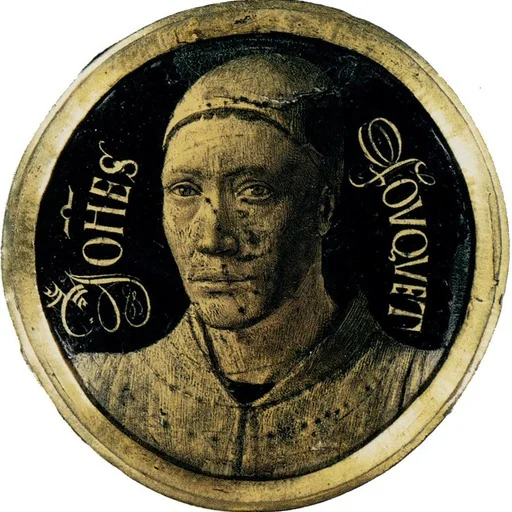
Jean (or Jehan) Fouquet (French:; c. 1420–1481) was a French painter and miniaturist. A master of panel painting and manuscript illumination, and the apparent inventor of the portrait miniature, he is considered one of…

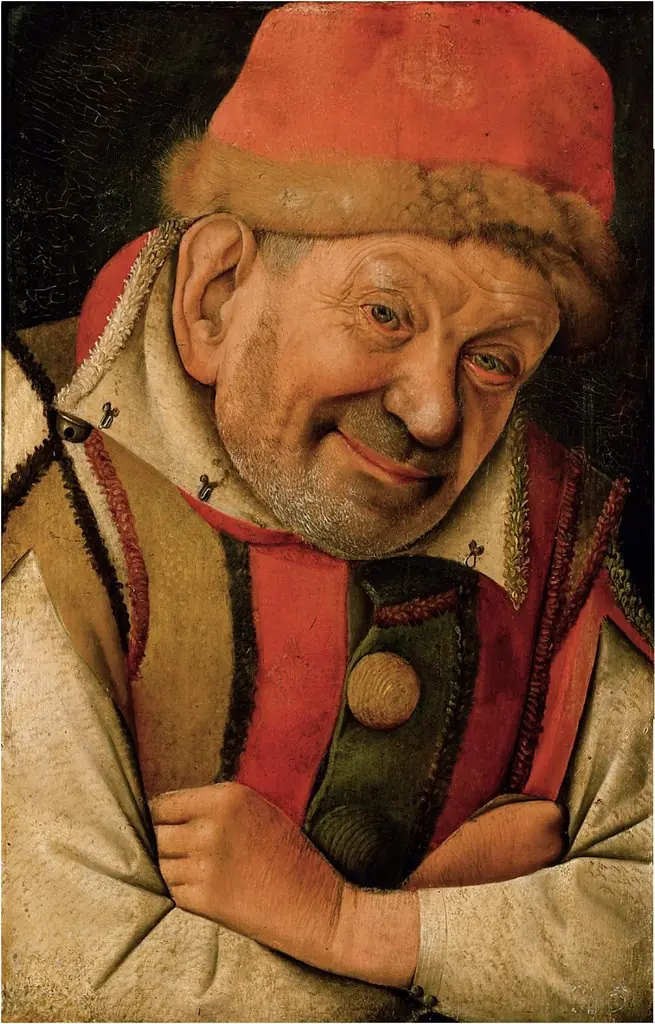
- Ferdinand I of Castile welcoming Saint Dominic of Silos
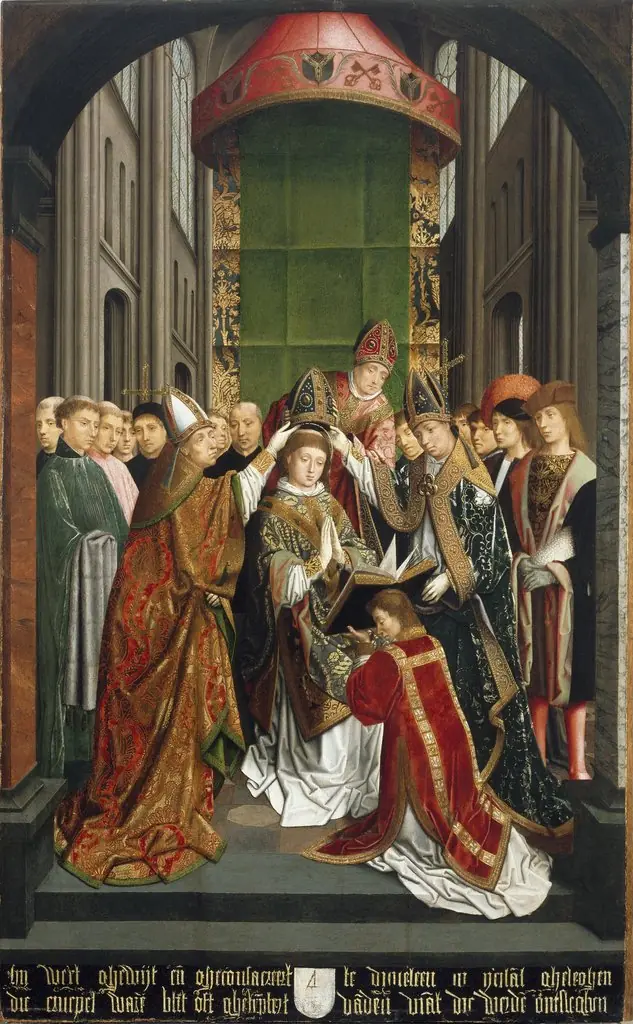 The Enthronement of Saint Romold as Bishop of Dublin
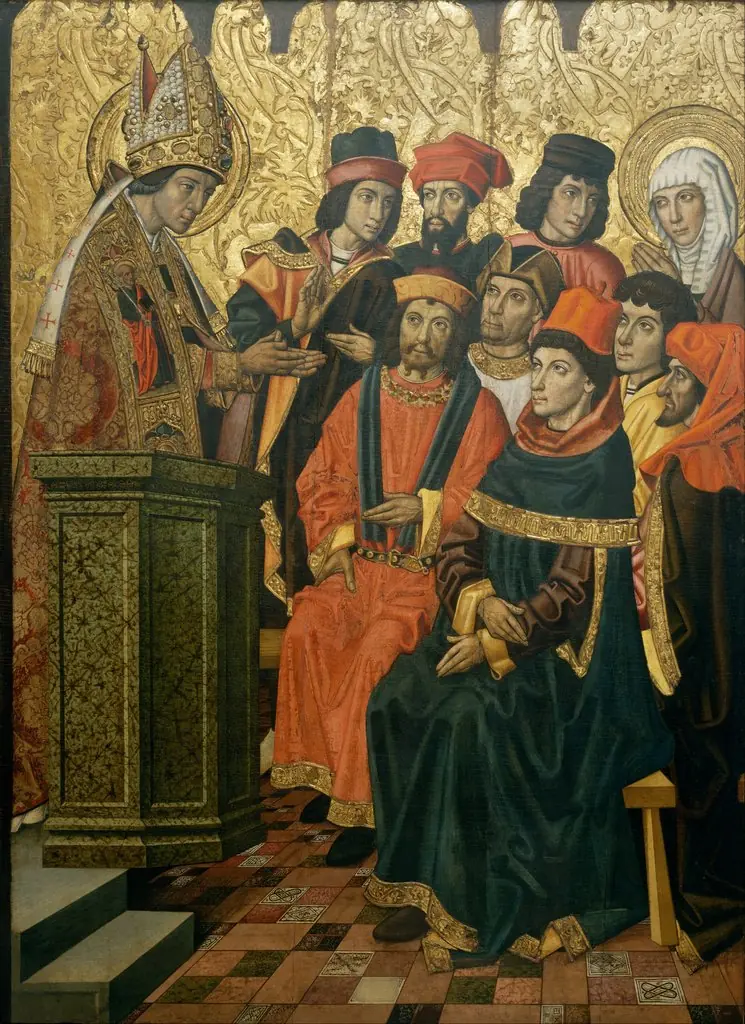 Saint Augustine and Saint Monica in a Sermon by Saint Ambrose
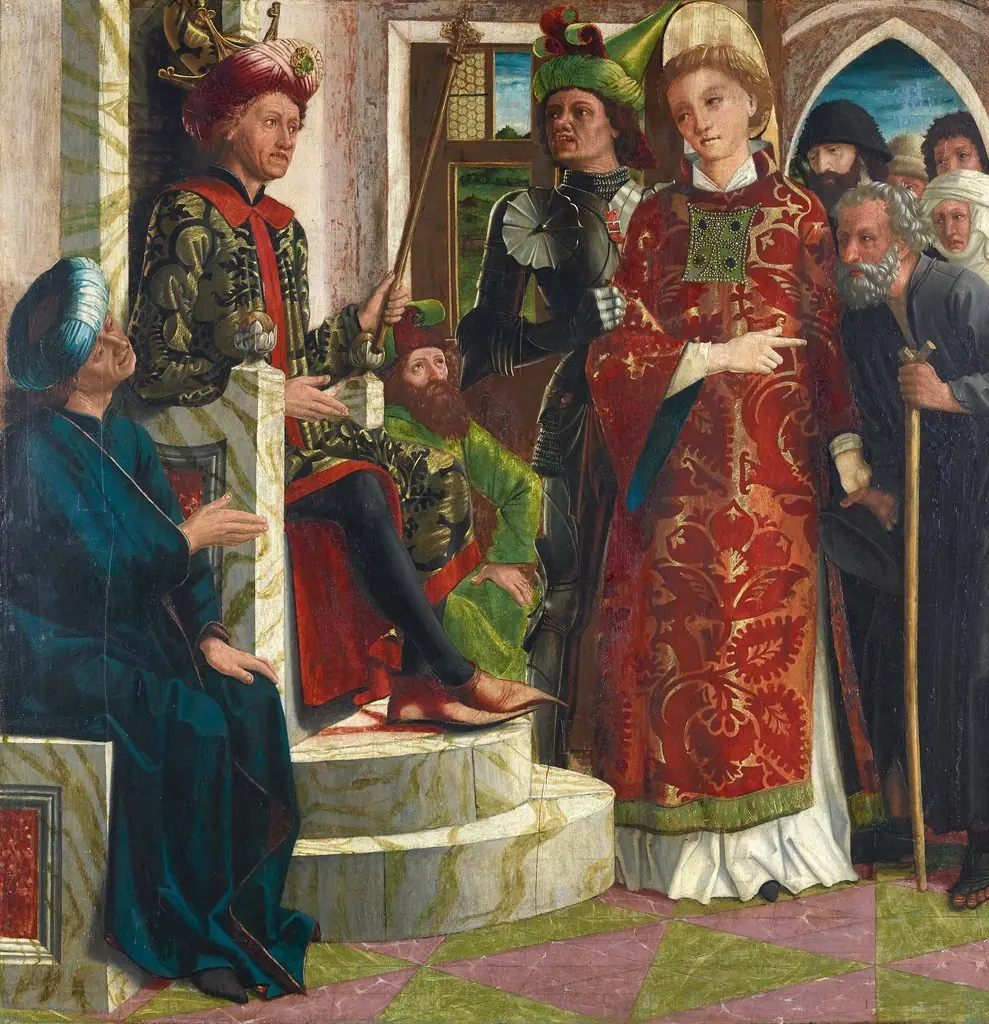 Der hl. Laurentius vor Kaiser Decius
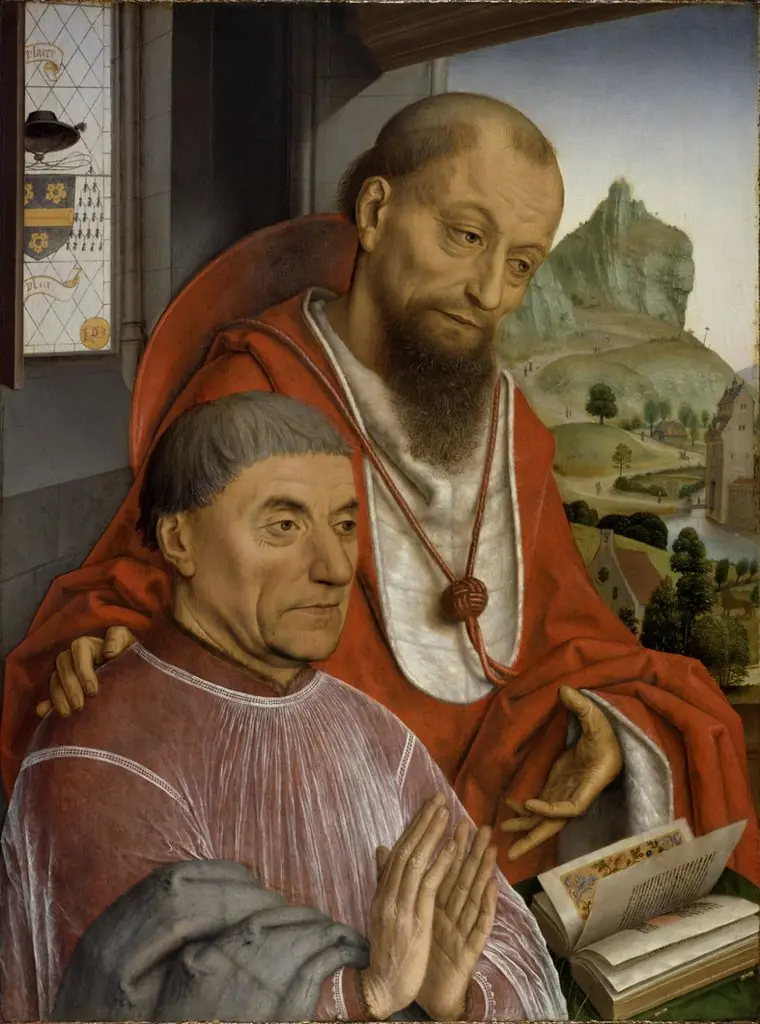 Saint Jerome and a Canon Praying
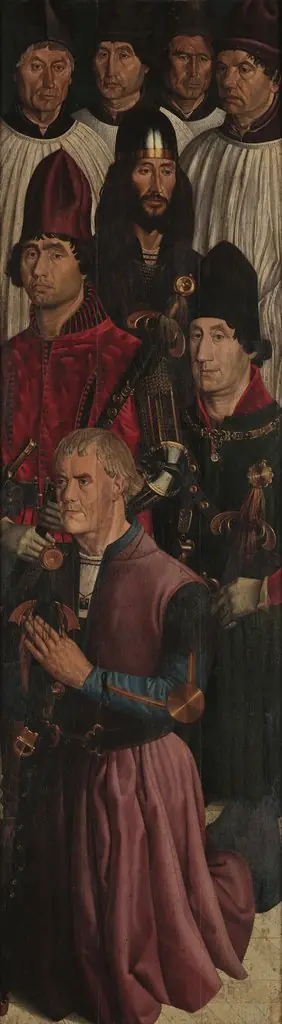 Saint Vincent Panels, fifth panel
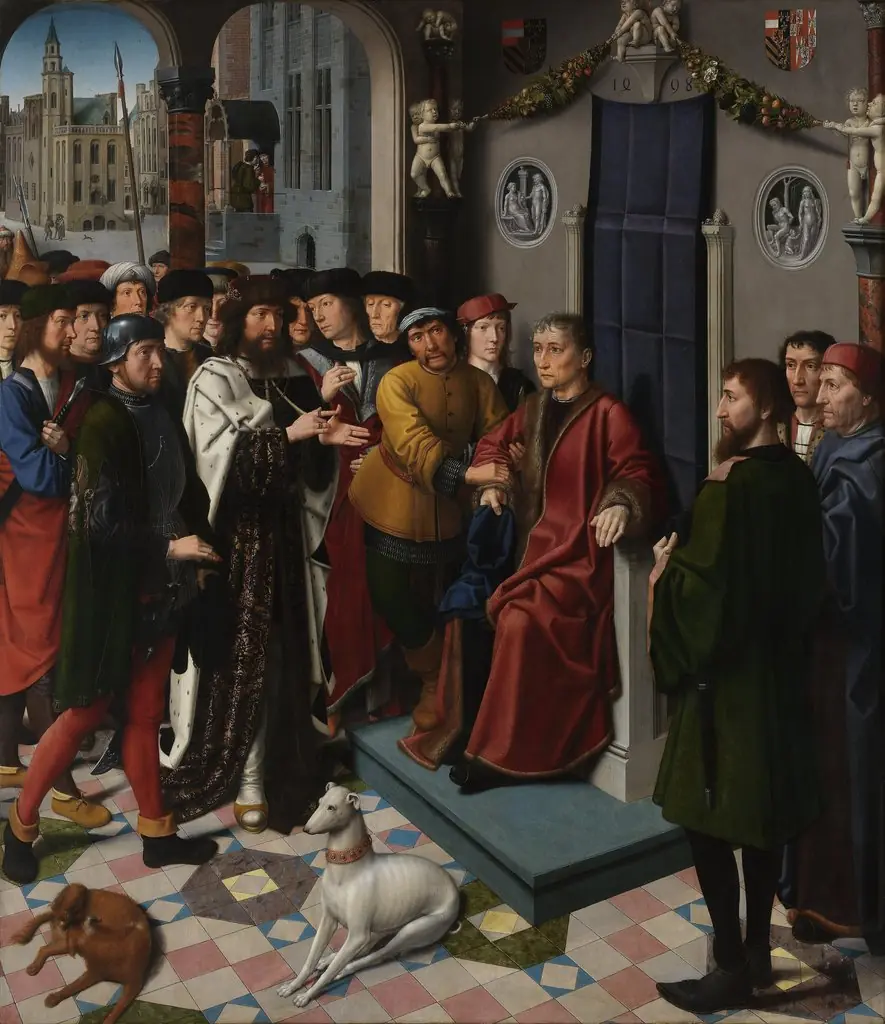 Judgement of Cambyses: The Arrest of Sisamnes
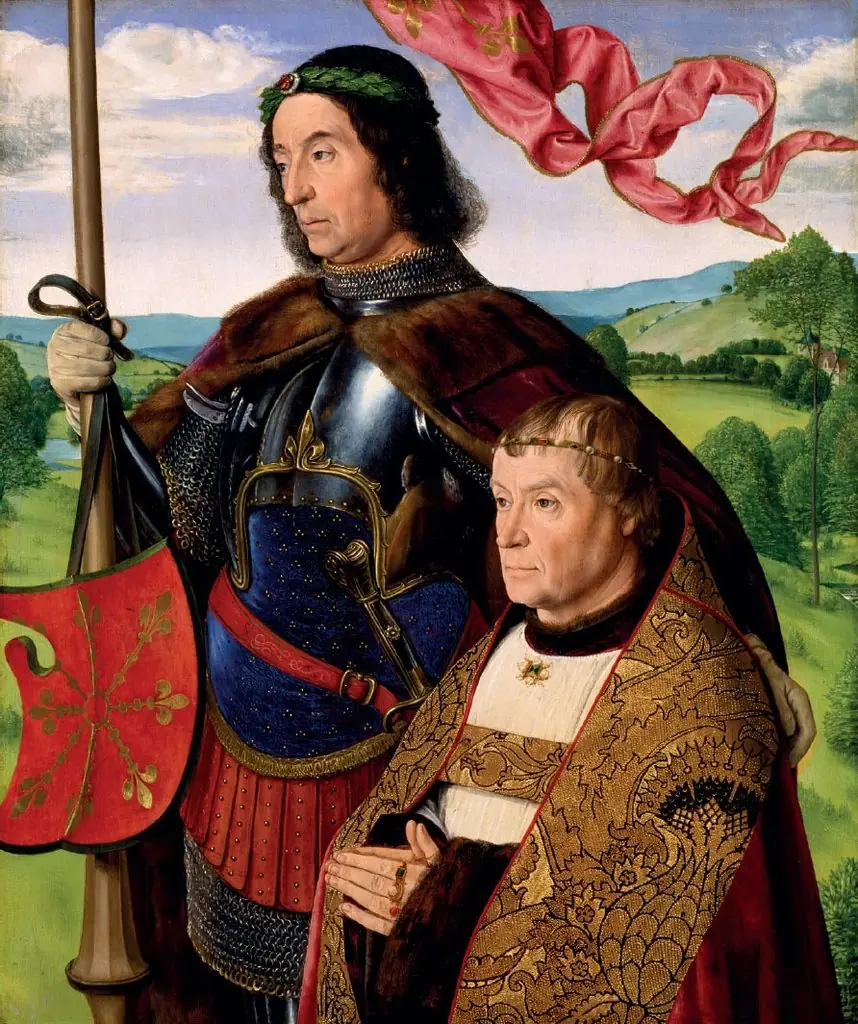 Saint Maurice with a Donor
 Portrait of Maximilian I, Holy Roman Emperor
 Portrait of a Man at Prayer with Saint John the Baptist
 Cardinal Bandinello Sauli, His Secretary, and Two Geographers
 Pope Sixtus II. bids farewell to St. Lawrence