Artwork
Bridge at Poissy (Pêcheurs à ligne)
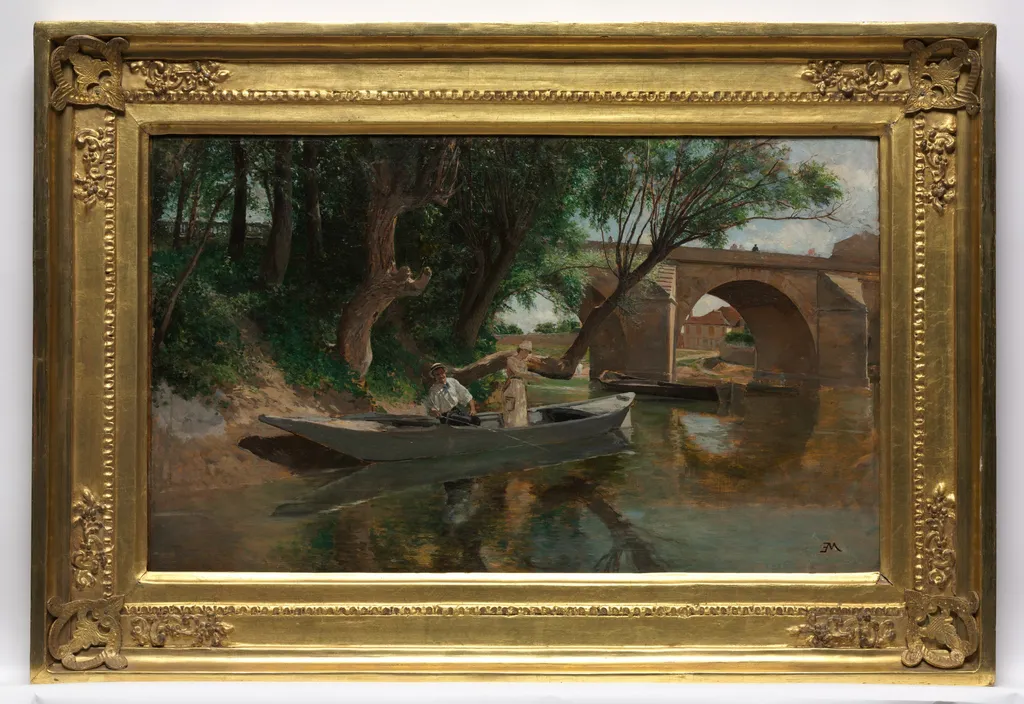
Bridge at Poissy (Pêcheurs à ligne) is an unspecified painting by the Impressionist artist Ernest Meissonier. It dates from 1891 and is held in the collection of the Cleveland Museum of Art.
About this work
Subject & Meaning
The bridge functions as a literal crossing point, but also as a visual metaphor for connection between the river’s commerce and the surrounding community.
The painting shows a modest riverside bridge at Poissy, rendered with careful attention to the daily activities of local fishermen. Meissonier emphasizes the quiet rhythm of labor and the modest scale of the structure, reflecting a realist interest in ordinary French life. The work thus represents a straightforward depiction of provincial industry rather than an idealized or symbolic scene.
The bridge functions as a literal crossing point, but also as a visual metaphor for connection between the river’s commerce and the surrounding community. By focusing on humble fishermen rather than grand narratives, the artist underscores the dignity of manual work and the stability of the local economy in late nineteenth‑century France.
Context
Jean-Louis-Ernest Meissonier (1815–1891) painted Bridge at Poissy (Pêcheurs à ligne) in 1881, a work reflecting his meticulous draftsmanship and fascination with atmospheric effects within the broader context of late 19th-century French landscape painting. Though less celebrated than his historical genre scenes, this canvas demonstrates his technical precision and engagement with contemporary Impressionist explorations of light and riverine environments, situating it within the evolving discourse of French naturalism. Art historians have noted its understated compositional rigor as emblematic of Meissonier's transitional role between academic tradition and emerging modernist sensibilities, despite his waning public prominence by the 1880s.
The painting's provenance at the Cleveland Museum of Art underscores its significance as a representative example of his landscape output, though critical reception during his lifetime often prioritized his narrative works over such studies.
Overview
Jean‑Louis Ernest Meissonier’s 1891 oil painting “Bridge at Poissy (Pêcheurs à ligne)” depicts a quiet river scene near the town of Poissy. The composition centers on a small boat occupied by two figures, set against a backdrop of a stone bridge, modest buildings, and a large overhanging tree. The work is part of the collection of the Cleveland Museum of Art.
Technique & Style
Meissonier employs a restrained palette and careful modeling of light and shadow to render volume, a subtle use of chiaroscuro that emphasizes the figures against the reflective water. Fine brushwork captures the texture of bark, rippling water, and the fabric of the clothing, while the soft illumination creates a warm, inviting ambience throughout the scene.
History & Provenance
Executed in the final decade of Meissonier’s career, the painting entered the Cleveland Museum of Art’s holdings in the early twentieth century, though the precise acquisition details remain modestly documented. Its presence in an American public collection reflects the broader European interest in Meissonier’s genre scenes among collectors of the period.
Own this work as a print
Artist & collection
Artist
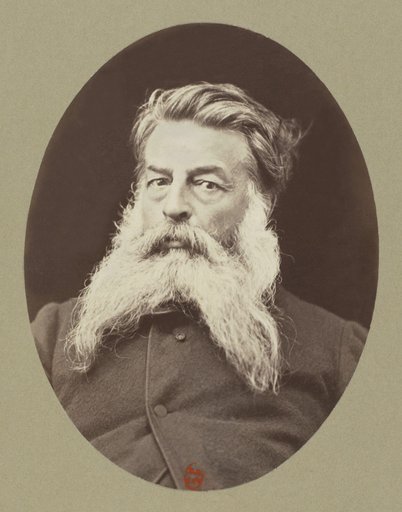
Jean-Louis-Ernest Meissonier was a French academic painter and sculptor. He became famous for his depictions of Napoleon and his military sieges and manoeuvres in paintings acclaimed both for the artist's mastery of…


 French River Landscape with a Bridge
 Förstad till Paris
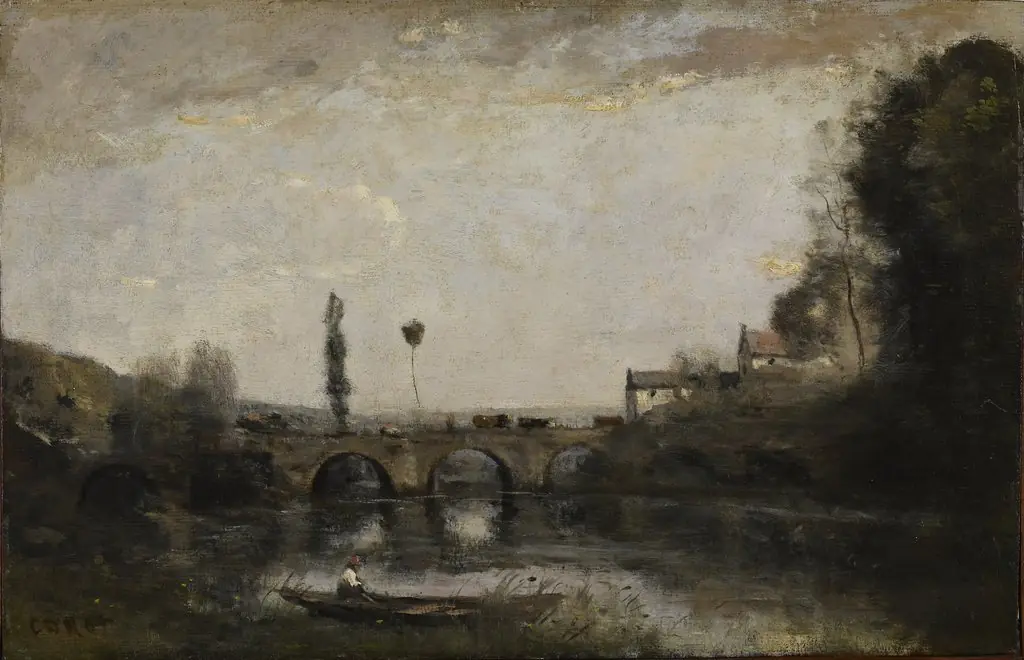 Landscape with Bridge
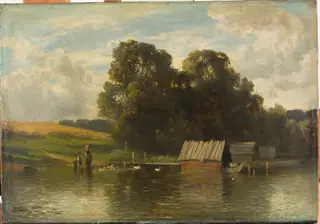 Enten am Starnberger See
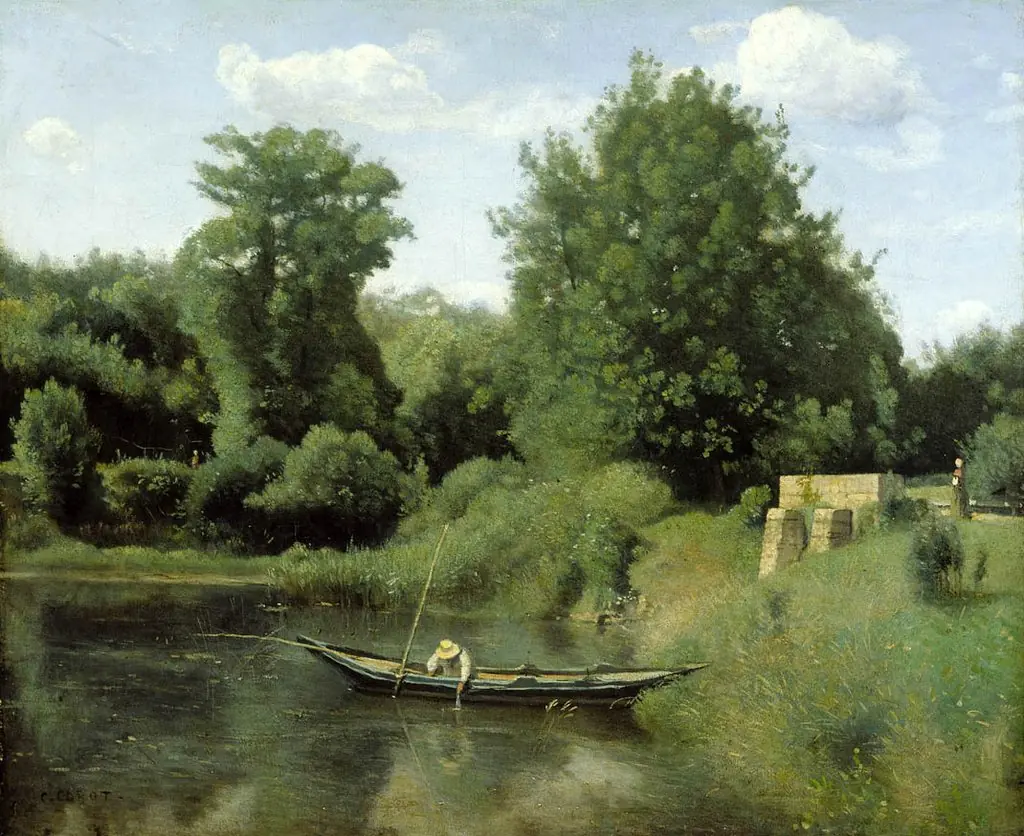 Ville-d'Avray. Le pêcheur auprès de l'écluse
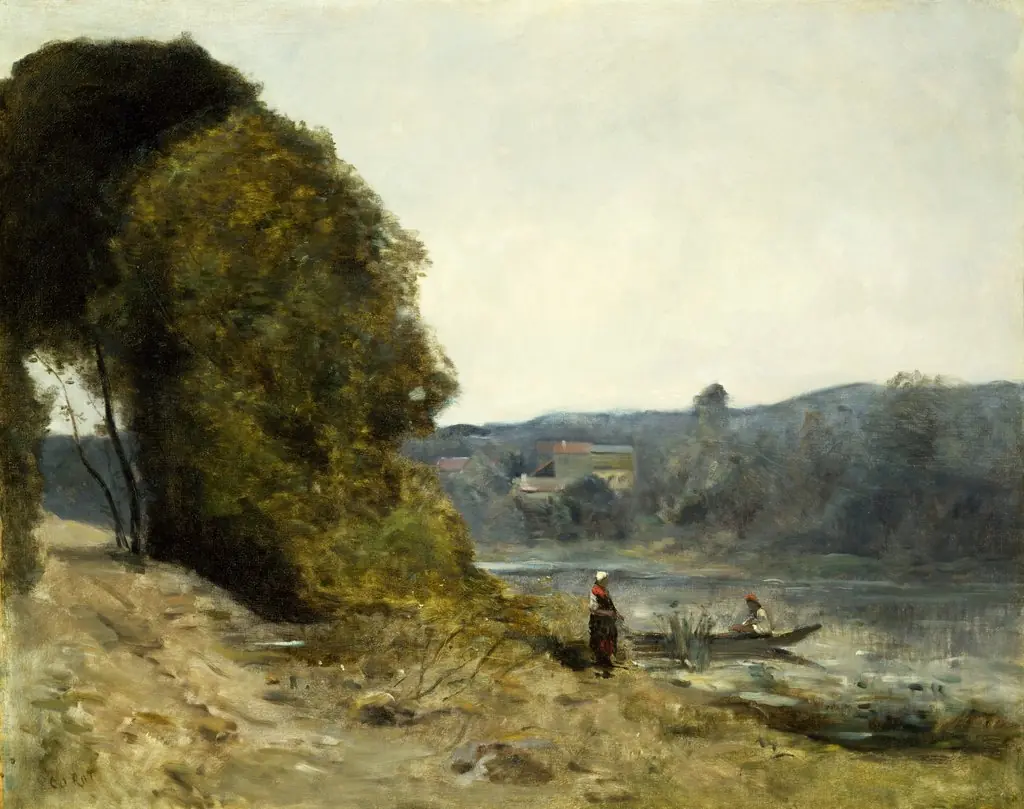 The Departure of the Boatman
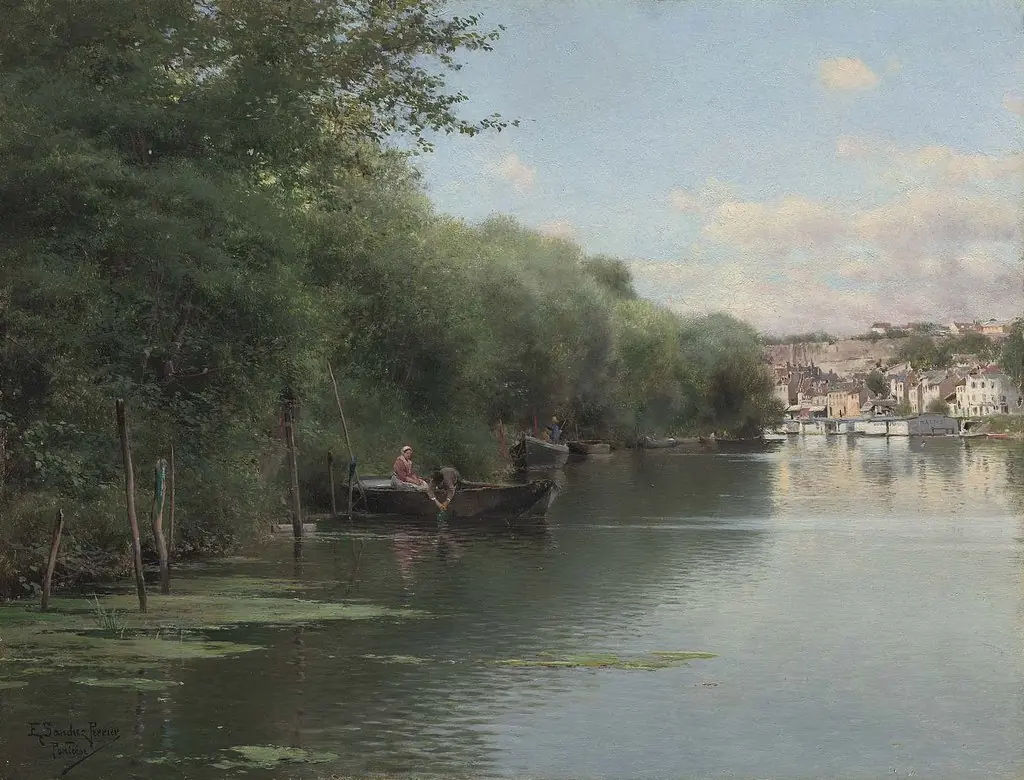 Fishing on the Bank of the Oise, Pontoise
 Cottage by the River with Washerwomen
 Het Minnewater met zicht op Brugge
 Landscape with a Pond