Artwork
The Card Players
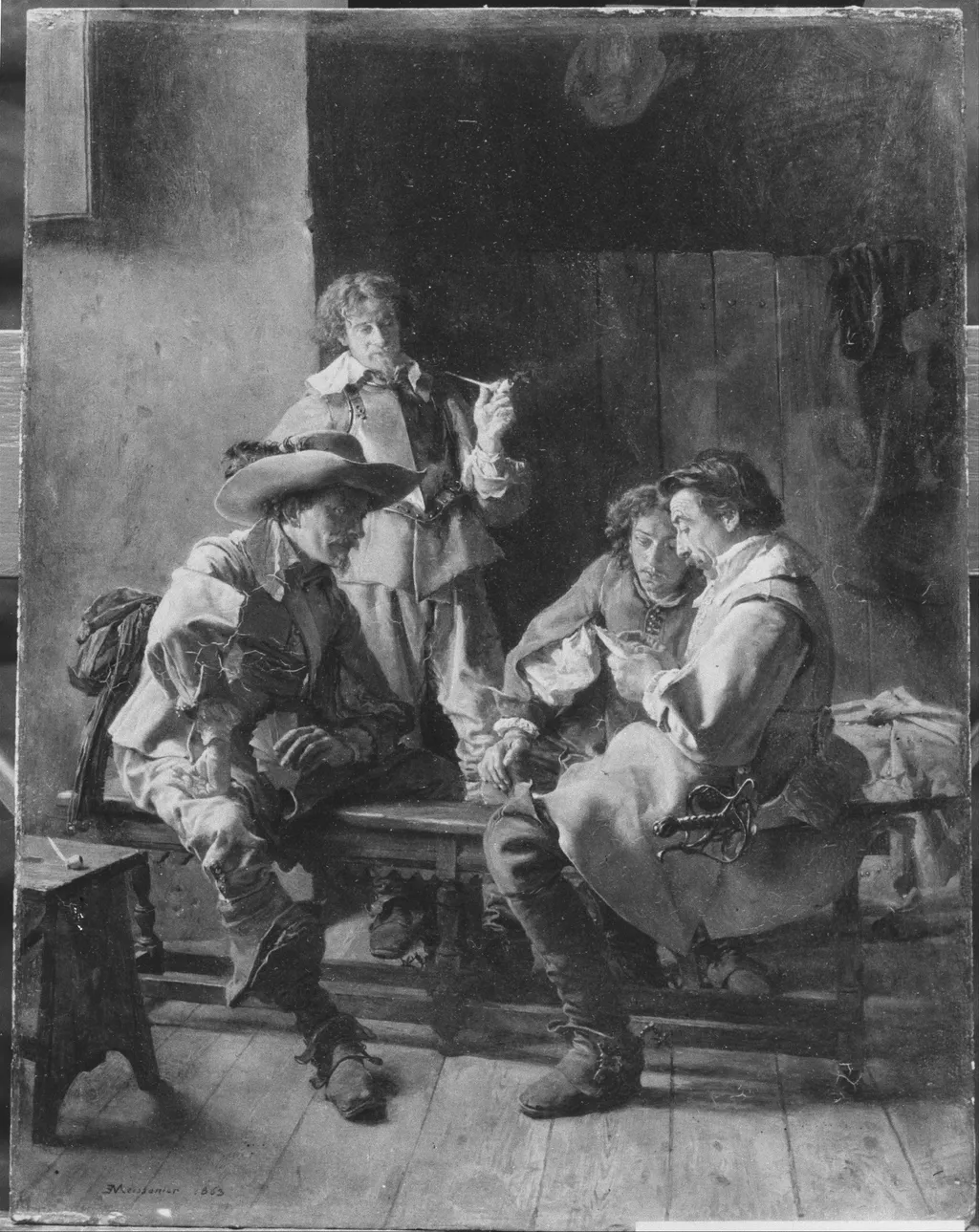
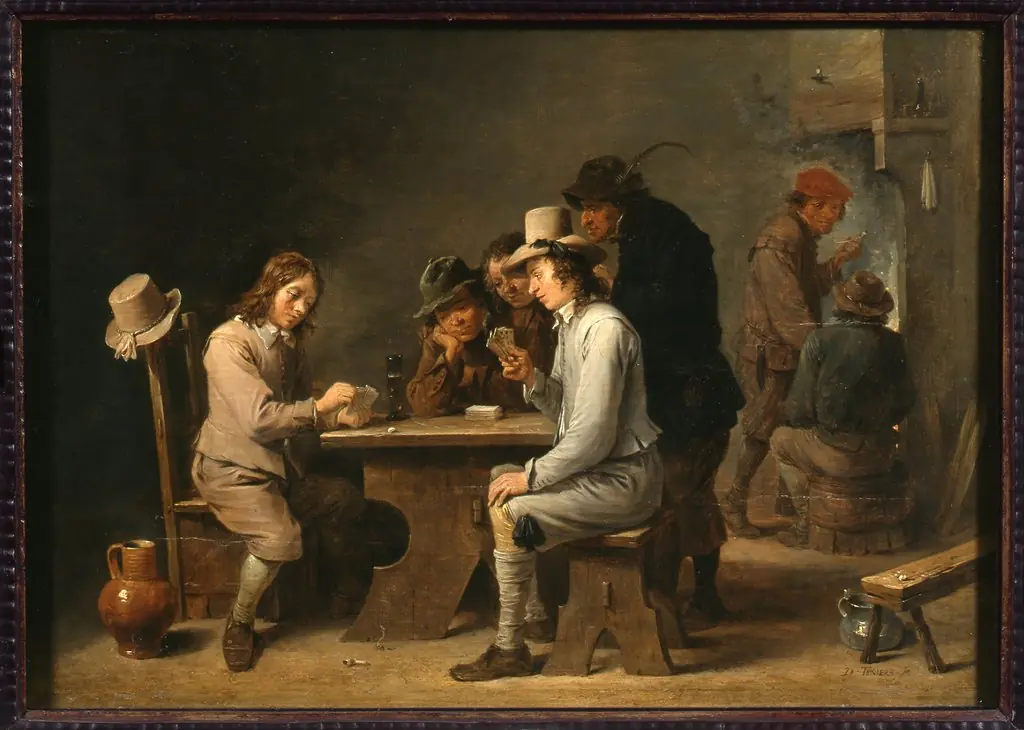
The Card Players is an oil painting by Ernest Meissonier. It dates from 1863 and is held in the collection of the Metropolitan Museum of Art.
About this work
Subject & Meaning
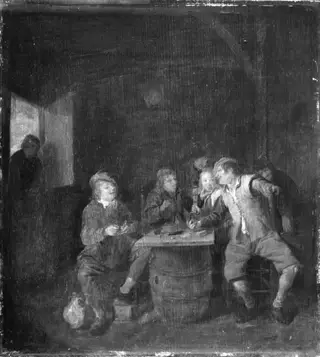
The figures, one smoking a pipe, the other donning a cavalier hat, are positioned at a small table, accompanied by playing cards, a bench, and a visible sword.
Jean-Louis Ernest Meissonier’s The Card Players (1863) depicts two men engaged in a game of cards, rendered with meticulous realism. The figures, one smoking a pipe, the other donning a cavalier hat, are positioned at a small table, accompanied by playing cards, a bench, and a visible sword. The iconography suggests a scene of leisure among military or aristocratic figures, evoking 17th-century Dutch genre paintings.
The sword and cavalier hat imply a connection to military life, while the act of card-playing symbolizes camaraderie, chance, or distraction from duty. The work may represent the tension between relaxation and underlying vigilance, reflecting themes of masculinity, strategy, and the quiet moments of respite in a soldier’s life.
Technique & Style
Executed in 1863, this work by Jean-Louis-Ernest Meissonier is an oil painting applied on a panel support. The composition measures 35.2 cm in height and 26.7 cm in width. Stylistically, the piece focuses on a genre scene depicting men engaged in a card game, with specific attention to period details such as cavalier hats, swords, and smoking pipes.
The inclusion of a bench and the intimate scale suggest a concentrated, detailed approach characteristic of the artist's handling of domestic interiors. The medium of oil on panel allows for the fine precision observed in the rendering of textures and objects within the scene.
History & Provenance
The Card Players was executed in 1863 by Jean‑Louis‑Ernest Meissonier as an oil painting on panel. While no record of a specific commission survives, the work remained in private hands before entering the collection of the Metropolitan Museum of Art, where it is now catalogued and displayed. The painting’s provenance is therefore traced from its creation in the artist’s studio to its present status as part of the Met’s holdings.
The Card Players, painted by Jean‑Louis‑Ernest Meissonier in 1863, is part of the permanent collection of the Metropolitan Museum of Art in New York. The work is housed in the museum’s European Paintings department, though the precise accession or inventory number is not disclosed in the available documentation. The painting has not been listed in publicly recorded exhibition catalogues according to the sources consulted, and no temporary loan or special exhibition history is recorded in the provided references.
Legacy
Ernest Meissonier’s The Card Players (1863) became a touchstone for later realist and genre painters who admired its meticulous detail and narrative intimacy. While overshadowed in the twentieth century by avant-garde movements, the work retained prestige among collectors and institutions, exemplified by its acquisition by the Metropolitan Museum of Art, where it remains a key example of Second Empire French painting. Critics and scholars have since revisited the painting for its technical precision and its role in elevating quotidian scenes to high art, securing its legacy as a masterwork of nineteenth-century realism.
Overview
Painted in 1863, Jean-Louis-Ernest Meissonier's The Card Players depicts three men engaged in a game of cards within a sparsely furnished interior. The composition focuses on the figures seated around a small table, illuminated by a light source that highlights their expressions and the texture of their clothing against a shadowed background. The man on the left wears a wide-brimmed hat and carries a bag, suggesting a traveler or soldier, while the central figure holds a pipe and gestures toward the cards, directing the viewer's attention to the game's critical moment.
The third participant leans forward intently, emphasizing the psychological tension of the contest. Meissonier, renowned for his meticulous attention to historical detail and small-scale genre scenes, executes the work with precise brushwork, capturing the rough textures of the wooden floor and the plain walls. This painting aligns with the artist's mid-career exploration of 17th-century Dutch genre traditions, adapted to a French context.
It reflects his reputation for creating intimate, narrative-driven scenes that prioritize the accuracy of costume and setting over dramatic action, solidifying his status as a leading academic painter of the Second Empire who specialized in historical and genre subjects.
Own this work as a print
Artist & collection
Artist
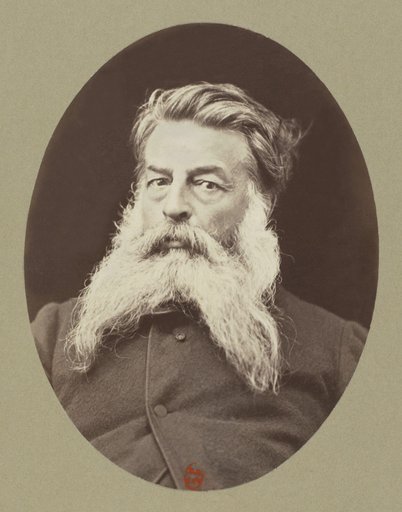
Jean-Louis-Ernest Meissonier was a French academic painter and sculptor. He became famous for his depictions of Napoleon and his military sieges and manoeuvres in paintings acclaimed both for the artist's mastery of…