Artwork
Josefa Manzanedo e Intentas de Mitjans, Second Marchioness of Manzanedo
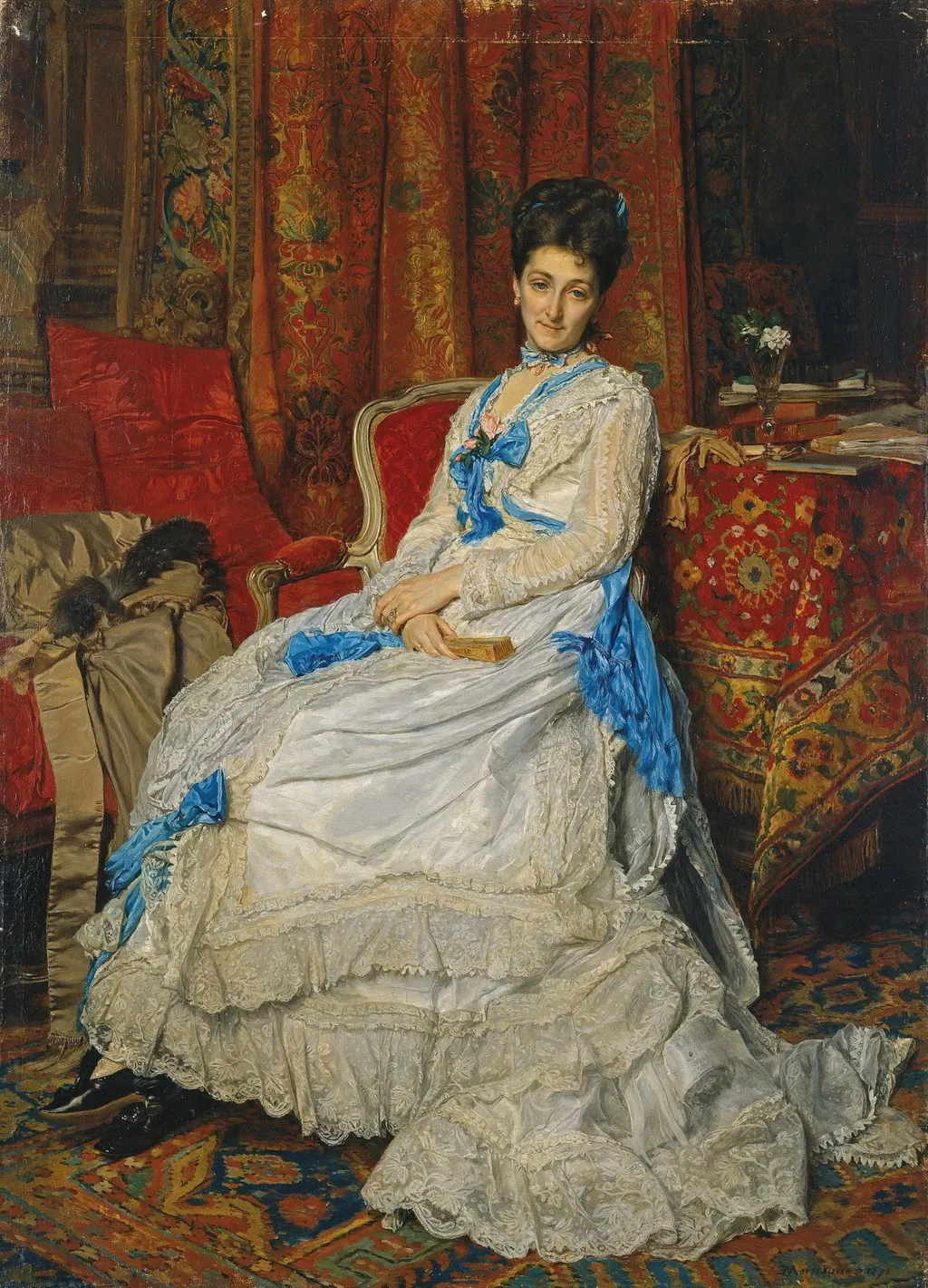
Josefa Manzanedo e Intentas de Mitjans, Second Marchioness of Manzanedo is an oil painting by the Realist artist Ernest Meissonier. It dates from 1872 and is held in the collection of the Museo del Prado.
About this work
Subject & Meaning
Surrounding the sitter are objects drawn from the vocabulary of luxury and learning: a vase, a book, a table, a hand fan, a glove, and a gemstone.
The painting presents Josefa Manzanedo e Intentas de Mitjans, Second Marchioness of Manzanedo, through a carefully arranged still-life vocabulary that signals her aristocratic status and refined tastes. Surrounding the sitter are objects drawn from the vocabulary of luxury and learning: a vase, a book, a table, a hand fan, a glove, and a gemstone. Each item carries conventional iconographic weight, the book suggests cultivation and intellect, the fan and gloves denote social refinement and the rituals of elite sociability, while the gemstone functions as an emblem of wealth and dynastic prestige.
Together these attributes frame the marchioness as a woman of breeding, education, and material distinction, using material objects to communicate rank and character rather than narrative action.
The composition thus operates as a portrait of status: the depicted objects are not incidental props but symbolic markers that translate the sitter's social position into visual form, situating her within the conventions of nineteenth-century aristocratic portraiture.
History & Provenance
The portrait was executed in 1872 by Jean-Louis-Ernest Meissonier, as indicated by the artist’s date and the work’s inclusion in the Museo del Prado’s holdings.
Meissonier depicted Josefa Manzanedo e Intentas de Mitjans, Second Marchioness of Manzanedo, presenting a three-quarter-length figure with attributes such as a vase, book, and fan. The painting measures 58 cm in height and 42 cm in width.
The painting is held in the collection of the Museo del Prado in Madrid. It entered the museum's holdings as part of the institution's assemblage of 19th‑century Spanish artworks, though the specific accession or inventory number assigned by the Prado is not recorded in the available documentation. The work, an oil on canvas dated 1872, measures 58 cm by 42 cm. No exhibition records pertaining to this piece are cited in the sources consulted.
Context
Meissonier's 1872 oil on canvas, titled Josefa Manzanedo e Intentas de Mitjans, Second Marchioness of Manzanedo, measures 58 × 42 cm and is housed in the Museo del Prado. The work portrays the aristocratic sitter surrounded by modest household objects, a vase, book, table, hand fan, glove and gemstone, rendered with meticulous detail.
Scholars view the painting as emblematic of the artist’s transition from historic narrative to intimate genre subjects, reflecting 19th‑century bourgeois domesticity while maintaining academic technique. Its presence in a major museum underscores its significance within European art history as a bridge between realism and the evolving interest in everyday aristocratic life.
Overview
Jean Louis Ernest Meissonier completed this oil painting, titled Josefa Manzanedo e Intentas de Mitjans, Second Marchioness of Manzanedo, in 1872. The artwork is a formal portrait of the Marchioness, rendered with meticulous detail. It is currently part of the collection at the Museo del Prado, offering insight into aristocratic representation during the late 19th century.
Technique & Style
Meissonier utilized oil paint with a distinct application of impasto, particularly noticeable in the Marchioness's elaborate dress. This technique involves laying paint on thickly, creating a textured surface where brushstrokes are visibly raised. This approach enhances the tactile quality of the fabric, lending a sense of depth and material richness to her attire and contributing to the overall realism of the portrait.
Own this work as a print
Artist & collection
Artist
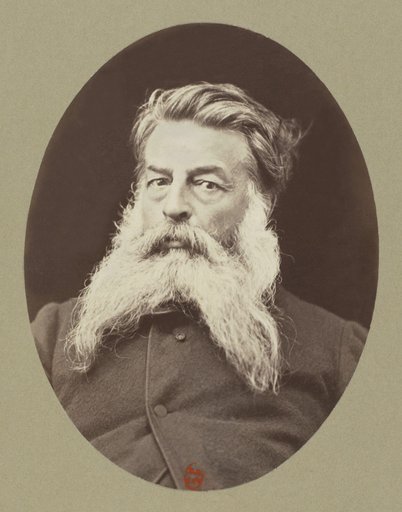
Jean-Louis-Ernest Meissonier was a French academic painter and sculptor. He became famous for his depictions of Napoleon and his military sieges and manoeuvres in paintings acclaimed both for the artist's mastery of…

- Desperate
 The artist's sister-in-law
 Portrait of Izabela Tyszkiewicz née Tyszkiewicz (1835–1907)
 Portrait of a Woman in a White Dress
 Portrait of Princess Brancaccio-Massimo
 María Hahn esposa del pintor
 María de las Mercedes de Alcázar y Nero Vera de Aragón marquesa de Coquilla
 Ausencia
 Young Woman
 Portrait of Alexandrine Patchenko, the Painter’s Sister-in-Law
 Lectură
 Reading Parisienne