Artwork
金處士筆 十王図の内|Ten Kings of Hell
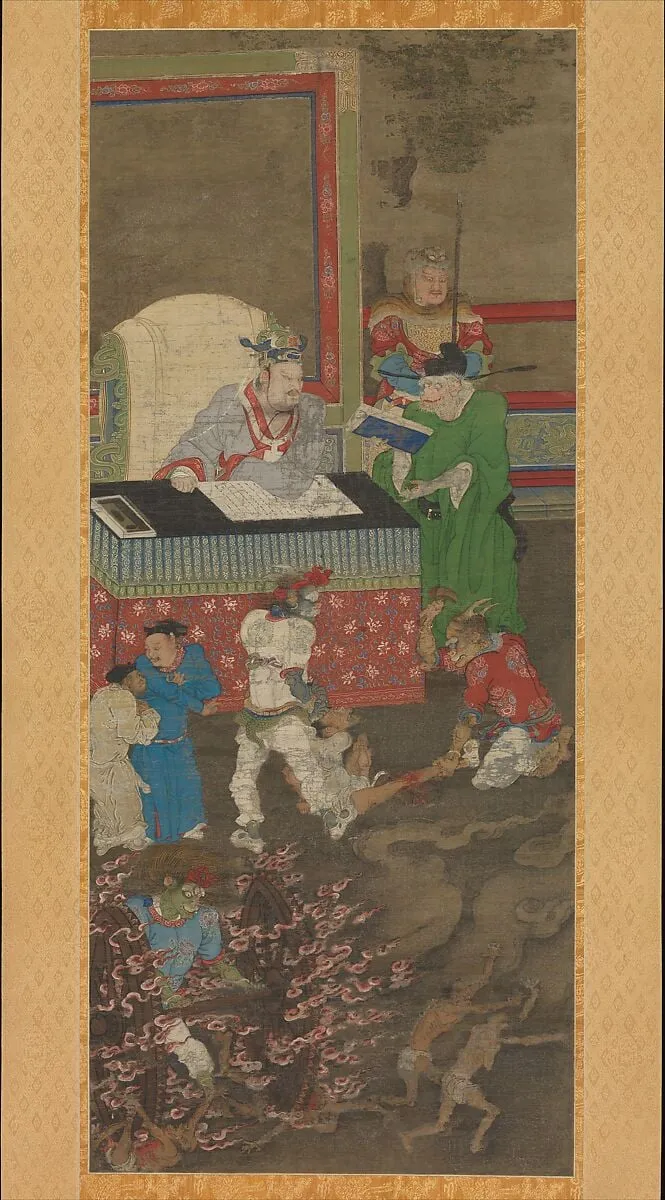
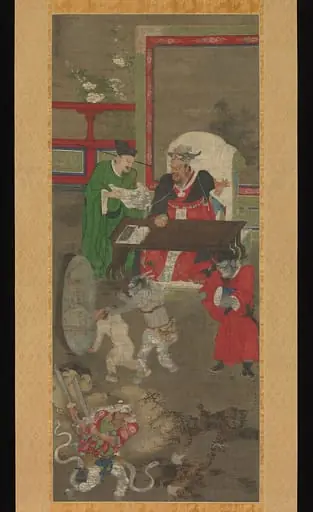
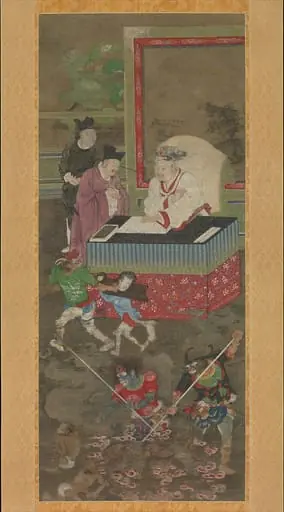
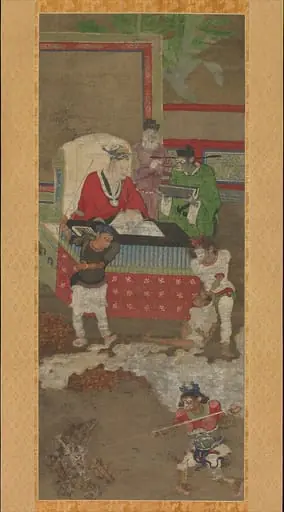
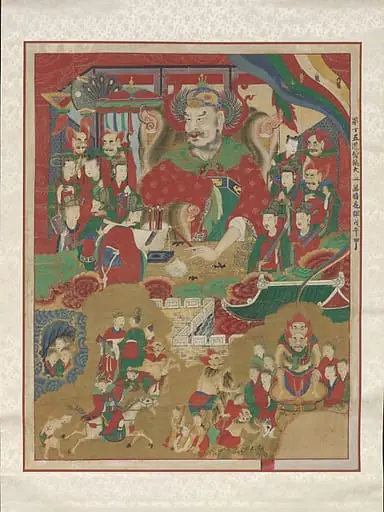
金處士筆 十王図の内|Ten Kings of Hell is an ink painting by the Ming dynasty painting artist Jin Chushi. It dates from 1195 and is held in the collection of the Metropolitan Museum of Art.
About this work
Subject & Meaning
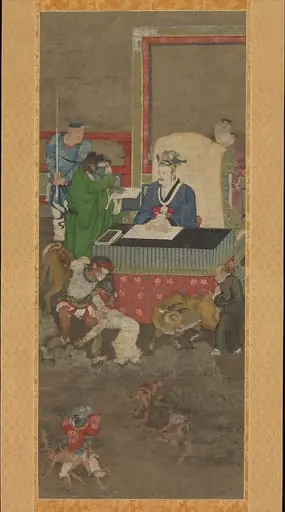
These visual elements collectively represent the bureaucratic and judicial processes of the underworld, where the deceased face judgment.
Created in 1195 by the artist Jin Chushi, this hanging scroll functions as a component of a larger ten-part set dedicated to the Ten Kings of Hell, a subject rooted in religious tradition. The work's iconography centers on the depiction of specific figures, including a man and a demon, arranged in relation to a table. These visual elements collectively represent the bureaucratic and judicial processes of the underworld, where the deceased face judgment.
As one of five surviving scrolls from the original series, the piece utilizes ink and color on silk to illustrate the hierarchical structure of hellish realms, symbolizing the moral consequences of human actions through the presence of both human souls and supernatural adjudicators.
Technique & Style
The Ten Kings of Hell scroll by Jin Chushi, dated 1195, is painted in ink and polychrome on silk and presented as a hanging scroll, one of ten companion pieces in the series. The composition depicts a demon, a man, and a table, reflecting its religious genre. Executed in China, the work belongs to the Metropolitan Museum of Art collection.
As a hanging scroll, the piece employs traditional Chinese brushwork and layered color washes to convey narrative detail, characteristic of Song‑era Buddhist illustration.
History & Provenance
The work, attributed to the artist Jin Chushi, was created in China during the year 1195. Originally conceived as a component of a larger religious set, this specific piece represents one of five surviving hanging scrolls from an intended group of ten, often collectively referred to as the Ten Kings of Hell. Executed in ink and color on silk, the painting falls within the religious genre and depicts figures including demons and men seated at tables.
The artwork is currently held in the collection of the Metropolitan Museum of Art. While the specific commission details and the full ownership chain prior to its arrival at the museum are not detailed in the available records, the piece is dated to the late 12th century and identified as a product of Chinese artistic production from that era.
Overview
This hanging scroll, titled Ten Kings of Hell, was created by Jin Chushi in 1195. Executed with ink and color on silk, it is one of a set of ten paintings, each dedicated to a different ruler of the underworld. The artwork presents a scene of post-mortem judgment, where a king of hell presides over the fate of the deceased.
Artist & collection

Artist
Jin Chushi was a Chinese Buddhist painter active at the port city of Ningbo (Mingzhou) during the Southern Song dynasty in the thirteenth century.