Artwork
金處士筆 十王図の内|Ten Kings of Hell
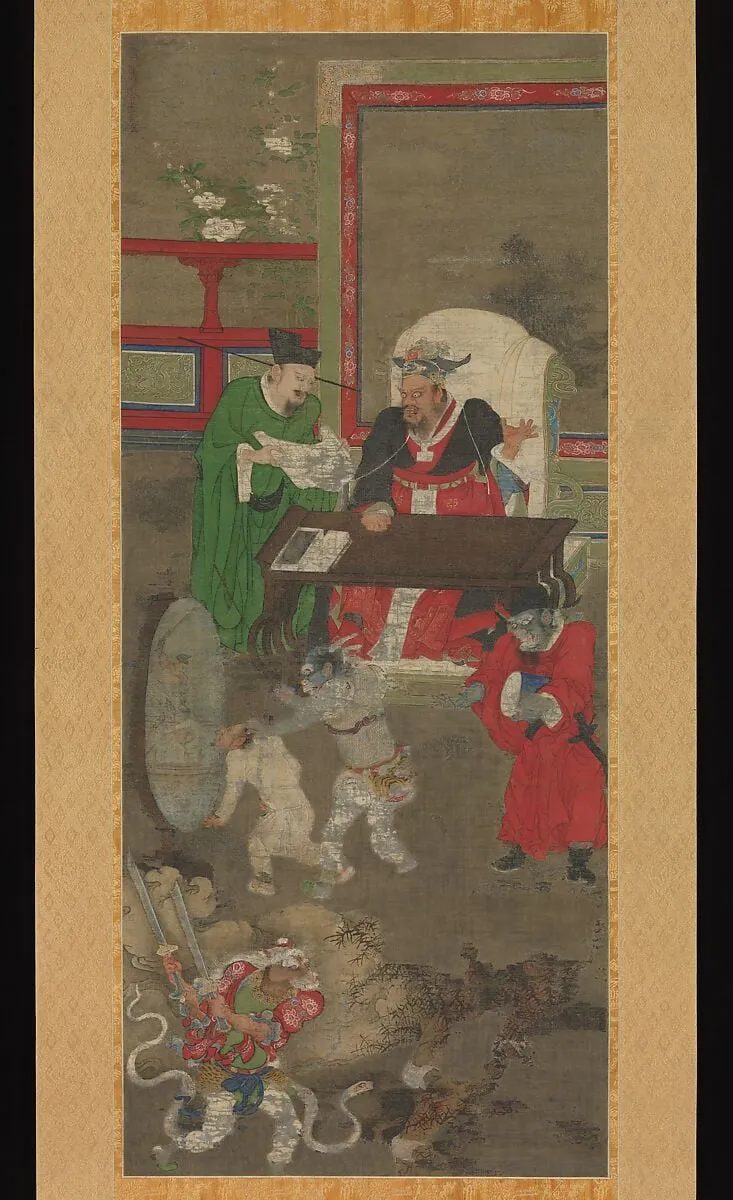
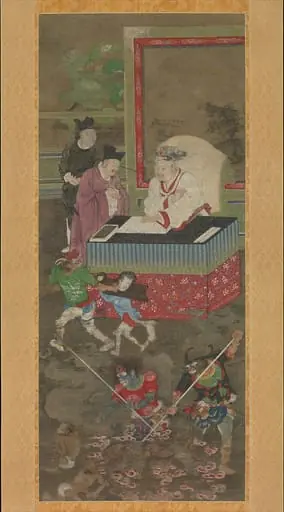
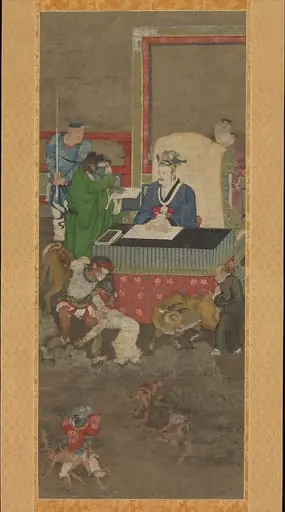
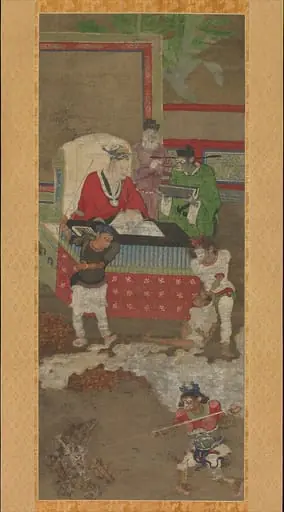
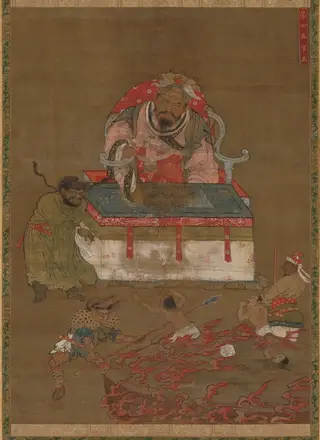
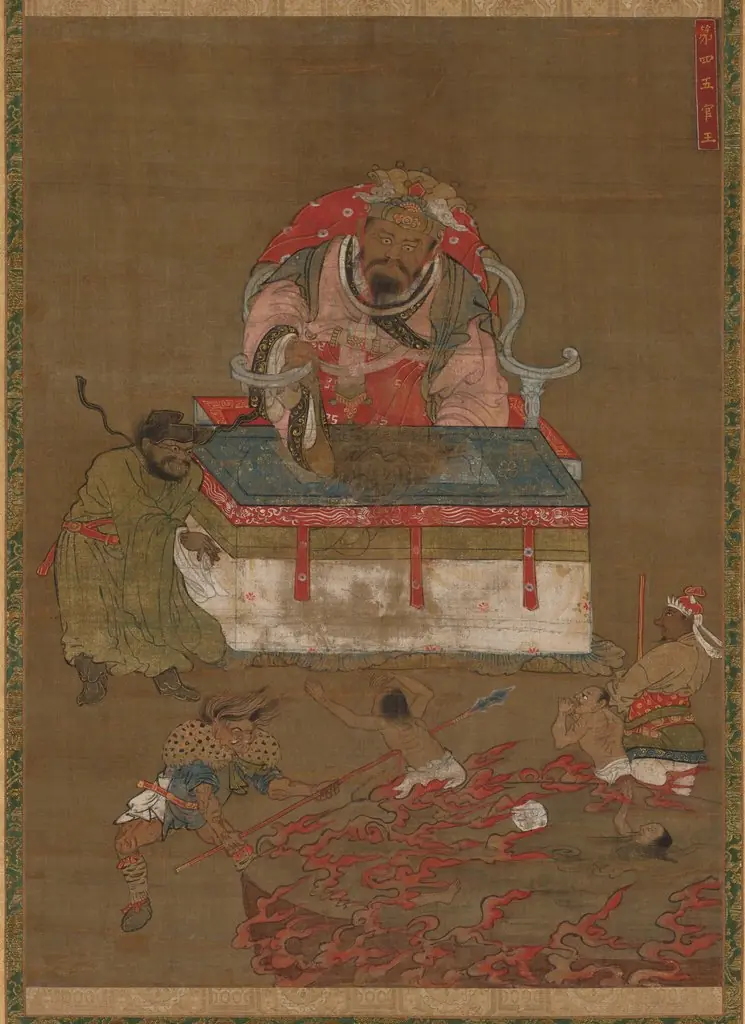
金處士筆 十王図の内|Ten Kings of Hell is an ink painting by the Ming dynasty painting artist Jin Chushi. It dates from 1195 and is held in the collection of the Metropolitan Museum of Art. This hanging scroll, executed in ink and color on silk, is part of a larger series illustrating the Ten Kings of Hell.
- Accession no.
- 30.76.293
- Credit line
- Rogers Fund, 1930
About this work
Subject & Meaning
This visual narrative reinforces the religious function of the artwork as a guide or warning regarding the consequences of earthly actions after death.
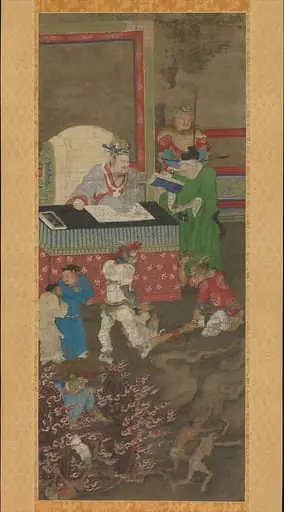
The work depicts the Ten Kings of Hell, a religious subject featuring kings, demons, and human figures within a setting of judgment. Created by Jin Chushi in 1180, this hanging scroll is one of a set of five originally comprising ten pieces. The iconography includes specific symbolic elements such as snakes and swords held by the figures, which represent the instruments of judgment and the punitive nature of the afterlife realm.
The composition illustrates the traditional Buddhist cosmology where the deceased face judgment by these monarchs. The presence of these distinct entities, kings presiding over demons and men, serves to visualize the moral reckoning process in the underworld. This visual narrative reinforces the religious function of the artwork as a guide or warning regarding the consequences of earthly actions after death.
Technique & Style
The set employs ink and mineral pigments on silk, executed in a refined line-and-wash manner typical of Southern Song academic practice. Figures are drawn with supple, attenuated contours that modulate into graded washes to articulate volume and drapery, while demonic adjuncts such as snakes and swords are heightened in saturated cinnabar and azurite. The handling privileges clarity over density, using sparse but decisive ink lines to define physiognomies and postures, then layering translucent washes to model musculature and bone structure.
Stylistic qualities include attenuated elegance, symmetrical frontality for the ten kings, and a restrained palette dominated by earthy ink, vermilion, and malachite, all set against a plain silk ground.
History & Provenance
The Ten Kings of Hell handscroll is attributed to the Chinese painter Jin Chushi and dated to 1180. It forms part of a set of five scrolls depicting the Ten Kings of Hell, a Buddhist subject. The work was likely created during the Southern Song dynasty (1127–1279), a period marked by the flourishing of religious painting in the Jiangnan region.
The Metropolitan Museum of Art holds one of the scrolls from this set (accession no. 30.76.293), indicating its presence in a major Western collection by the mid-20th century. The painting’s religious iconography and stylistic features align with Jin Chushi’s known works, suggesting it was commissioned for devotional or monastic contexts rather than secular display.
The painting Ten Kings of Hell, created by Jin Chushi in 1180, is housed in the Metropolitan Museum of Art in New York. Its accession number within the museum is 30.76.293. The work is part of a ten‑scroll hanging‑scroll set and is classified as a religious painting depicting demon, king, man, snake, and sword.
Exhibition records are not mentioned in the available documentation, indicating that the piece has not been listed in publicly noted exhibitions to date.
Overview
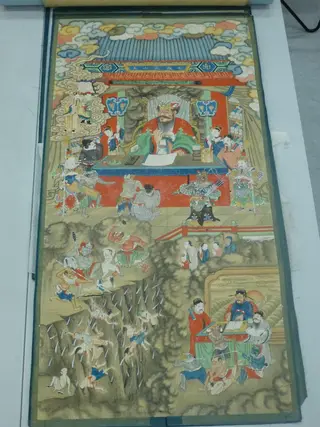
This hanging scroll, executed in ink and color on silk, is part of a larger series illustrating the Ten Kings of Hell. It depicts a scene from the Buddhist underworld, where one of the ten rulers presides over the fate of the deceased. The composition features the enthroned king surrounded by an array of figures, including demons, snakes, and individuals awaiting judgment. This painting served a ritualistic purpose within Chinese Buddhist practices.
Context
This painting belongs to a larger set specifically created for use in Chinese Buddhist rituals. These ceremonies were designed to facilitate the passage of souls through the intricate stages of the afterlife, where the Ten Kings played a crucial role. The artworks served as visual aids, illustrating the process by which each king would assess the deeds of the deceased and determine their subsequent fate, whether advancement or retribution.
Artist & collection

Artist
Jin Chushi was a Chinese Buddhist painter active at the port city of Ningbo (Mingzhou) during the Southern Song dynasty in the thirteenth century.