Artwork
金處士筆 十王図の内|Ten Kings of Hell
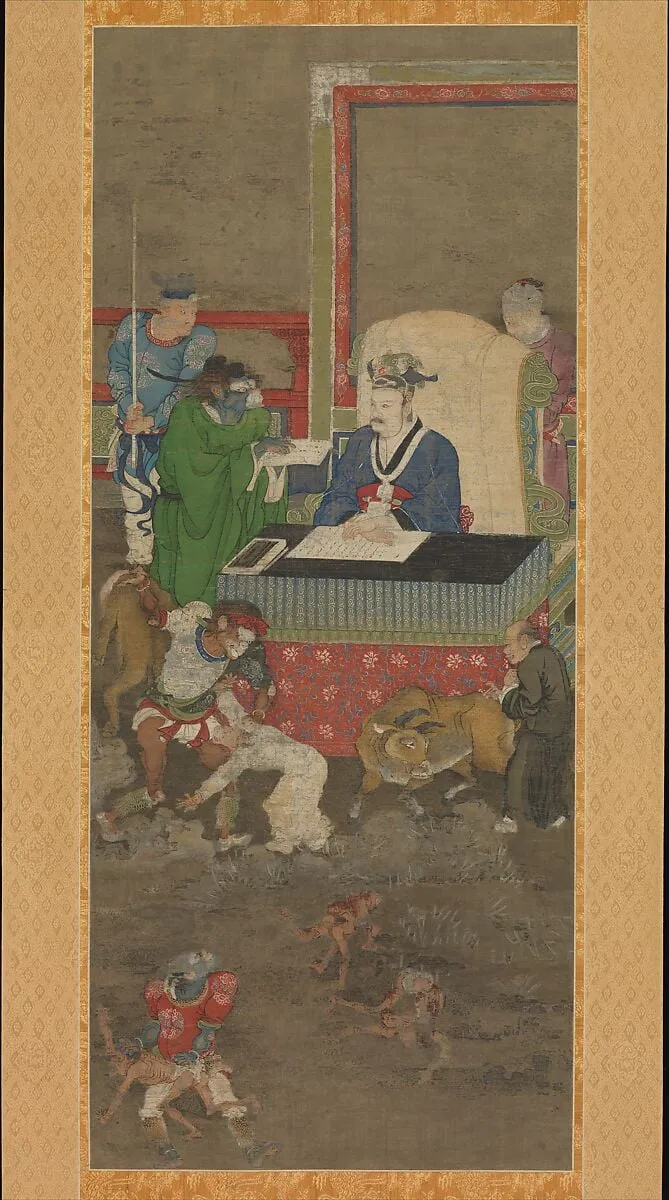
金處士筆 十王図の内|Ten Kings of Hell is an ink painting by the Ming dynasty painting artist Jin Chushi. It dates from 1195 and is held in the collection of the Metropolitan Museum of Art.
About this work
Subject & Meaning
The imagery illustrates the judgment process souls undergo after death, presided over by the ten monarchs of the underworld.
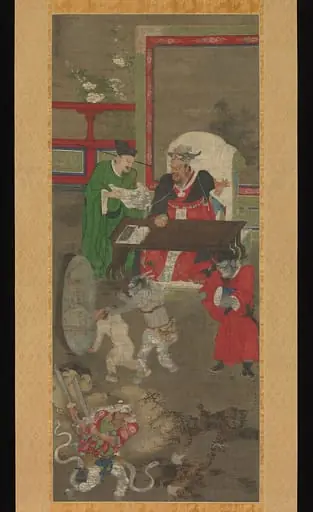
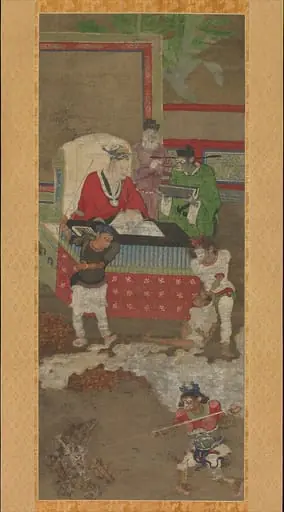
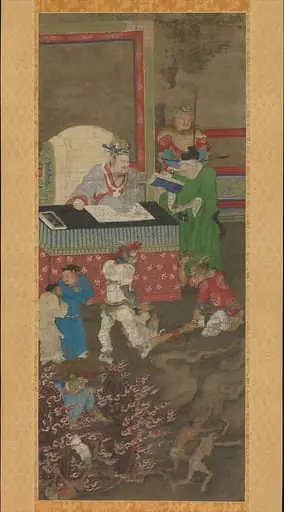
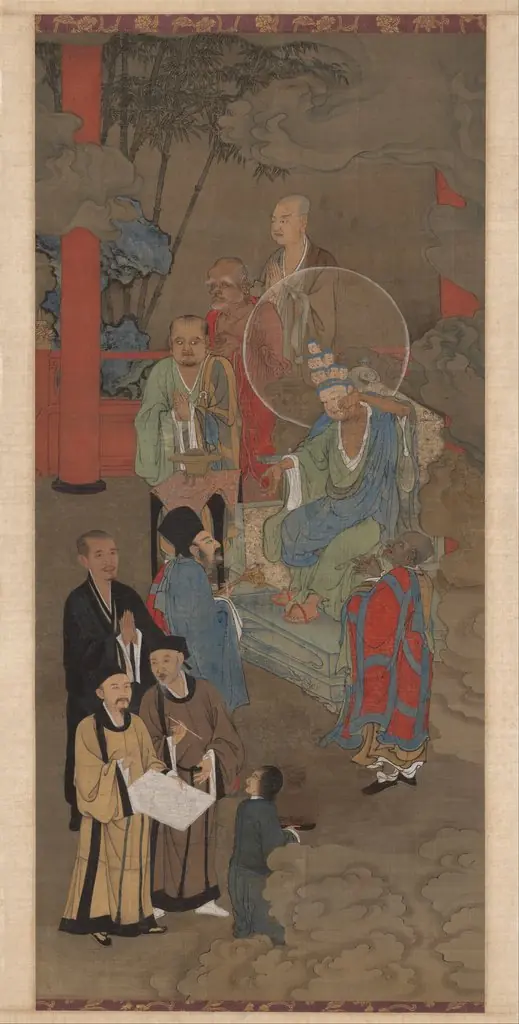
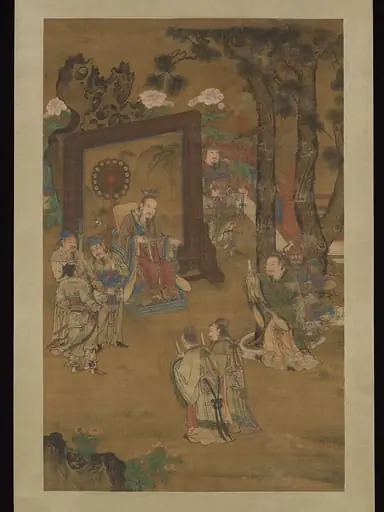
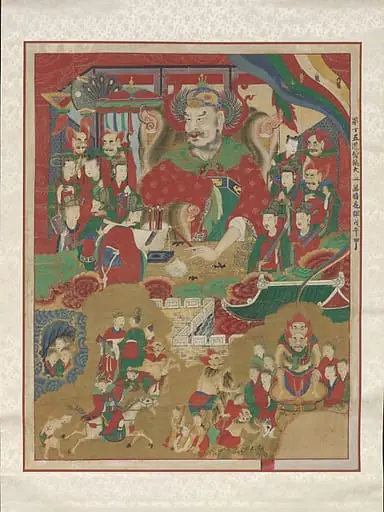
This work, created in 1180 by Jin Chushi, forms part of a set of hanging scrolls depicting the Ten Kings of Hell, a central theme in East Asian Buddhist eschatology. The imagery illustrates the judgment process souls undergo after death, presided over by the ten monarchs of the underworld. Specific iconographic elements identified in the composition include demons, men, tables, and buffaloes, which serve as agents of punishment or witnesses within the infernal court.
These figures collectively represent the moral accountability of the deceased, visualizing the consequences of earthly actions through the lens of religious doctrine. The inclusion of demons and buffaloes underscores the terrifying nature of the afterlife judgment, while the presence of tables suggests the formal administration of justice by the kings. As a religious painting, the scroll functions as a didactic tool, reinforcing the belief in karmic retribution and the necessity of virtuous conduct to avoid the torments of the lower realms.
Technique & Style
The painting is executed in ink and polychrome washes on silk, forming a hanging scroll that forms part of a ten‑scroll set titled Ten Kings of Hell. The composition portrays a buffalo, a demon, a human figure and a table, as recorded in the cataloging data. Its formal qualities reflect Heian‑period Buddhist narrative painting, employing bold outlines and layered color to convey the hierarchical authority of the ten king deities.
The work’s stylistic approach combines narrative clarity with decorative patterning, characteristic of religious scrolls of the late twelfth century. Condition details are not provided in the available documentation.
History & Provenance
The set of Ten Kings of Hell paintings by Jin Chushi is held by the Metropolitan Museum of Art, New York, with one scroll from the series assigned the accession number 30.76.290. The museum’s collection record identifies the work as a Chinese painting dated to 1180, executed in ink and color on silk.
Overview
Created in 1195 by the Japanese painter Jin Chushi, this hanging scroll is one of five surviving panels from a complete set of ten depicting the Ten Kings of Hell. Executed in ink and color on silk, the work illustrates the Buddhist eschatological belief that the deceased face judgment by ten monarchs over a period of forty-nine days after death. The composition centers on a specific king seated at a long table, flanked by attendants, clerks, and demons who manage the proceedings.
A prominent black buffalo stands adjacent to the throne, its horns extending nearly to the scroll's edge, symbolizing the king's association with the underworld. Sinners in chains appear before the court, awaiting their verdict. Originally designed for funeral rituals, these scrolls served a didactic and spiritual function, guiding the living in prayers to assist the dead through the trials of the afterlife.
This work represents a significant example of early Kamakura period religious painting, reflecting the period's intense focus on Pure Land Buddhism and the visualization of karmic retribution. The surviving panels demonstrate the artist's mastery in rendering complex narrative scenes with distinct figures and atmospheric depth.
Context
These scrolls were integral to Buddhist funeral rites, displayed to assist the deceased's soul in navigating the complex legal proceedings of the underworld. The imagery served as a visual guide and a reminder of the karmic consequences of earthly actions, offering comfort and instruction to both the living and the departed during their journey through the various courts of hell.
Artist & collection

Artist
Jin Chushi was a Chinese Buddhist painter active at the port city of Ningbo (Mingzhou) during the Southern Song dynasty in the thirteenth century.