Artwork
金處士筆 十王図の内|Ten Kings of Hell
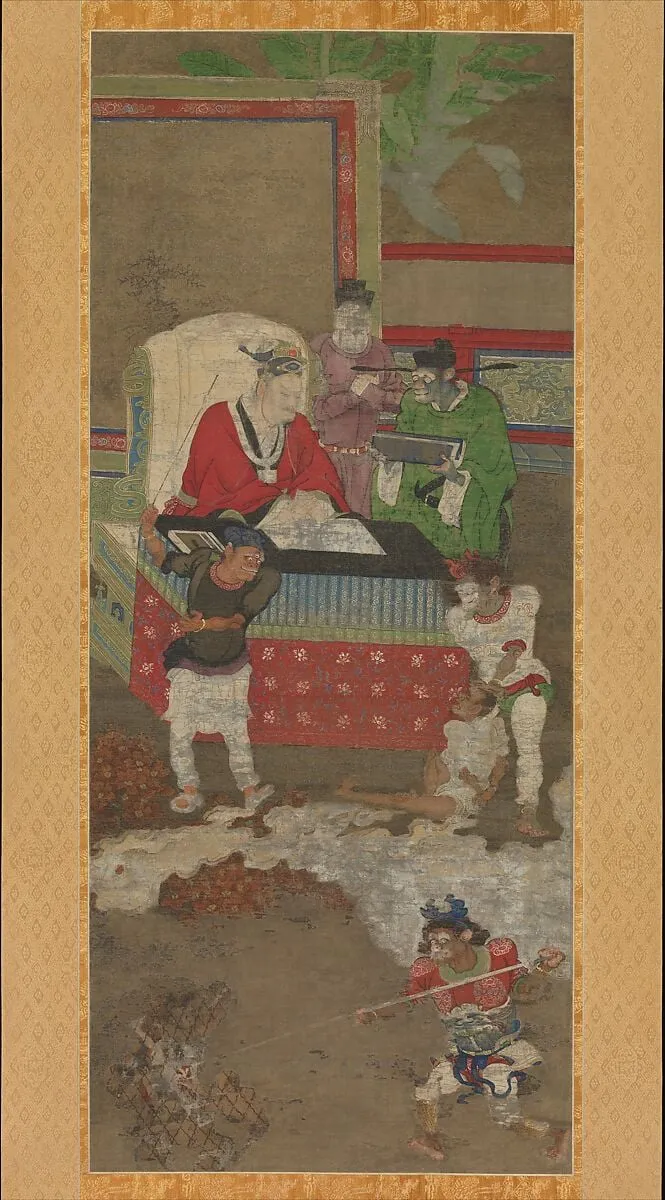
金處士筆 十王図の内|Ten Kings of Hell is an ink painting by the Ming dynasty painting artist Jin Chushi. It dates from 1195 and is held in the collection of the Metropolitan Museum of Art.
- Accession no.
- 30.76.292
- Credit line
- Rogers Fund, 1930
About this work
Subject & Meaning
This artwork functions as a didactic tool, reinforcing moral behavior through the visualization of karmic consequences.
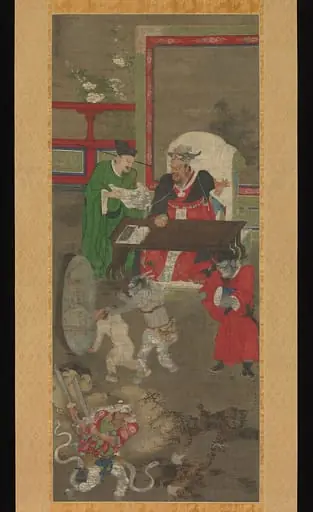
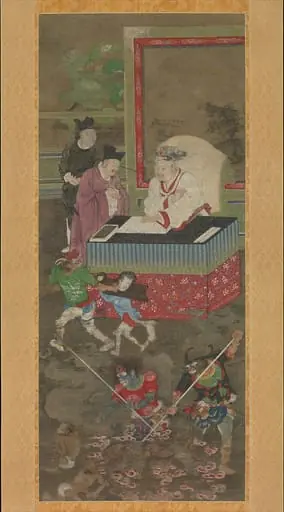
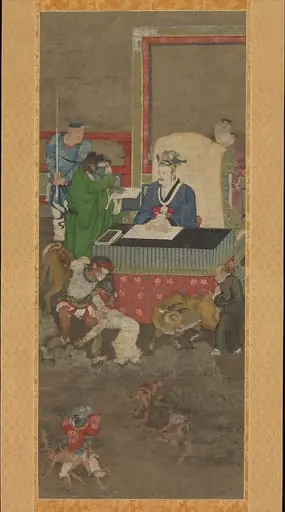
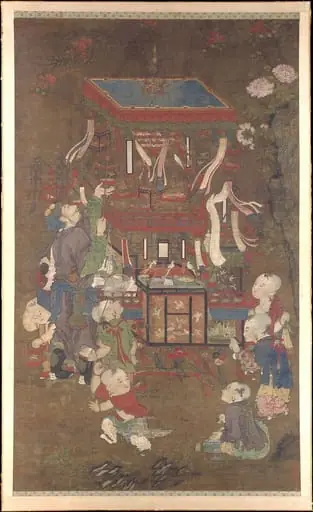
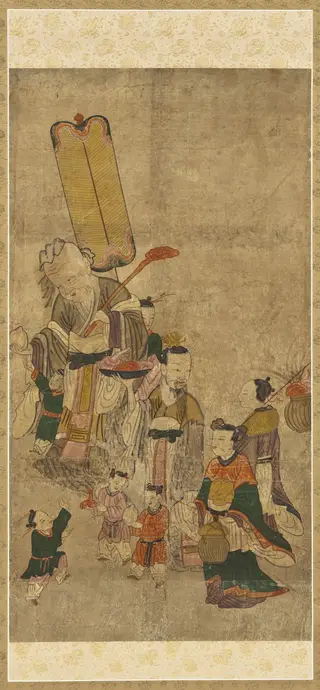
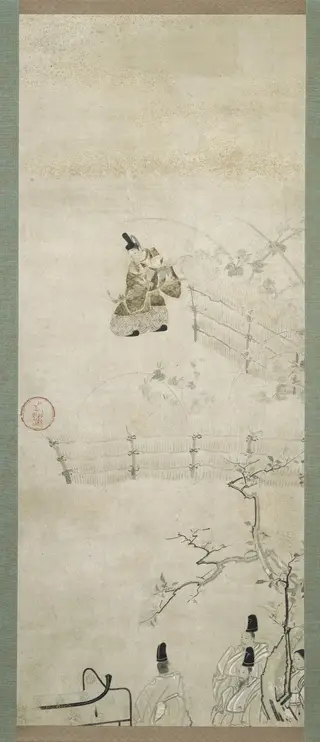
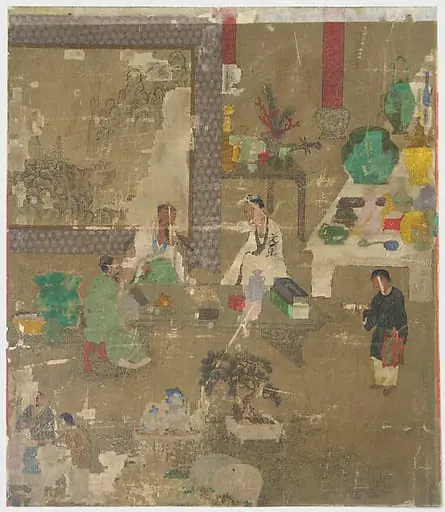
Created by Jin Chushi in 1180, this hanging scroll is part of a ten-piece set depicting the Ten Kings of Hell, a central theme in East Asian Buddhist eschatology. The composition illustrates the judgment of the deceased, featuring specific iconographic elements such as demons, human figures, and a table, which likely serves as the seat for a presiding King. As a religious work, the painting visually represents the Buddhist concept of post-mortem retribution, where souls are evaluated based on their earthly actions before being assigned to various realms of existence.
The inclusion of demonic entities underscores the terrifying nature of the underworld judgment process, while the human figures represent the souls undergoing scrutiny. This artwork functions as a didactic tool, reinforcing moral behavior through the visualization of karmic consequences.
Technique & Style
The painting is executed in ink with polychrome washes on silk and is mounted as a hanging scroll, a format typical of Buddhist narrative works from the late 12th century. Its composition illustrates one of the Ten Kings of Hell, depicting a demon, a man, and a table, reflecting the religious genre and narrative intent of the period. The work belongs to a set of ten scrolls, of which this is one of five surviving pieces, and was created in China around 1180.
Formal analysis notes the restrained line work, muted palette, and hierarchical arrangement of figures characteristic of contemporary Song‑dynasty court painting.
History & Provenance
The hanging scroll known as Ten Kings of Hell was created in 1180 by the artist Jin Chushi in China. Executed in ink and color on silk, the work constitutes one of five surviving scrolls from an original set of ten depicting religious themes. The piece is currently held in the collection of the Metropolitan Museum of Art, where it is cataloged under the accession number 30.76.292.
While the precise commission details and early ownership chain are not detailed in the available records, the work's inception is firmly dated to the late 12th century. The painting portrays figures including demons and men seated at tables, consistent with its classification as a religious artwork from the Song dynasty period.
The hanging scroll titled Ten Kings of Hell, attributed to the artist Jin Chushi and dated to 1180, is held in the collection of the Metropolitan Museum of Art in New York. The work serves as one of five surviving scrolls from an original set of ten depicting religious figures. Its official accession number at the museum is 30.76.292.
The piece is classified as a painting executed in ink and color on silk. While the source material identifies the museum's location and the specific inventory number, it does not provide a detailed record of past exhibitions or specific provenance movements prior to the museum's acquisition.
Overview
This hanging scroll, titled Ten Kings of Hell, was created by Jin Chushi in 1195. Executed with ink and color on silk, it is one of a series of ten paintings depicting the Buddhist underworld. The artwork presents a vivid scene from one of the courts where the deceased are judged, illustrating the intricate cosmology of the afterlife in East Asian tradition.
Context
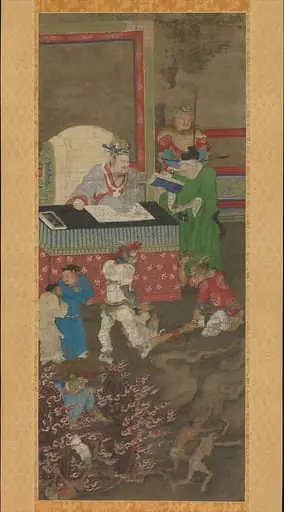
This painting is part of a larger set of ten hanging scrolls, each dedicated to one of the Ten Kings of Hell in Chinese Buddhist cosmology. These kings govern distinct courts where the deceased undergo judgment for their actions in life. The complete series would have provided a comprehensive visual narrative of the journey through the afterlife, guiding viewers through the various stages of karmic assessment before reincarnation.
Artist & collection

Artist
Jin Chushi was a Chinese Buddhist painter active at the port city of Ningbo (Mingzhou) during the Southern Song dynasty in the thirteenth century.