Artwork
Pieter Cornelisz Hooft (1581-1647). High bailiff of Muiden, historian and poet
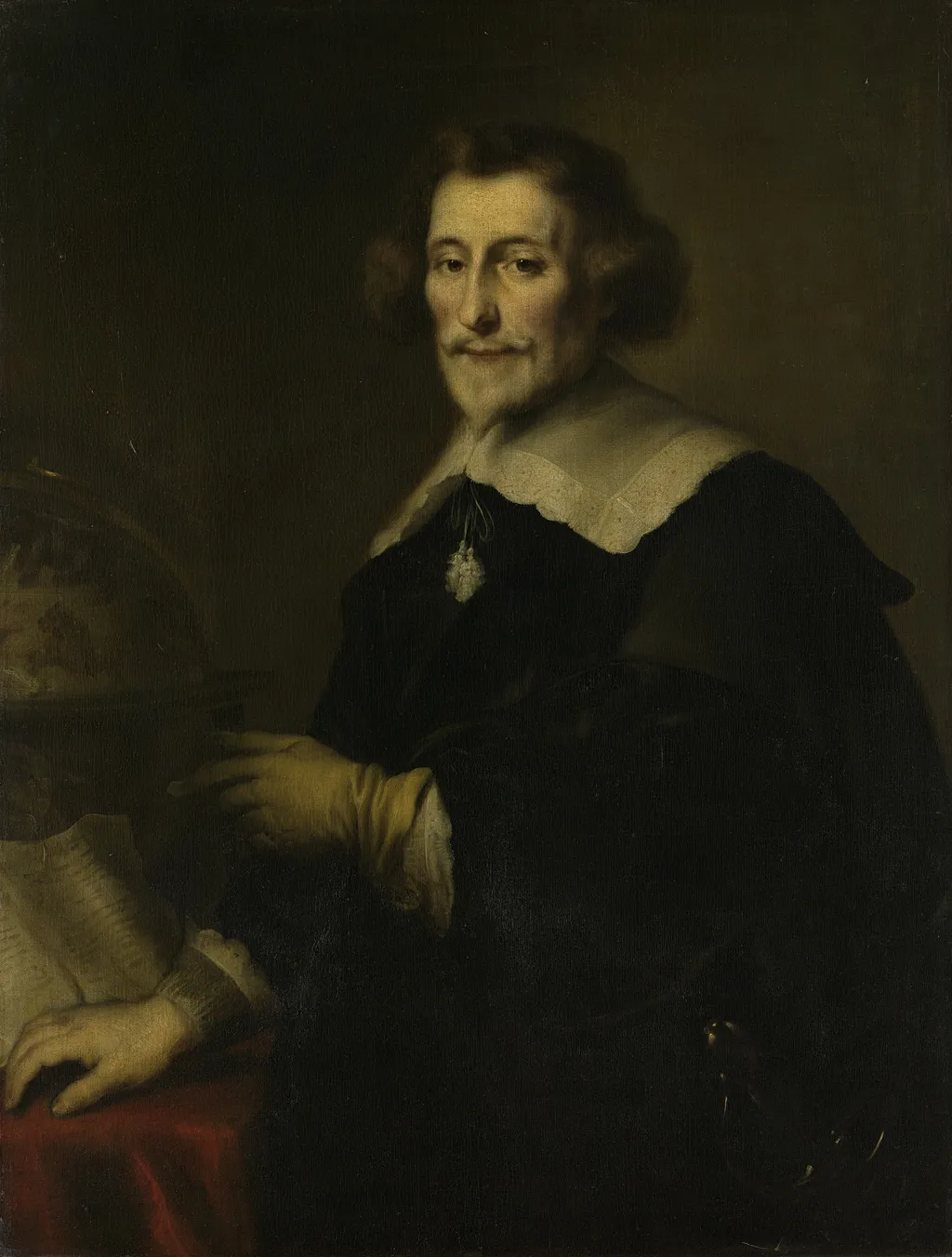
Pieter Cornelisz Hooft (1581-1647). High bailiff of Muiden, historian and poet is an oil painting by the Dutch Golden Age artist Joachim von Sandrart the Elder. It dates from 1665 and is held in the collection of the Rijksmuseum.
About this work
Subject & Meaning
He is shown half‑length, leaning on a table that holds an open book and a globe, while his gloved left hand points toward the globe.
The painting depicts Pieter Corneliszoon Hooft, a 17th‑century Dutch historian, poet and high bailiff of Muiden. He is shown half‑length, leaning on a table that holds an open book and a globe, while his gloved left hand points toward the globe. He wears a black tabard over a white collar, emphasizing his scholarly status.
The work is a portrait created by Joachim von Sandrart the Elder in 1665, painted in oil on canvas. Two additional versions are known, one in the Amsterdam Museum and another in Leiden University, but the original attribution has shifted over time, ultimately rejecting Jurriaen Ovens as a copyist and confirming the Leiden version as the earliest. A 1677 print by Anthony van Zijlvelt reproduces only the head within an oval and includes a poem by Joost van den Vondel, suggesting an earlier 1642 date for the lost original.
The composition uses symbols of knowledge, a book, a globe, and a glove, to highlight Hooft’s roles as historian and poet. The portrait entered the collection of the Nationale Konst‑Galerij in 1803, purchased for 17 gulden as a work attributed to Abraham Bloemaert, and later became part of the Rijksmuseum’s holdings.
History & Provenance
The portrait, dated 1665, depicts Pieter Corneliszoon Hooft and was created by Joachim von Sandrart the Elder, though attribution history is complex. The work held in the Rijksmuseum was initially attributed to Sandrart in 1807, then to Leonaert Bramer, and later to Jürgen Ovens as a copyist before the Ovens attribution was rejected in 1976. While an engraving by Anthony van Zijlvelt from 1677 suggests an original version may date to 1642, the Rijksmuseum canvas is recorded with a 1665 inception.
The painting entered the collection of the Nationale Konst-Galerij, the predecessor to the Rijksmuseum, when it was purchased by Temminck on 11 August 1803 for 17 gulden, at which time it was misidentified as a work by Abraham Bloemaert.
The painting is held in the collection of the Rijksmuseum in Amsterdam, where it carries the inventory number SK-A-56. The work entered the national collection on August 11, 1803, when it was purchased for 17 guilders by Temminck for the Nationale Konst-Galerij, the institution's predecessor. At the time of acquisition, the piece was attributed to Abraham Bloemaert.
While other versions of this portrait exist in the Amsterdam Museum and at Leiden University, this specific canvas remains a key holding of the Rijksmuseum.
Context
Pieter Corneliszoon Hooft was a prominent Dutch historian, poet and high bailiff of Muiden whose portrait entered the Rijksmuseum collection in 1803 (purchased for 17 gulden) and remains part of its holdings. Contemporary scholarship notes that the work attributed to Joachim von Sandrart the Elder shows Hooft half-length, with his right hand resting on a table bearing a book and a globe and his left hand gloved and pointing toward the globe, while wearing a black tabard over a white collar. The painting was reproduced in 1677 by Anthony van Zijlvelt as an engraving that included only the head within an oval and a poem by Joost van den Vondel, suggesting an original date of 1642.
Three versions of the portrait are known, one in the Rijksmuseum, one in the Amsterdam Museum and one in Leiden University, with attribution history reflecting changing connoisseurship from early 19th‑century attributions to Von Sandrart, through Leonard Bramer and Jurriaen Ovens, to the eventual rejection of Ovens as mere copyist in 1976. The work’s provenance links it to Abraham Bloemaert’s collection before its purchase by the National Art Gallery predecessor of the Rijksmuseum.
Legacy
Hooft's legacy rests on his dual role as a historian and poet, reflected in his continued recognition in art and literature. His portrait by Sandrart, depicting him with a book, globe, and scholarly accessories, symbolizes his intellectual stature. The work has been reproduced and referenced in later prints, such as an 1677 engraving by Anthony van Zijlvelt featuring a poem by Joost van den Vondel, which attributes the original to 1642.
His legacy is further marked by the multiple versions of the portrait across institutions, including the Rijksmuseum, Amsterdam Museum, and Leiden University, though the original's authorship remains debated. The painting entered the collection in 1803 at a modest price, underscoring its historical journey from private ownership to national heritage.
Overview
The oil painting, executed in 1665 by Joachim von Sandrart the Elder, presents a portrait of Pieter Corneliszoon Hooft (1581–1647). The work is part of the Rijksmuseum’s collection and measures the sitter in a dark, high‑collared coat, his hand resting on a red cushion. The composition isolates the figure against a plain, shadowed backdrop, emphasizing his calm demeanor.
Technique & Style
Sandrart employs chiaroscuro, using strong contrasts of light and dark to model the face and garments, creating a three‑dimensional effect. The soft illumination on Hooft’s visage against the deep background highlights the texture of the dark coat and the red cushion, while the delicate handling of brushwork conveys a sense of immediacy and realism typical of Dutch portraiture of the period.
Own this work as a print
Artist & collection
Artist
Joachim von Sandrart the Elder
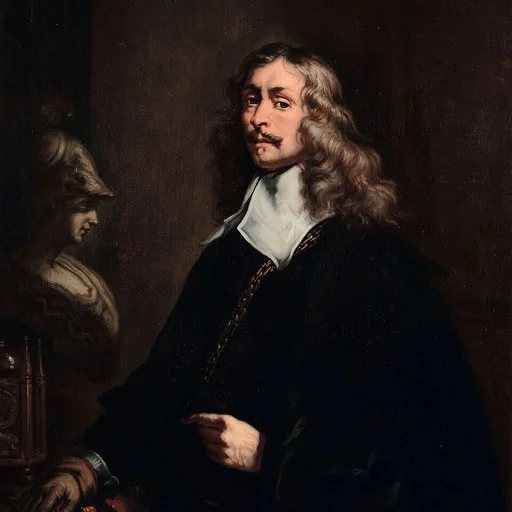
Joachim von Sandrart the Elder (1606–1688) was a German artist, born in Frankfurt.

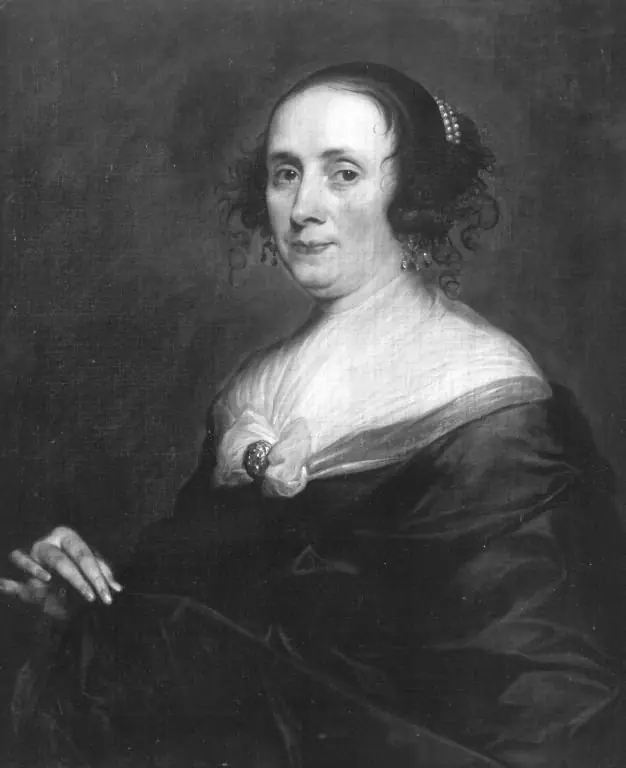 Bildnis einer Frau (?)
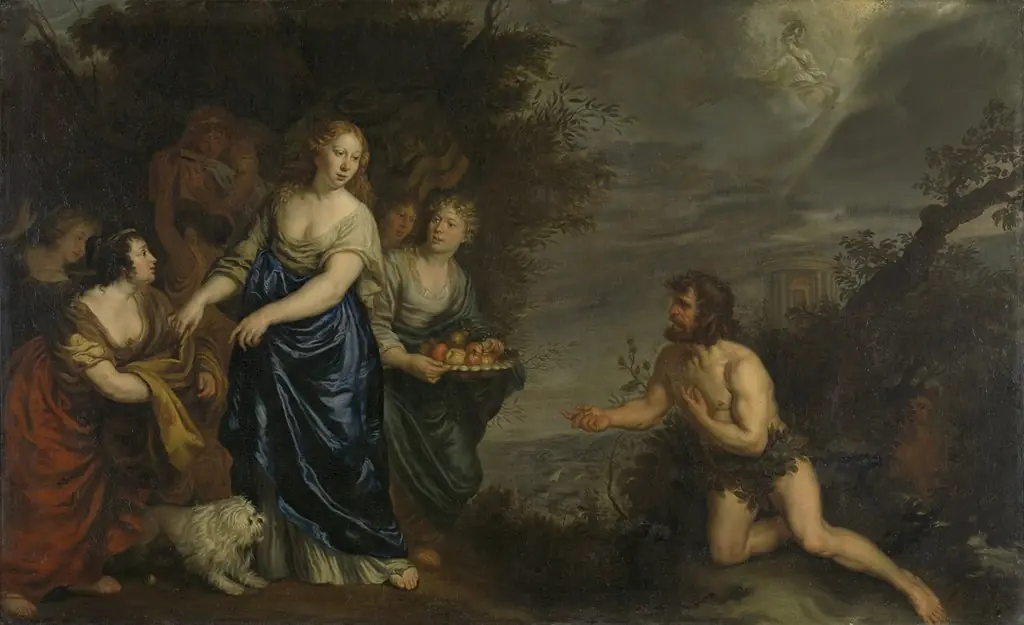 Odysseus and Nausikaä
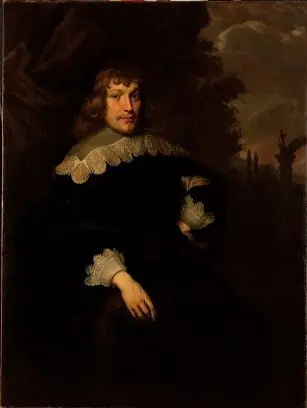 Portrait of Hendrick Bicker (1615-1651)
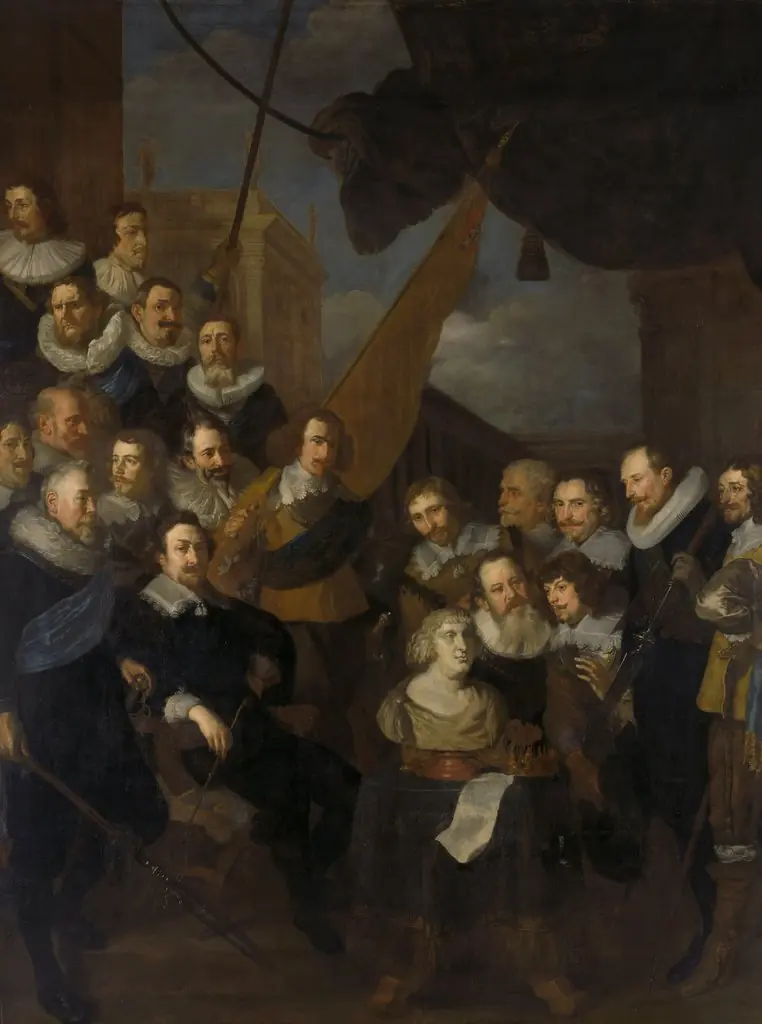 Officers of the militia of departmetn XIX in Amsterdam under the command of Cornelis Bicker and Frederick van Banchem, ready to receive Maria de' Medici in 1638
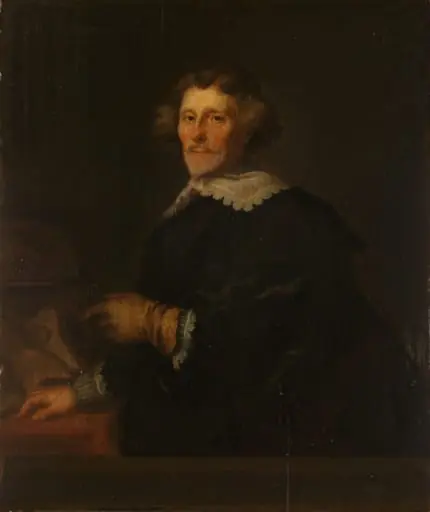 Portrait of Pieter Corneliszoon Hooft, Bailiff of Muiden, Historian and Poet
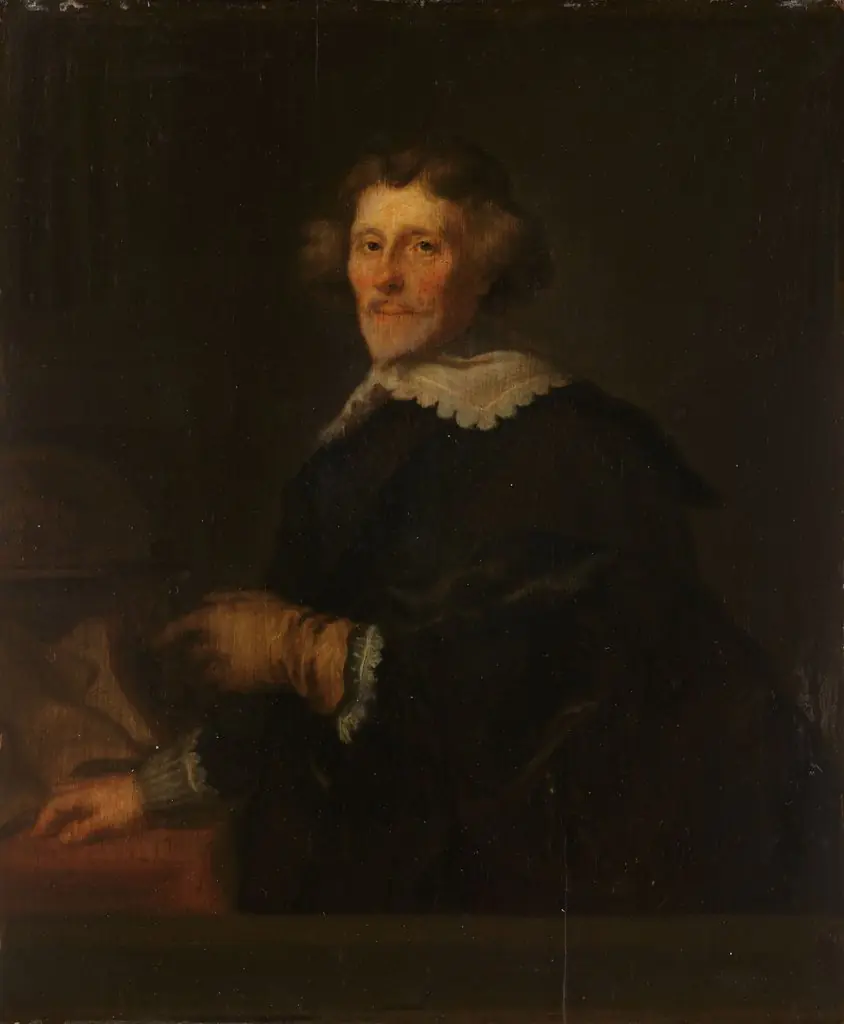 Portrait of Pieter Cornelis Hooft (1581-1647), High bailiff of Muiden, historian and poet
- Portrait of Pieter Corneliszoon Hooft, Bailiff of Muiden, Historian and Poet
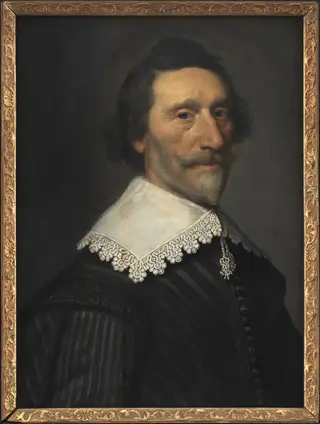 The Dutch Poet and Historian Pieter Cornelisz Hooft (1581-1647)
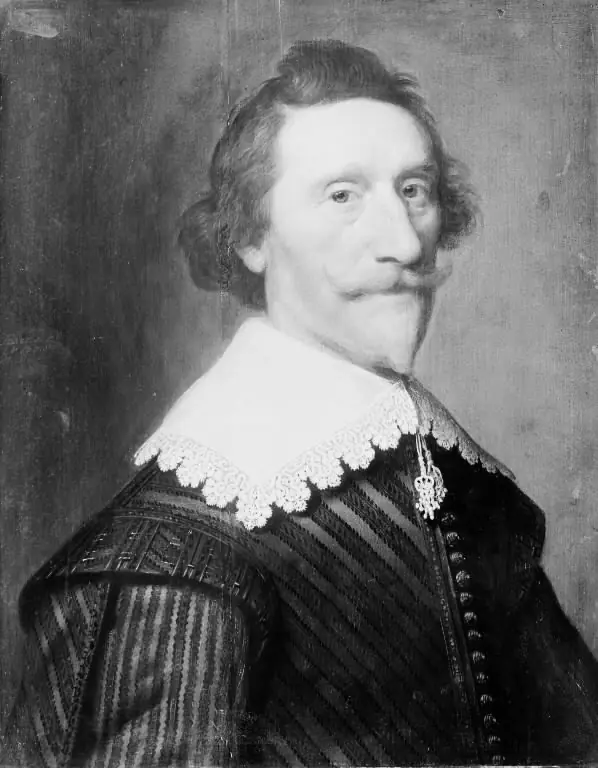 The Dutch Poet and Historian Pieter Cornelisz Hooft (1581-1647)
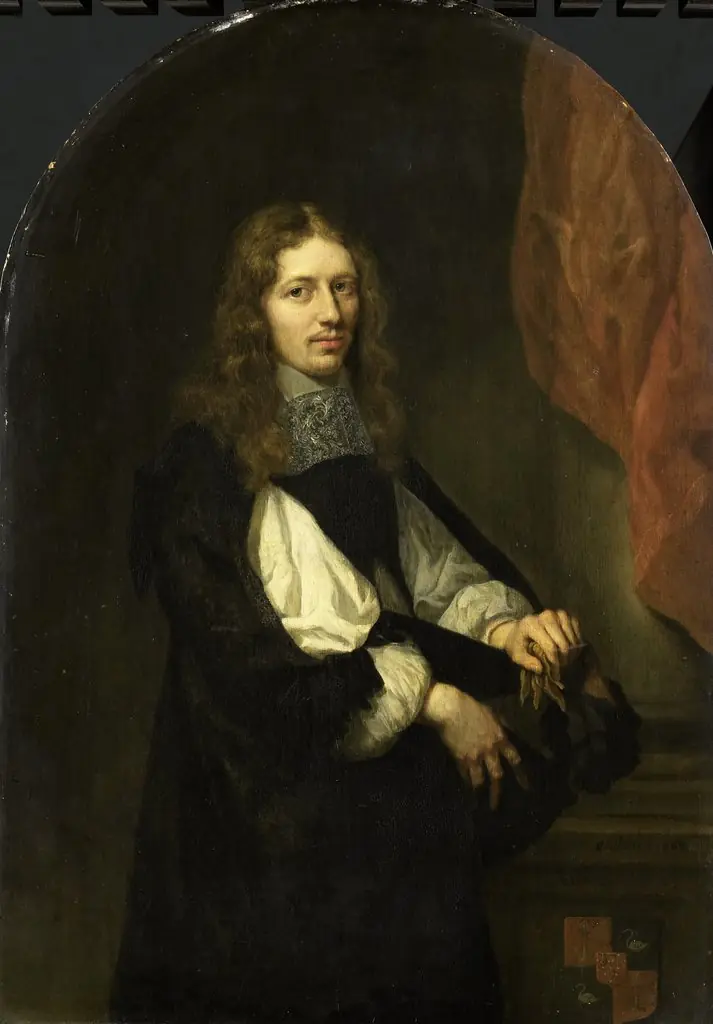 Portrait of Pieter de Graeff (1638-1707), lord of Zuid-Polsbroek, Purmerland, and Ilpendam. Alderman of Amsterdam