Artwork
Still Life with Flowers and Fruit
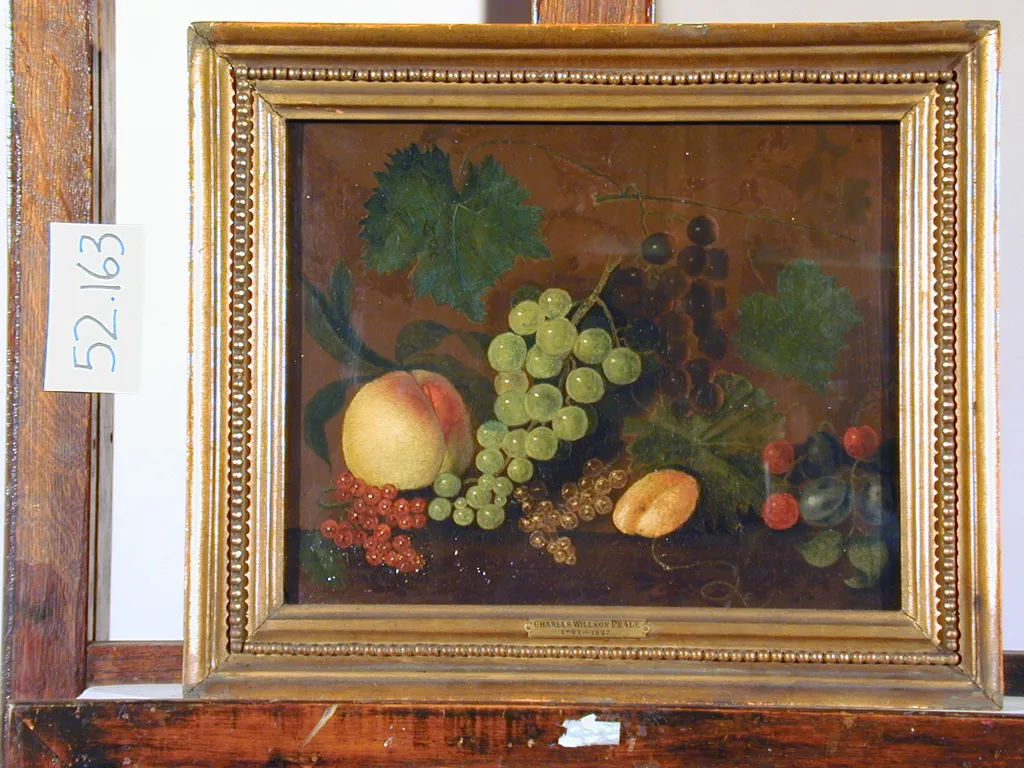
Still Life with Flowers and Fruit is an unspecified painting by the Rococo painting artist John Beale Bordley. It dates from 1769 and is held in the collection of the Detroit Institute of Arts.
About this work
History & Provenance
It has been exhibited in the museum's American Paintings gallery, though specific exhibition dates are not provided in the available documentation.
John Beale Bordley painted Still Life with Flowers and Fruit in 1769, a work classified as a painting and still life. The artwork entered the collection of the Detroit Institute of Arts, where it remains on display. No record indicates a specific commission or sale history prior to its acquisition by the museum.
Still Life with Flowers and Fruit is held in the collection of the Detroit Institute of Arts. The work is cataloged under the accession number 1975.1.1. It has been exhibited in the museum's American Paintings gallery, though specific exhibition dates are not provided in the available documentation.
Overview
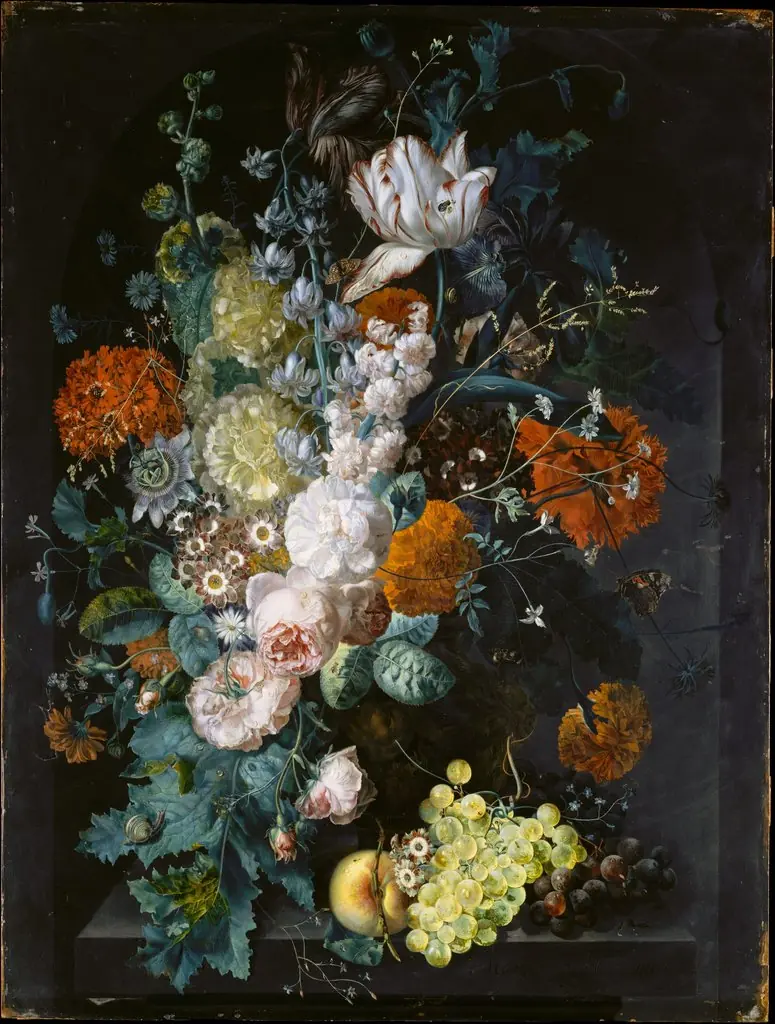
Still Life with Flowers and Fruit, created by John Beale Bordley in 1769, is a still life painting featuring an arrangement of flowers and fruit. The work is part of the collection at the Detroit Institute of Arts.
Subject & Meaning
The painting's subject is a carefully composed still life, with flowers and fruit (including grapes and berries) arranged in an overlapping, decorative manner. The specific types of flowers are not detailed but are depicted in white and yellow, set against a range of fruit hues (green, purple). The composition conveys a sense of ordered abundance.
Technique & Style
While the medium of the painting is not specified, its visual characteristics include a muted color palette dominated by shades of green, brown, and yellow, set against a dark brown background. The overall style suggests a focus on naturalism and balance, typical of 18th-century still life traditions.
Context
Still Life with Flowers and Fruit reflects the artistic tastes of the late 18th century, where still life paintings were valued for their beauty and as reflections of the owner's refinement. The work aligns with broader European and American colonial artistic practices of the time, emphasizing harmony and the depiction of everyday luxury items.
Legacy
The painting's legacy is tied to its representation of 18th-century American still life art. While not extensively detailed in broader art historical narratives, it contributes to the understanding of artistic production during this period, particularly in the context of John Beale Bordley's oeuvre.
Own this work as a print
Artist & collection

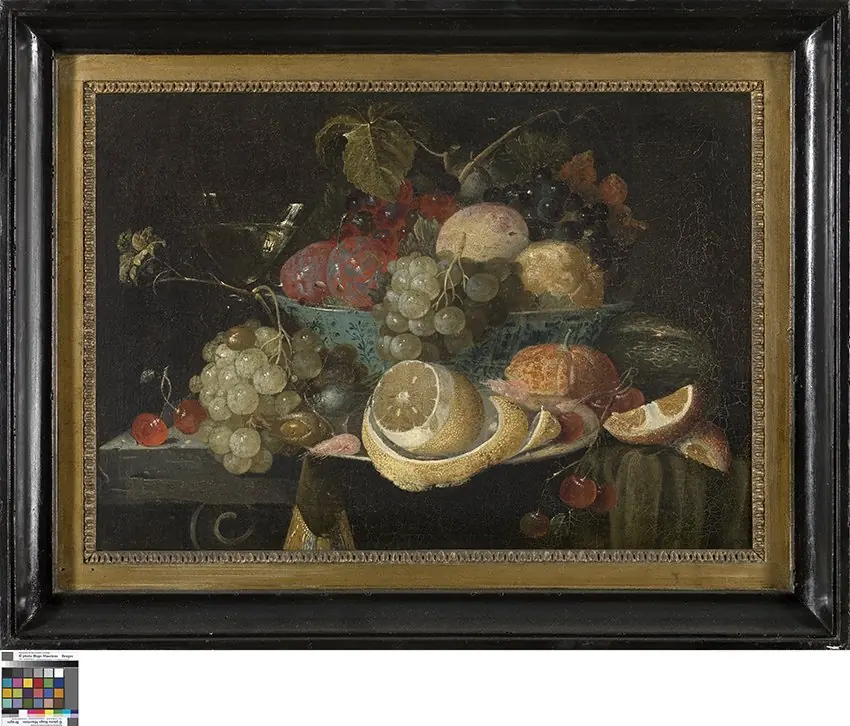 Still Life with Fruit
 Natură moartă
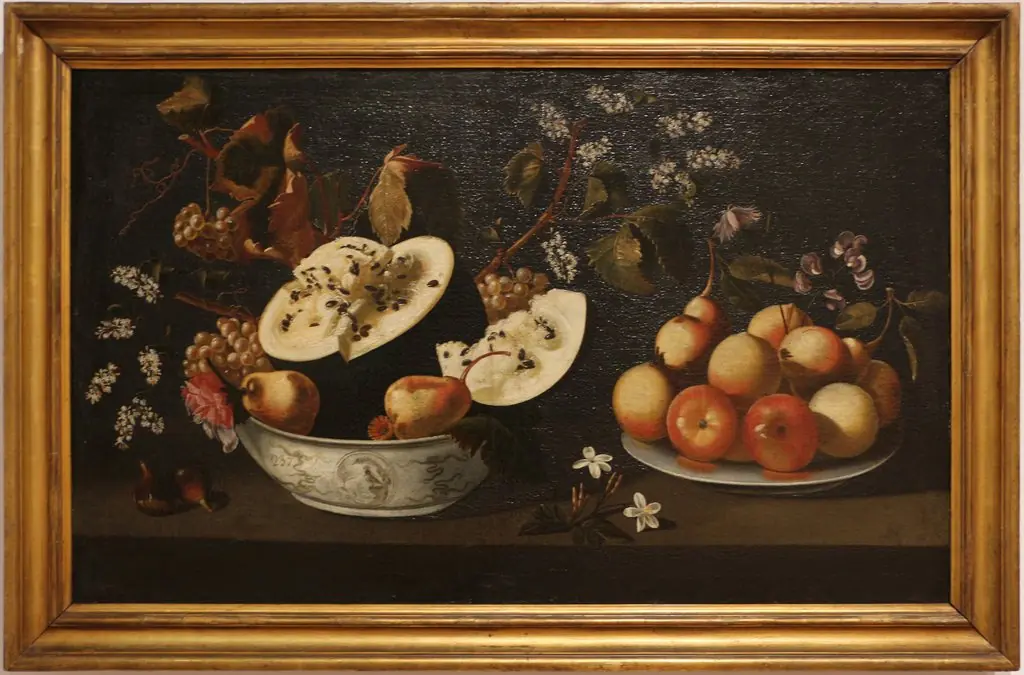 Still life with watermelon and pear
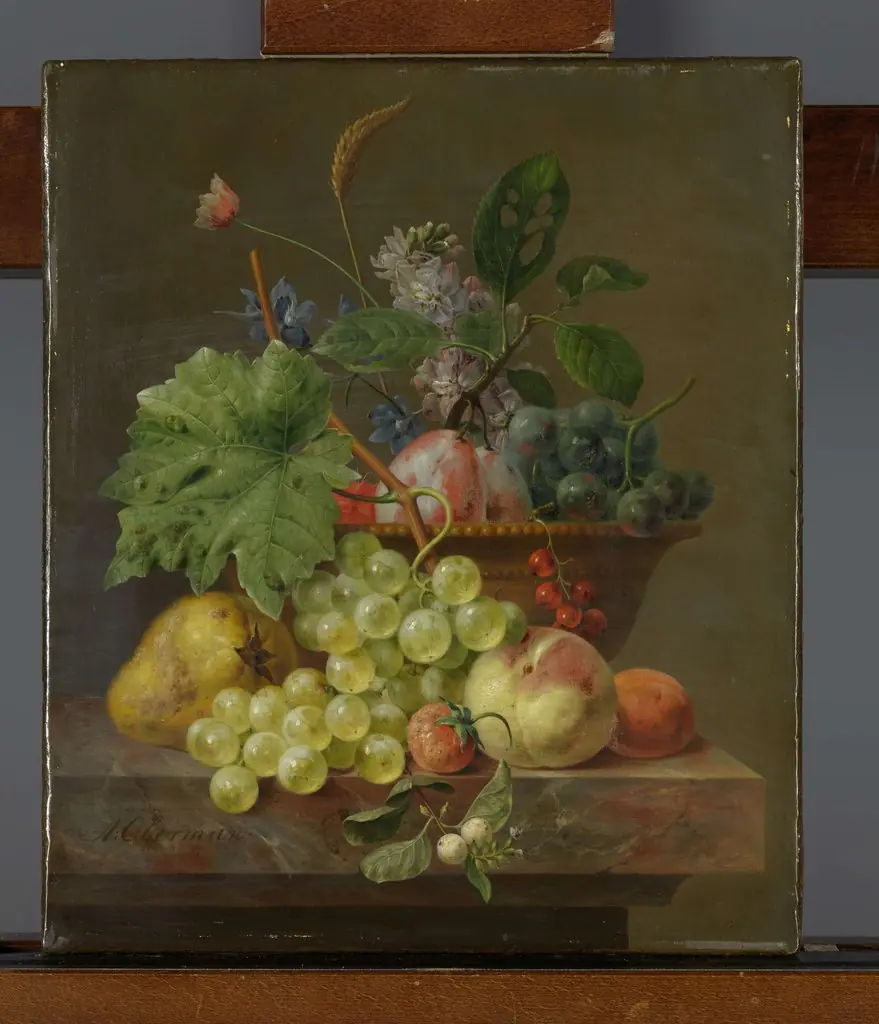 Still Life with Fruit in a Terracotta Dish
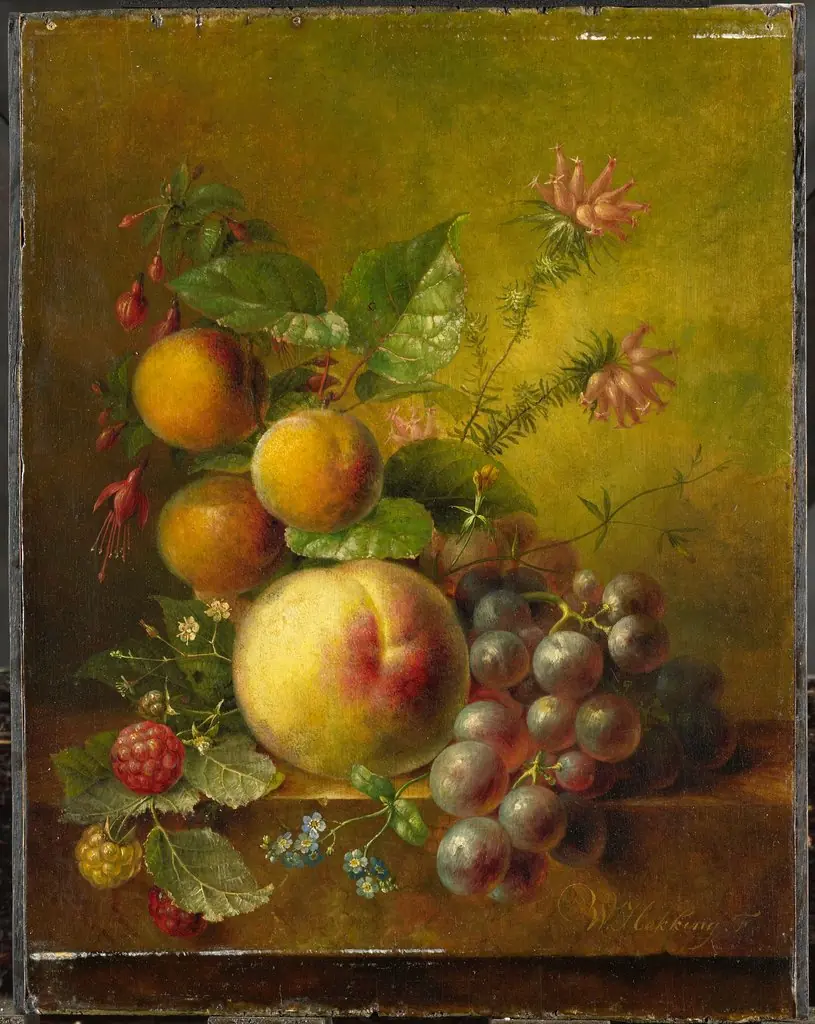 Still Life with Fruit
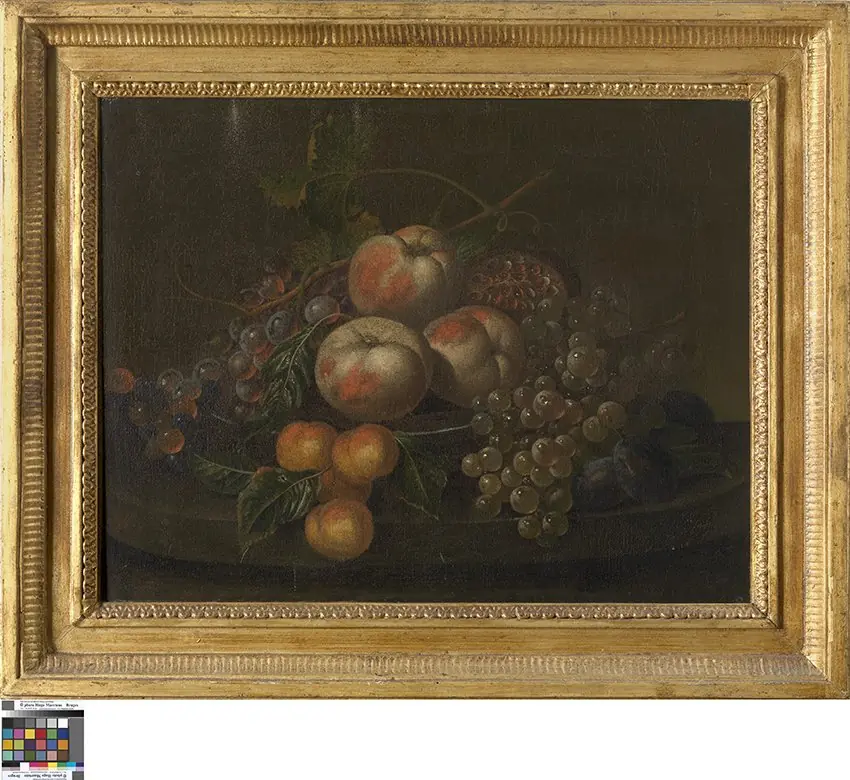 Stilleven met fruit
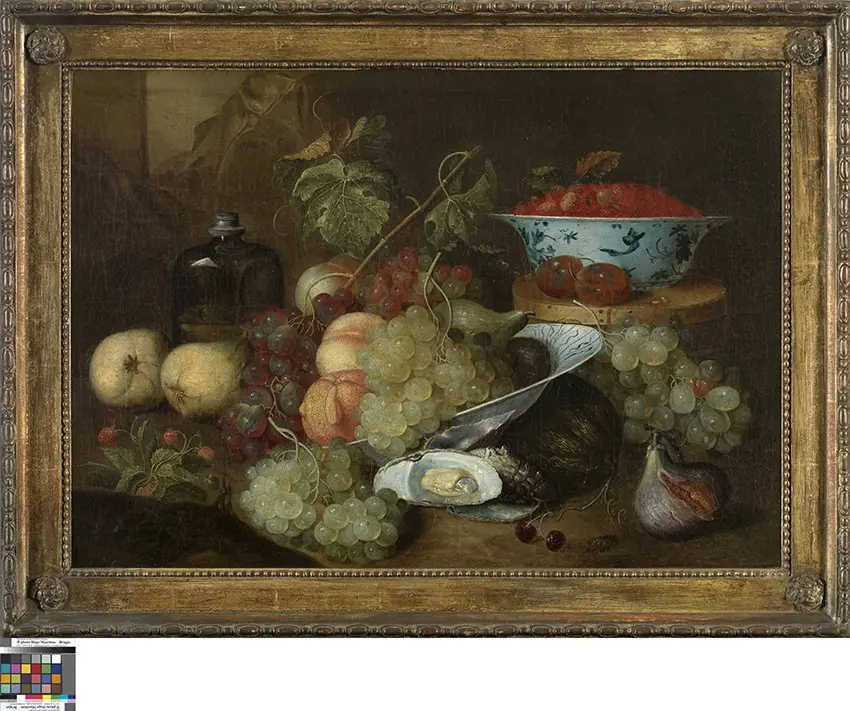 Still Life with Fruit
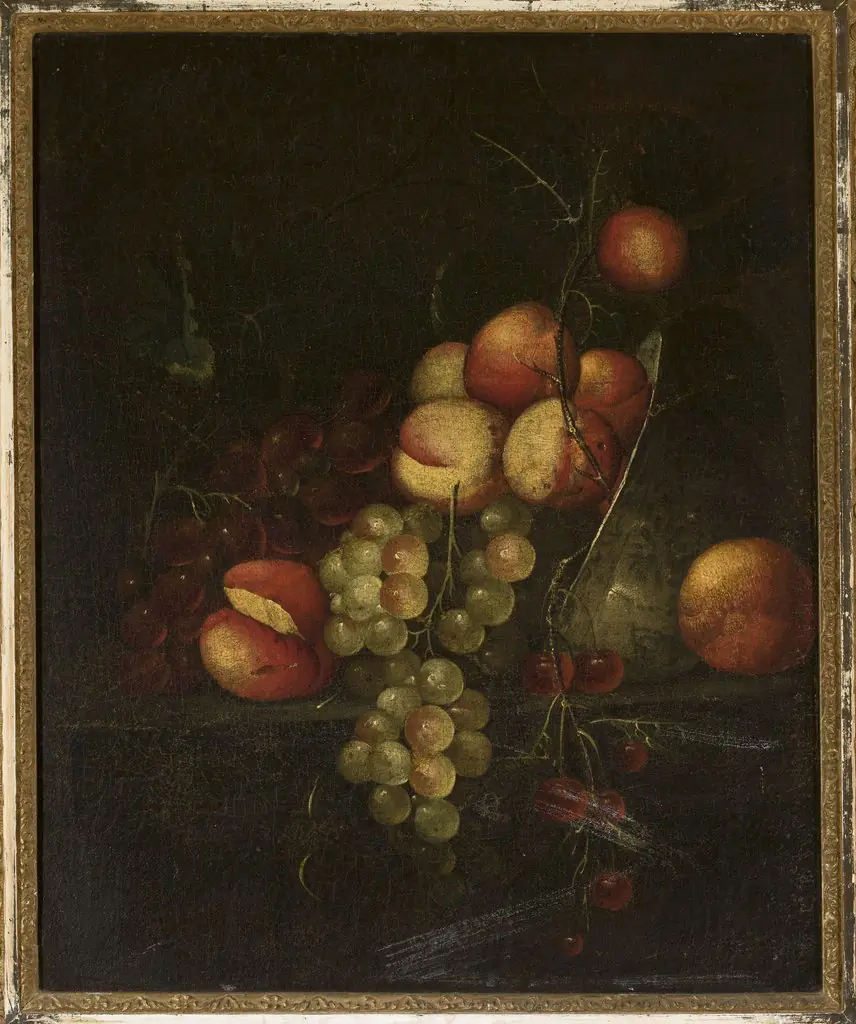 Still life – apples and grapes
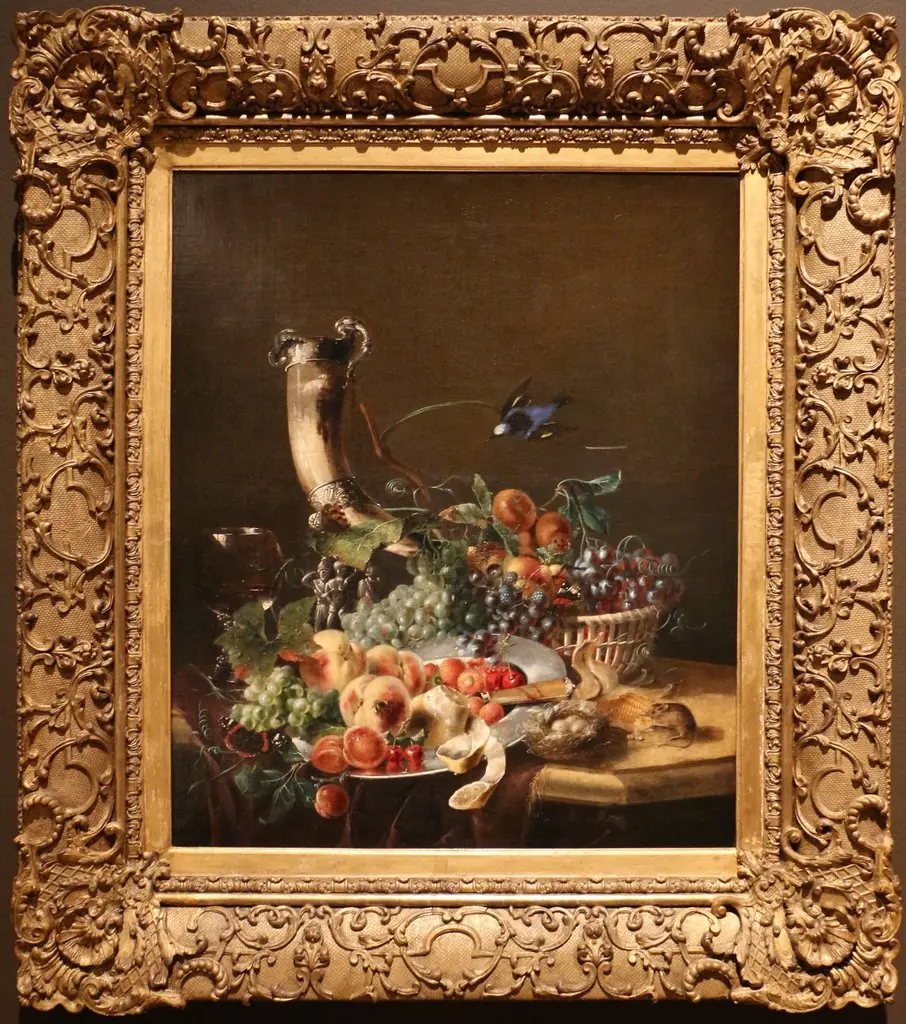 Fruits
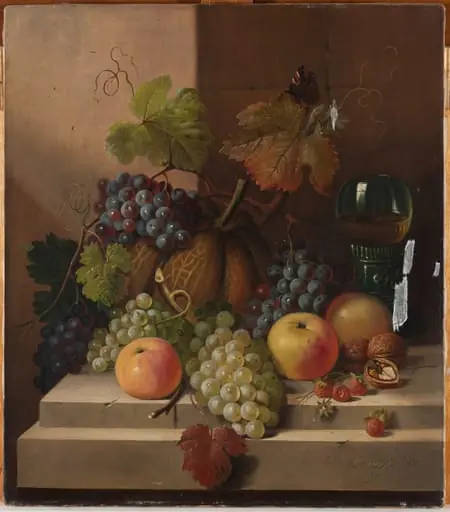 Früchtestillleben
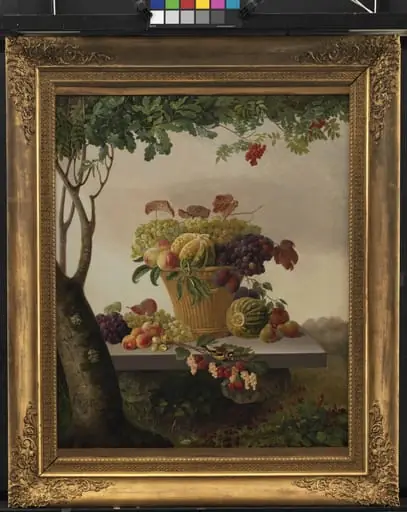 A Basket of Fruit in a Landscape
- Still life with fruit, vegetables and flowers