Artwork
Saint Bride
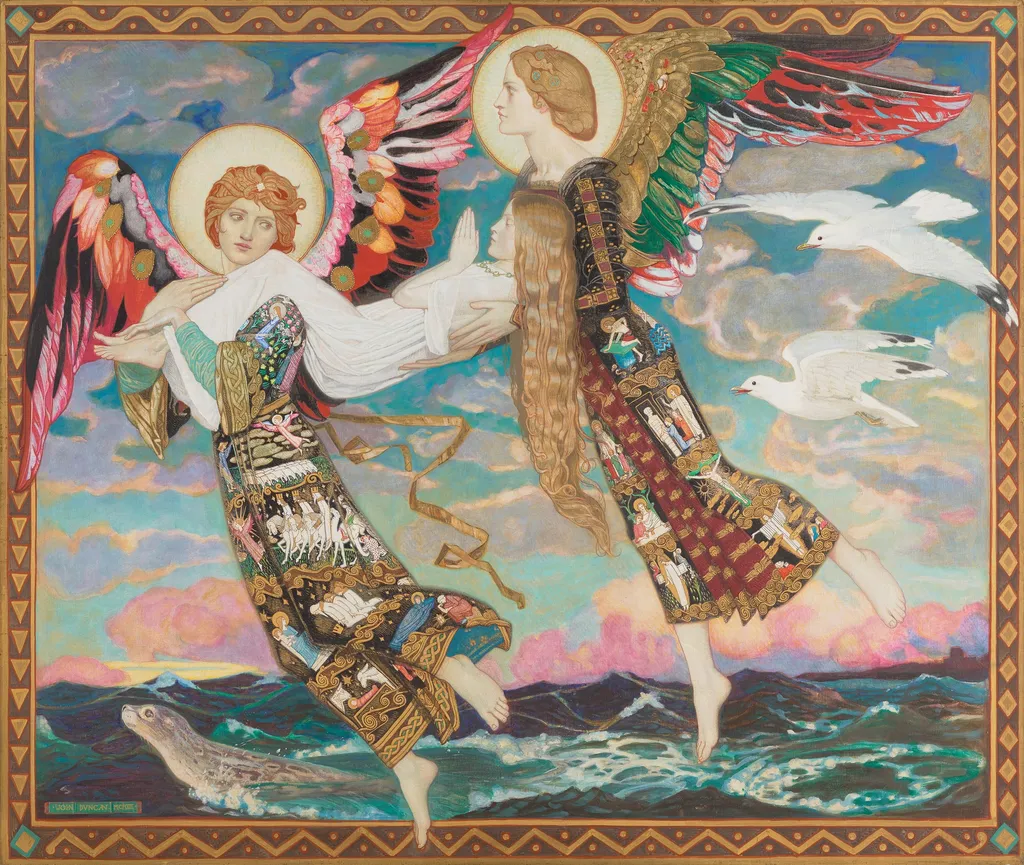
Saint Bride is an oil painting by the Symbolist artist John Duncan. It dates from 1913 and is held in the collection of the National Galleries Scotland.
About this work
Subject & Meaning
The work is classified within the genre of religious art, utilizing tempera, oil paint, and gold leaf to convey its spiritual significance.
The painting depicts Brigid of Kildare, also known as Saint Bride, as its central subject. She is shown accompanied by an angel, a seal, and a bird identified as a Larus, set against a background of the sea. The inclusion of these specific figures alongside the saint suggests a narrative or symbolic connection to her legend and the maritime environment associated with her life in Kildare.
The work is classified within the genre of religious art, utilizing tempera, oil paint, and gold leaf to convey its spiritual significance.
Technique & Style
The painting Saint Bride (1913) is executed in tempera, oil paint, and gold leaf applied to a canvas support. The canvas measures 122.3 cm in height and 144.5 cm in width. Classified as a religious work, it portrays Brigid of Kildare accompanied by an angel, the sea, a gull and a seal.
The sources do not specify the artist’s handling technique, the current condition of the paint surface, or further formal qualities beyond its medium and genre.
History & Provenance
Saint Bride is a tempera painting by John Duncan, dated 1913. It was acquired by the National Galleries Scotland through purchase in 1946, entering the collection under accession number NG 2043. The work is held at the Scottish National Gallery, where it remains part of the institution's holdings.
The sources do not provide further details on the painting's commission, earlier ownership, or chain of custody prior to its 1946 purchase by the National Galleries Scotland.
Saint Bride is held in the collection of the National Galleries of Scotland, housed at the Scottish National Gallery.
The work is inventoried as NG 2043, with dimensions of 122.3 × 144.5 cm. It was acquired by purchase in 1946.
The painting has not been recorded in major exhibitions in the sources provided.
Context
Saint Bride (1913) by John Duncan has been discussed within Scottish Symbolist circles as a summation of Duncan’s engagement with Celtic Christian themes and his adaptation of Pre-Raphaelite figuration to modern religious iconography. The work’s layered tempera technique, combined with gold leaf and oil detail, situates it within the fin-de-siècle revival of tempera painting in Britain, aligning with broader efforts to reclaim early Italian and Byzantine methods as a critique of industrial modernity.
Acquired by the Scottish National Gallery in 1946, the painting entered a national collection during a period when Scottish art was being reassessed through the lens of national identity. Its display within the Gallery’s holdings has framed Saint Bride as a key example of early 20th-century Scottish religious art, linking it to broader European Symbolist currents while grounding it in local hagiographic tradition.
Overview
Created in 1913 by Scottish Symbolist John Duncan, Saint Bride is a tempera painting that resides in the Scottish National Gallery. The work presents a mythic scene set over a tumultuous sea, populated by two radiant, winged figures and a child accompanied by a seal, all rendered in vivid, swirling colors.
Own this work as a print
Artist & collection
Artist
John Duncan (1866–1945) was a Scottish Symbolist painter. Much of his work, apart from portraits, depicted Arthurian legends, Celtic folklore, and other mythological subjects.

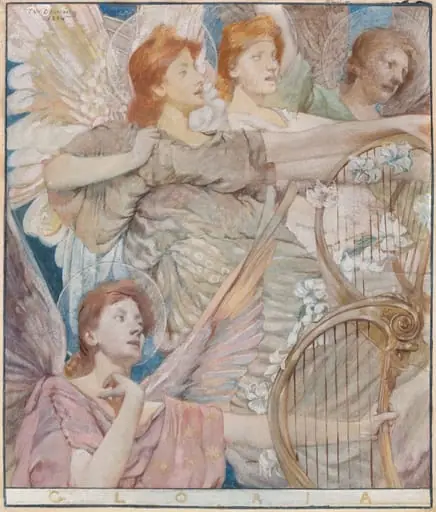
- Gloria
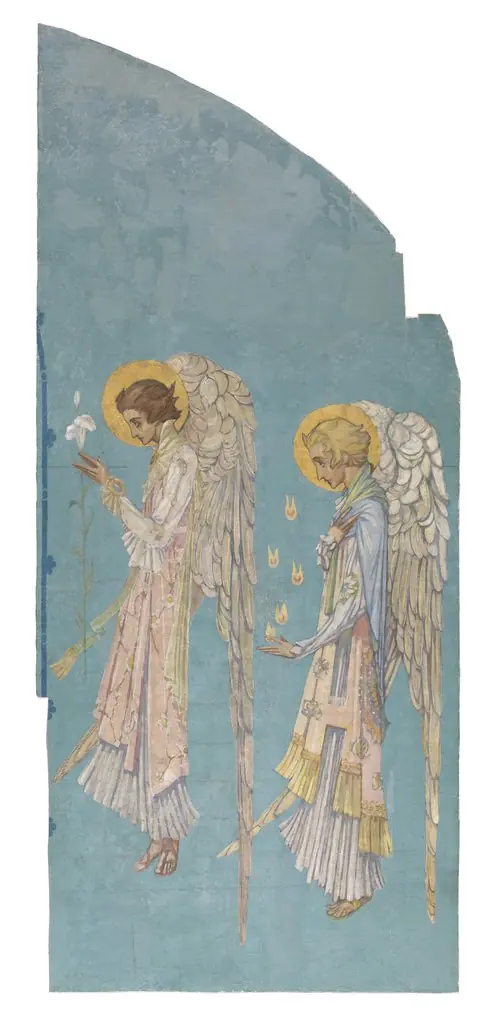 Two Winged Angels in Profile
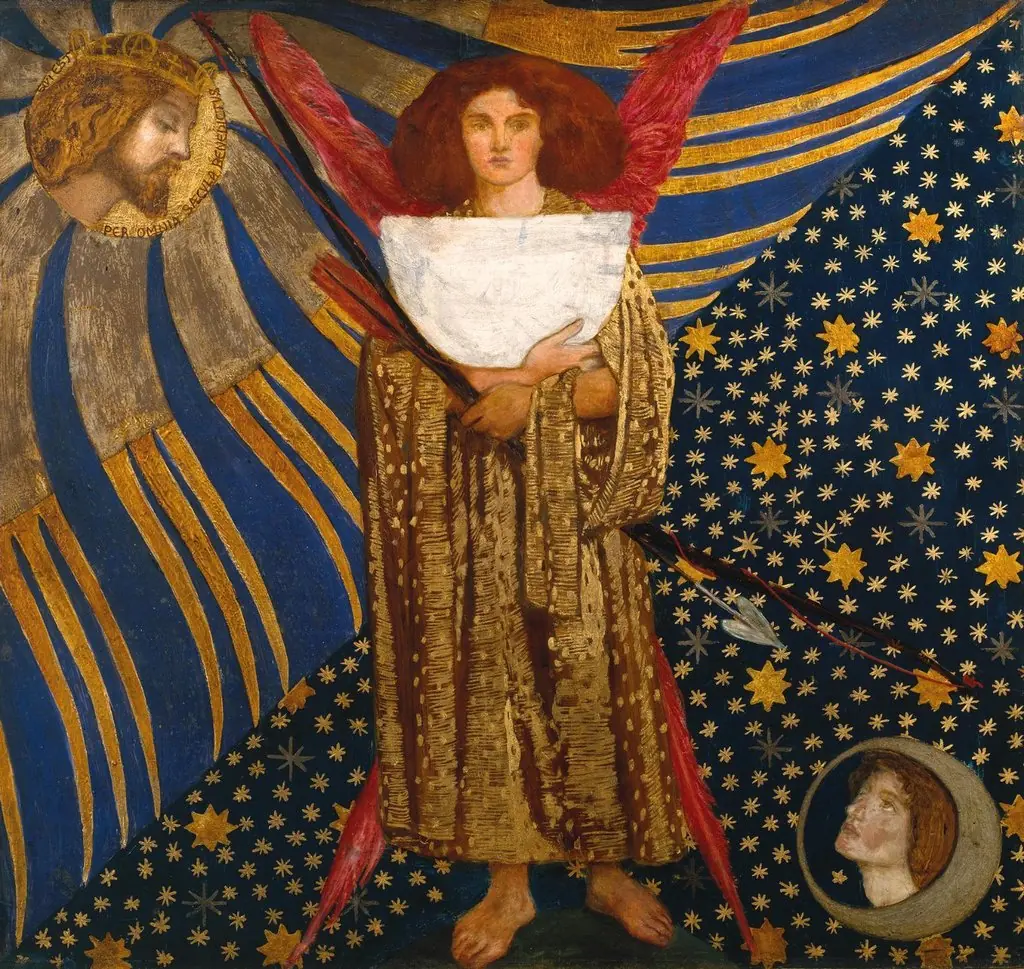 Dantis Amor
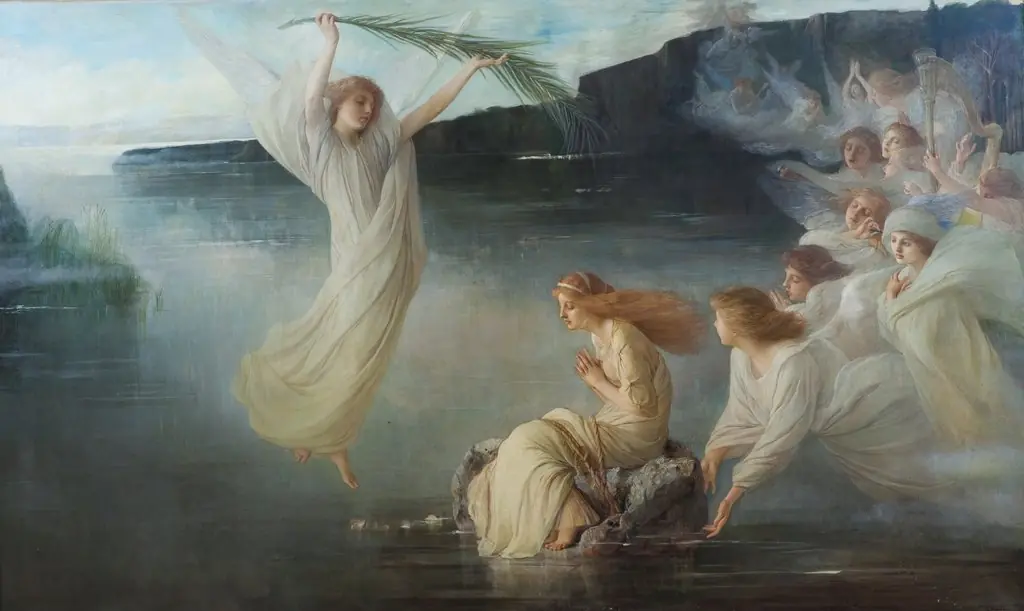 El martirio de santa Cristina
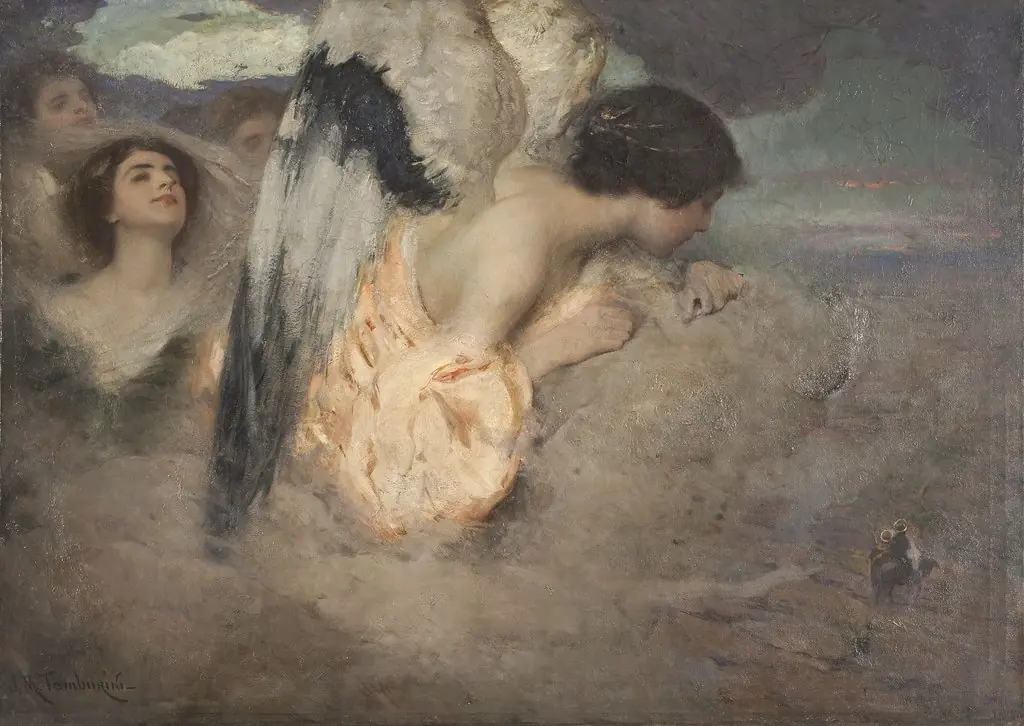 The Flight into Egypt
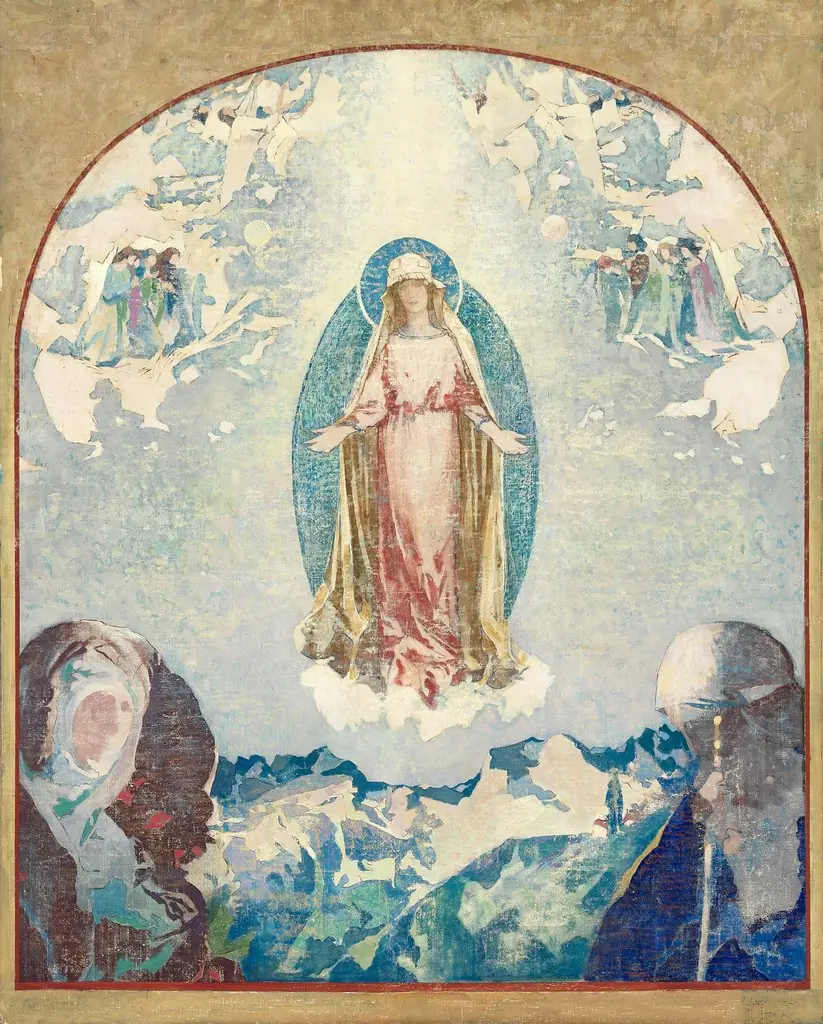 Rosa Mystica
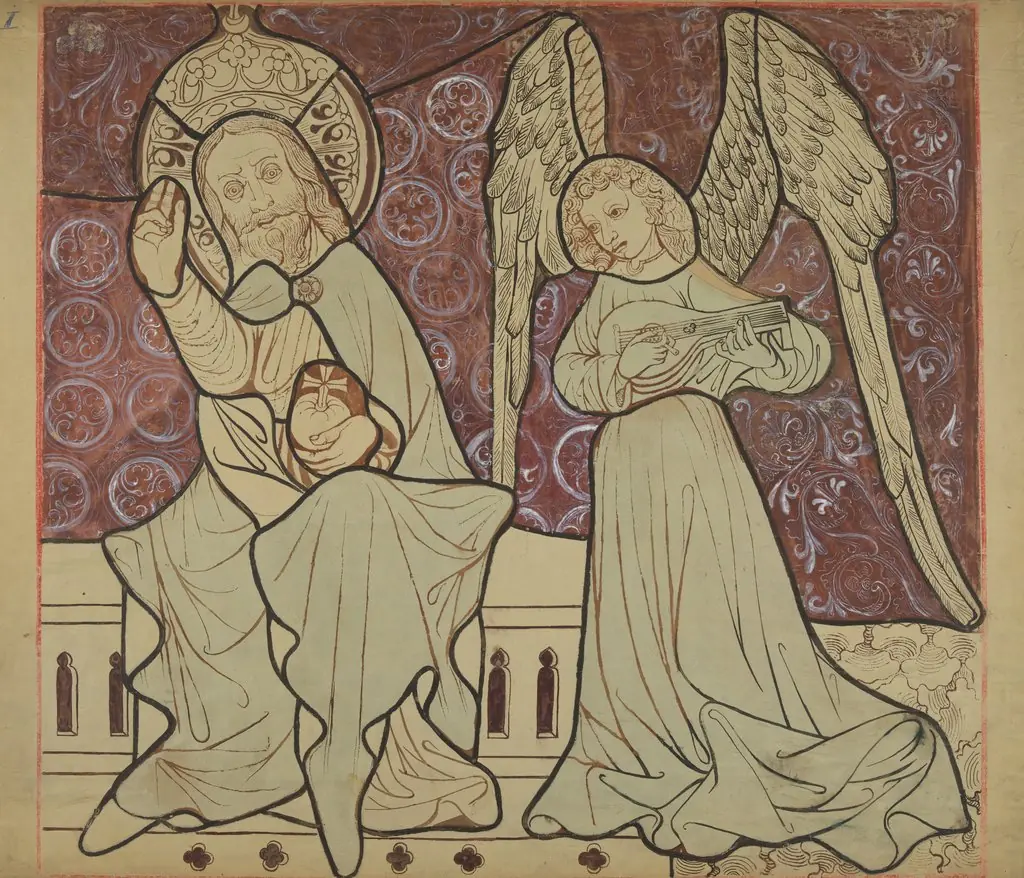 Enthroned Christ with an angel from the scene "Coronation of the Blessed Virgin Mary" (right part). Artistic reconstruction of a stained-glass panel from the Dominican church in Kraków
 Rosa Mystica
 Pieśń – Studium do obrazu „Joanna d’Arc”
 The Vision and Inspiration (Joan of Arc series: I)
 Composition with winged nymph at sunrise
 Angel with the star of Bethlehem