Artwork
Christ in the House of His Parents
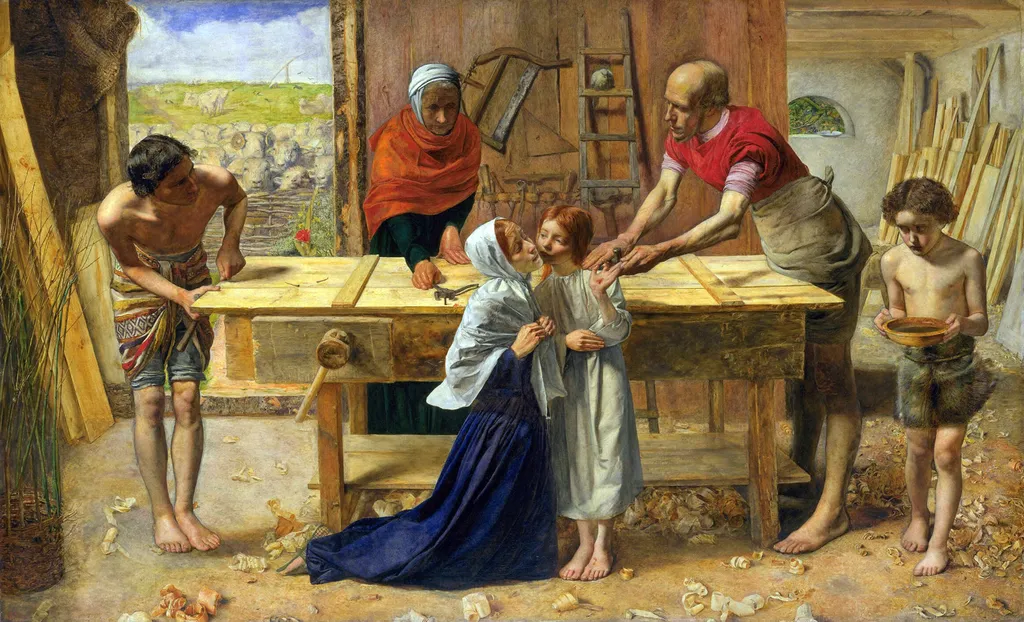
Christ in the House of His Parents is an oil painting by the Pre-Raphaelite artist John Everett Millais. It dates from 1849 and is held in the collection of the National Gallery.
About this work
Overview
Christ in the House of His Parents is an oil on canvas painting by the English artist John Everett Millais, executed in 1849 and first exhibited in 1850.
Christ in the House of His Parents is an oil on canvas painting by the English artist John Everett Millais, executed in 1849 and first exhibited in 1850. Measuring 86.4 by 139.7 cm, the work is now held at Tate Britain in London, where it entered the collection in 1921 through purchase with assistance from the Art Fund and various subscribers. The painting is widely recognized as a foundational work of the Pre-Raphaelite Brotherhood, the movement with which Millais was closely associated, and it remains one of the most discussed and significant religious paintings of nineteenth-century British art. Its importance stems not only from its technical achievement but from the extraordinary controversy it provoked upon first exhibition, which catapulted the previously obscure Pre-Raphaelite Brotherhood to public notoriety and catalyzed a major debate about realism in the arts.
Subject & Meaning
The painting depicts the Holy Family in Saint Joseph's carpentry workshop, a scene drawn from the boyhood of Christ rather than a specific biblical narrative. At center, the young Jesus has cut his hand on an exposed nail from a door laid upon Joseph's workbench. Blood falls from his hand onto his foot, prefiguring the stigmata and his future crucifixion. The Virgin Mary kneels before him in a deep blue robe, kissing his cheek in consolation, while Joseph, in a red tunic and apron, leans over to examine the wounded hand. To the right, Saint Anne removes the nail with pincers. A young boy identifiable as John the Baptist by his animal-skin garment brings water to wash the wound, prefiguring his later baptism of Christ. A shirtless young assistant, representing the future Apostles, observes from the left.
The composition is dense with theological symbolism. A ladder against the back wall refers to Jacob's Ladder, while a dove perched upon it represents the Holy Spirit. The carpenter's triangle on the wall above Christ's head symbolizes the Holy Trinity. Through an open doorway, sheep in a green landscape represent the future Christian flock, and Christ's raised palm suggests a blessing gesture. Millais likely drew upon Albrecht Dürer's engraving Melencolia I and Quattrocento works for this iconographic program, and may have been influenced by John Rogers Herbert's painting Our Saviour Subject to His Parents at Nazareth and a work then attributed to Annibale Carracci depicting Jesus helping Joseph in his workshop.
Technique & Style
Millais executed the painting in oil on canvas with a technique characterized by precise, smooth brushwork and meticulous attention to textures of wood, fabric, and skin. The palette juxtaposes warm browns and ochres of the workshop interior with vivid reds and the deep blue of Mary's robe. Light streams in from the left, illuminating wood shavings scattered across the floor and highlighting the physical specificity of the setting. The artist prepared the scene through on-site studies made in an actual carpentry workshop on Oxford Street in central London, resulting in an unprecedented realism for religious subject matter of this period. Contemporary tools hang on the walls, loose planks stand in the corner, and the floor is covered with wood shavings and detritus. The figures are rendered with an everyday physicality that deliberately departs from the idealized devotional conventions of the time, even showing dirt beneath Joseph's fingernails. This combination of symbolic program with detailed observation of a humble working environment defines the painting's distinctive approach.
History & Provenance
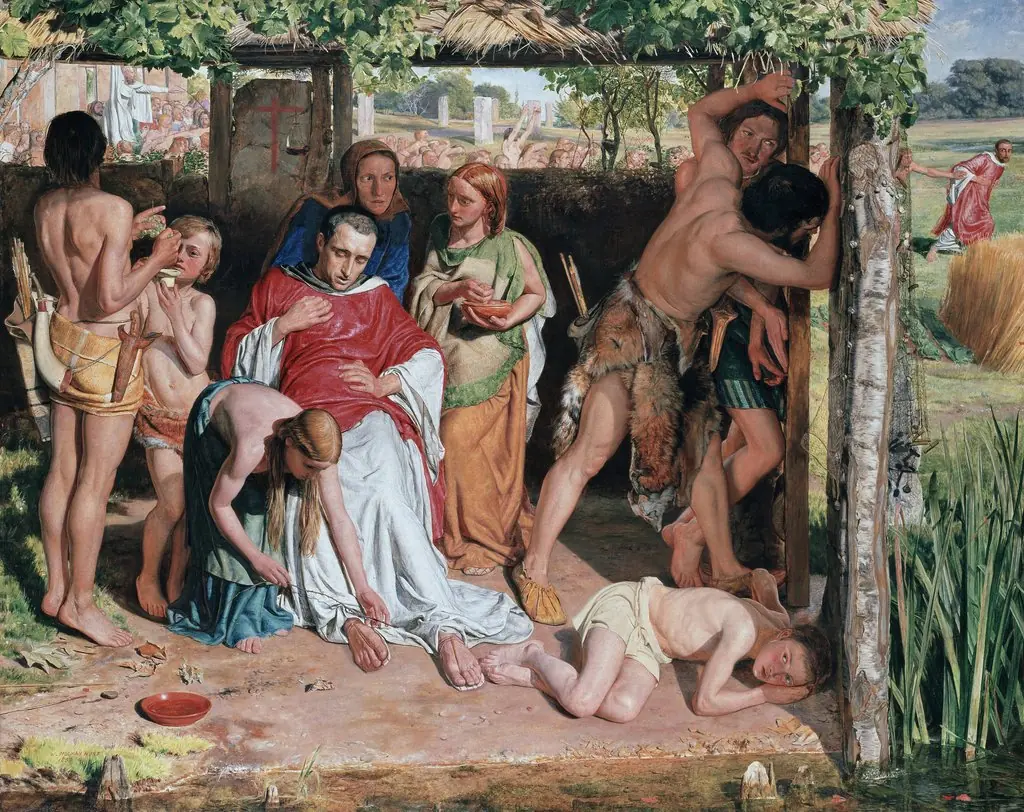
The painting was completed in 1849 and first exhibited at the Royal Academy in 1850, where it appeared without a title but accompanied by a biblical quotation from Zechariah 13:6: 'And one shall say unto him, What are those wounds in thine hands? Then he shall answer, Those with which I was wounded in the house of my friends.' At this exhibition it was shown alongside a companion piece by Millais's Pre-Raphaelite colleague William Holman Hunt, A Converted British Family Sheltering a Christian Missionary from the Persecution of the Druids, which similarly depicted a family aiding a wounded individual from early Christian history. The painting was acquired by Tate Britain in 1921 through purchase with assistance from the Art Fund and various subscribers, and is catalogued under accession number N03584. An inscription on the work records its date.
Context
The painting emerged from the Pre-Raphaelite Brotherhood, a movement founded in 1848 that sought to revitalize British art through detailed observation, bright color, and engagement with medieval and early Renaissance precedents. Millais's treatment of a sacred subject with unidealized realism and contemporary working-class setting represented a radical break with academic conventions, which typically presented biblical figures in classical or idealized terms. The critical response was immediate and fierce. Charles Dickens was among the most prominent attackers, describing the young Christ as 'a hideous, wry-necked, blubbering, red-headed boy, in a bed gown' and Mary as so hideous that she would stand out as 'a Monster, in the vilest cabaret in France, or the lowest gin-shop in England.' Other critics complained of the 'loathsome minuteness' with which misery, dirt, and even disease were depicted, with some suggesting the figures showed signs of rickets and slum conditions. The Times called the work 'revolting.' The intensity of the reaction led Queen Victoria to request that the painting be brought to Buckingham Palace for private viewing.
Yet the controversy also generated support. John Ruskin defended Millais in a letter to the press and in his lecture 'Pre-Raphaelitism,' despite later admitting personal dislike of the painting itself. The work thus became a flashpoint for broader debates about the proper relationship between modernity, realism, and medievalism in the arts, and its symbolic realism helped establish a wider movement combining careful thematic choice with detailed observation.
Legacy
The critical fur surrounding Christ in the House of His Parents proved paradoxically beneficial to the Pre-Raphaelite movement, transforming it from obscurity to notoriety and establishing its central place in Victorian cultural debate. The painting's notoriety helped define the terms on which realism in religious art would be discussed for decades. Over time, the work has come to be recognized as one of Millais's most significant achievements and a cornerstone of Pre-Raphaelite art. It is now held among the key works at Tate Britain, where it represents both the technical ambitions and the social provocations of the movement. Scholarly attention has focused on its complex negotiation of sacred narrative with contemporary social reality, its sophisticated iconographic program, and its role in reshaping British painting's engagement with religious subject matter. The painting continues to be cited in discussions of realism, the Pre-Raphaelite Brotherhood, and the Victorian reception of religious art, its initial shock value now transformed into recognition of its historical importance and enduring visual power.
Own this work as a print
Artist & collection
Artist
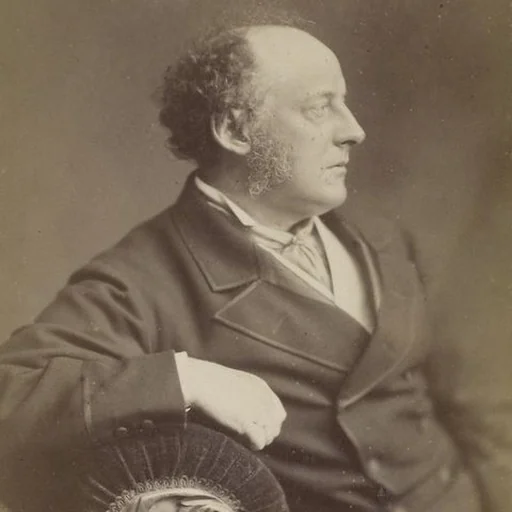
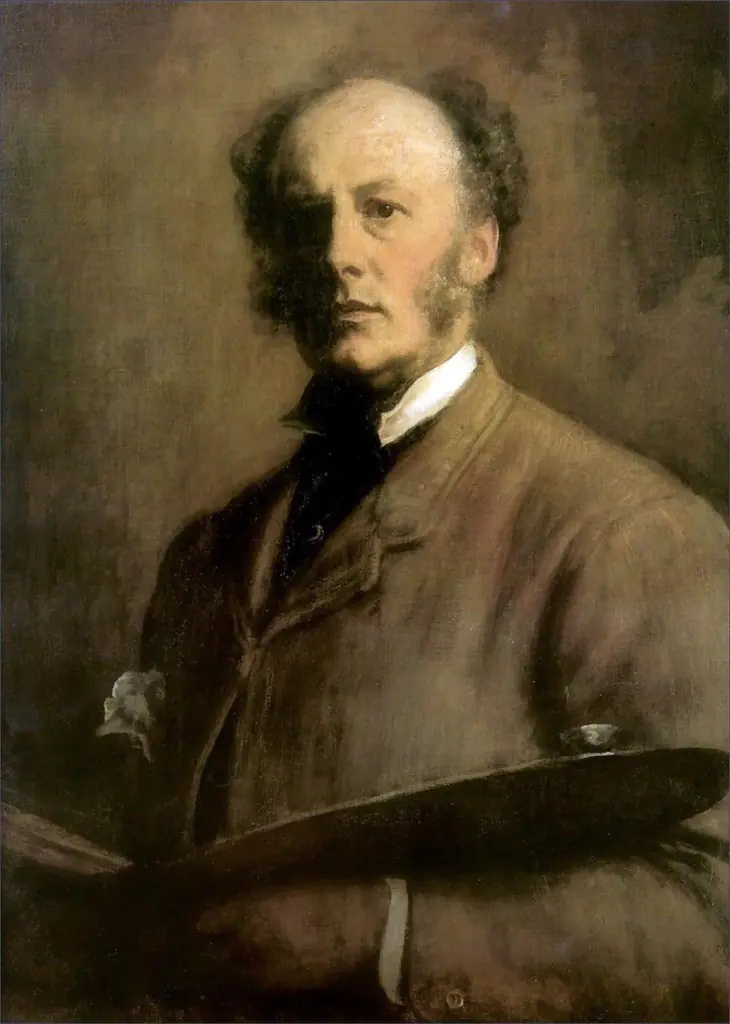
Sir John Everett Millais, 1st Baronet ( MIL-ay; 8 June 1829 – 13 August 1896) was an English painter and illustrator who was one of the founders of the Pre-Raphaelite Brotherhood.

 The Flight into Egypt
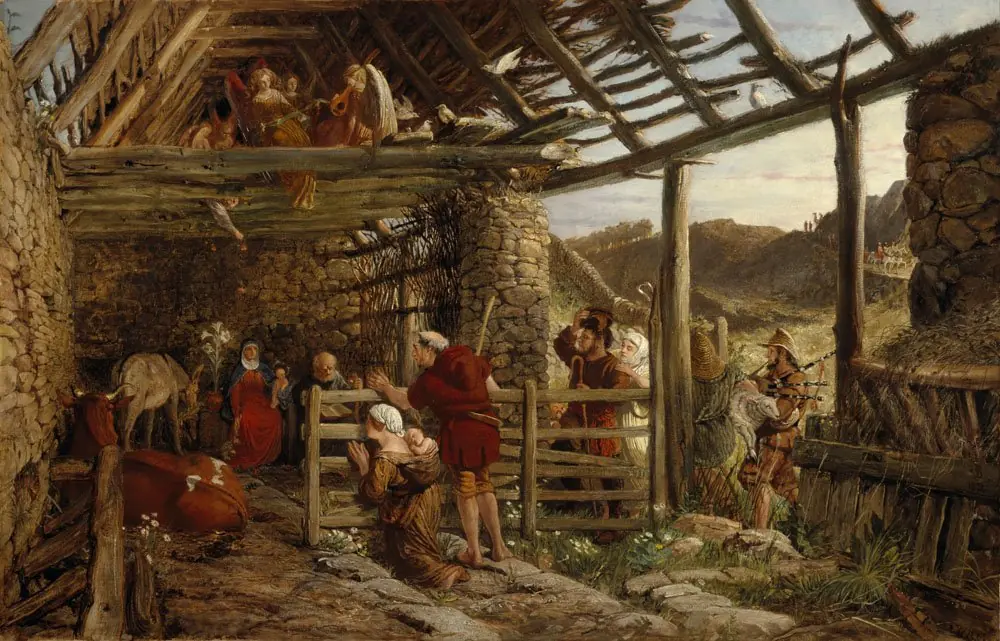 The Nativity
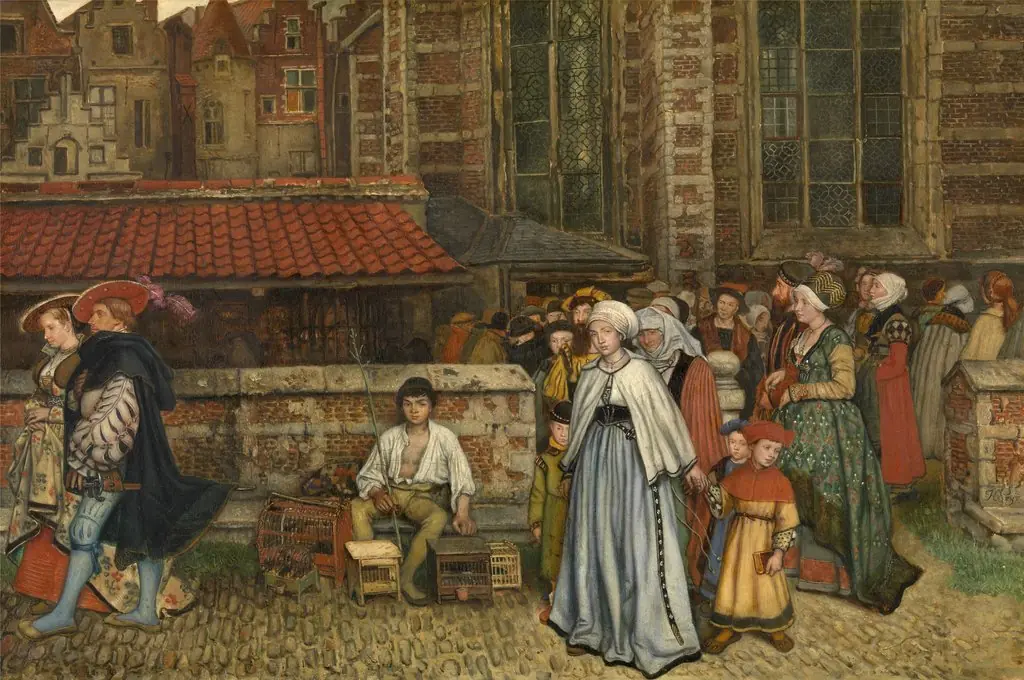 After Mass
 The Adoration of the Shepherds
 The Persecuted, the Enslaved, the Unfortunates
 The Father's Leave-Taking
 The Adoration of the Magi
 To kvinder besøger landsbykunstneren for at se det bestilte gravkors
 The Triumph of the Innocents
 The Adoration of the Shepherds
- A Converted British Family Sheltering a Christian Missionary from the Persecution of the Druids
 Studied in the Pre-Raphaelites course