Artwork
Tableau of Indian Faces
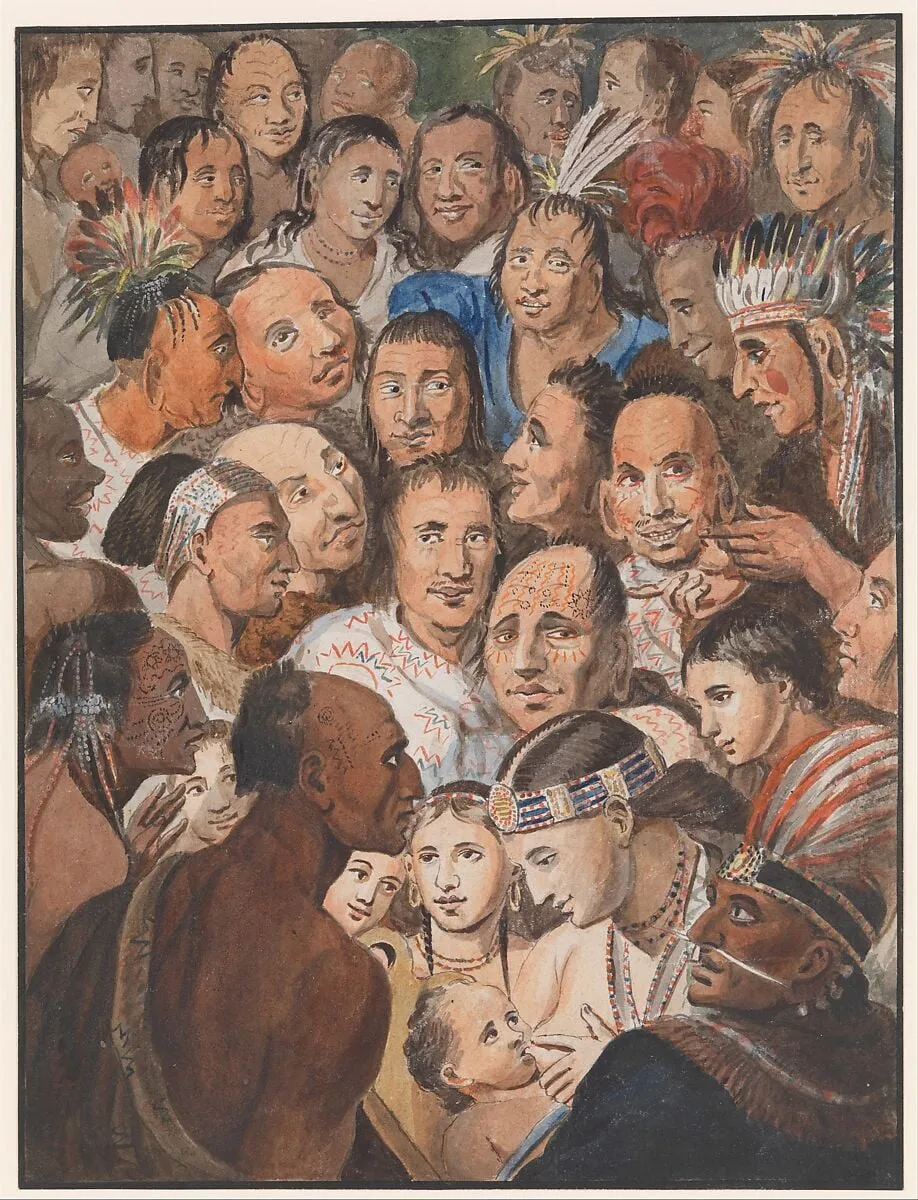
Tableau of Indian Faces is a watercolor work on paper by the American Folk Art artist John Lewis Krimmel. It dates from 1811 and is held in the collection of the Metropolitan Museum of Art.
About this work
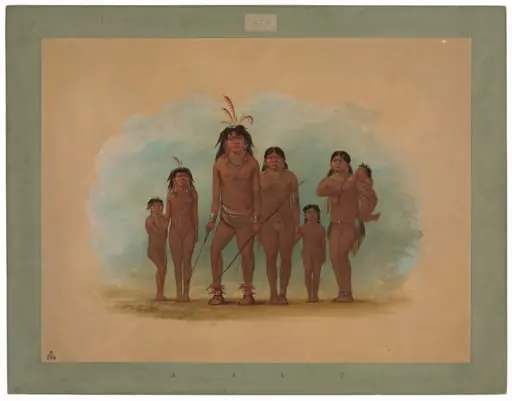
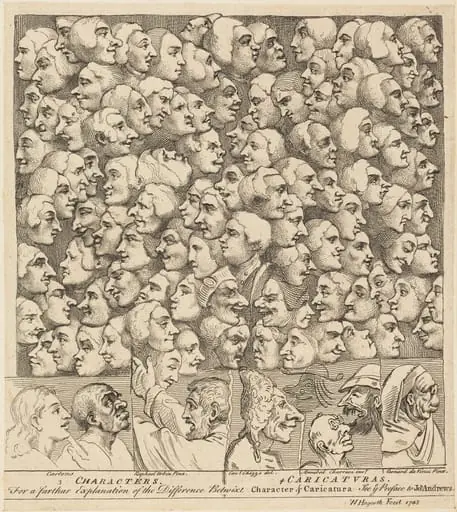
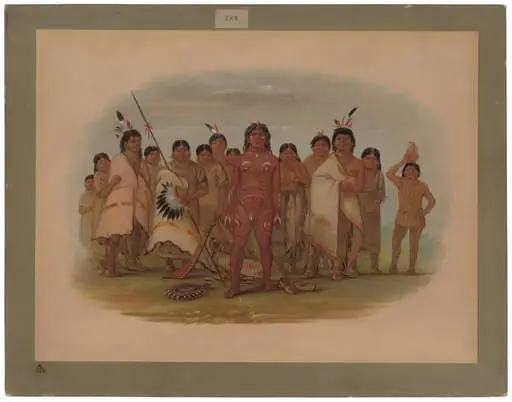
A row of faces, Native American men, women, and a baby being nursed, drawn in soft watercolor and chalk. The work is rare for 1811, when most artists showed Indigenous people as symbols rather than individuals. Here each face feels personal, like a sketch from life, and the nursing baby is especially unusual in early American art.
Subject & Meaning
Krimmel documents specific markers of Indigenous identity and adornment, depicting beadwork, feathered headdresses, and headbands worn by the sitters.
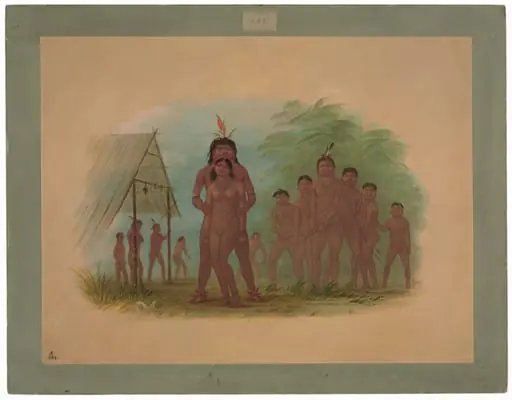
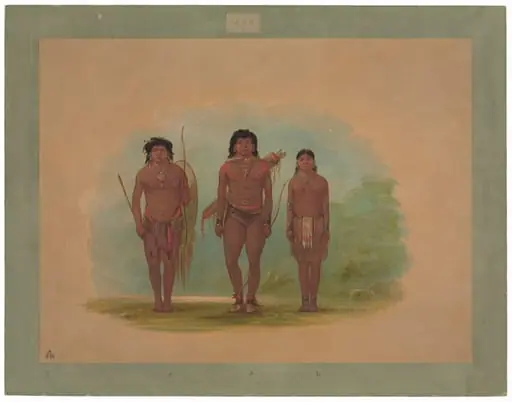
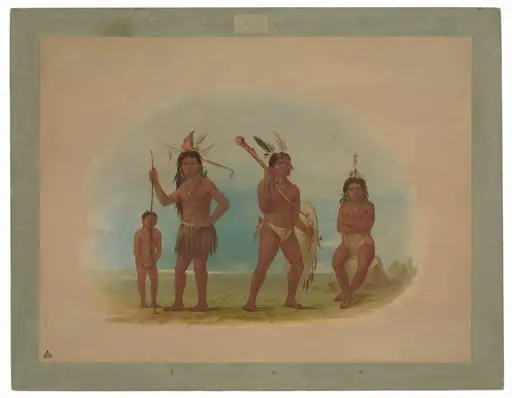
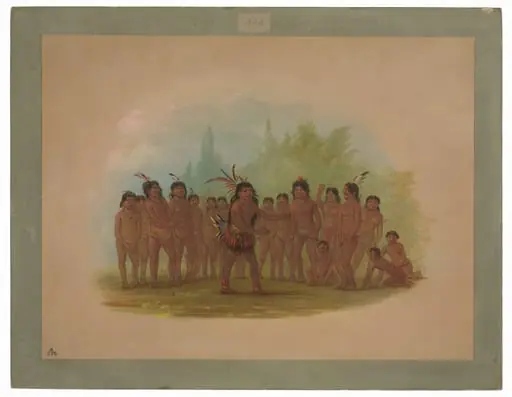
Tableau of Indian Faces is a watercolor portrait study centered on a densely packed crowd of Native American figures, with particular attention given to the varied faces within the gathering. The composition includes an infant among the group, suggesting a cross-generational portrayal of the community. Krimmel documents specific markers of Indigenous identity and adornment, depicting beadwork, feathered headdresses, and headbands worn by the sitters.
Facial tattoos are also rendered, recorded as a notable feature of the subjects' appearance. By concentrating on a multitude of faces rather than a single sitter, the work functions as a typological study, cataloguing the diversity of features, expressions, and personal ornamentation within the group. The combination of portraiture with ethnographic observation reflects early nineteenth-century American interest in Indigenous peoples, presenting the figures both as individual likenesses and as representatives of a broader cultural presence.
Technique & Style
Tableau of Indian Faces is executed in watercolor combined with black chalk, gum arabic, and gouache on white laid paper. The mixed-media handling allows for both linear definition through chalk and translucent washes via watercolor, while gum arabic and gouache add opacity and surface body. The work is a portrait-format composition measuring 23.5 by 17.8 centimeters, depicting a crowd of Native American figures rendered with attention to identifying adornments such as beadwork, headbands, headdresses, feathers, and facial tattoos, alongside an infant.
History & Provenance
John Lewis Krimmel produced Tableau of Indian Faces in 1811 using watercolor, black chalk, gum arabic, and gouache on laid paper. The work, classified as a portrait within The American Wing, depicts a crowd of Native American figures with traditional adornments;. It entered the Metropolitan Museum of Art’s collection, where it remains on view.
No documentation indicates a specific commission; the painting’s creation history is documented only through its dated execution and subsequent inclusion in the museum’s holdings.
The watercolor study Tableau of Indian Faces (1811) by John Lewis Krimmel is held by The Metropolitan Museum of Art, New York, where it is catalogued as accession 54.3.1. The sheet measures 23.5 cm in height and 17.8 cm in width and entered the collection in 1954. It has not been recorded in the Museum’s exhibition history since its acquisition.
Context
John Lewis Krimmel produced Tableau of Indian Faces in 1811 using watercolor, black chalk, gum arabic, and gouache on white laid paper; the work is classified as a portrait and is housed in The American Wing of the Metropolitan Museum of Art. The painting portrays a crowd of Native American figures, including an infant, and incorporates details such as headdress, bead, headband, face tattoo, and feather. As an early American portrait, it reflects the period’s growing interest in depicting Indigenous subjects and serves as a notable example of early 19th‑century representation within the museum’s collection.
Overview
John Lewis Krimmel's Tableau of Indian Faces, created around 1811, presents a series of portraits of Native American individuals. Executed with watercolor, black chalk, gum arabic, and gouache on white laid paper, this work stands out for its intimate and personal approach. It captures a diverse group, including men, women, and a child, departing from the more symbolic representations common in early American art.
Artist & collection

Artist
John Lewis Krimmel (May 30, 1786 – July 15, 1821), sometimes called "the American Hogarth," was North America's first painter of genre scenes.