Artwork
Portrait of Charles Deering
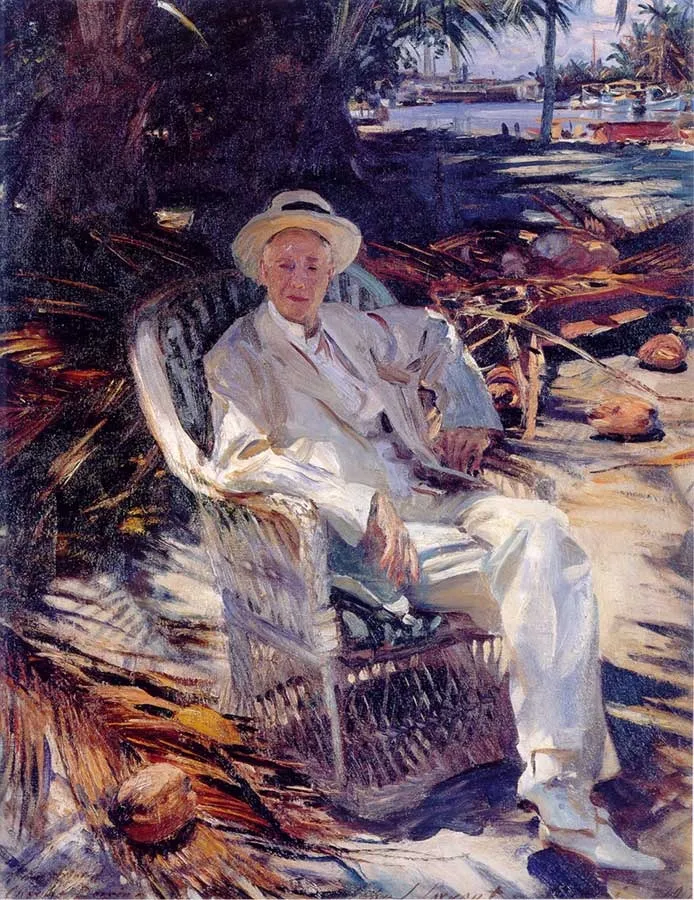
Portrait of Charles Deering is an oil painting by the Impressionist artist John Singer Sargent. It dates from 1917 and is held in the collection of the Art Institute of Chicago.
About this work
Overview
3 centimeters (28 1/2 by 21 inches), the work depicts the sixty-five-year-old Chicago businessman and art collector seated outdoors in tropical surroundings.
Portrait of Charles Deering is an oil on canvas painting by John Singer Sargent, created in 1917 during a two-month stay with his longtime friend at Brickell Point, Miami, Florida. Measuring 72.4 by 53.3 centimeters (28 1/2 by 21 inches), the work depicts the sixty-five-year-old Chicago businessman and art collector seated outdoors in tropical surroundings. Now held by the Art Institute of Chicago, where it is currently off view, the painting represents a remarkable late example of Sargent's portraiture, distinguished by its informal, sketchlike execution and its seamless fusion of figure and landscape. The work matters in Sargent's oeuvre as an testament to a fifty-year friendship and as a demonstration of the artist's enduring ability to capture personality through plein-air observation, even as he moved away from the formal society portraits that had established his reputation.
Subject & Meaning
The subject, Charles Deering (1852-1927), appears as a relaxed, white-clad figure seated in a wicker cane chair, his body angled slightly toward the viewer with one hand on his thigh and the other on the chair arm. He wears a white suit, pale tie, white shoes, and a light straw hat, the crinkled textures of his clothing rendered with the same attention to textile surfaces that Sargent brought to formal portraits such as Ada Rehan. The iconography of dress signals leisure, wealth, and ease; the all-white ensemble suggests tropical suitability and perhaps a degree of studied informality appropriate to the private setting. Behind and around Deering, dense tropical foliage frames the composition, with fallen coconuts and palm fronds scattered across the foreground. Through gaps in the vegetation, a sunlit harbor with boats, distant buildings, and palm trees along the water's edge provides depth and locational specificity. The inscription "To My Friend / Charles Deering" in the lower left, together with the signature and date "John S. Sargent Miami 1917" in the lower right, transforms the image from mere likeness into a document of personal affection and mutual regard between artist and sitter. The painting's meaning resides in this balance: it is simultaneously a portrait of a specific individual, a record of a particular place and moment, and a meditation on the pleasures of friendship and observation freed from the constraints of commissioned formal portraiture.
Technique & Style
Sargent executed the portrait in oil on canvas, employing a technique that the Art Institute describes as weaving "the sitter into a tapestry of swift brushstrokes, warm and cool hues, and the area's rich vegetation." The palette is dominated by whites and creams set against deep purples, blues, and browns in the shadowed areas, with dappled sunlight filtering through leaves to create patterns of light and shadow across both figure and ground. The brushwork is loose and rapid, with unblended strokes describing form and atmosphere rather than delineating precise detail. This handling gives the surface an unfinished, sketchlike quality, with canvas texture visible throughout. The approach recalls Sargent's watercolor technique and relates to other works painted during his 1917 Florida visit, including several now at the Metropolitan Museum of Art. The composition harmonizes portraiture and landscape painting in ways that critics have found distinctive: the figure is neither dominant over nor subordinate to his environment but fully integrated within it. The visual effect suggests the influence of Impressionist plein-air practice, yet Sargent's swift notation of specific observed effects, his muscular understanding of form beneath color, and his willingness to leave passages in a provisional state all mark this as characteristic late work by an artist confident in his powers and unconstrained by the expectations of conventional portraiture.
History & Provenance
The portrait emerged from an uncommissioned, informal encounter during Sargent's 1917 trip to Florida, where he had traveled to work on a portrait of John D. Rockefeller. While there, he stayed with Deering at his Miami home for two months and painted this likeness, probably presenting it to his friend as a token of gratitude for hosting him. The inscription suggests this gift status. The painting's subsequent ownership history includes descent through the Deering family; it was later lent to the Art Institute of Chicago, where it entered the collection with the reference number 8.2002. The credit line indicates it came as an anonymous loan. The work has been exhibited in significant Sargent retrospectives, including "Sargent: Portraits of Artists and Friends" at the Metropolitan Museum of Art in 2015, where it was reunited with Sargent's portrait of Mrs. Hugh Hammersley and Hercules Brabazon Brabazon, two paradigmatic works once owned by Deering.
Context
The 1917 portrait stands at the culmination of a fifty-year friendship that began in 1876, when the twenty-year-old Sargent, then studying in Paris with Carolus-Duran, made his first trip to the United States and painted an earlier portrait of Deering in his naval uniform at Newport, Rhode Island. That earlier work, now in a private collection, was described by the Art Institute as "dark, tonal, and subtle," demonstrating Sargent's Parisian training. In the decades between the two portraits, both men rose to eminence: Deering as chairman of the machinery company that became International Harvester Corporation, amateur artist, Hispanist, owner of a castle in Sitges, Spain, and important collector; Sargent as the most sought-after portraitist of the Anglo-American elite. Their paths crossed repeatedly across Europe and America. Deering accumulated more than a dozen Sargent portraits, at least eighteen landscapes and figure studies in oil, and more than ten watercolors, including gifts and purchases. His collecting extended to acquiring Sargent's 1893 portrait of Mrs. Hugh Hammersley in 1923, which he specifically sought to keep in the United States. The Deering family became significant patrons of the Art Institute of Chicago, and other Chicago collectors including Martin A. Ryerson, Annie Swan Coburn, and Robert Allerton similarly ensured a Sargent legacy for the city. The 1917 portrait thus emerges from a nexus of personal friendship, patronage, and cultural ambition that characterized Chicago's Gilded Age collecting culture.
Legacy
The Portrait of Charles Deering occupies a significant place in the later reception of Sargent's work, representing the informal, experimental side of an artist often caricatured as merely a facile society painter. Its exhibition at the Metropolitan Museum in 2015, where it was described as a "unique and candid masterpiece," helped consolidate scholarly appreciation of Sargent's late, more personal production. The painting's cultural afterlife is inseparable from the broader Deering legacy: Charles Deering's descendants continued his patronage, and works from his collection, including the portrait of Mrs. Hugh Hammersley, have entered major public institutions. The Art Institute's holding of this portrait, together with other Sargent works that passed through Deering hands, preserves a material record of one of the most important artist-patron relationships in American art of the period. For scholars, the painting offers evidence of Sargent's working methods in his late career, his continued engagement with plein-air observation, and the persistence of his technical brilliance even in seemingly casual circumstances. For general audiences, it remains accessible as a vivid evocation of place, personality, and the pleasures of friendship captured at a moment when Europe, Sargent's customary sphere, was closed to him by World War I, making the Florida interlude an unexpected late flowering.
Artist & collection
Artist
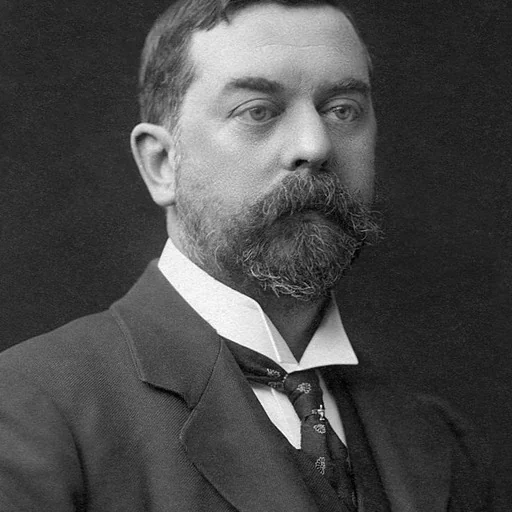
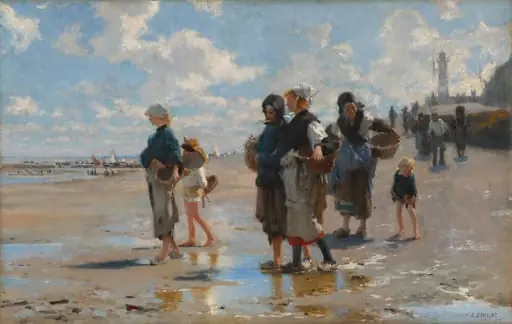
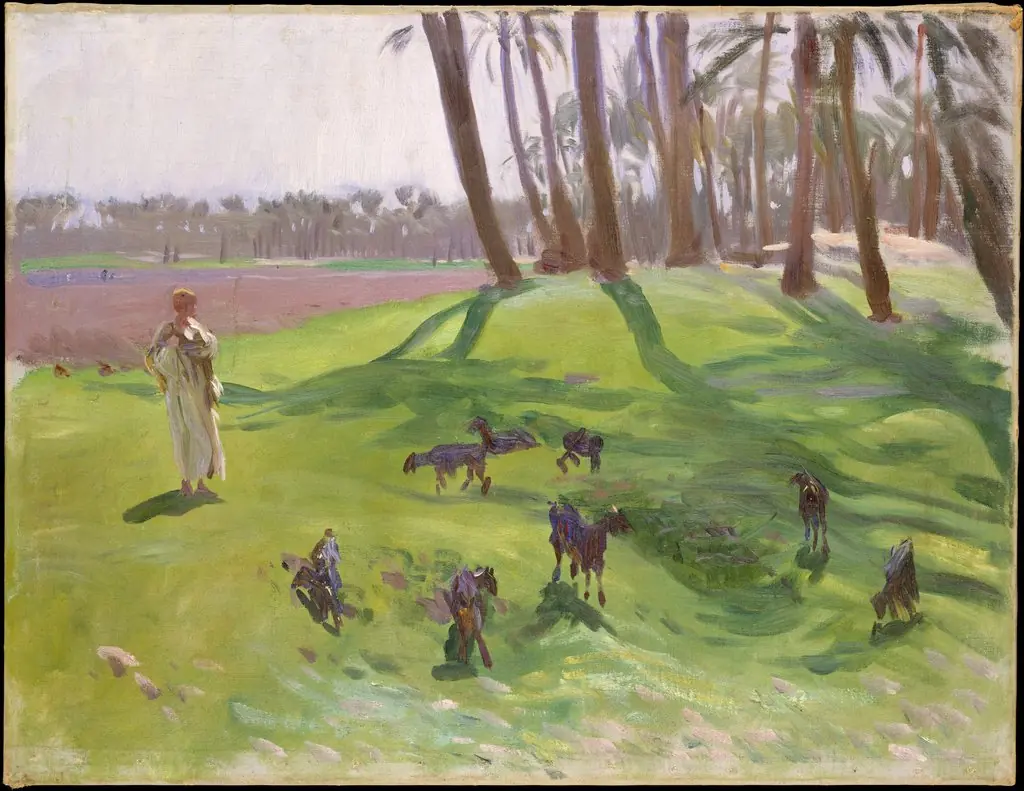
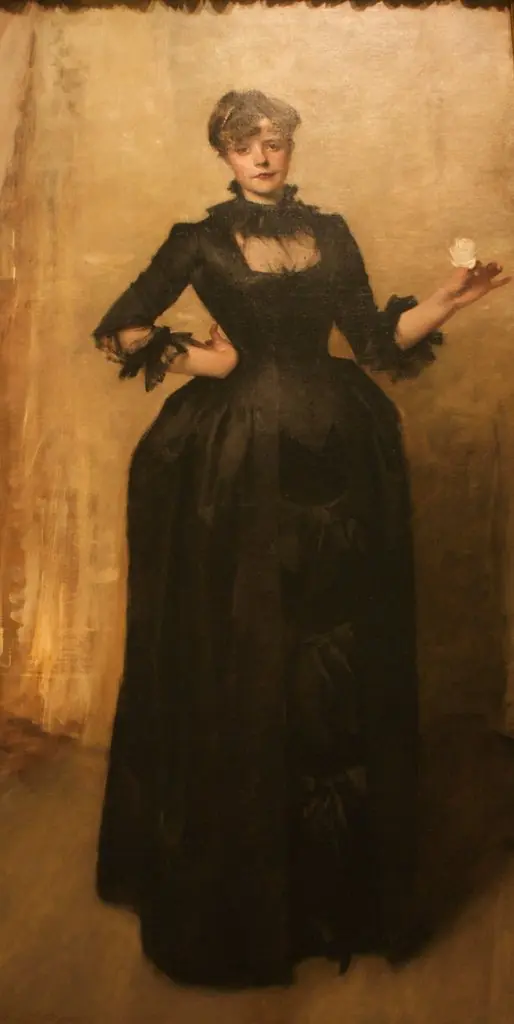
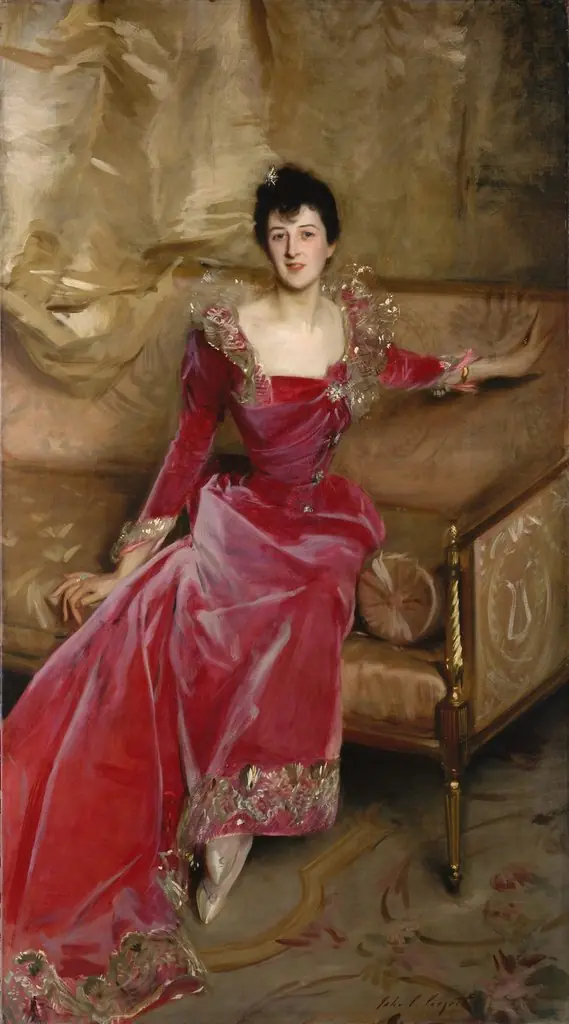
John Singer Sargent (; January 12, 1856 – April 15, 1925) was an American expatriate artist, considered the "leading portrait painter of his generation" for his evocations of Belle Époque and Edwardian-era luxury.

- Portrait of Stanisław Czajkowski, painter, artist’s brother
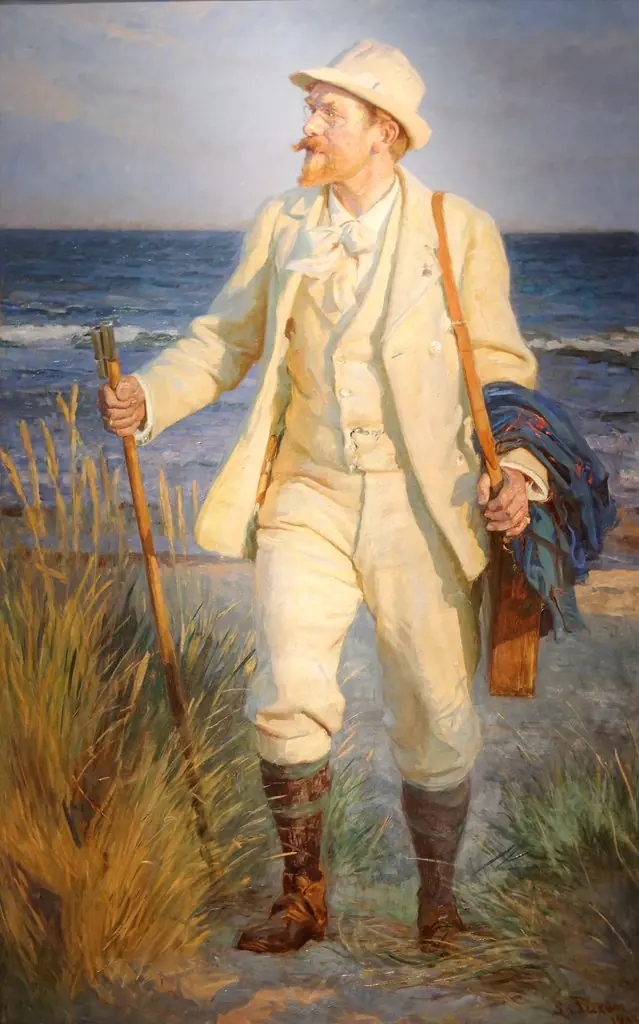 Portrait of Painter Peder Severin Kröyer
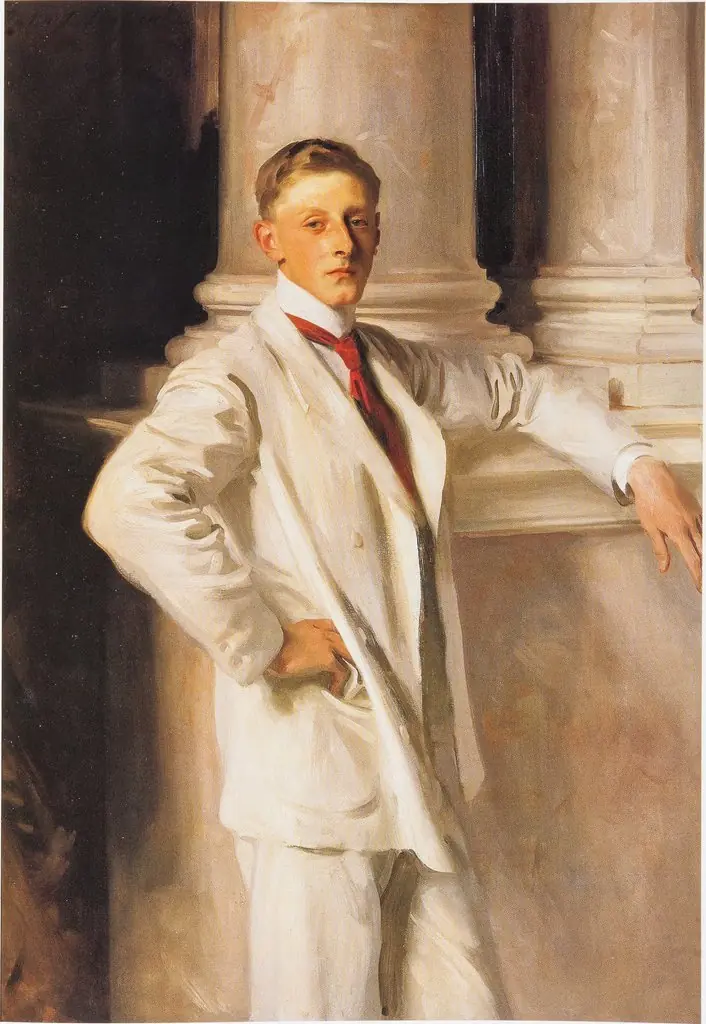 The Earl of Dalhousie
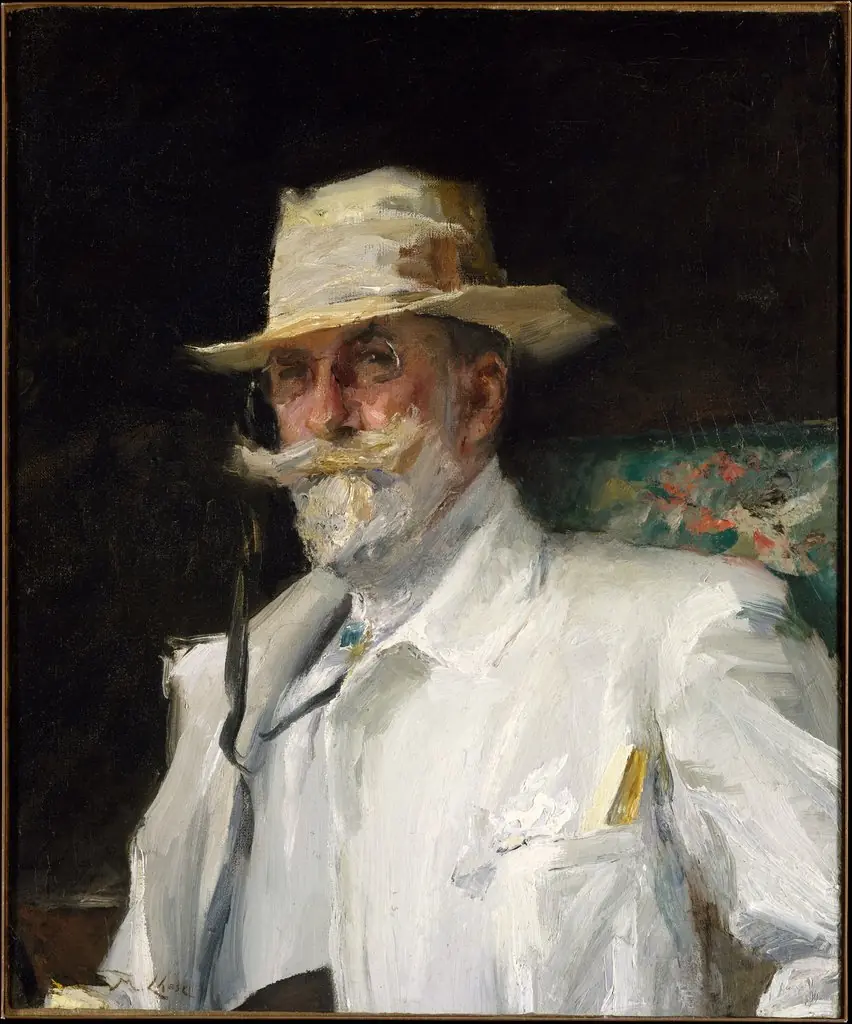 William Merritt Chase
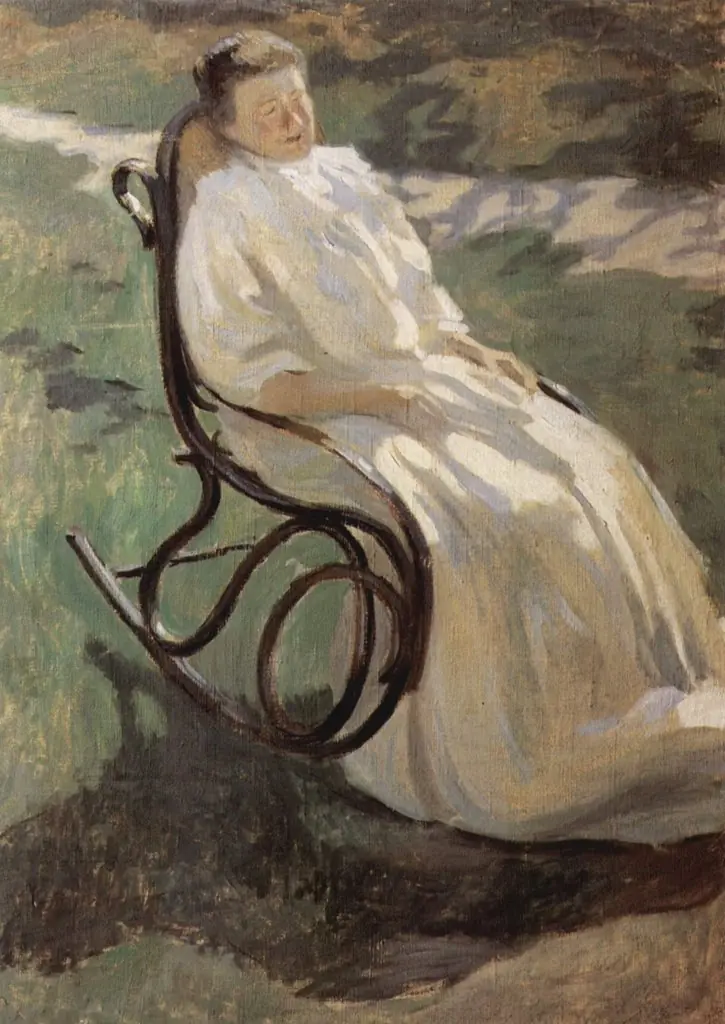 Dame im Schaukelstuhl
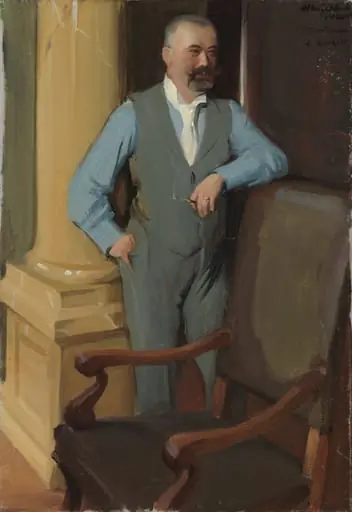 Ruukinpatruuna A.N:son Keirkner, muotokuvaharjoitelma
 Self-portrait
 The Painter Ditlev Blunck
 La mare
 James MacAlister (Sketch)
 Retrato de homem com cartola: o poeta Hanvin, o homem do fígaro
 Portrait of Józef Czajkowski