Artwork
Watson and the Shark
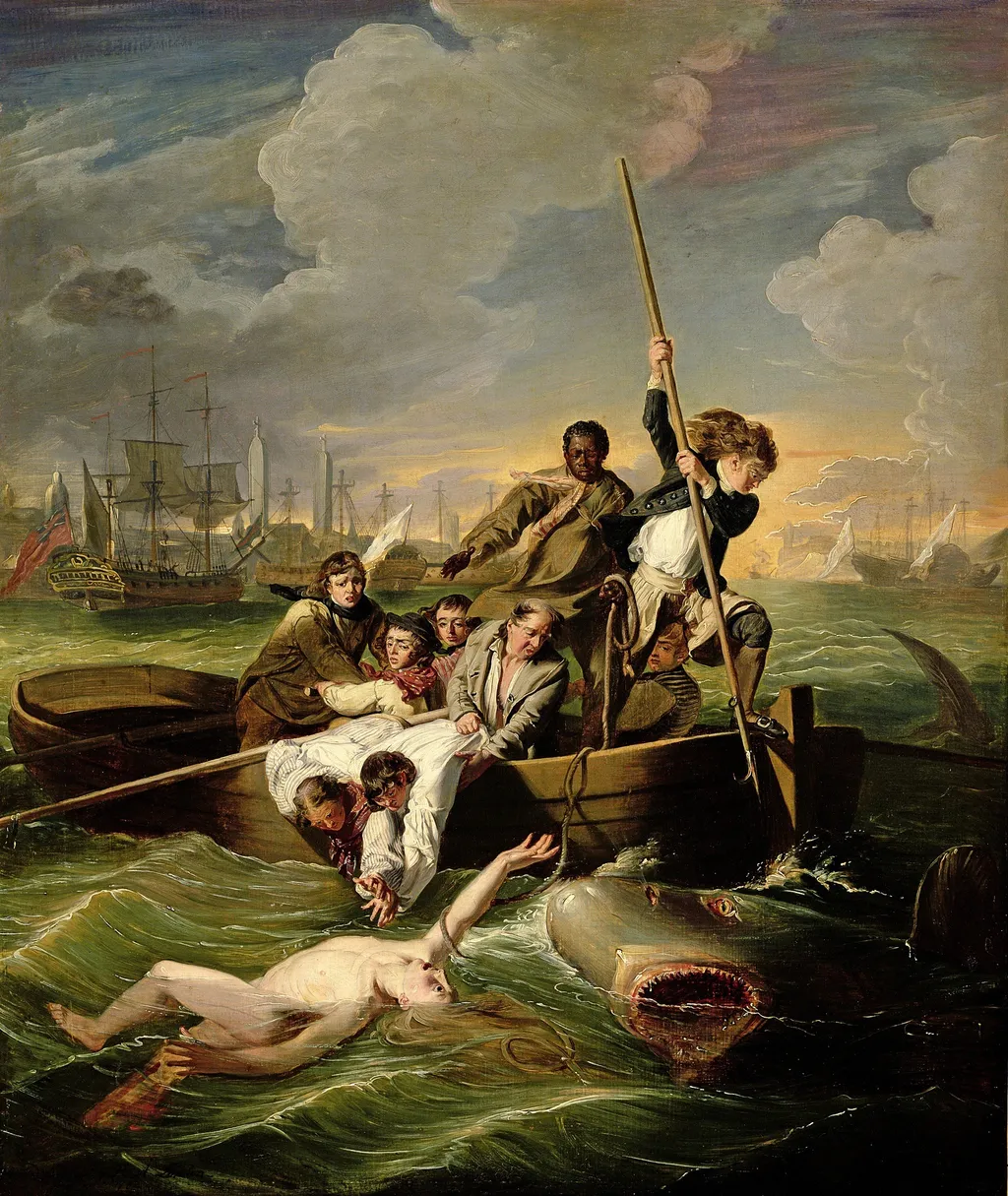
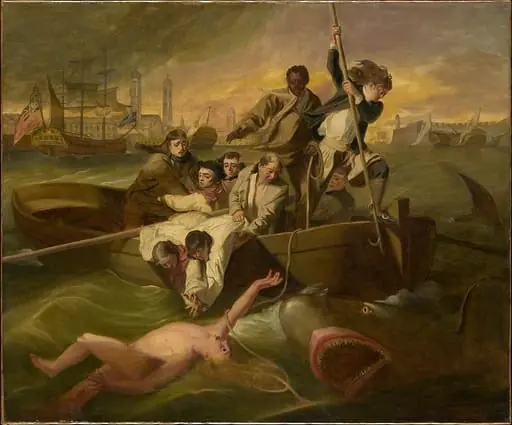
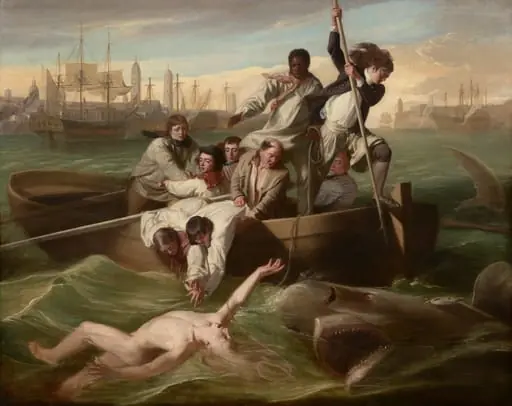
Watson and the Shark is an oil painting by the Rococo painting artist John Singleton Copley. It dates from 1792 and is held in the collection of the Detroit Institute of Arts.
About this work
Subject & Meaning
As an example of history painting, the work captures a specific moment of peril where a man is threatened by a shark while others in a boat attempt a rescue.
The painting depicts a dramatic shark attack in Havana harbor, centering on the figure of Brook Watson. As an example of history painting, the work captures a specific moment of peril where a man is threatened by a shark while others in a boat attempt a rescue. The composition focuses on the human struggle against the predator, illustrating a narrative of survival and danger.
The scene is set in Havana, grounding the event in a specific geographic location while emphasizing the universal theme of man versus nature.
Technique & Style
Copley employed oil paint on canvas to render the dramatic scene with precise, descriptive handling. The composition is built from sharply focused foreground figures and a receding sea, creating spatial depth through controlled recession and selective focus. The shark’s form is modeled with thick, tactile impasto around its jaws and along the water’s surface, contrasting with smoother passages in the sky and distant figures.
Figures are individualized with careful attention to costume and physiognomy, while the sea itself is painted wet-in-wet to convey movement and light. The work’s chiaroscuro and dynamic diagonal organize the action into a legible narrative climax, balancing realism with theatrical effect.
The painting’s condition is stable, with the original canvas support intact and only minor surface abrasion reported in later surveys.
History & Provenance
John Singleton Copley painted 'Watson and the Shark' in 1782, depicting a dramatic shark attack witnessed by the young Brook Watson in Havana. The work was created as an oil painting on canvas and classified as a history painting. It entered the collection of the Detroit Institute of Arts, where it remains on display.
John Singleton Copley painted Watson and the Shark in 1782, depicting the young Brook Watson's harrowing encounter with a shark in Havana waters. The artwork, an oil on canvas measuring 91.4 cm by 77.5 cm, resides in the permanent collection of the Detroit Institute of Arts under accession details documented in institutional records.
The painting has been featured in exhibitions focused on American art history and 18th-century maritime themes at the DIA, including a 1998 showcase of Copley's works and a 2016 display within the museum's European and American Paintings galleries.
Historical documentation confirms its continuous presence in the museum's holdings since acquisition, reflecting its significance within the institution's collection of early American masterpieces.
Overview
John Singleton Copley’s 1792 oil on canvas, Watson and the Shark, portrays a dramatic rescue scene off the coast of Havana. A group of 18th‑century sailors in a small boat struggle to save a naked man from a massive shark, whose gaping jaws dominate the composition. The work is part of the Detroit Institute of Arts’ collection.
Context
Created shortly after Copley’s relocation to England, the painting reflects his shift from colonial portraiture to grand historical subjects. The incident it depicts had become a popular anecdote in 18th‑century travel literature, allowing Copley to explore contemporary interests in exotic locales and the perils of sea travel.
Own this work as a print
Artist & collection

Artist
John Singleton Copley (July 3, 1738 – September 9, 1815) was an American-born British painter active in both the Thirteen Colonies and England.