Artwork
Jacob Houseman
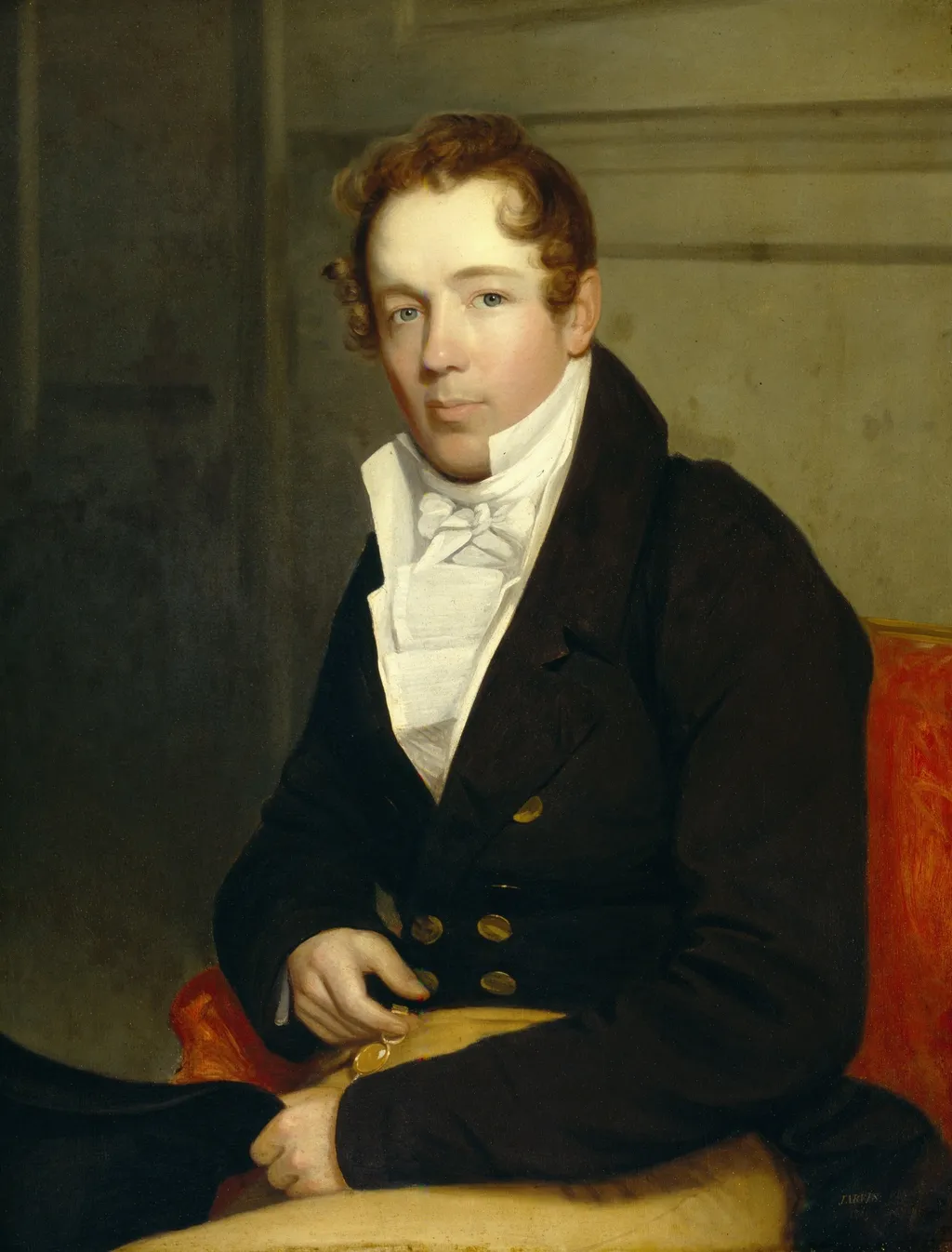
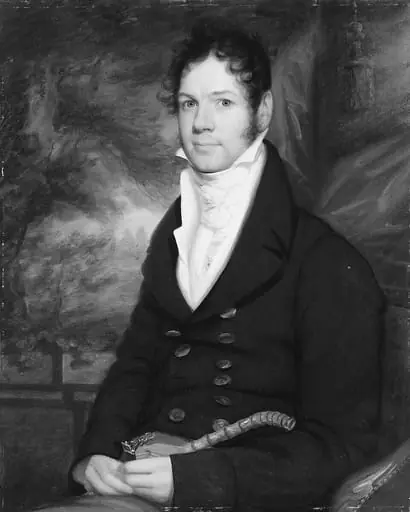
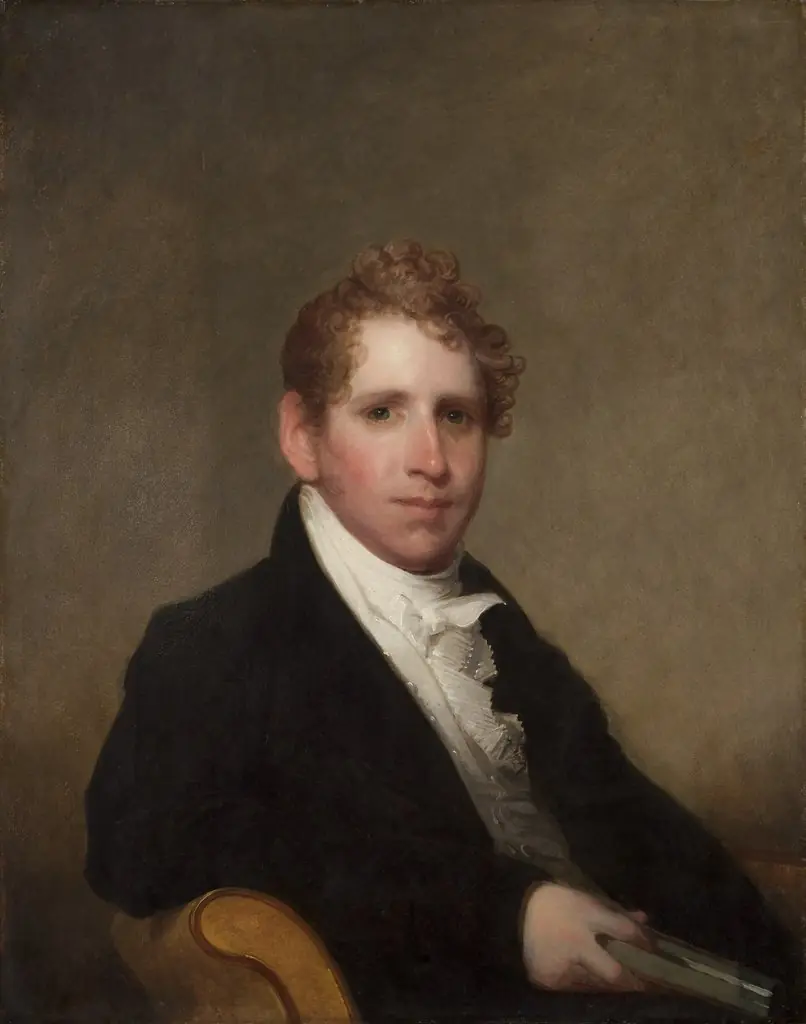
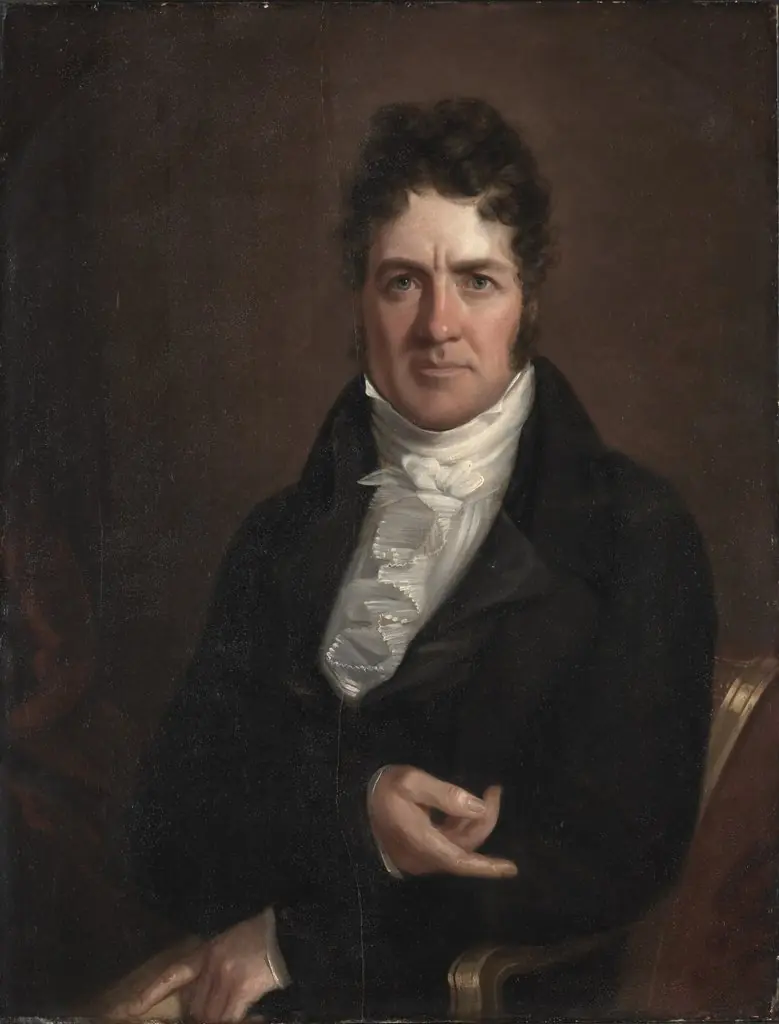
Jacob Houseman is an unspecified painting by the Realist artist John Wesley Jarvis. It dates from 1809 and is held in the collection of the Detroit Institute of Arts.
About this work
The man is seated in front of a wall with a decorative molding, and the overall atmosphere of the painting is one of quiet contemplation.
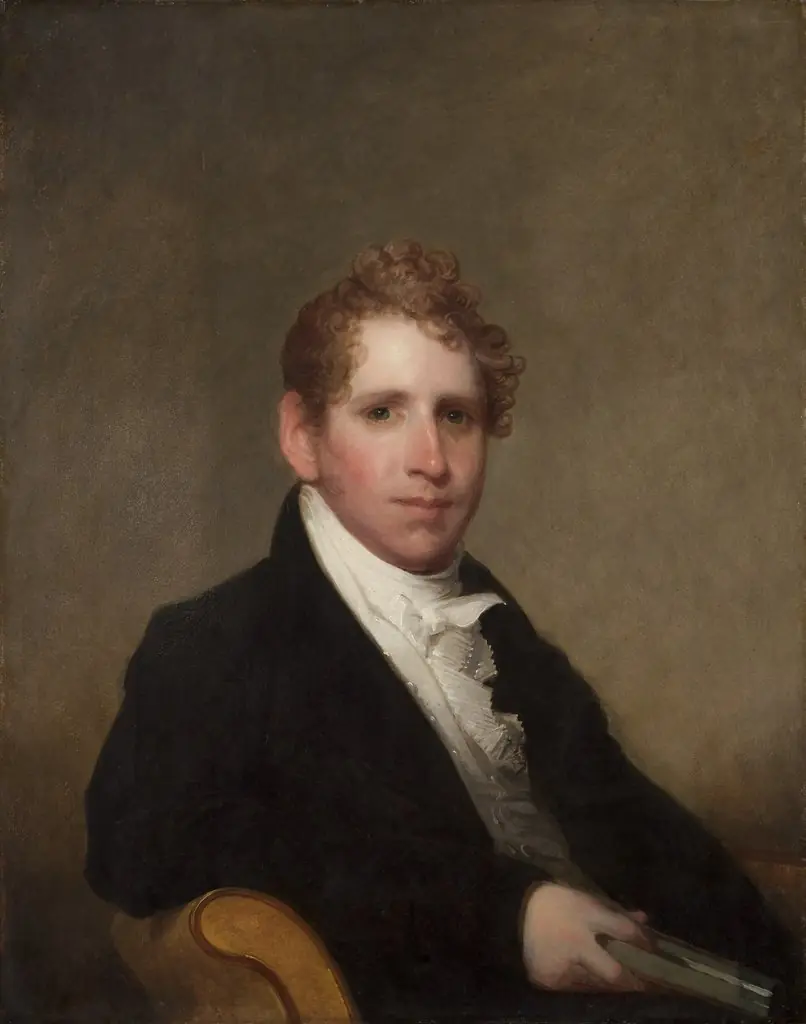
The painting depicts a man sitting in a chair, wearing a black coat with gold buttons and a white cravat. He has curly red hair and is looking directly at the viewer. His right hand rests on his lap, and his left hand holds a small object that is not clearly visible.
The man is seated in front of a wall with a decorative molding, and the overall atmosphere of the painting is one of quiet contemplation. The artist has used a range of colors to create a sense of depth and dimensionality, with the man's face and clothing standing out against the more subdued background.
The painting is a portrait of Jacob Houseman, created by John Wesley Jarvis in 1809. It is held at the Detroit Institute of Arts. To learn more about the artist's use of chiaroscuro, look up John Wesley Jarvis.
Overview
John Wesley Jarvis's 1809 portrait, Jacob Houseman, captures the sitter in a half-length composition that exemplifies the artist's early Federal style. Houseman is depicted seated in a wooden chair, dressed in a black coat adorned with gold buttons and a crisp white cravat, contrasting with his voluminous curly red hair. The subject gazes directly at the viewer with a steady, confident expression, establishing an immediate psychological connection characteristic of Jarvis's portraiture.
His right hand rests naturally in his lap, while his left hand grasps a small, indistinct object, possibly a glove or a piece of paper, adding a subtle narrative element to the formal pose. Painted shortly after Jarvis arrived in Philadelphia from London, this work demonstrates the artist's rapid assimilation of British portrait traditions, particularly the influence of Thomas Lawrence, adapted for an American clientele. The painting reflects the emerging confidence of the young American republic, presenting its subjects with dignity and individuality rather than aristocratic grandeur.
It stands as a significant example of Jarvis's early career, showcasing his ability to render texture and character with precision during a pivotal period in American art history.
Subject & Meaning
The sitter, Jacob Houseman, is shown seated in a chair, dressed in a black coat trimmed with gold buttons and a white cravat. His curly red hair frames a direct gaze toward the viewer, suggesting a calm confidence. A small, indistinct object rests in his left hand, adding a hint of personal detail.
Technique & Style
Jarvis employs a restrained palette, contrasting the richly colored attire with a muted wall and decorative molding behind the figure. Careful modeling of light on the face and fabric creates depth, while the smooth background recedes, emphasizing the sitter’s presence.
History & Provenance
Created in the early nineteenth century, the portrait entered the Detroit Institute of Arts’ holdings through acquisition (specific acquisition details are not recorded in the source). It has been catalogued as a work by Jarvis, an active portraitist in New York during the period.
Own this work as a print
Artist & collection

Artist
John Wesley Jarvis (1781–1839) was an American artist, born in South Shields.