Artwork
Conversion of Saint Augustin
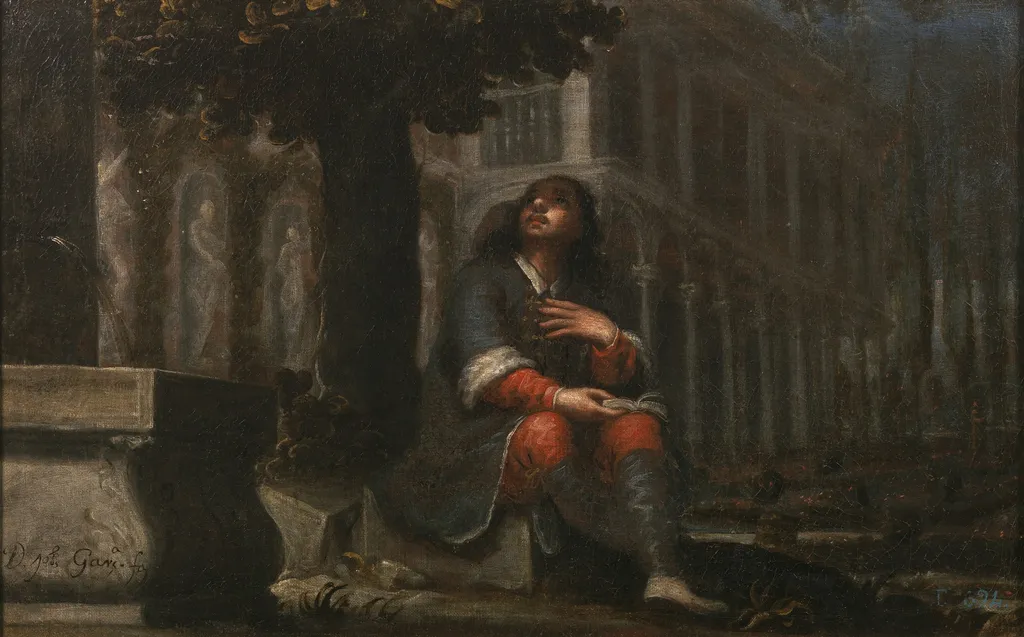
Conversion of Saint Augustin is an oil painting by the Early Baroque Italian artist José García Hidalgo. It dates from 1663 and is held in the collection of the Museo del Prado.
About this work
Subject & Meaning
As a religious artwork housed in the Museo del Prado, it reflects Counter-Reformation ideals that championed personal conversion and saintly exemplarity.
The Conversion of Saint Augustin depicts Augustine of Hippo in the moment of spiritual transformation, a pivotal scene from his autobiographical Confessions where he recounts his shift from a life of worldly pursuits to Christian faith. García Hidalgo emphasizes Augustine’s contemplative posture and the illuminated manuscript he holds, underscoring the theme of divine revelation. The painting’s composition, with its dramatic chiaroscuro and richly textured oil on canvas, highlights the Baroque interest in emotional intensity and the interplay of light and shadow to convey inner spiritual awakening.
As a religious artwork housed in the Museo del Prado, it reflects Counter-Reformation ideals that championed personal conversion and saintly exemplarity.
Symbolically, the work incorporates traditional attributes of Augustine, such as the open book representing his theological writings and the flaming heart signifying divine love, to reinforce the narrative of enlightened conversion. The surrounding architectural elements and muted palette further suggest a transition from earthly uncertainty to divine clarity, inviting viewers to meditate on the transformative power of faith.
Technique & Style
The Conversion of Saint Augustin, painted by José García Hidalgo in 1663, is executed in oil paint on canvas, a medium typical of 17th-century Spanish religious artworks. The work measures 53 centimeters in height and 84 centimeters in width, reflecting a composition characterized by dramatic chiaroscuro and expressive brushwork that emphasize the saint’s spiritual transformation. These stylistic elements align with the Baroque period’s emphasis on emotional intensity and dynamic movement.
The painting’s surface handling reveals careful preservation of the oil medium, though minor craquelure is visible across the canvas, consistent with its age and material composition. Such technical features support its classification within the religious genre, as depicted by the narrative of Augustine’s conversion, a theme recurrent in devotional art of the era.
History & Provenance
The work titled Conversion of Saint Augustin was painted by José García Hidalgo in 1663 as an oil on canvas. It entered the collection of the Museo del Prado, where it remains on display in Madrid. The painting was likely commissioned for devotional use within a religious context, reflecting the Baroque emphasis on personal conversion and saintly intercession.
Its creation history is documented through archival records of the artist’s workshop, which indicate that the canvas was completed shortly after Hidalgo’s return from a period of study in Italy, integrating learned compositional techniques with Counter‑Reformation iconography.
The painting Conversion of Saint Augustin by José García Hidalgo is held in the collection of the Museo del Prado in Madrid. The work, executed in oil on canvas, measures 53 cm in height and 84 cm in width. While the inception date is recorded as 1663, some records also reference 1687.
The provided sources do not contain specific inventory numbers, accession codes, or a documented exhibition history for this artwork.
Legacy
The Conversion of Saint Augustin by José García Hidalgo exerted modest influence on later religious painting in Spain, particularly shaping 18th-century devotional works in Madrid. Its integration of narrative clarity and emotive realism informed contemporaries such as Francisco de Zurbarán and later academic curricula at the Royal Academy of San Fernando, where the canvas was used as an exemplar of Counter-Reformation visual theology. The painting's prominence in the Museo del Prado's collection ensured sustained scholarly attention, reinforcing its reputation as a pivotal yet understated example of Spanish Baroque spirituality.
Contemporary restorations have highlighted its technical innovations in chiaroscuro, cementing its status within art-historical discourse on conversion narratives.
Overview
Conversion of Saint Augustin is a 1663 oil painting by Spanish artist José García Hidalgo, created in the style of the early Baroque Italian movement.
Context
As part of the early Baroque Italian movement, the painting reflects the era's emphasis on emotional intensity and dramatic lighting, despite being created by a Spanish artist.
Own this work as a print
Artist & collection
Artist
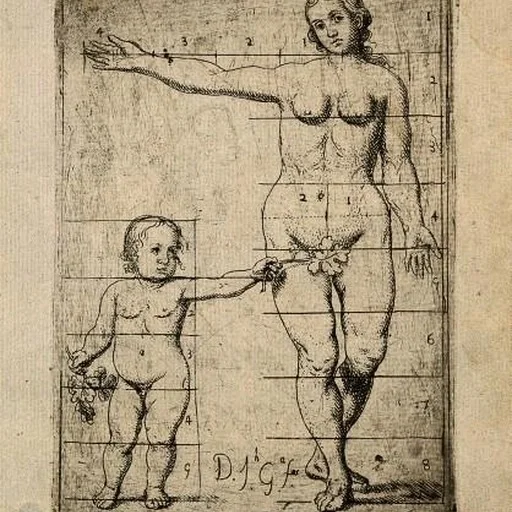
José García Hidalgo (1645 or 1646 – 1717 or 1719) was a Spanish painter, who wrote notes of his life, but omitted to state where and when he was born.

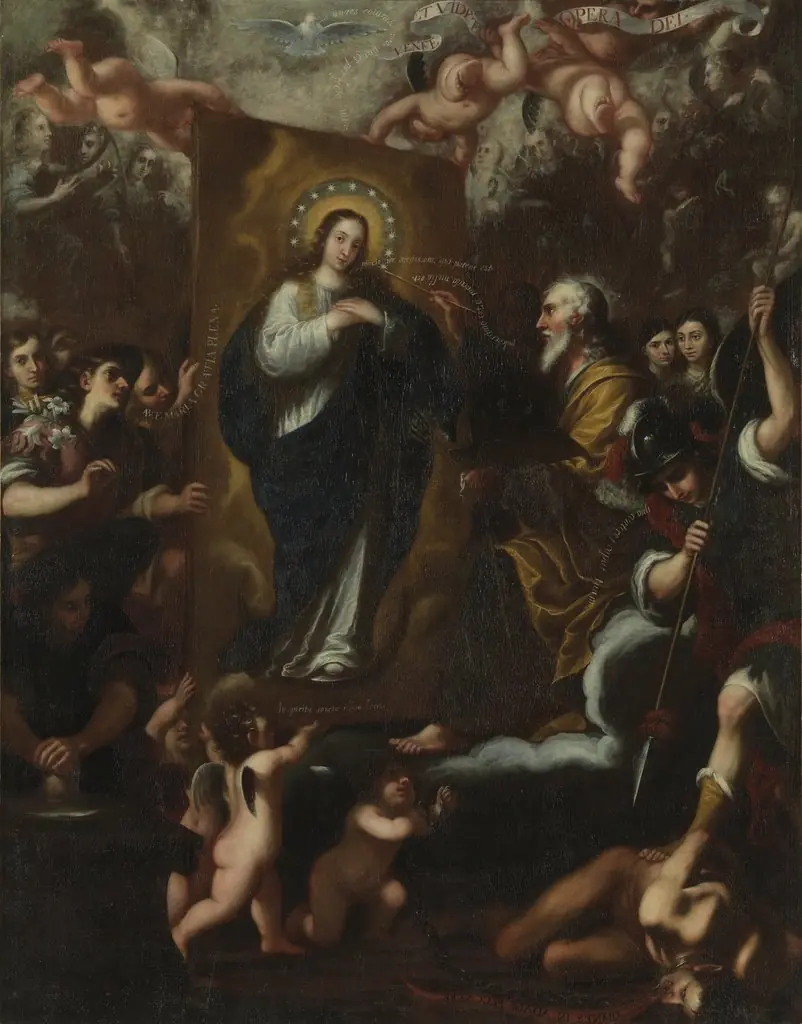 God the Father painting the Immaculate Conception
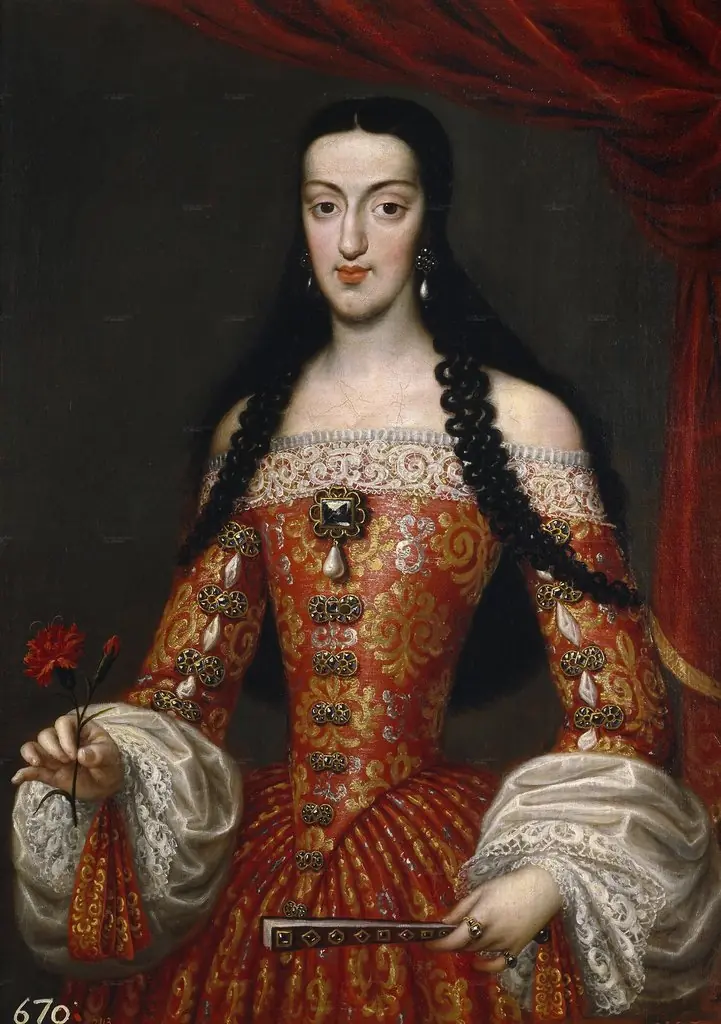 Mary Louise of Orleans, queen of Spain
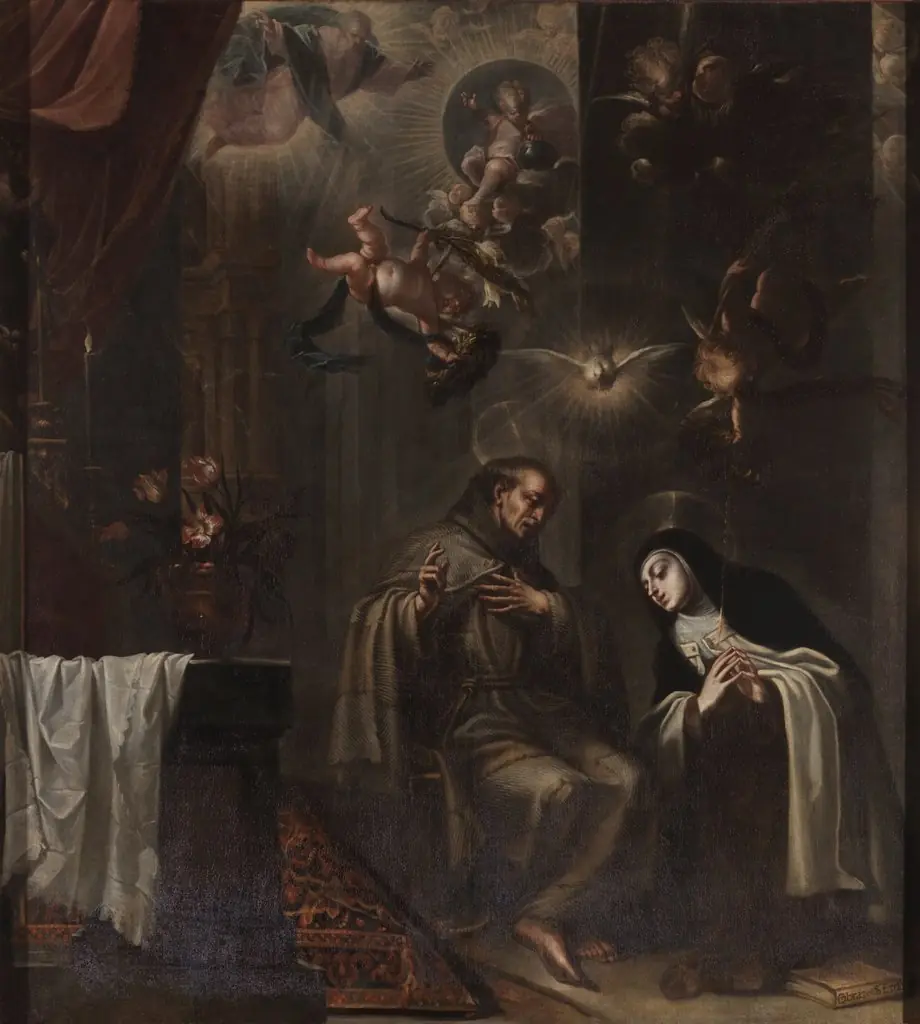 San Pedro de Alcántara confesando a Santa Teresa
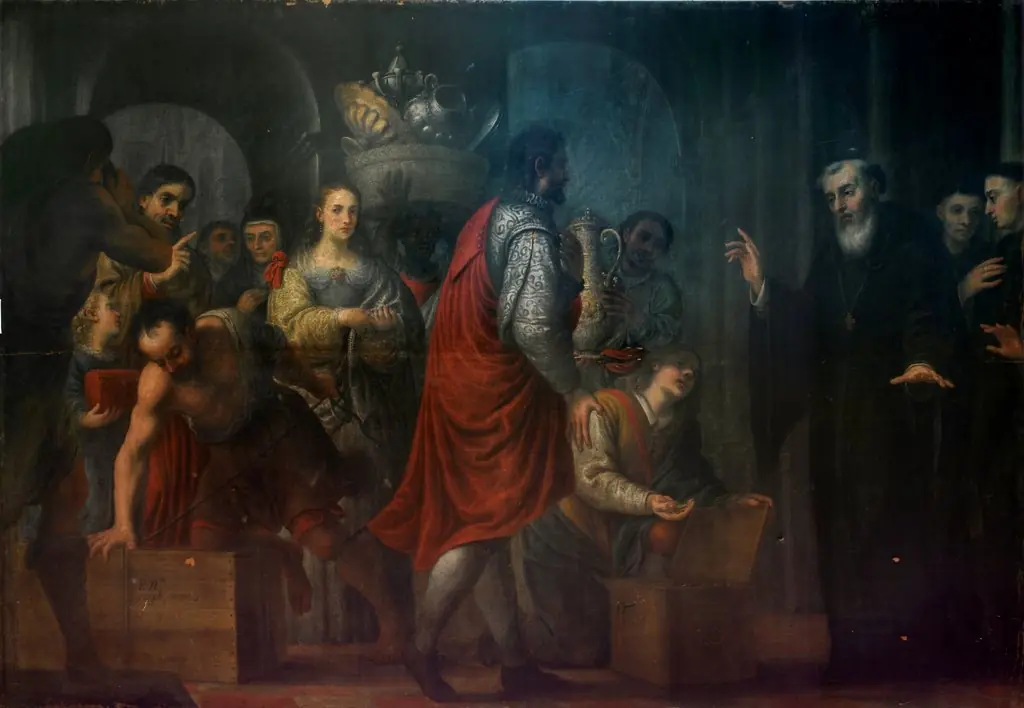 San Agustín recibiendo donaciones de los ricos para entregarlas a los pobres
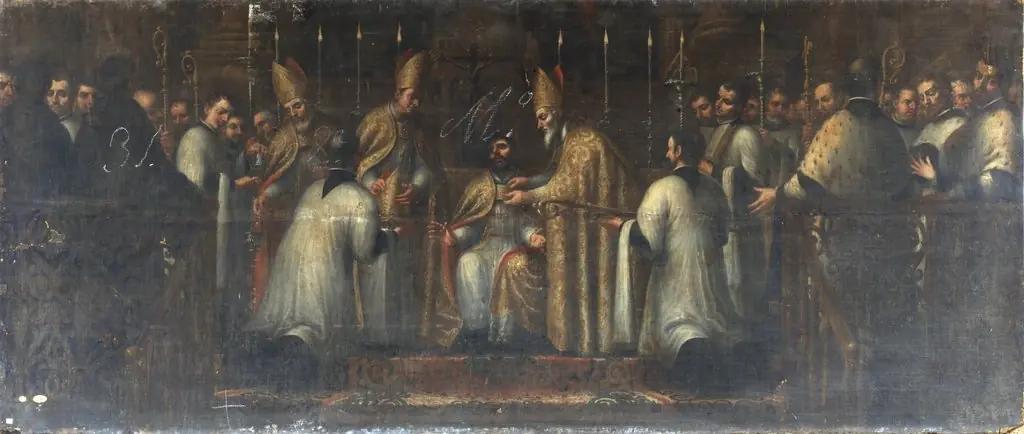 San Agustín discutiendo con el maniqueo Fortunato
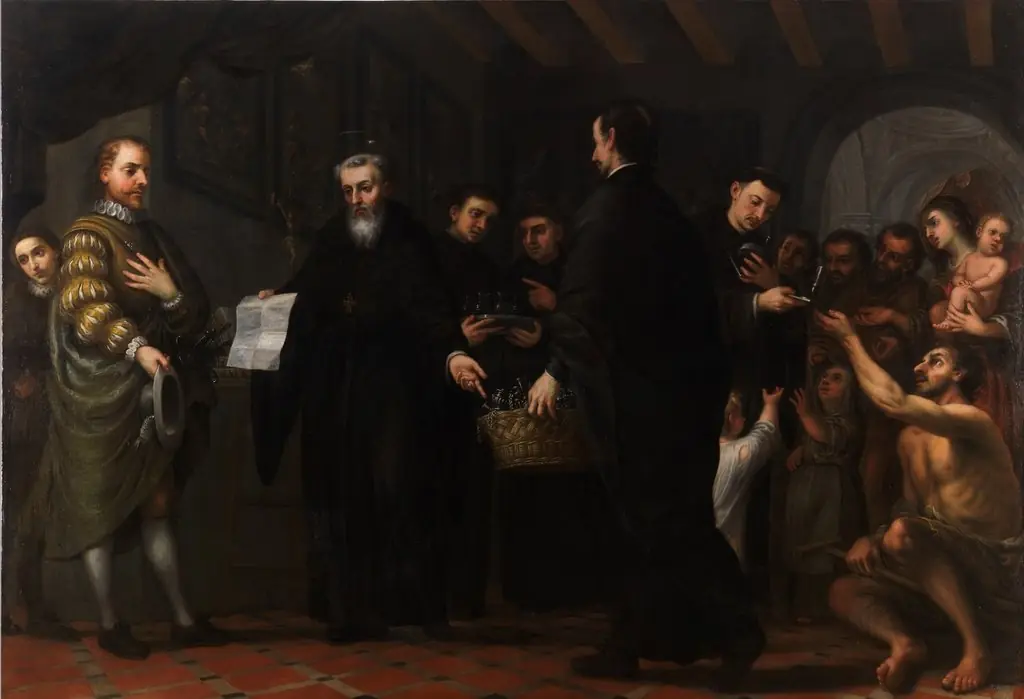 San Agustín repartiendo los bienes de los ricos entre los pobres
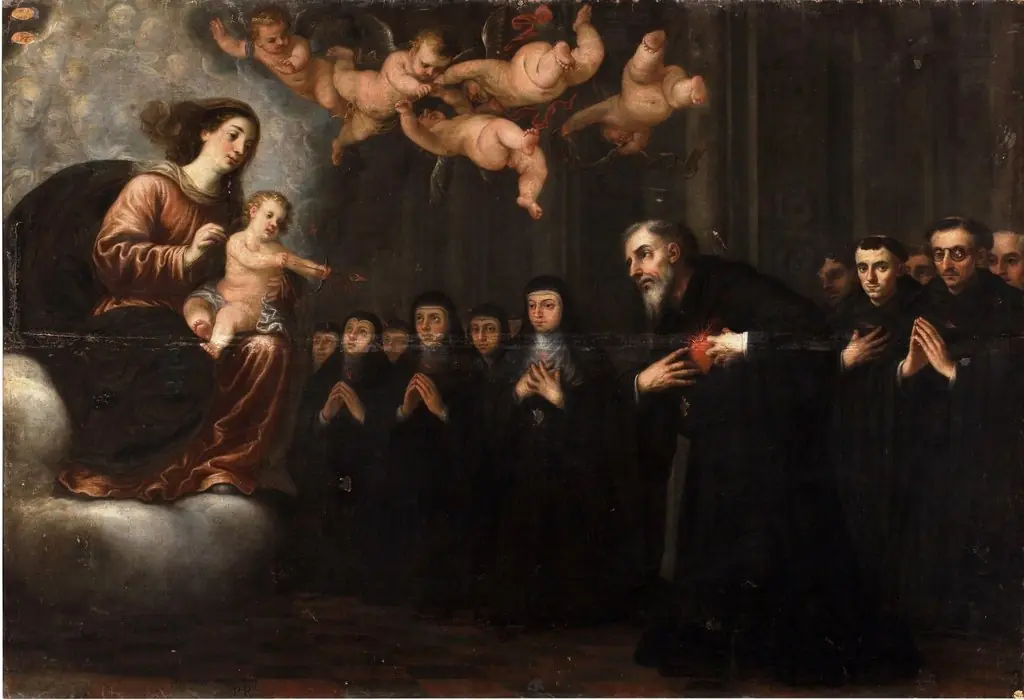 La Virgen y el Niño transverberando el corazón a San Agustín ante la comunidad de agustinos
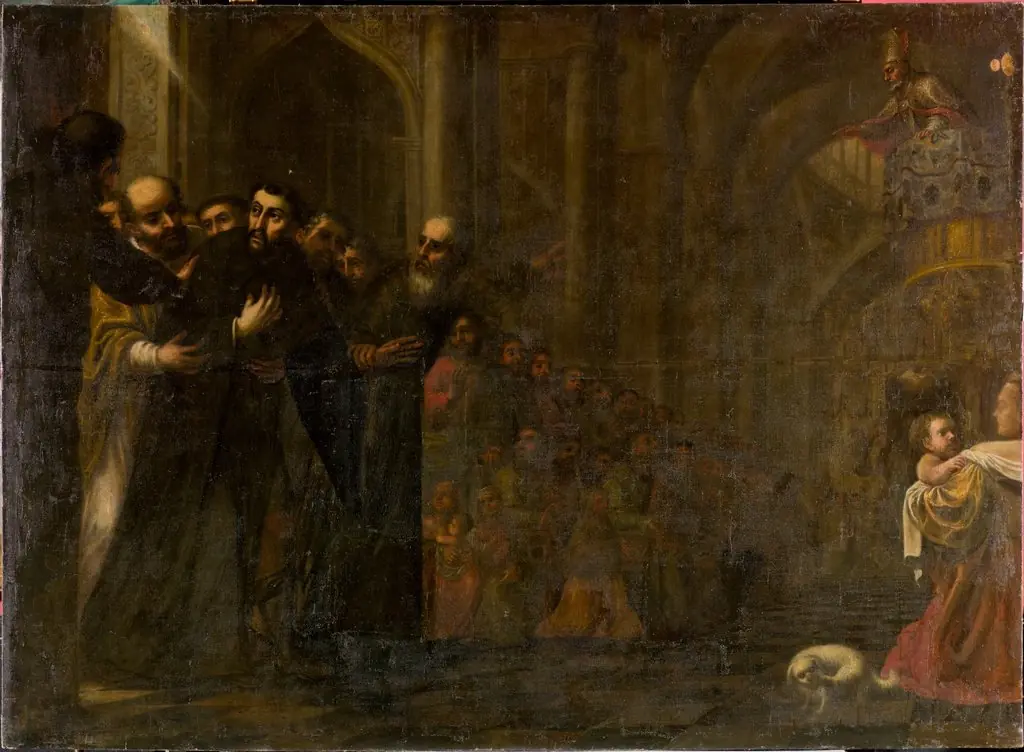 Ordenación de San Agustín
- Bird-Catching by a Decoy with a Whistle and Net (Decorative painting for a supper-box at Vauxhall Gardens, London)
 Nopanpelaajat
 After the Hunt
 Landscape with a Scene of Witchcraft
 Abraham and the Three Angels
 The Prodigal Son Living with Harlots
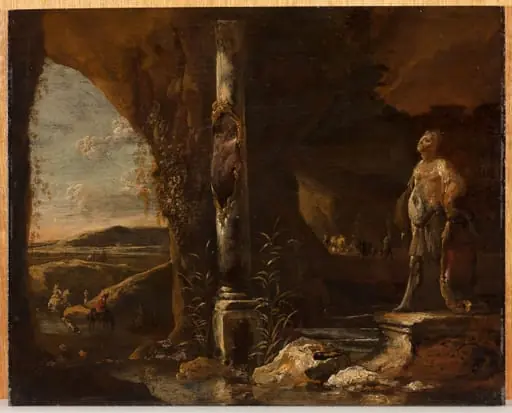 Grottenlandschaft
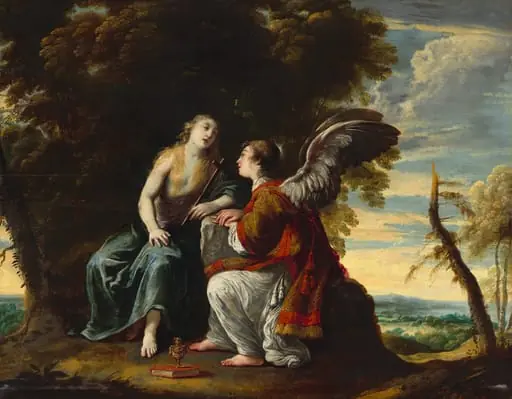 Mary Magdalene Comforted by an Angel
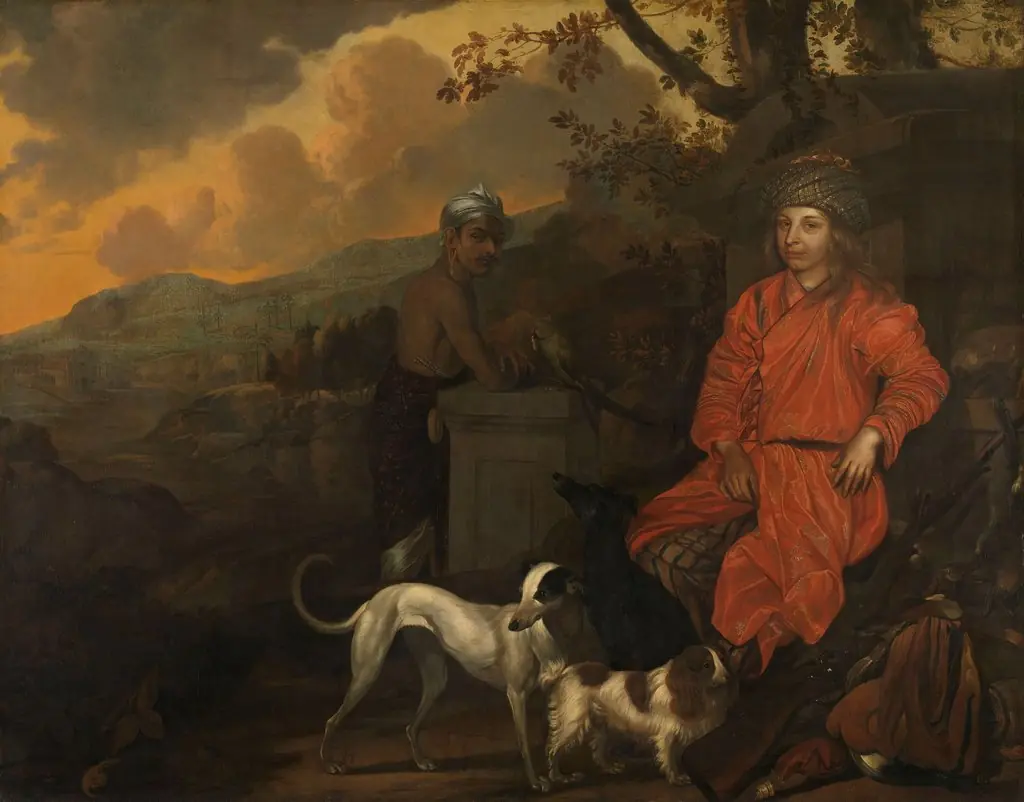 Portrait of Philippus Baldaeus and Gerrit Mossopotam
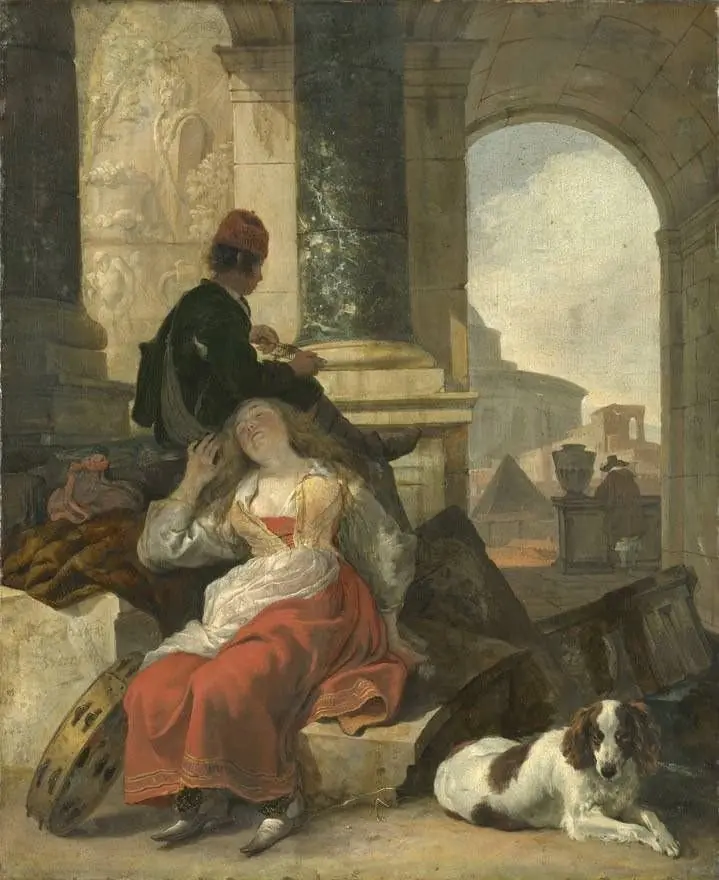 Sleeping girl
 Perseus freeing Andromeda
 Vagabonds resting in the ruins of the Colosseum