Artwork
San Agustín discutiendo con el maniqueo Fortunato
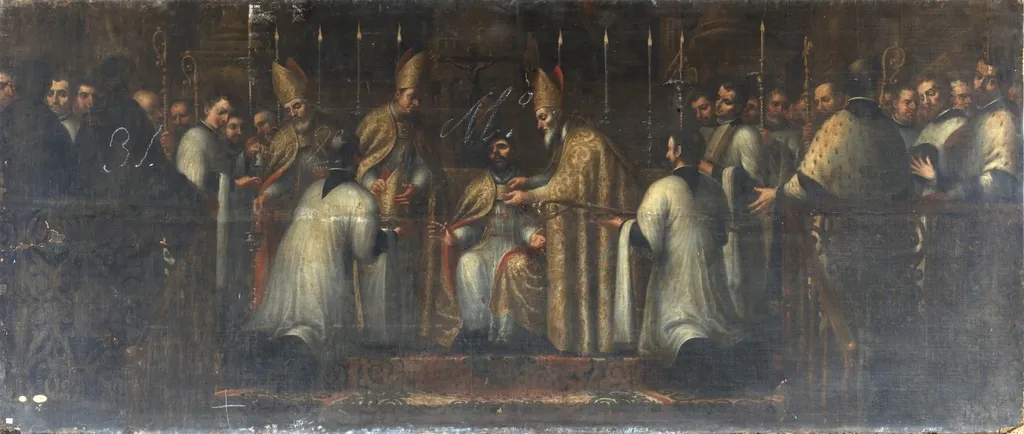
San Agustín discutiendo con el maniqueo Fortunato is an oil painting by the Early Baroque Italian artist José García Hidalgo. It dates from 1663 and is held in the collection of the Museo del Prado.
About this work
Subject & Meaning
By visualizing this specific doctrinal dispute, the artist emphasizes the power of reason and faith in resolving theological conflicts.
The painting depicts the theological confrontation between Saint Augustine of Hippo and the Manichaean Fortunatus. This religious scene illustrates the historical debate in which Augustine, formerly a Manichaean, engaged with his former co-religionist to refute Manichaean doctrines. The work serves as an allegory for the triumph of orthodox Christian thought over heresy, highlighting Augustine's intellectual and spiritual journey from Manichaeism to Catholicism.
By visualizing this specific doctrinal dispute, the artist emphasizes the power of reason and faith in resolving theological conflicts.
Technique & Style
The work is an oil painting executed on canvas, reflecting the religious genre typical of 17th‑century Spanish art. Its dimensions measure 209 cm in height by 445 cm in width, and it portrays Augustine of Hippo engaged in a theological discussion with the Manichaean Fortunato. The stylistic approach aligns with the Baroque emphasis on dramatic chiaroscuro and emotive expression, characteristic of José García Hidalgo’s mature period.
The surface handling shows careful preparation of the canvas, with a smooth application of oil paint that preserves fine linear detail in the figures’ gestures and drapery. The condition is stable, though the varnish has yellowed slightly, affecting the original tonal balance in certain areas.
History & Provenance
The painting was created in 1663 by José García Hidalgo as an oil on canvas work depicting Augustine of Hippo in a religious scene. It entered the collection of the Museo del Prado, where it remains on display.
The work was originally commissioned for a religious context and classified within the religious art genre, reflecting its devotional subject matter and devotional function in 17th-century Spain.
San Agustín discutiendo con el maniqueo Fortunato by José García Hidalgo is held in the collection of the Museo del Prado in Madrid. The painting, executed in oil on canvas, measures 209 cm in height by 445 cm in width and is catalogued as a religious work depicting Augustine of Hippo.
No exhibition history or specific accession/inventory number is documented in the available sources.
Overview
Created in 1663 by the Spanish painter José García Hidalgo, known in his day as El Castellano, this oil on canvas portrays a scholarly dispute centered on Augustine of Hippo. The composition gathers several robed figures around a seated man on a raised dais, illuminated by a single candlelight source that casts deep shadows across the surrounding space.
Context
Executed during the early Baroque period in Italy, the work reflects the era’s fascination with dramatic lighting and theological subjects. Hidalgo’s choice to depict Augustine’s debate with a Manichaean opponent aligns with Counter‑Reformation interests in affirming orthodox doctrine through visual narrative.
Artist & collection
Artist
José García Hidalgo (1645 or 1646 – 1717 or 1719) was a Spanish painter, who wrote notes of his life, but omitted to state where and when he was born.

 God the Father painting the Immaculate Conception
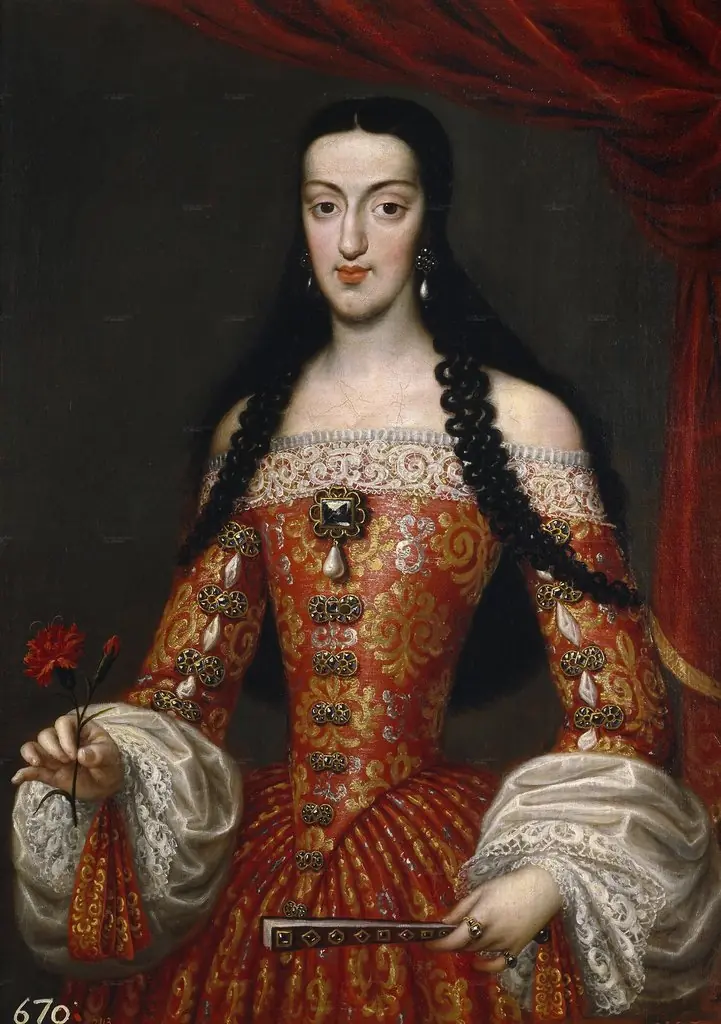 Mary Louise of Orleans, queen of Spain
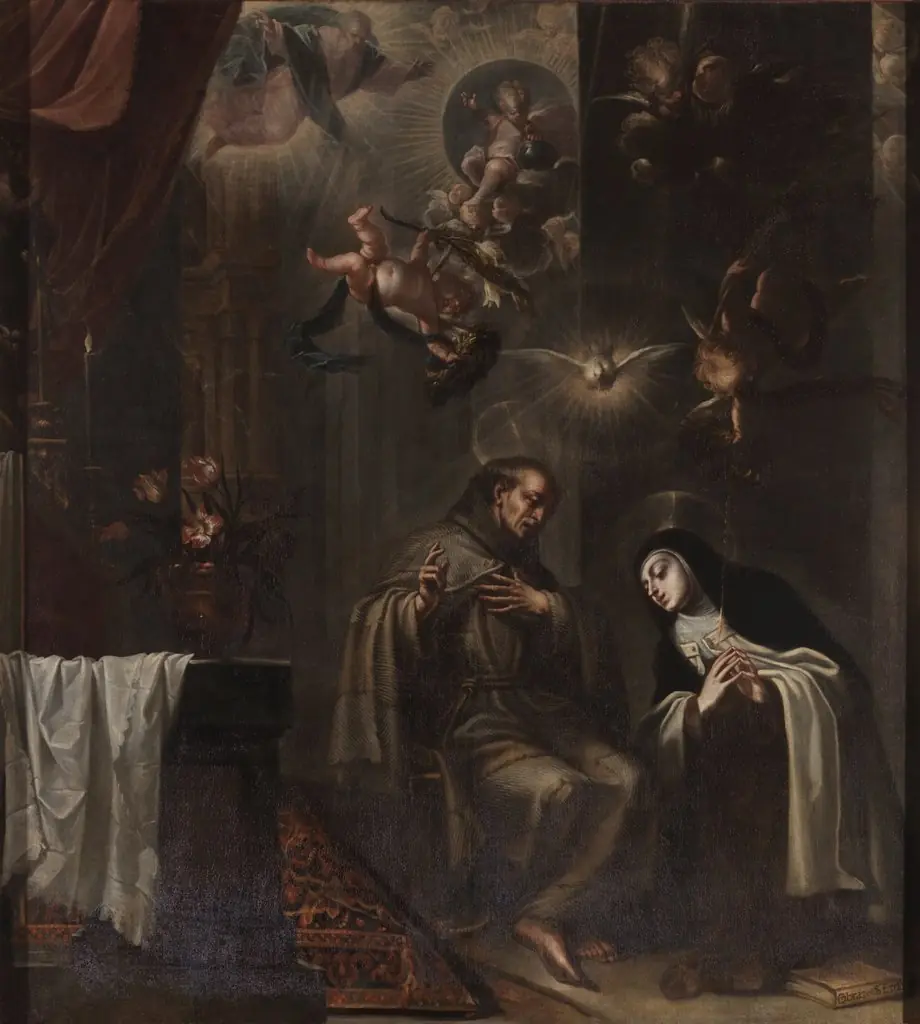 San Pedro de Alcántara confesando a Santa Teresa
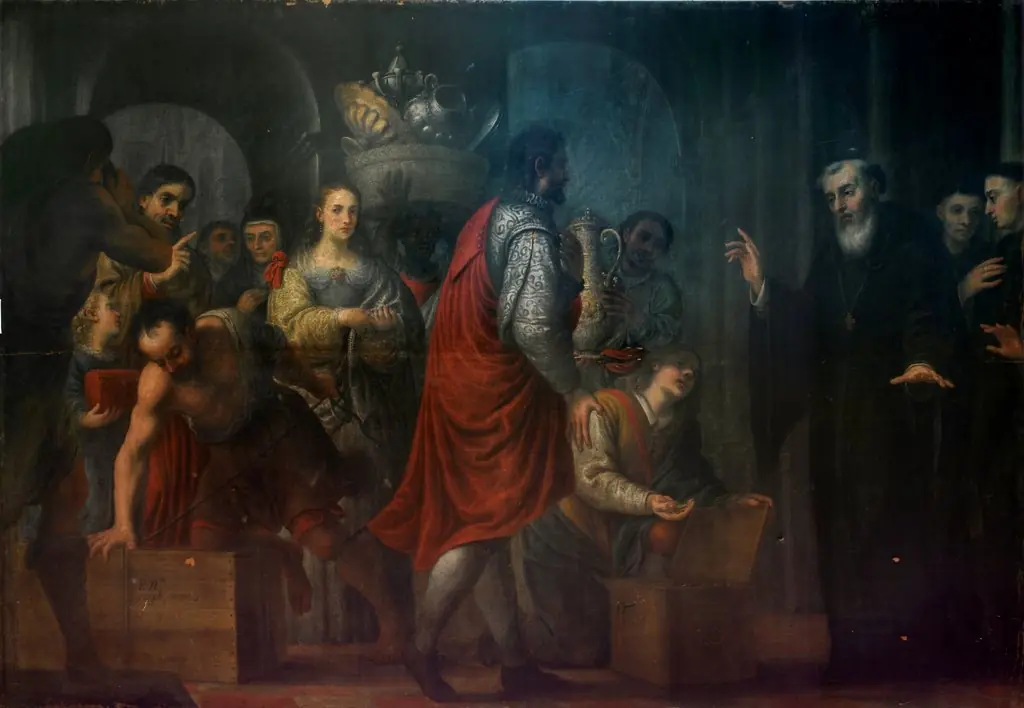 San Agustín recibiendo donaciones de los ricos para entregarlas a los pobres
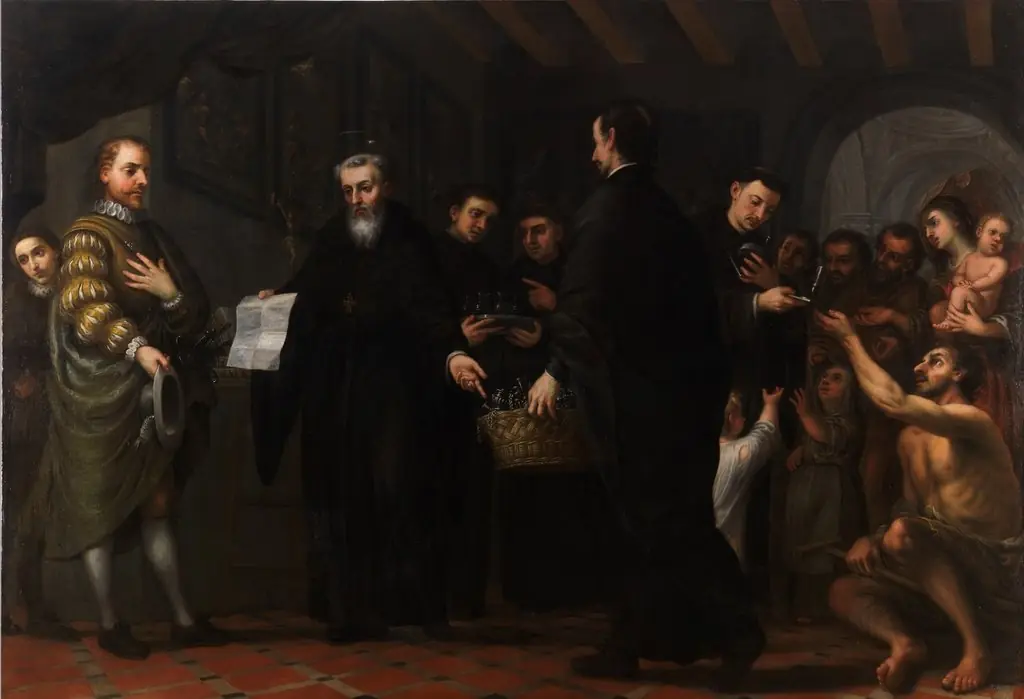 San Agustín repartiendo los bienes de los ricos entre los pobres
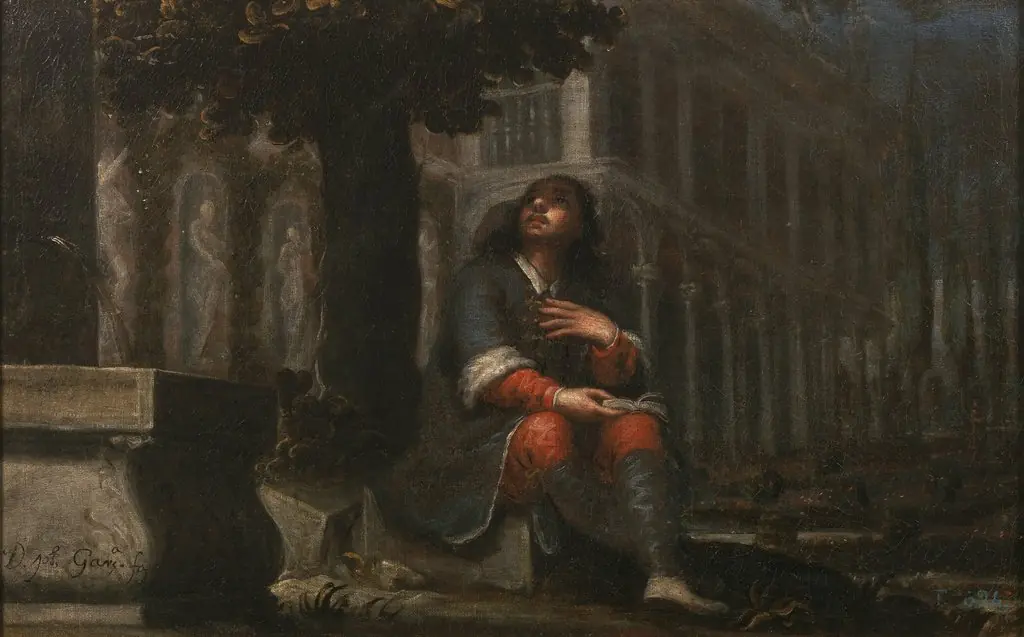 Conversion of Saint Augustin
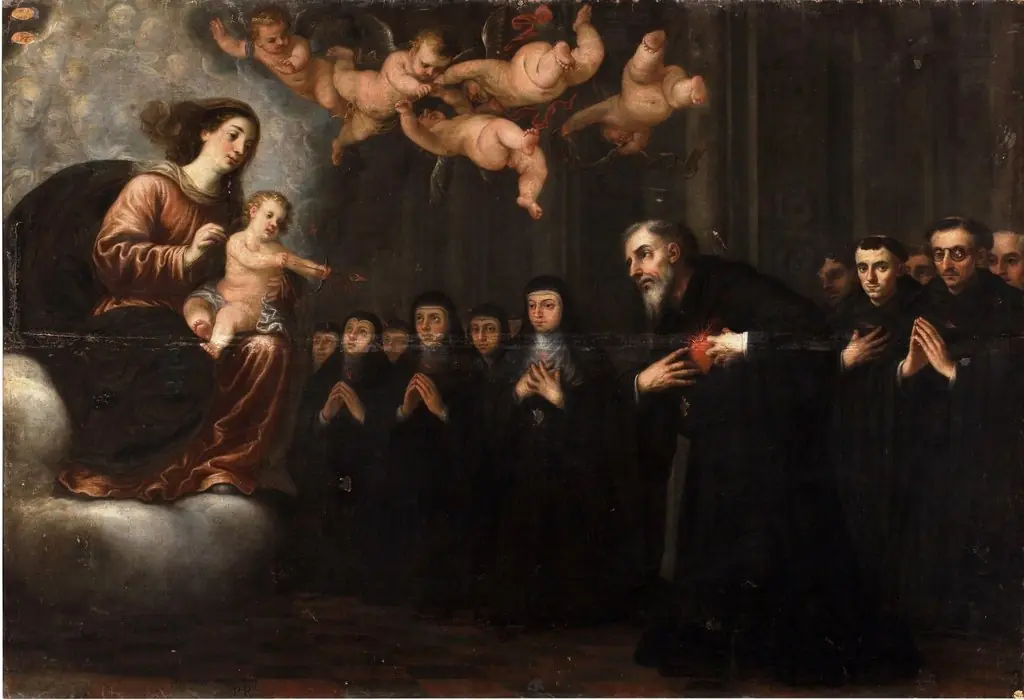 La Virgen y el Niño transverberando el corazón a San Agustín ante la comunidad de agustinos
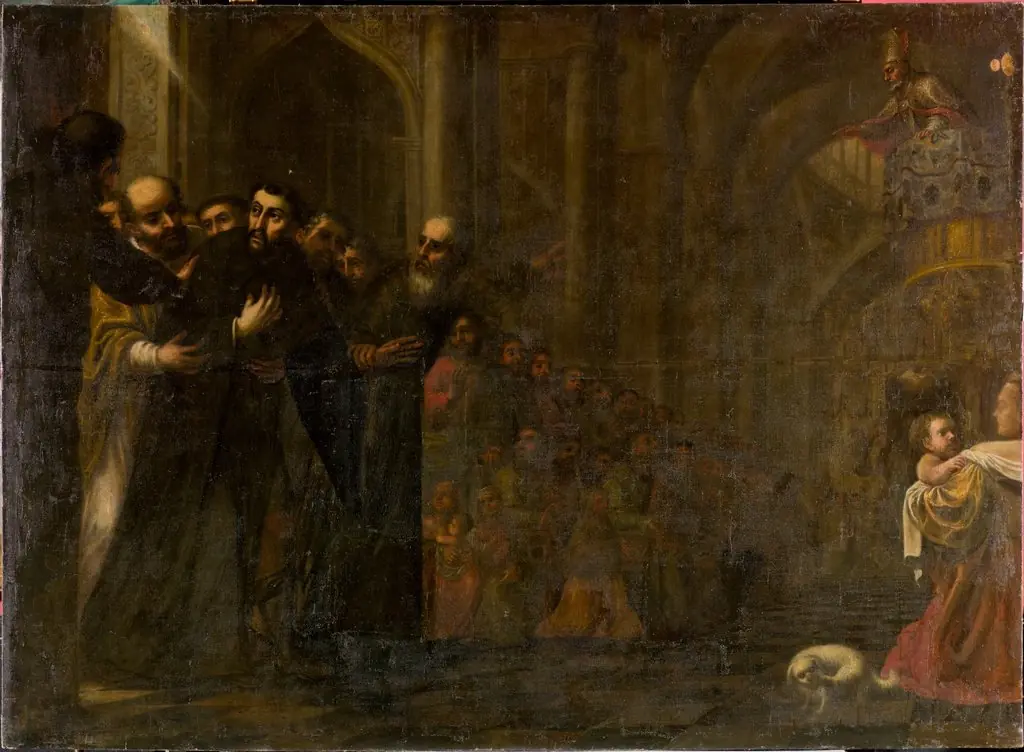 Ordenación de San Agustín
- Anointing of a bishop
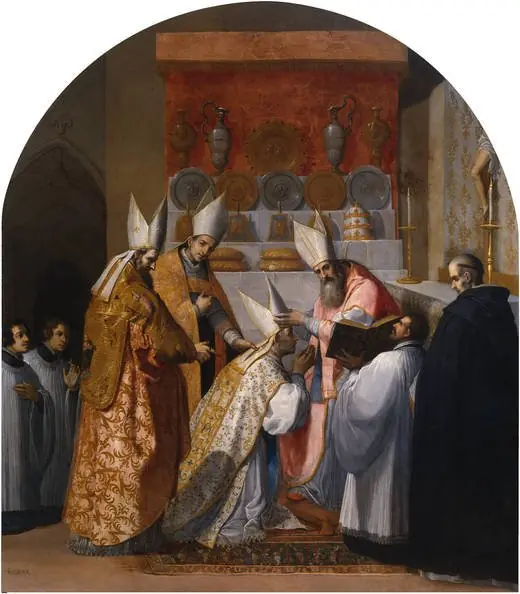 Pope Alexander III Consecrates Anthelm of Chignin as Bishop of Belley
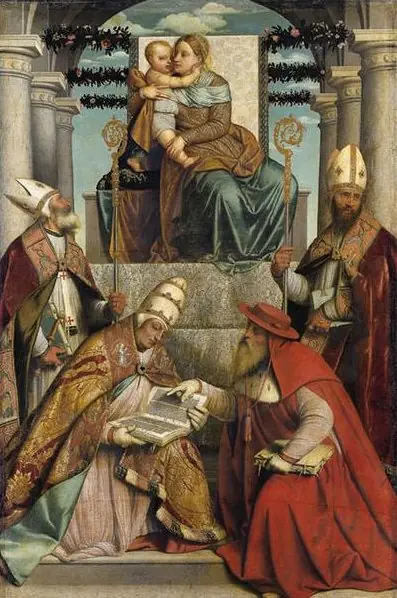 Madonna and Child with Four Doctors of the Church
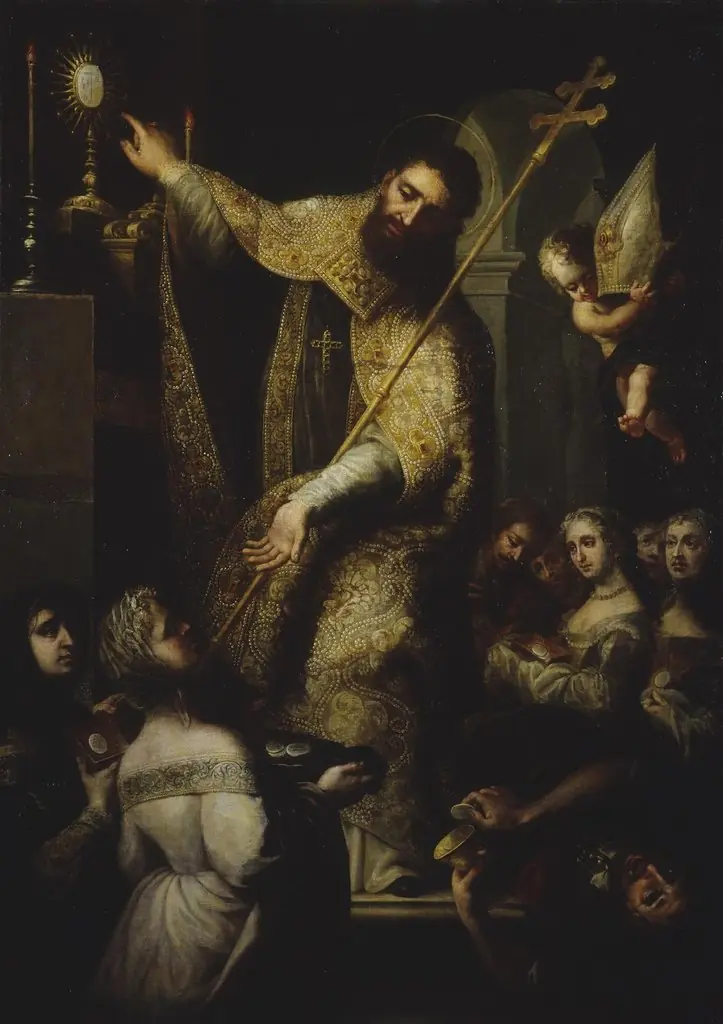 Triumph of St Norbert
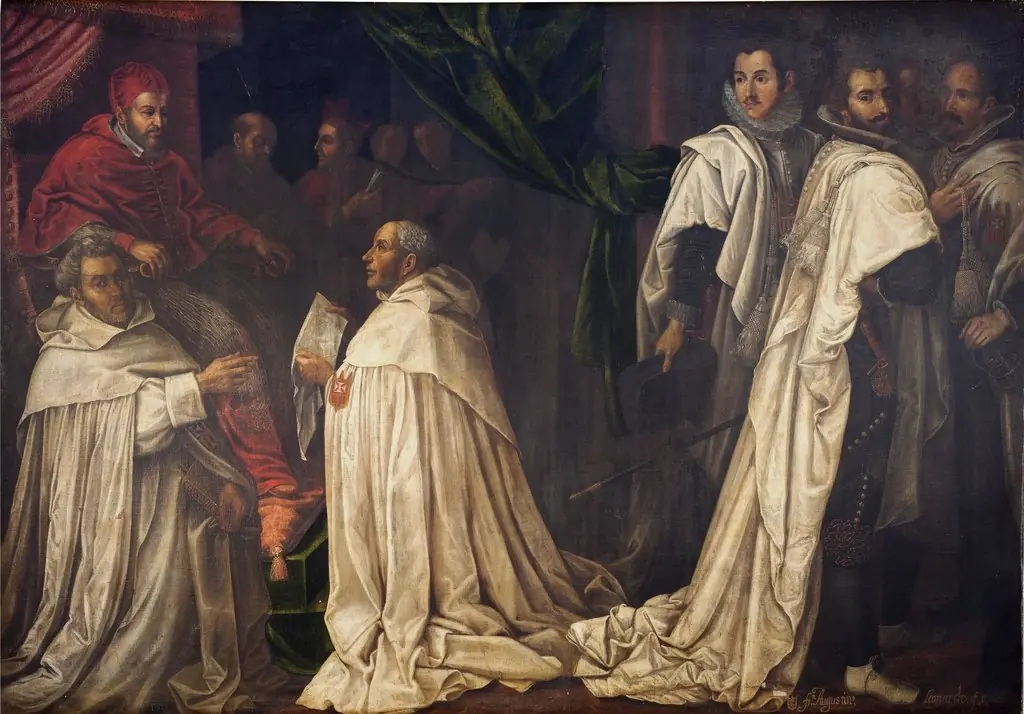 Decisión del pleito entre religiosos y caballeros
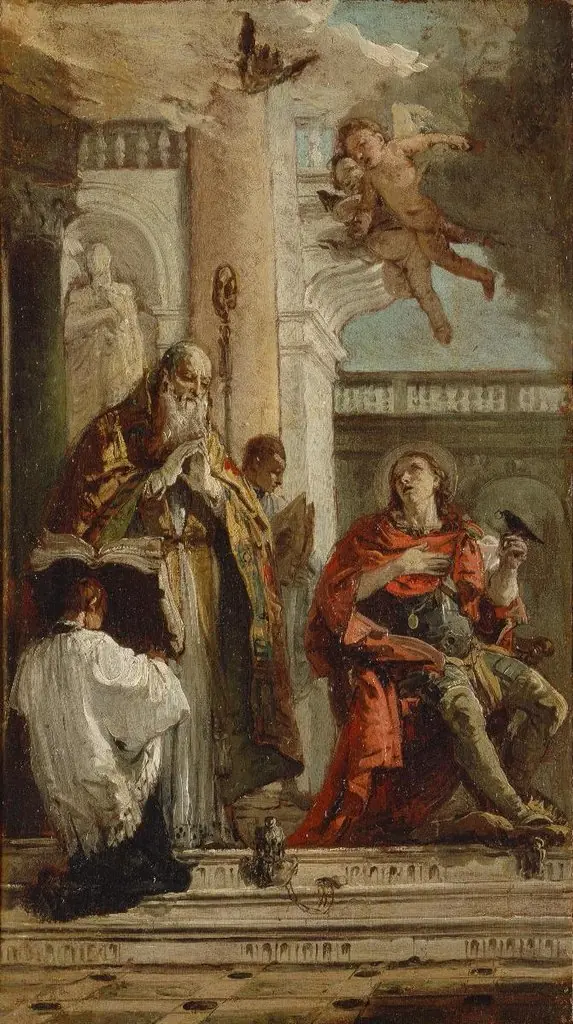 Santi Massimo e Osvaldo
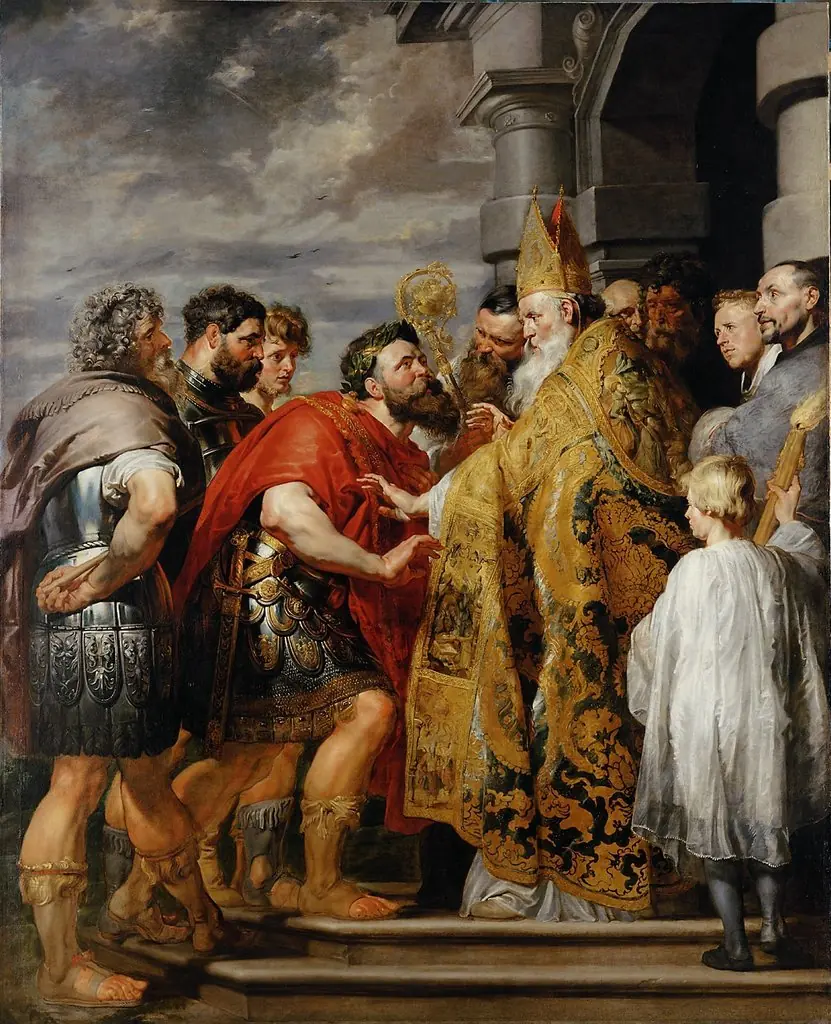 Theodosius and Saint Ambrose
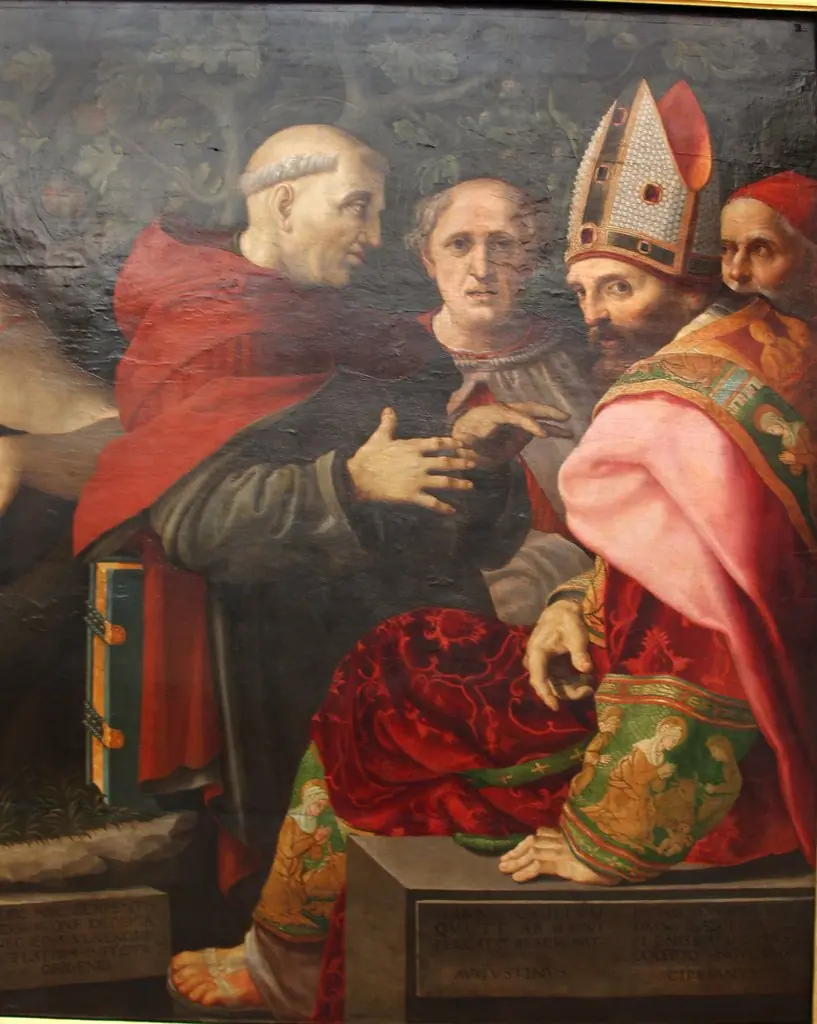 Der Disput von Kirchenlehrern über das Mysterium der unbefleckten Empfängnis
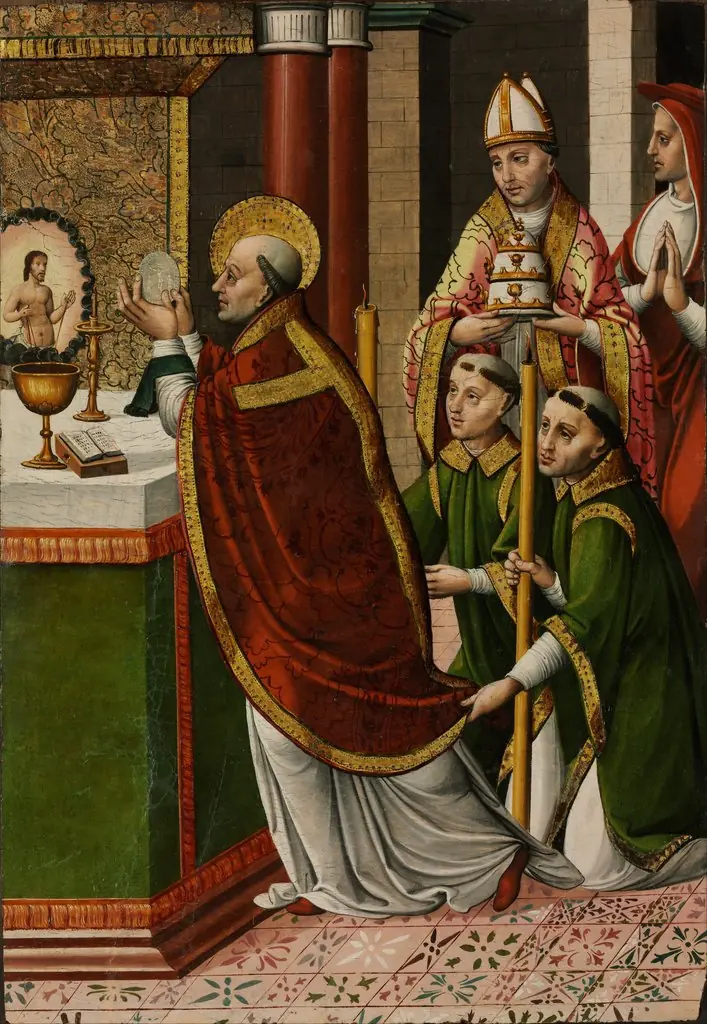 The Mass of Saint Gregory the Great
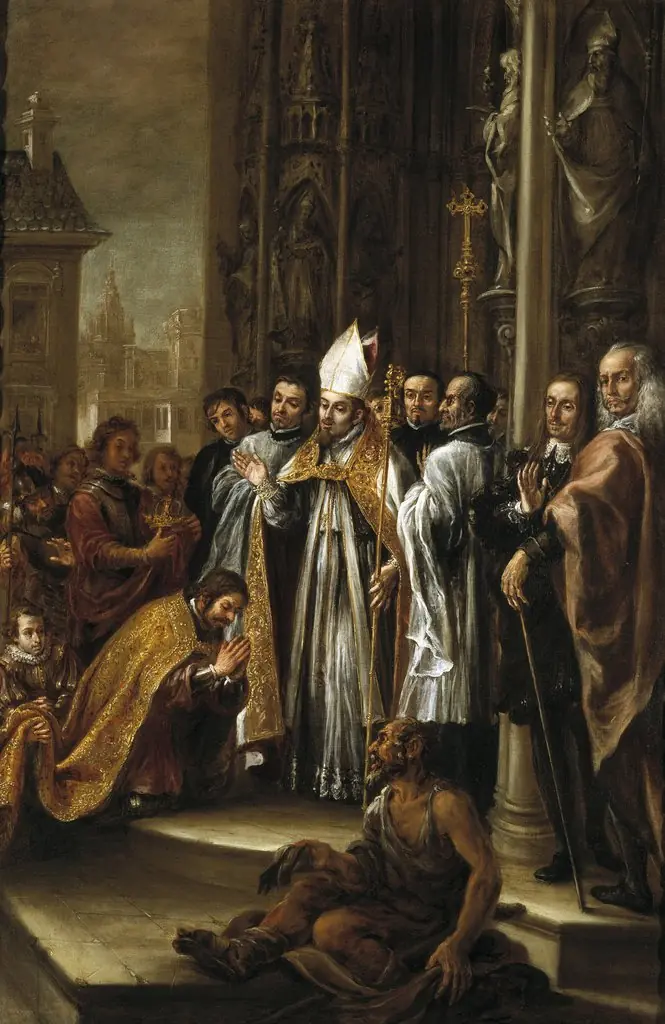 Saint Ambrose absolves the Emperor Theodosius
 La última comunión de San Diego de Alcalá
 Three Venetian city chamberlains before St. Mark