Artwork
Cupid carves the bow
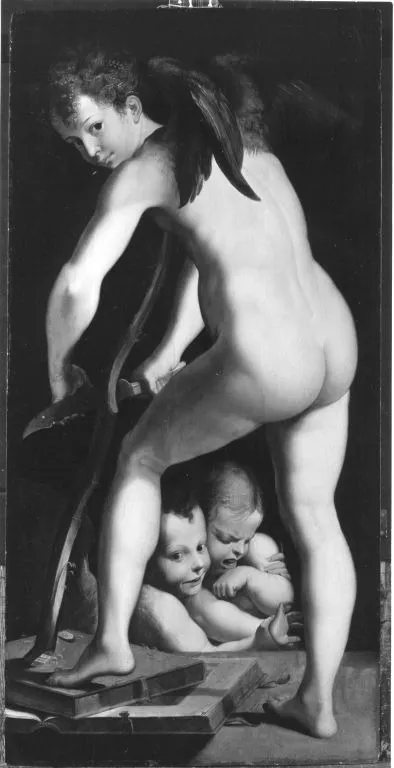
Cupid carves the bow is an unspecified painting by the Mannerist artist Joseph Heintz the Elder. It dates from 1594 and is held in the collection of the Bavarian State Painting Collections.
About this work
Subject & Meaning
The painting depicts Cupid, the Roman god of love, engaged in the act of carving his bow, a subject drawn from classical mythology.
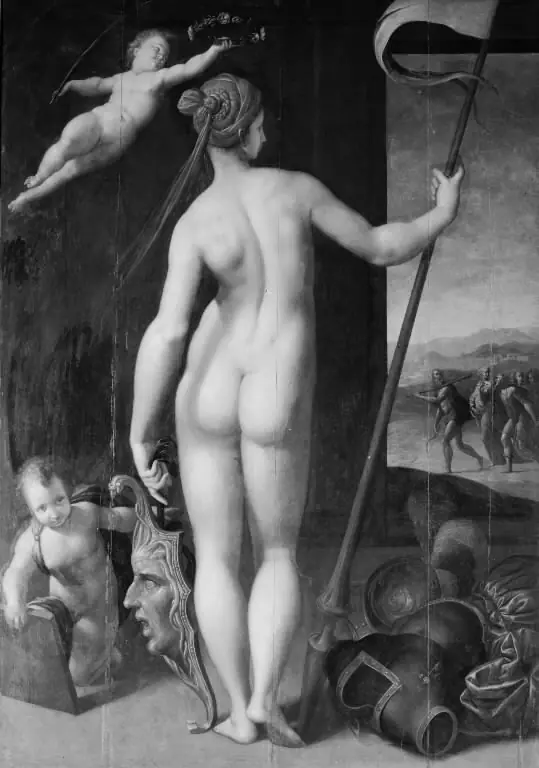
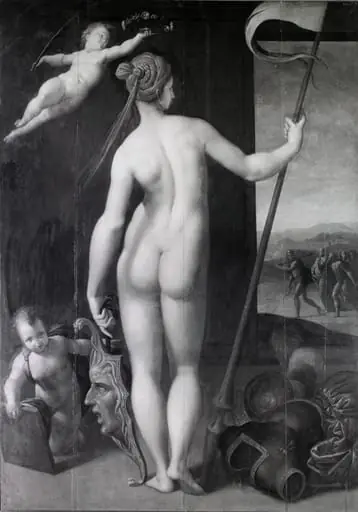
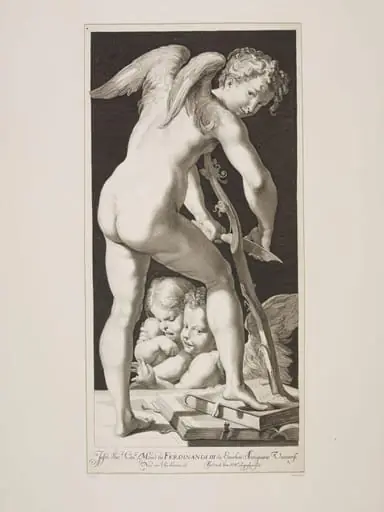
The painting depicts Cupid, the Roman god of love, engaged in the act of carving his bow, a subject drawn from classical mythology. As a mythological work, it treats Cupid as an allegory of love and desire, with the bow serving as his traditional attribute and emblem of the power to inspire or wound through love. The composition is derived from a known prototype by Parmigianino, which Heintz reinterpreted in his own late sixteenth-century idiom, lending the figure a refined Mannerist elegance while preserving the iconographic core of Cupid as the personification of erotic attraction and the craftsman of his own amorous weapons.
Technique & Style
The work is an oil on canvas executed in 1586 by Joseph Heintz the Elder, who followed Parmigianino’s composition in reverse. Handling is precise and linear, characteristic of the late Mannerist tradition, with smooth transitions between modeled flesh and the crisp folds of drapery.
Technically, the paint surface is thinly applied in glazes to achieve luminous modeling, especially in the figure’s softly rounded forms. The background is kept dark, focusing attention on Cupid’s delicate activity. No significant losses or abrasions are recorded, indicating the canvas remains in stable condition.
History & Provenance
Joseph Heintz the Elder created the mythological painting Cupid carves the bow in 1586. The work is a rendition based on Parmigianino's Cupid Making His Arch. It currently resides within the Bavarian State Painting Collections, where it is housed at the Alte Pinakothek.
Joseph Heintz the Elder painted Cupid carves the bow in 1586, a mythological work now housed in the Bavarian State Painting Collections at the Alte Pinakothek in Munich. The painting measures 139 cm in height and 68.5 cm in width. It was displayed in the exhibition "Parmigianino and his followers" at the Kunsthistorisches Museum in 2010 and later featured in "Mythology in the Baroque Age" at the Alte Pinakothek in 2018.
Overview
Joseph Heintz the Elder’s 1594 canvas, titled Cupid Carves the Bow, presents a mythological scene centered on a winged youth engaged in the craft of bow-making. The work resides in Munich’s Alte Pinakothek, where it exemplifies the artist’s handling of narrative and form.
Context
During the period, depictions of Cupid often served allegorical purposes, symbolizing love’s creative power. Heintz’s choice to portray the deity in a moment of craftsmanship aligns with contemporary interests in merging classical mythology with everyday labor.
Artist & collection

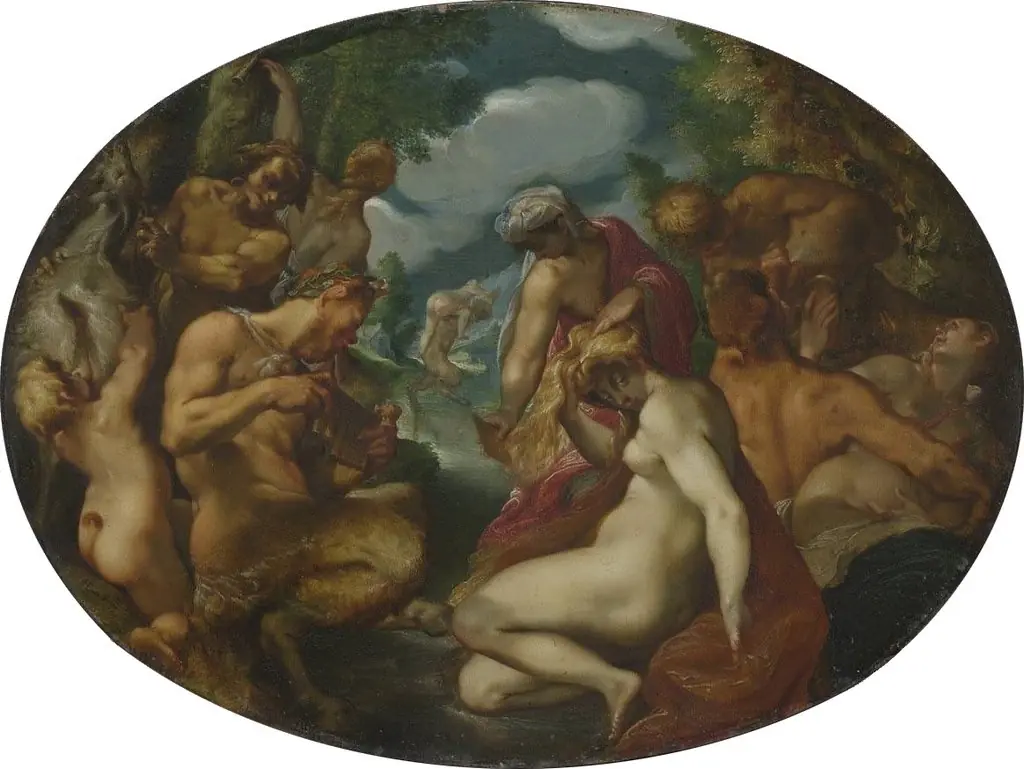 Satyrs and nymphs
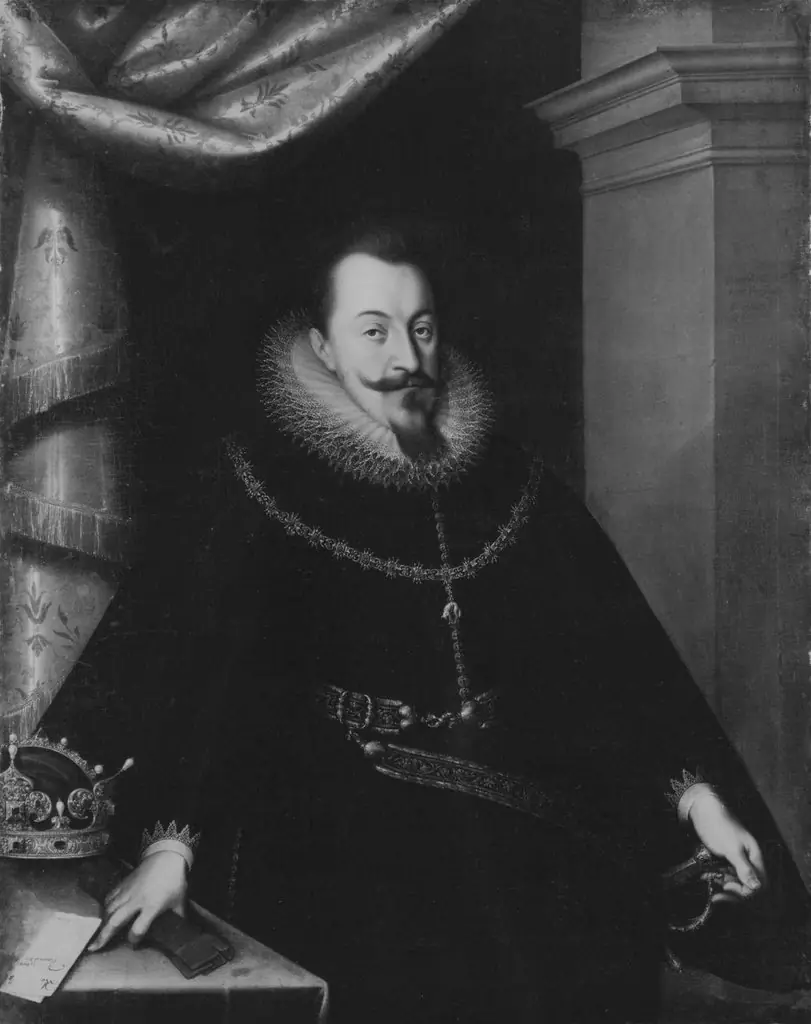 Bildnis des Königs Sigismund III. Vara von Polen und Schweden
 Diana and Actaeon
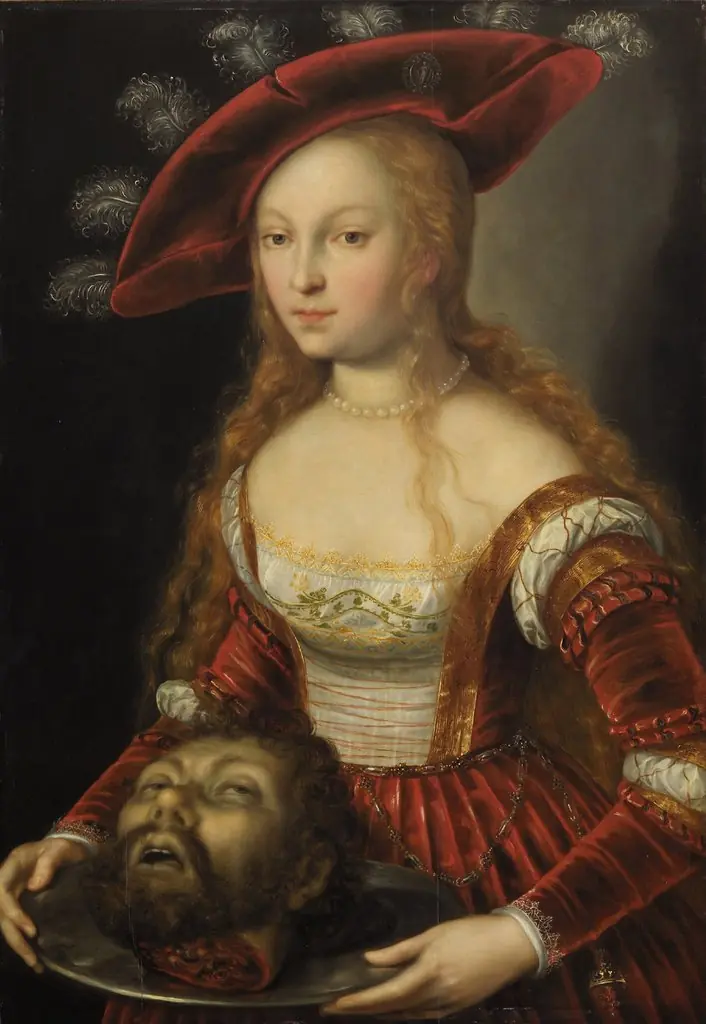 Salome with the head of John the Baptist
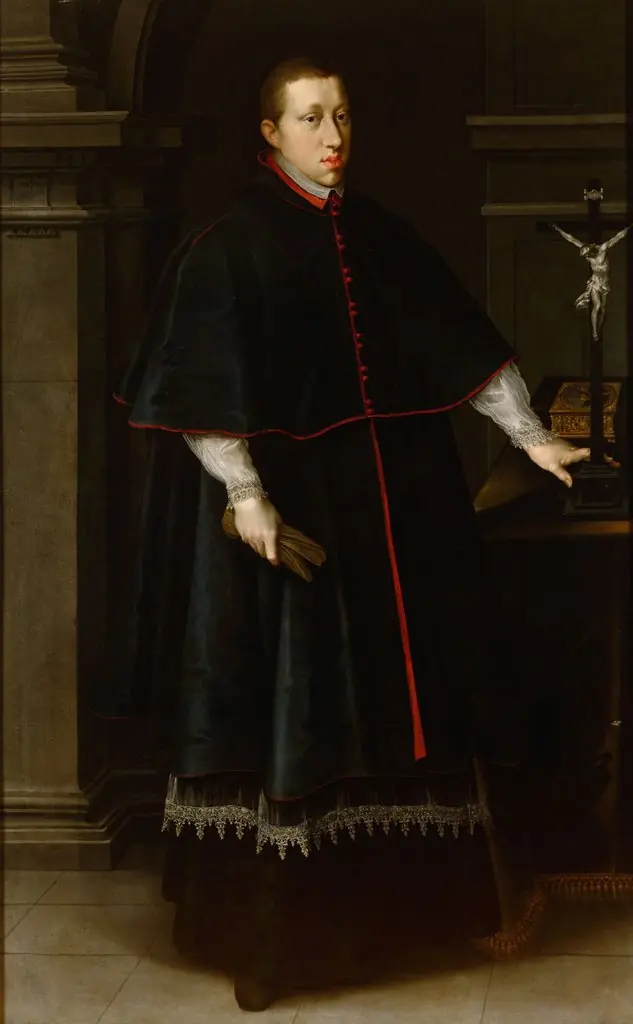 Archduke Leopold V (1586-1632) in the Spiritual Garment
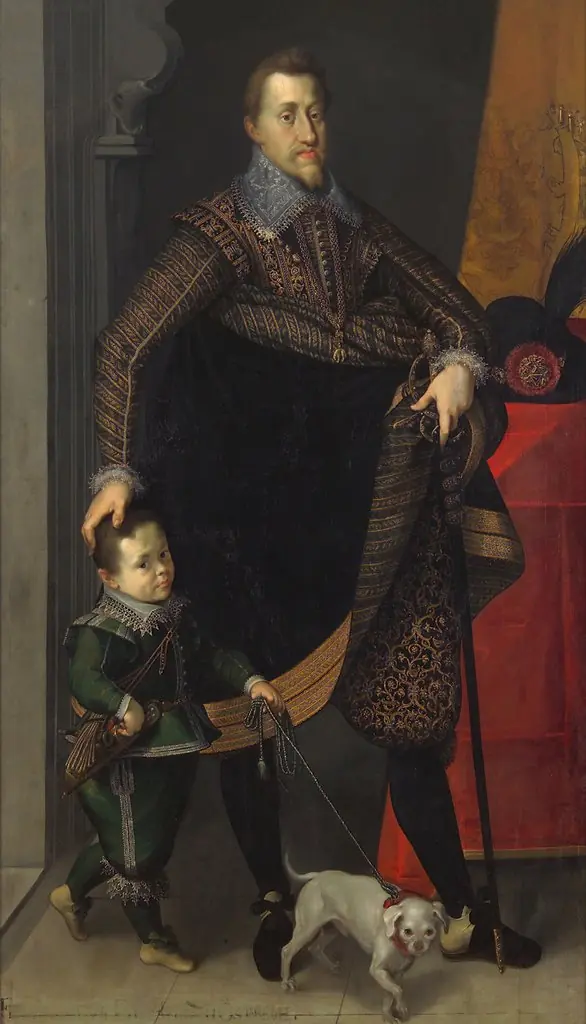 Emperor Ferdinand II (1578-1637) in Full Figure with a Court Dwarf
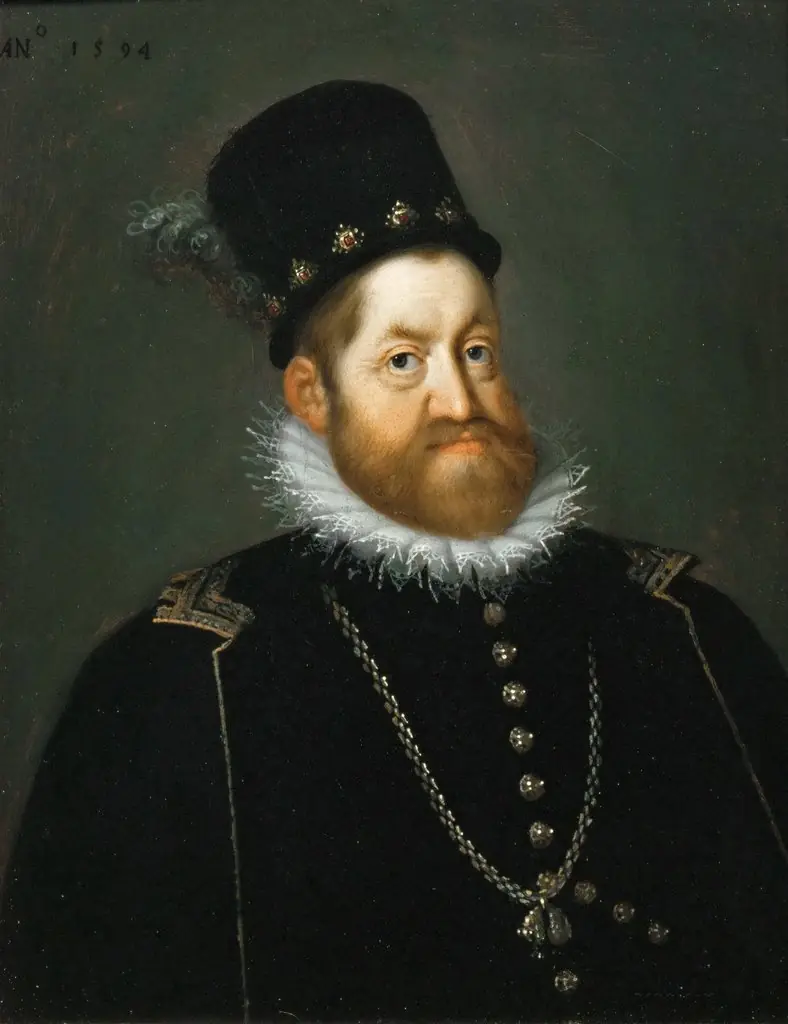 Porträt des Kaisers Rudolf II.
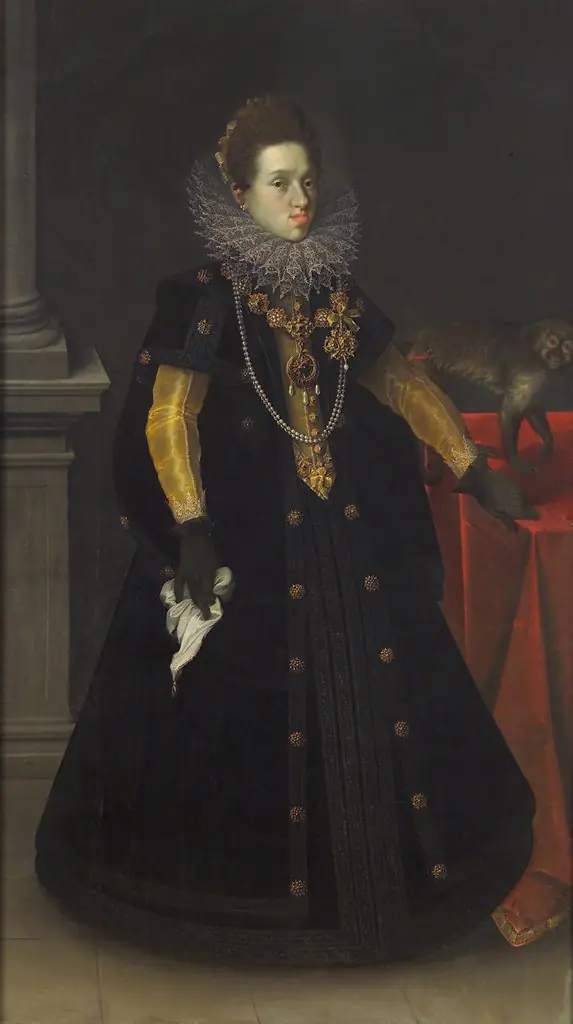 Archduchess Constance (1588-1631), Queen of Poland, with a Monkey