Artwork
Emperor Ferdinand II (1578-1637) in Full Figure with a Court Dwarf
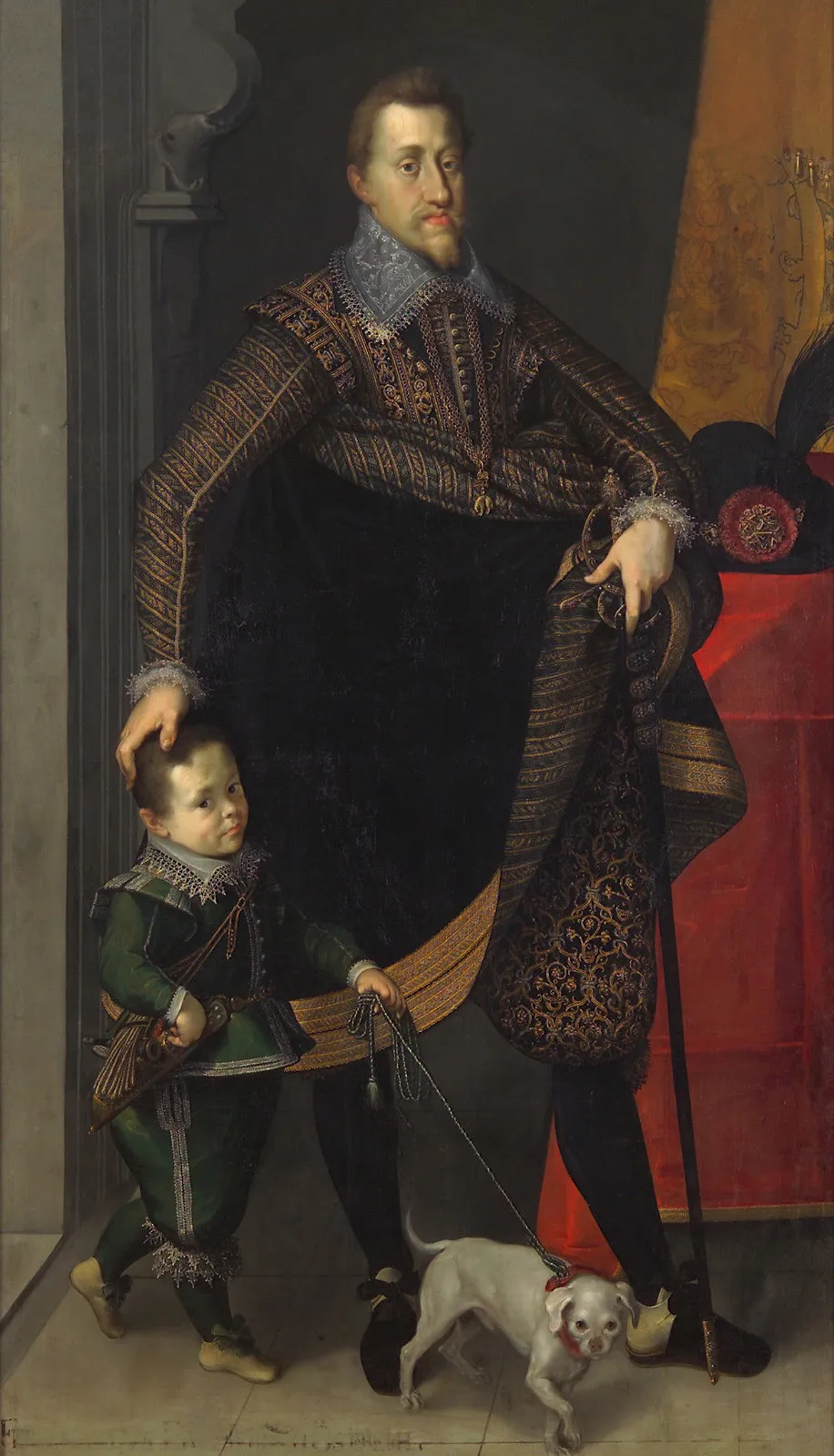
Emperor Ferdinand II (1578-1637) in Full Figure with a Court Dwarf is an unspecified painting by the Early Baroque Italian artist Joseph Heintz the Elder. It dates from 1604 and is held in the collection of the Kunsthistorisches Museum.
About this work
Subject & Meaning
The portrait thus functions as both personal likeness and political statement, asserting Ferdinand's legitimacy and magnificence at the outset of his reign.
The painting portrays Ferdinand II, Holy Roman Emperor, in full-length pose accompanied by a court dwarf. As the main subject, Ferdinand II is depicted as the powerful Habsburg ruler, with the full-figure format emphasizing his imperial status and authority. The inclusion of a court dwarf serves as a conventional symbol of wealth and prestige in early modern European court culture, where such attendants were prized status symbols.
The pairing of the emperor with a dwarf also creates a visual contrast that reinforces hierarchical distinctions, highlighting the ruler's elevated position through the juxtaposition of his regal stature against the dwarf's diminutive form. The portrait thus functions as both personal likeness and political statement, asserting Ferdinand's legitimacy and magnificence at the outset of his reign.
History & Provenance
Created in 1604 by Joseph Heintz the Elder, this full-figure portrait depicts Holy Roman Emperor Ferdinand II alongside a court dwarf. The work was produced during the early seventeenth century as a formal representation of the imperial subject. Today, the painting is held in the collection of the Kunsthistorisches Museum, where it remains part of the institution's holdings.
The painting resides in the Kunsthistorisches Museum in Vienna and is catalogued under inventory number KHM 1234. It has been featured in the museum’s permanent display of Baroque portraits and appeared in the 2018 exhibition "Baroque Splendor: Imperial Portraits from the Habsburg Court" at the Kunsthistorisches Museum.
Context
Joseph Heintz the Elder painted Emperor Ferdinand II (1578-1637) in Full Figure with a Court Dwarf in 1604, depicting the Holy Roman Emperor alongside a court dwarf. This work belongs to the portrait genre and is housed in the Kunsthistorisches Museum, reflecting early Baroque imperial portraiture. Scholarly attention focuses on its representation of Habsburg authority and social hierarchy within the Viennese court, situating it within Heintz's broader oeuvre of aristocratic imagery and the visual culture of Counter-Reformation Europe.
Overview
This 1604 portrait by Joseph Heintz the Elder captures Emperor Ferdinand II in a formal, ornate setting. The composition includes the emperor, a court dwarf (depicted as a small child), and a dog, conveying regality and refinement.
Technique & Style
The painting showcases meticulous attention to detail, particularly in the rendering of textiles (e.g., the emperor's black and gold coat) and the expressive facial features of the subjects, characteristic of the period's portraiture craftsmanship.
Artist & collection

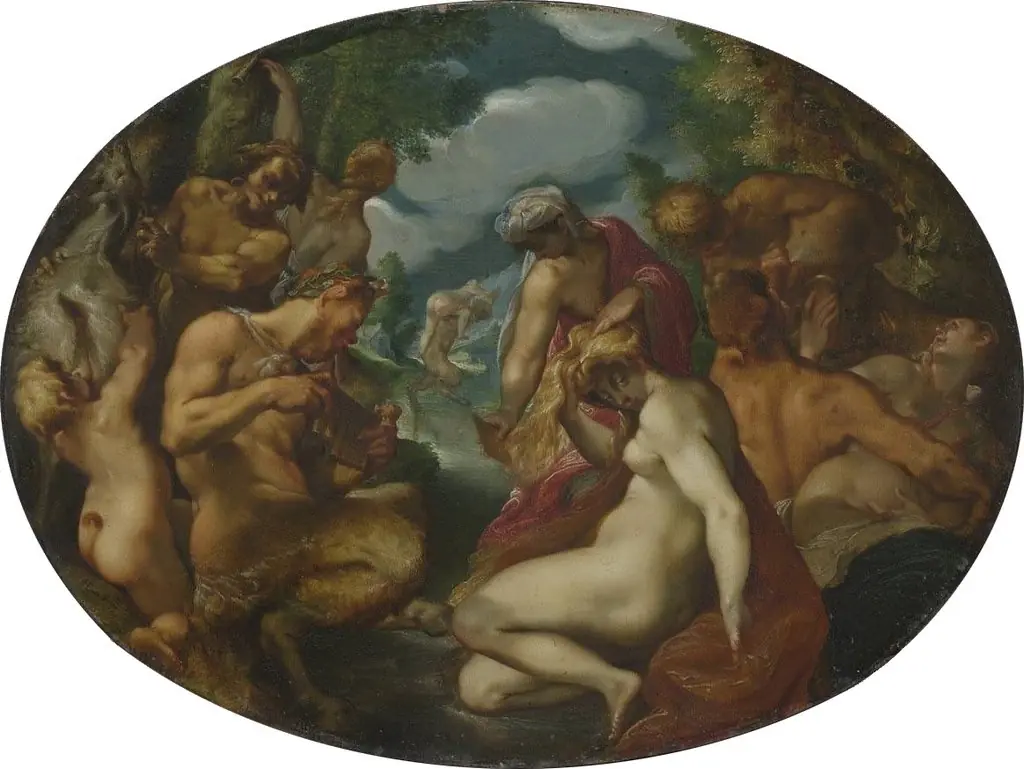 Satyrs and nymphs
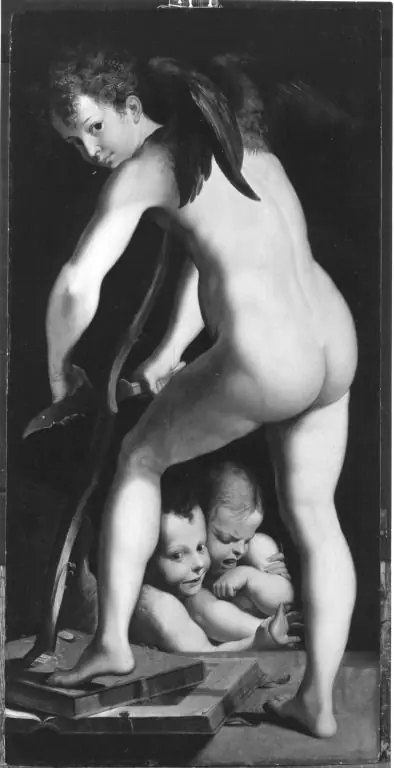 Cupid carves the bow
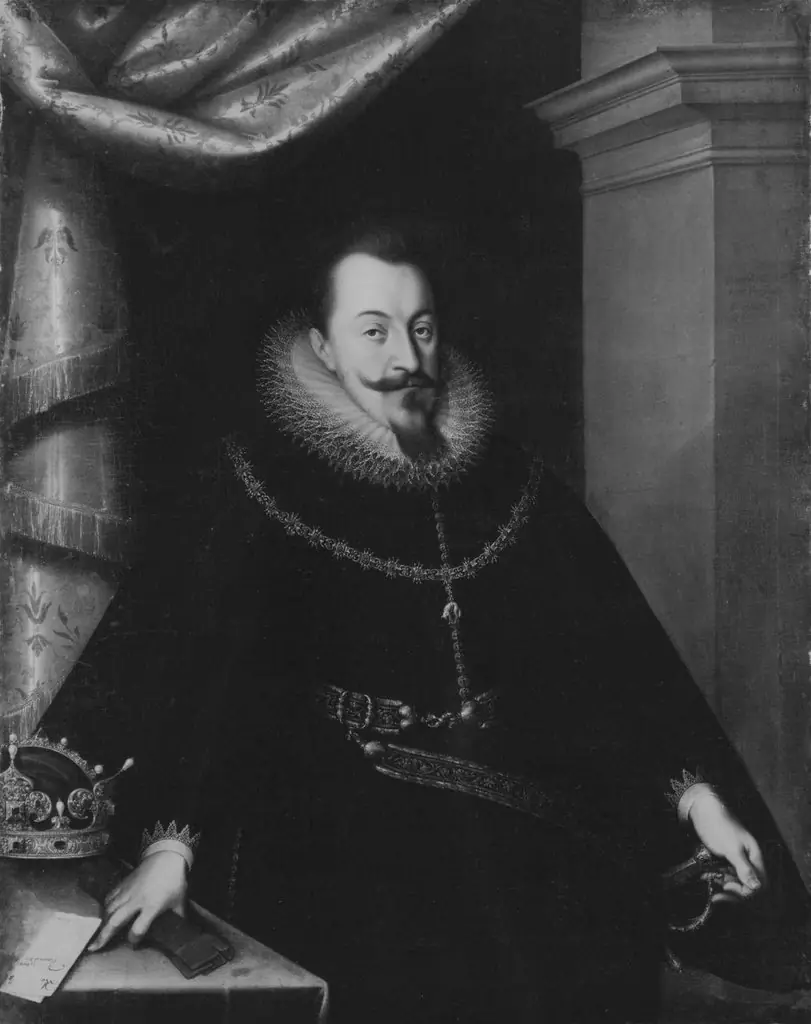 Bildnis des Königs Sigismund III. Vara von Polen und Schweden
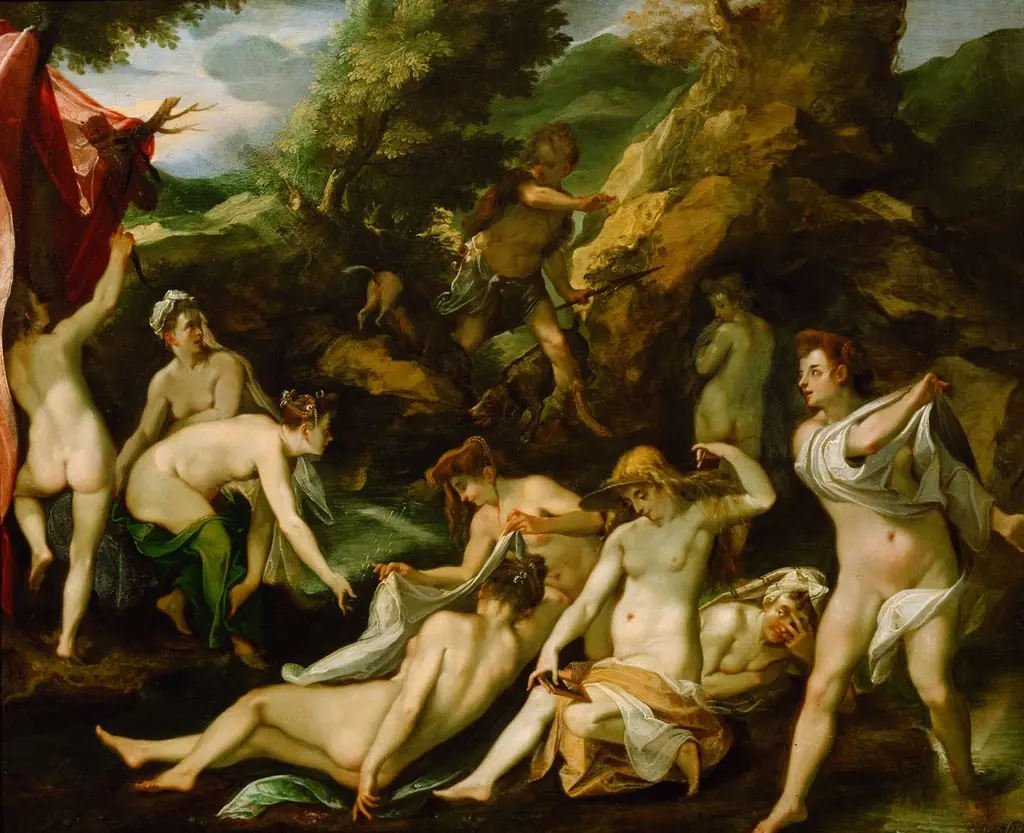 Diana and Actaeon
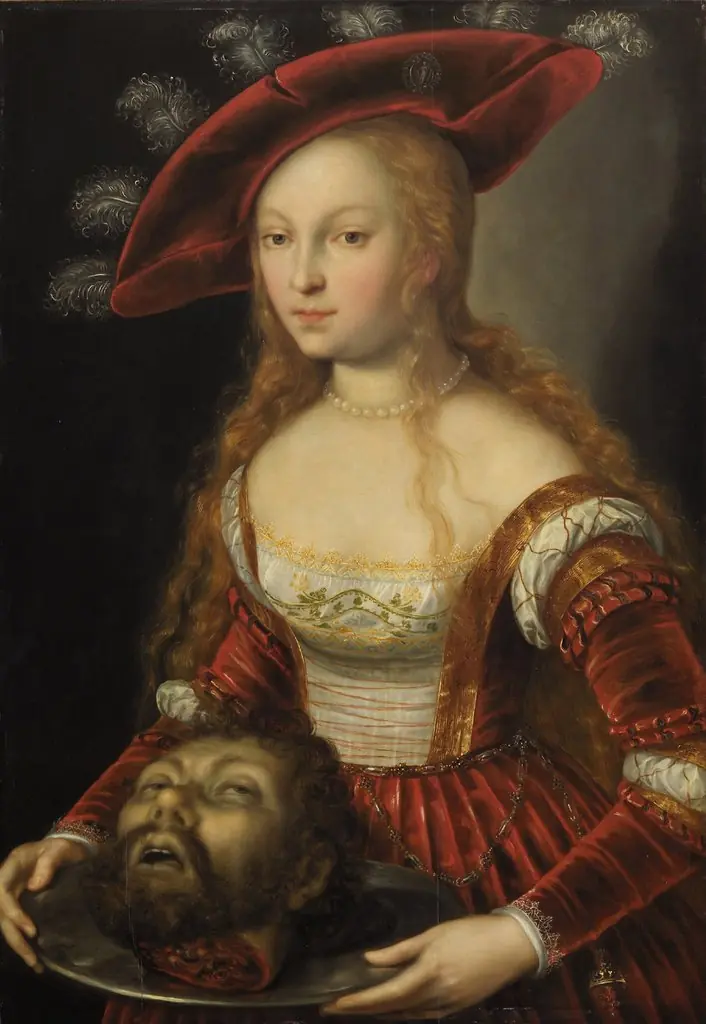 Salome with the head of John the Baptist
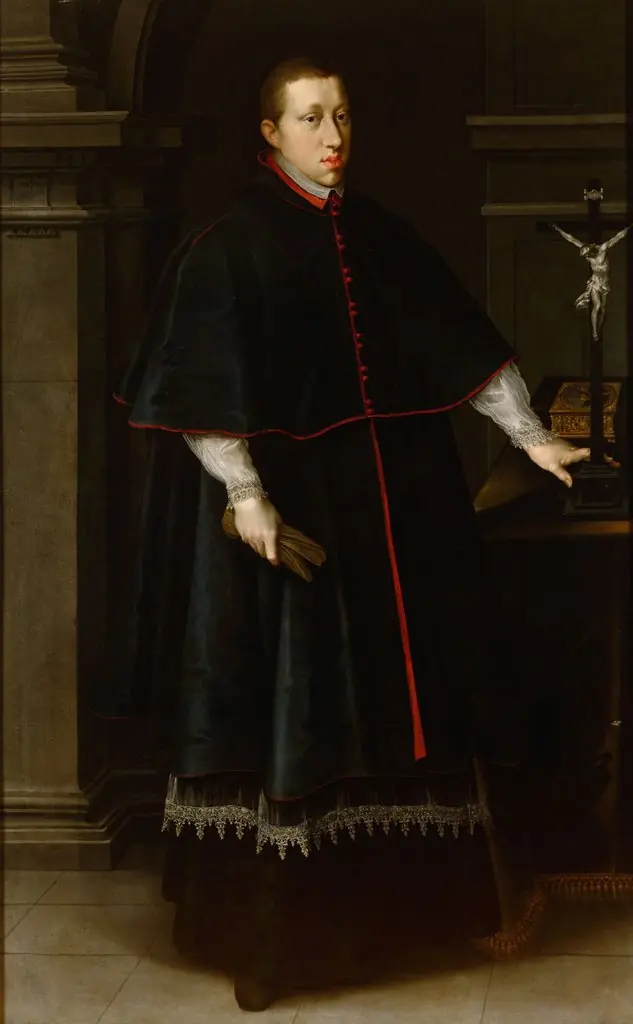 Archduke Leopold V (1586-1632) in the Spiritual Garment
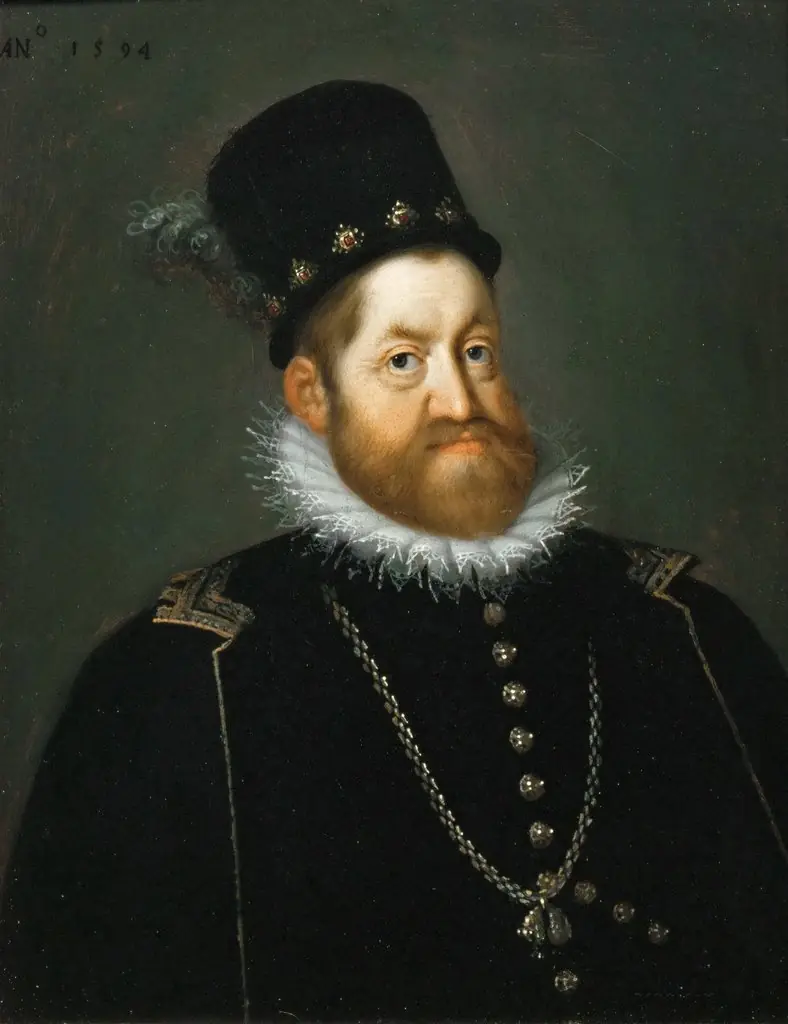 Porträt des Kaisers Rudolf II.
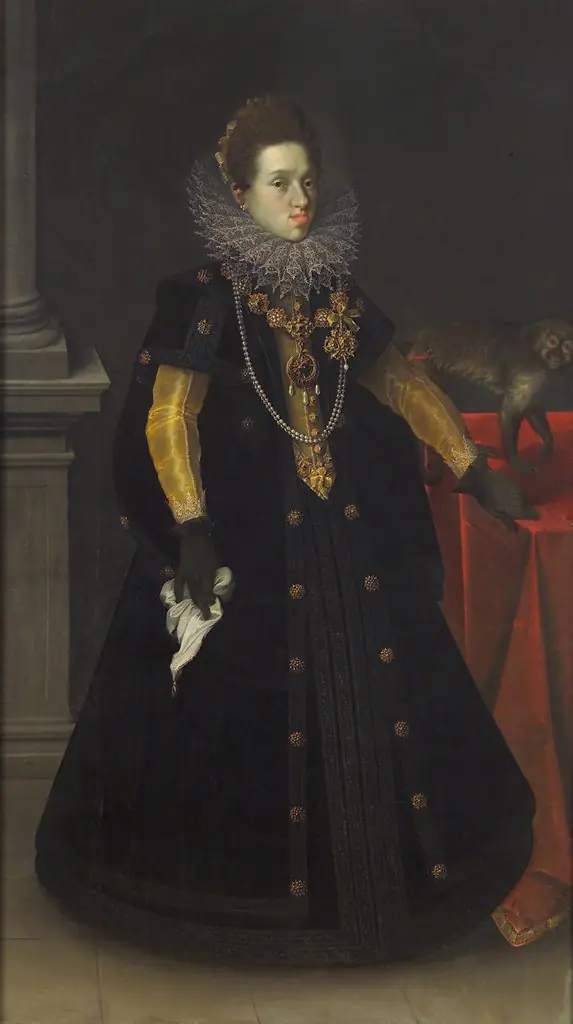 Archduchess Constance (1588-1631), Queen of Poland, with a Monkey
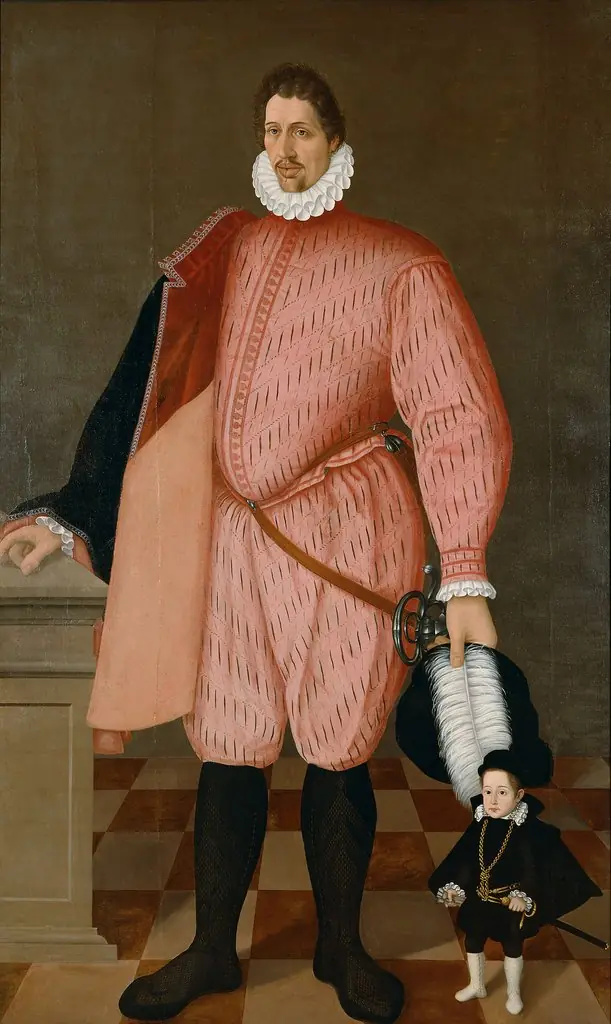 Der Riese Bartlmä Bona mit dem Zwerg Thomele
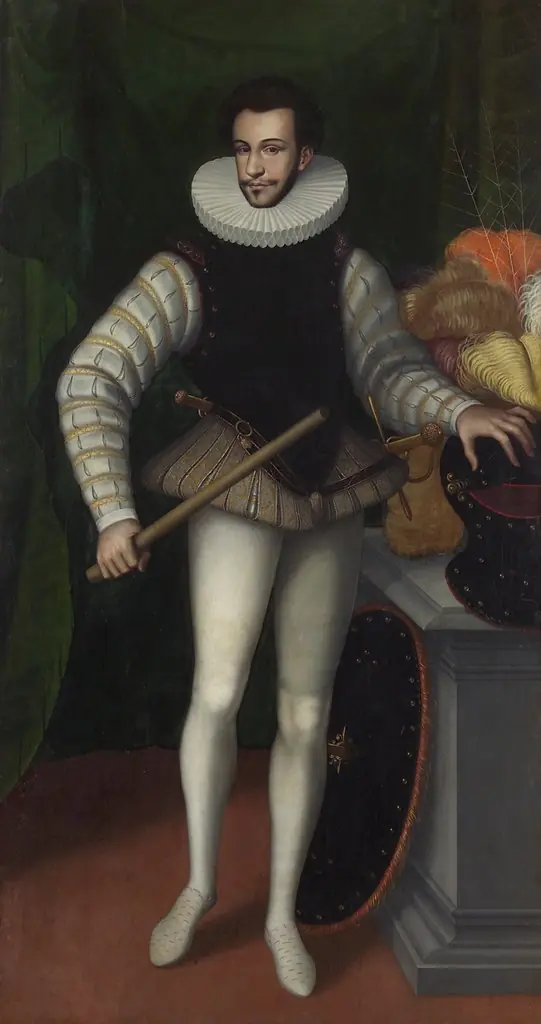 Herzog Francois von Alencon und Anjou (1555-1584)
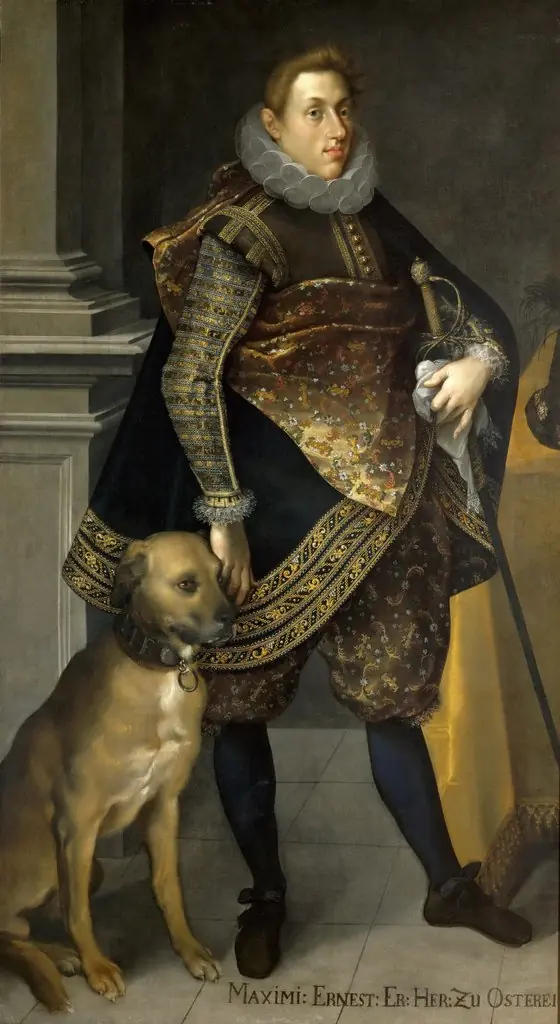 Erzherzog Maximilian Ernst (1583-1616) mit Jagdhund
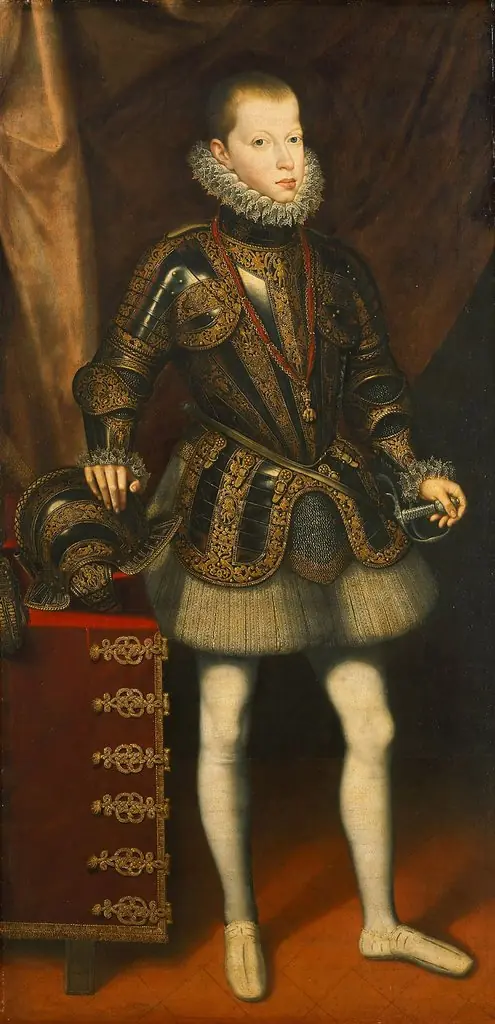 Infant Philipp in einem Harnisch
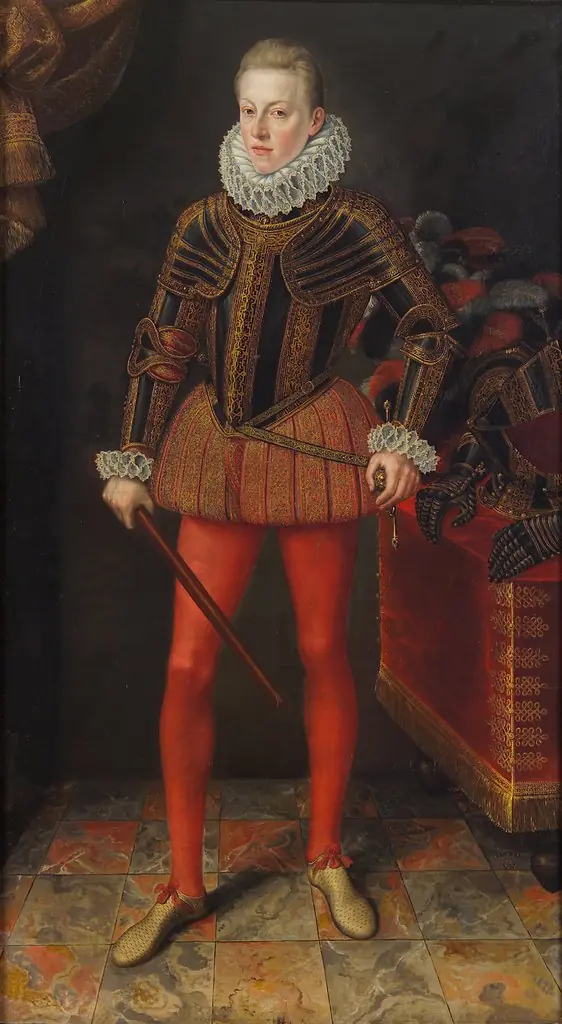 Portrait of Matthias II of Habsburg (1557-1619), the future Holy Roman Emperor
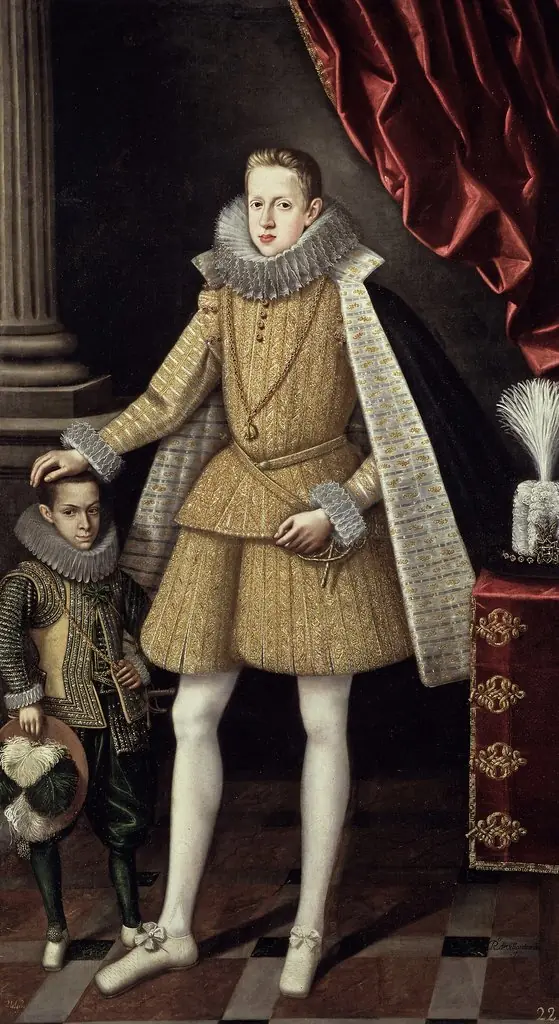 Prince Philip and the Dwarf, Miguel Soplillo
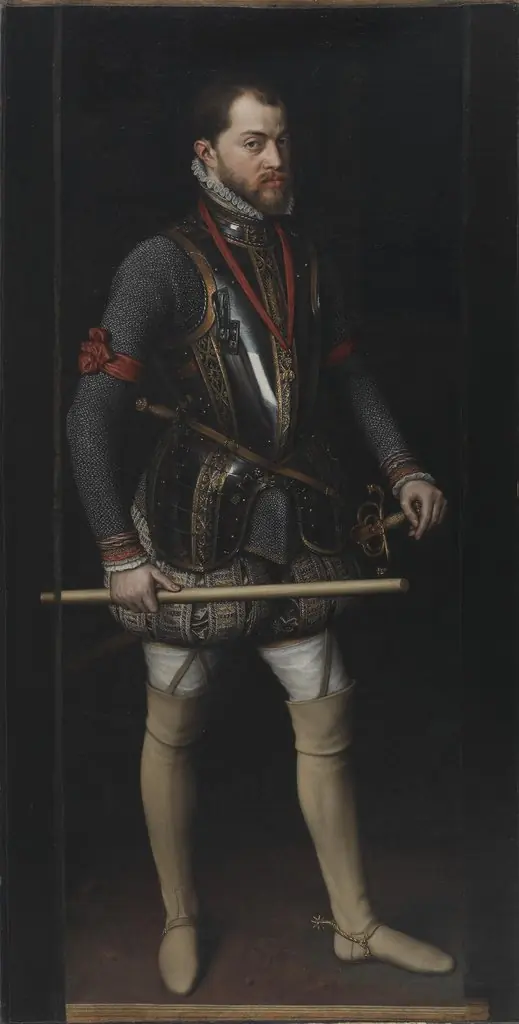 Philip II of Spain
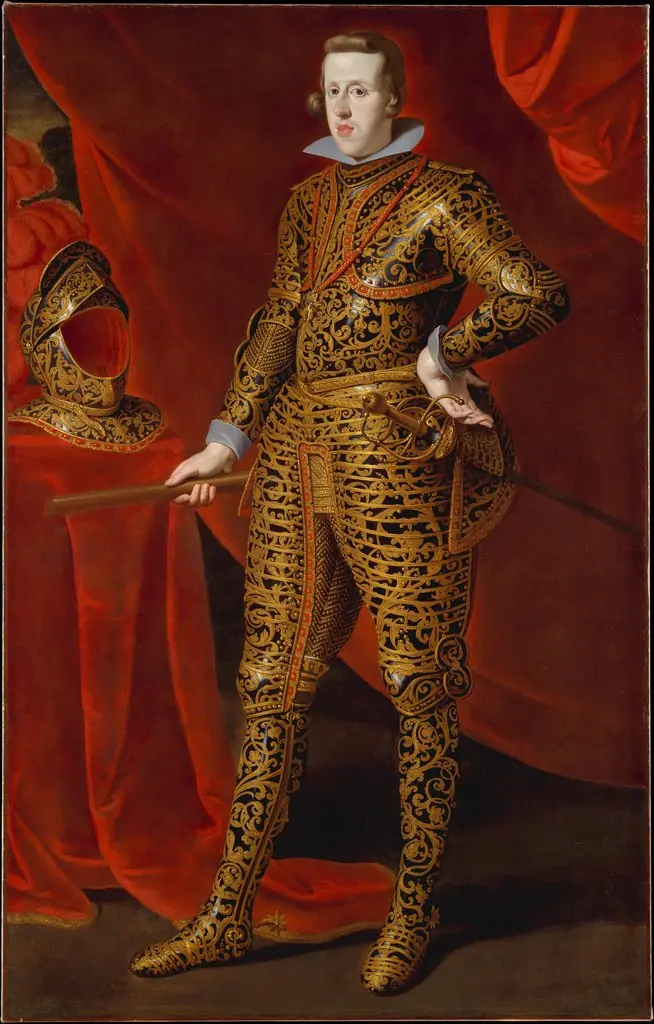 Philip IV (1605–1665) in Parade Armor