Artwork
San Bernardo
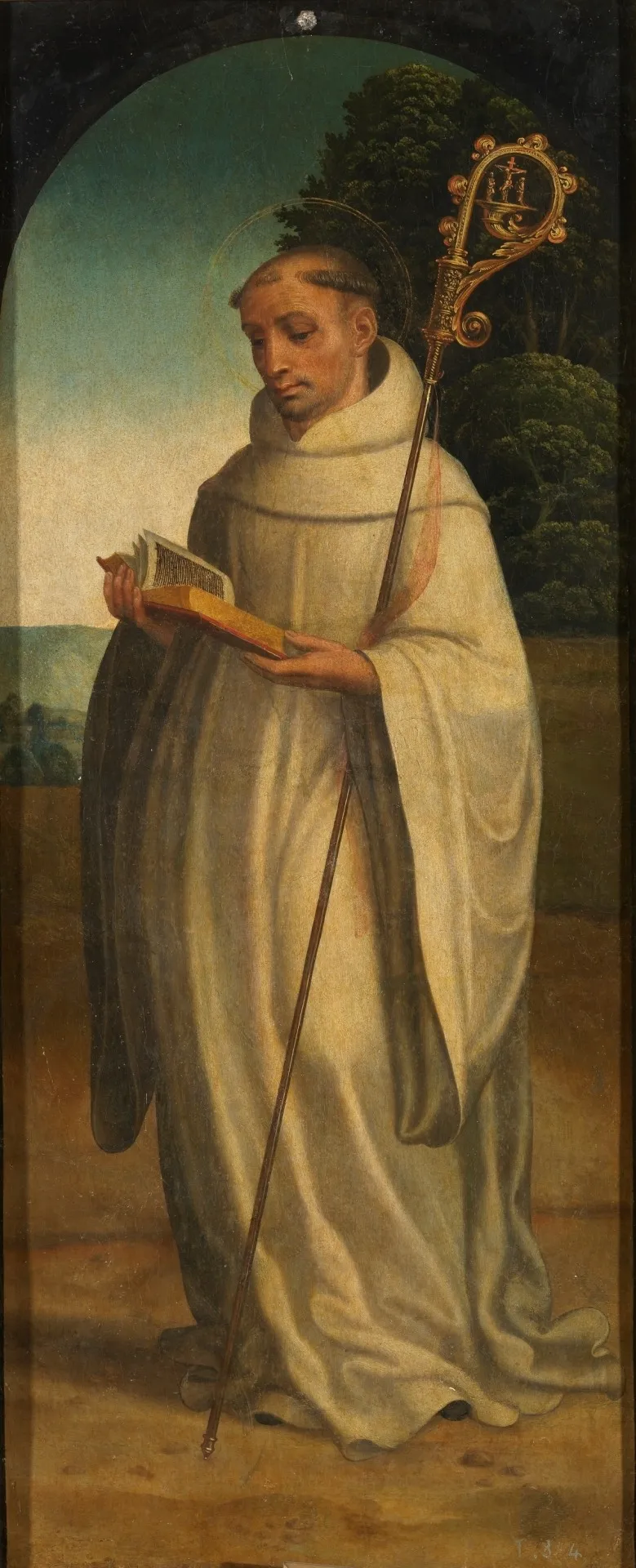
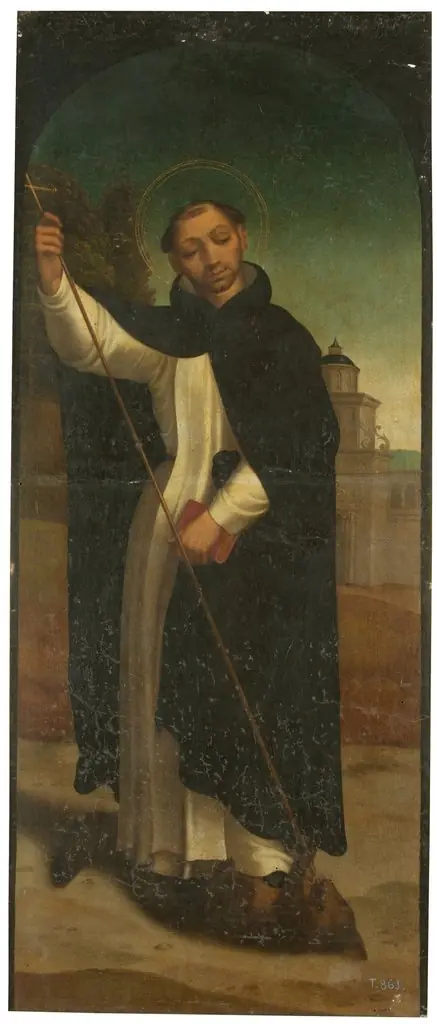
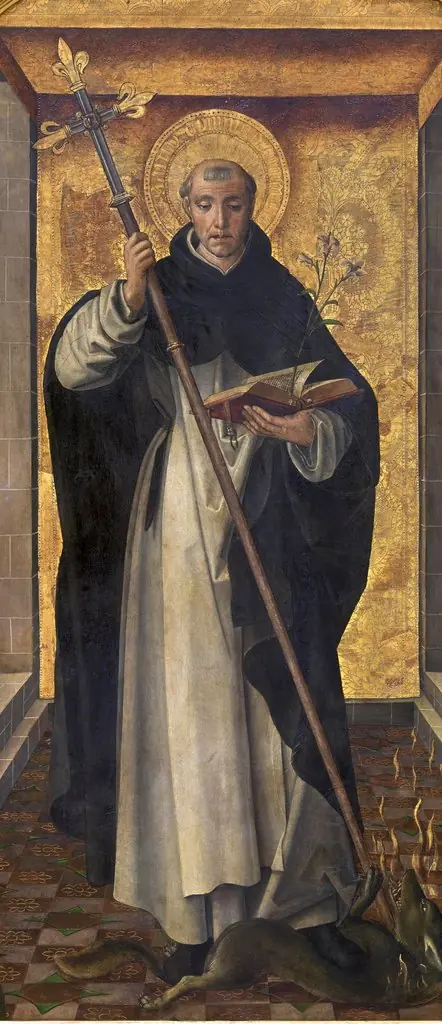
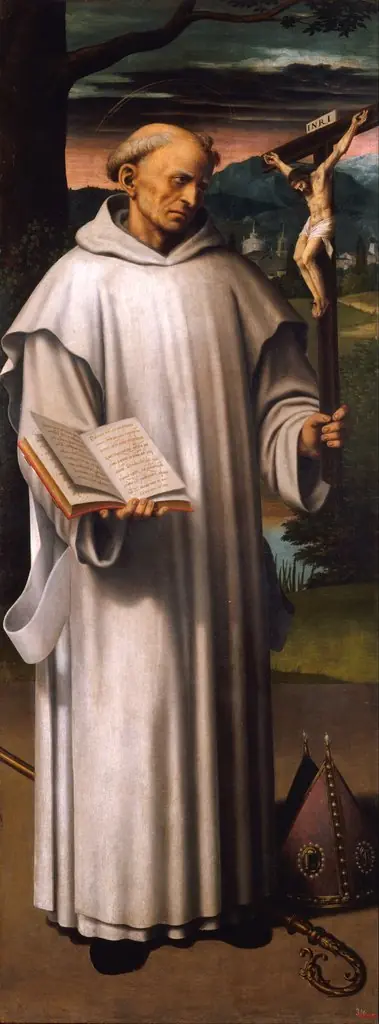
San Bernardo is an oil painting by the Mannerist artist Juan Correa de Vivar. It dates from 1540 and is held in the collection of the Museo del Prado.
About this work
Subject & Meaning
Bernard was widely venerated in Counter-Reformation Spain for his role as a Doctor of the Church, his Marian devotion, and his efforts to reform monastic life.
The painting depicts Bernard of Clairvaux, the influential 12th-century Cistercian abbot and theologian. As a religious work from the mid-16th century, the image would have served devotional purposes, presenting Bernard as a model of spiritual authority and mystical devotion. Bernard was widely venerated in Counter-Reformation Spain for his role as a Doctor of the Church, his Marian devotion, and his efforts to reform monastic life.
The panel's vertical format and relatively modest dimensions suggest it may have functioned as a personal devotional image or formed part of a larger altarpiece ensemble, inviting contemplation of Bernard's sanctity and theological significance.
Technique & Style
Executed in 1540, this religious painting by Juan Correa de Vivar utilizes oil paint applied to a wooden panel support. The work depicts Bernard of Clairvaux and is characterized by its vertical format, measuring 93 cm in height and 39 cm in width. As a piece of religious art, the composition focuses on the singular figure of the saint, rendered through the artist's application of oil media on the rigid surface of the panel.
History & Provenance
San Bernardo is a religious panel painting by Juan Correa de Vivar, dated to 1540 and executed in oil on panel. The work was created in the mid-sixteenth century as part of the artist's devotional output, depicting Saint Bernard of Clairvaux. It was held in the Museo de la Trinidad, a Spanish national collection, and is now housed at the Museo del Prado in Madrid, where it remains part of the museum's holdings. No further details of commission, intermediate ownership, or acquisition history are documented in the available sources.
Context
San Bernardo depicts Bernard of Clairvaux and dates to 1540. Juan Correa de Vivar painted it in oil on panel, measuring 93 cm by 39 cm. The work belongs to the religious genre and appears in collections at the Museo del Prado and the Museo de la Trinidad. It is studied within the broader context of 16th‑century Spanish religious painting and the artist’s devotional output.
Scholarship emphasizes its devotional function and the stylistic traits of Correa de Vivar’s religious art, situating the painting within the devotional practices of the period and highlighting its significance in the development of Spanish Counter‑Reformation imagery.
Legacy
San Bernardo shaped later religious painting in Spain through its vivid portrayal of Bernard of Clairvaux, establishing a visual template that influenced Baroque devotional works. The composition and emotive realism pioneered by Correa de Vivar informed subsequent artists' approaches to saintly subjects, reinforcing the painting's standing as a benchmark of Counter-Reformation art. Its presence in major collections such as the Museo del Prado cemented its reputation as a key example of 16th-century Spanish religious art, contributing to ongoing scholarly discussions of iconography and stylistic continuity.
The work's legacy persists in art history curricula and exhibitions that reference its innovative use of space and figure, underscoring its role in the evolution of Spanish religious painting.
Overview
San Bernardo is a 1540 oil painting by Spanish Renaissance artist Juan Correa de Vivar, portraying Bernard of Clairvaux in a serene, symbolic setting.
Artist & collection