Artwork
Visiting Grandfather
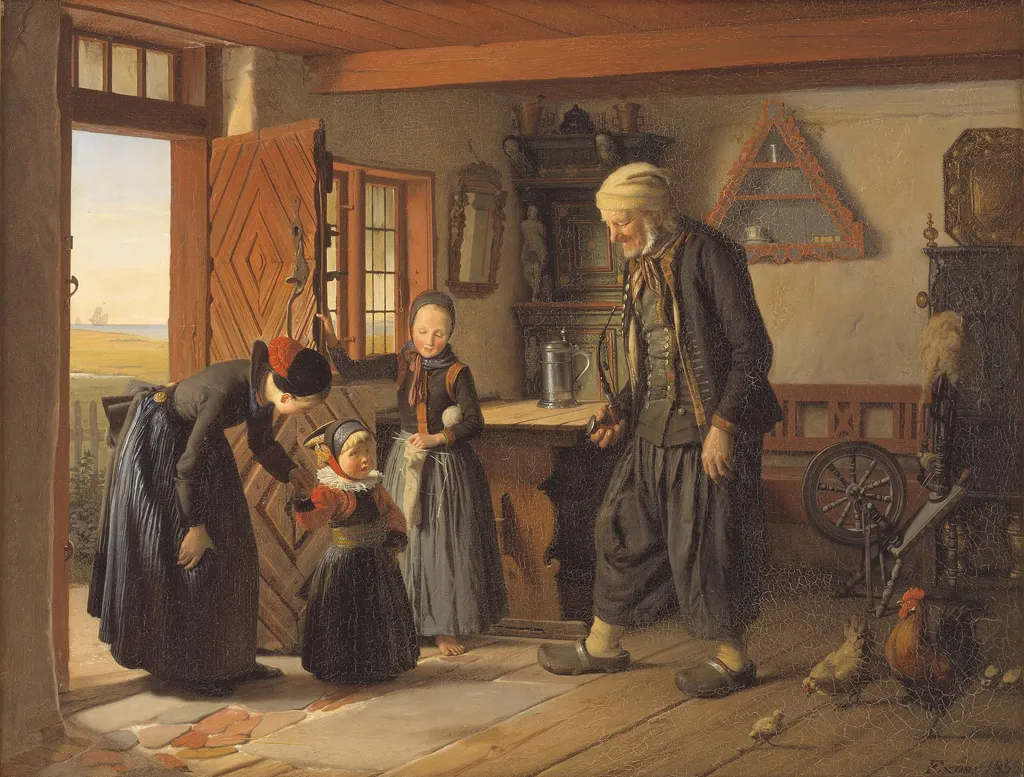
Visiting Grandfather is an oil painting by the Realist artist Julius Exner. It dates from 1853 and is held in the collection of the Statens Museum for Kunst.
About this work
Subject & Meaning
The composition centers on three human figures: a grandfather, a mother, and a grandchild, capturing a moment of familial interaction.
Julius Exner's 1853 genre painting, Visiting Grandfather, depicts an intimate domestic scene set in Amager. The composition centers on three human figures: a grandfather, a mother, and a grandchild, capturing a moment of familial interaction. The setting is rich with specific iconographic elements that ground the work in its cultural context, including a spinning wheel, a clog, a table, and a distinctive pyramid shelf.
A chicken is also present within the interior, adding to the rustic atmosphere. These objects, alongside the architectural feature of a door, collectively symbolize the daily life and material culture of the Amager community during the mid-nineteenth century. The work functions as a detailed ethnographic record, representing the simple, agrarian existence of the region's inhabitants through the lens of a family gathering.
Technique & Style
The painting Visiting Grandfather (1853) is an oil on canvas work measuring 73.5 cm × 97 cm, created by Julius Exner. It belongs to the genre_scene category and portrays a domestic interior with a mother, grandfather, grandchild, chicken, door, pyramid shelf, spinning wheel, table, clog and Amager, as recorded in the museum’s catalogue. The composition exemplifies a 19th‑century Danish genre scene, employing a realistic handling of light and detail typical of oil paint on canvas. The work is part of the collection of Statens Museum for Kunst.
History & Provenance
Julius Exner created the oil-on-canvas painting Visiting Grandfather in 1853. The work, measuring 73.5 by 97 centimeters, is a genre scene depicting a domestic interior in Amager featuring a mother, grandfather, grandchild, and various household items such as a spinning wheel and a clog. While the specific commission details are not recorded in the available documentation, the painting has been part of the collection at the Statens Museum for Kunst in Copenhagen since its inception. The work remains held by this national institution, which serves as its current custodian and location.
Overview
Julius Exner, a Danish artist born in Copenhagen in 1825, completed Visiting Grandfather in 1853. This oil painting exemplifies his focus on genre scenes, a popular artistic trend of the era. The work captures a quiet, intimate moment within a domestic setting in Amager, reflecting everyday life. It is currently part of the collection at the Statens Museum for Kunst.
Context
Exner worked during Denmark's National Romantic period, a time when artists often celebrated national identity through depictions of local life and landscapes. As a genre painter, he specialized in scenes of ordinary people, a style that proved both popular and financially rewarding. This focus on domestic narratives followed the earlier flourishing of the Danish Golden Age of Painting, continuing a tradition of detailed observation.
Own this work as a print
Artist & collection
Artist
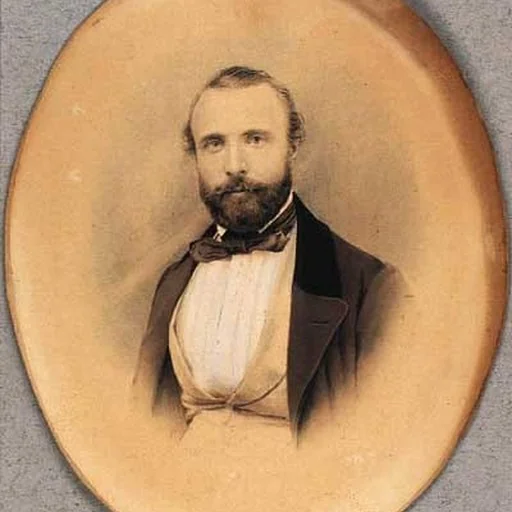
Johan Julius Exner, (30 November 1825 – 15 November 1910), Danish genre painter, was born in Copenhagen to Johann Gottlieb Exner, a Czech musician from Bohemia, who came to Denmark during the Napoleonic period, and his wife Karen…

 Reservesoldatens afsked med sin familie
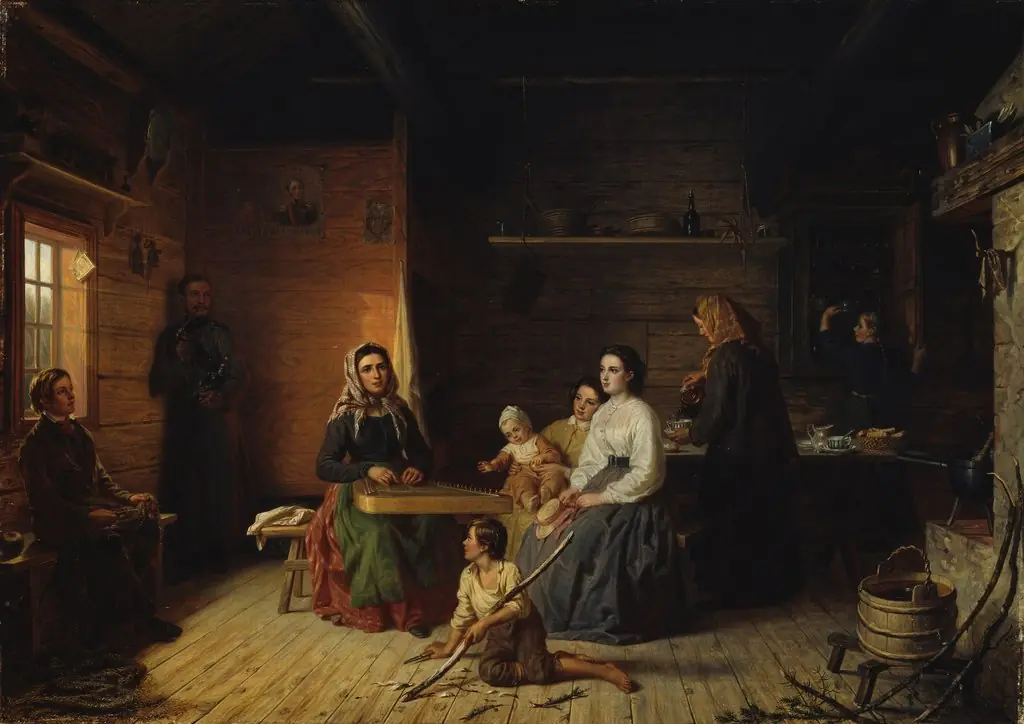 Kreeta Haapasalo Playing the Kantele in a Peasant Cottage
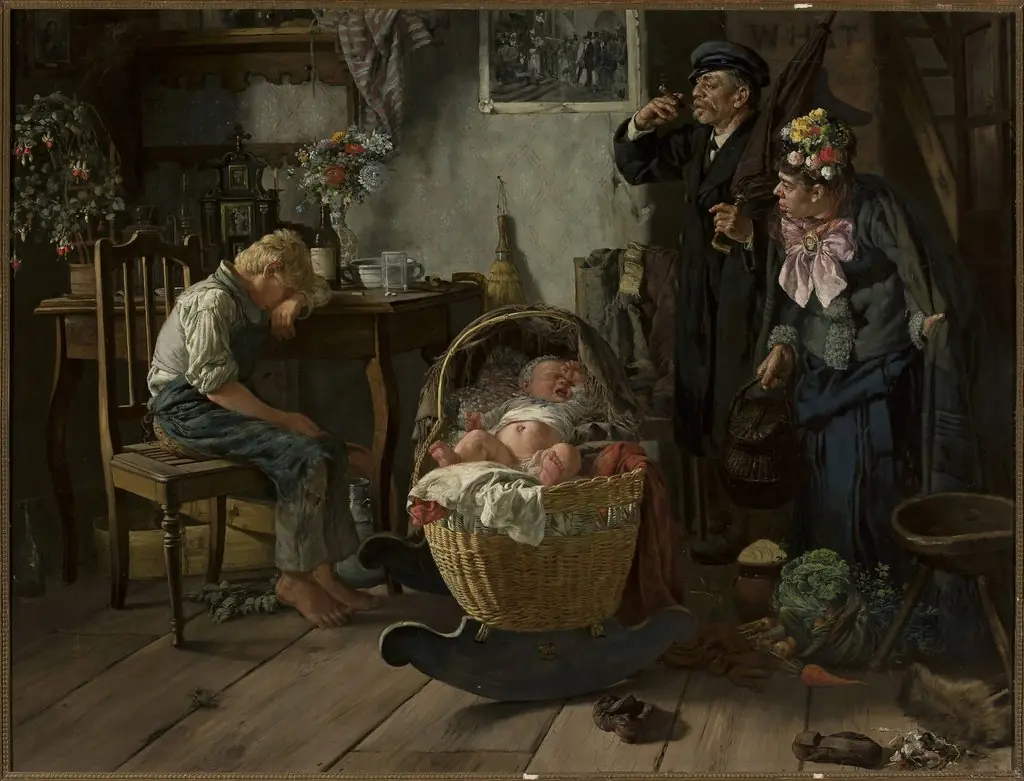 Lashes coming
 En fattig kone der venter på et krus øl i en bondestue
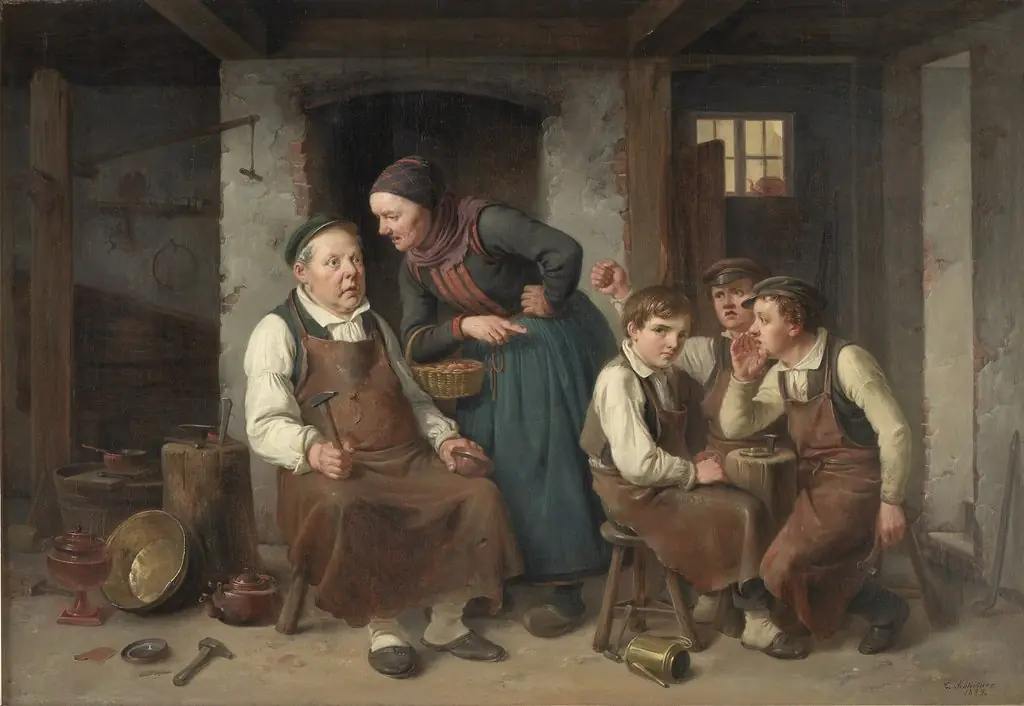 At a Coppersmith’s Workshop
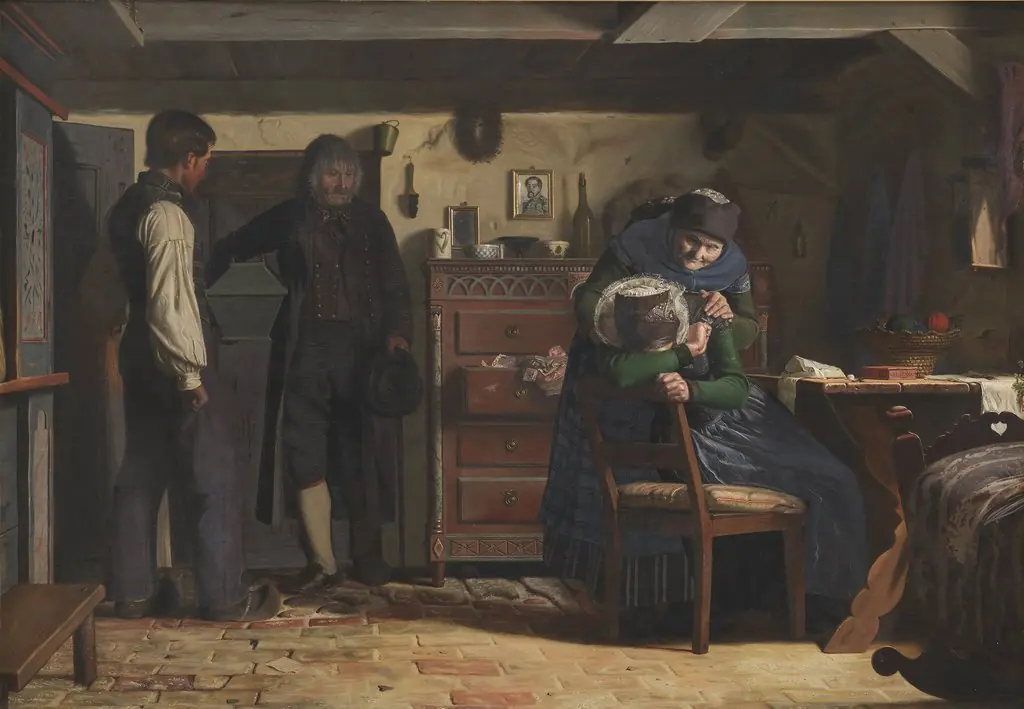 The Village Carpenter Bringing a Coffin for a Dead Child
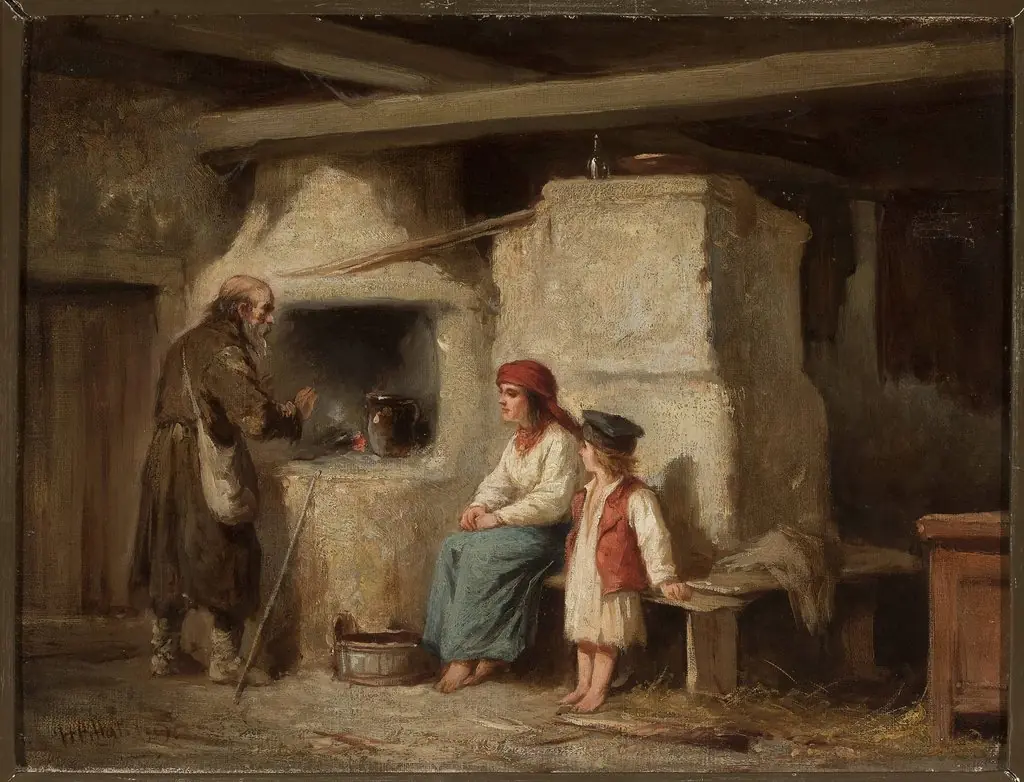 In a peasant cottage
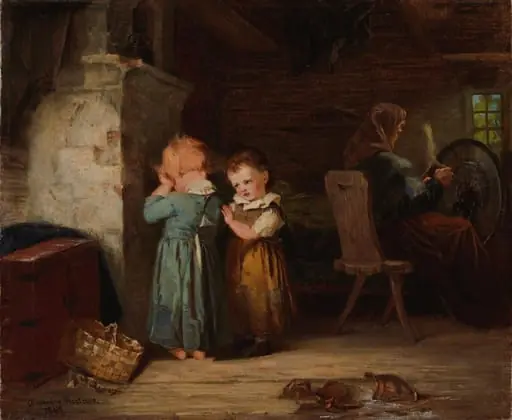 Pikku suruja
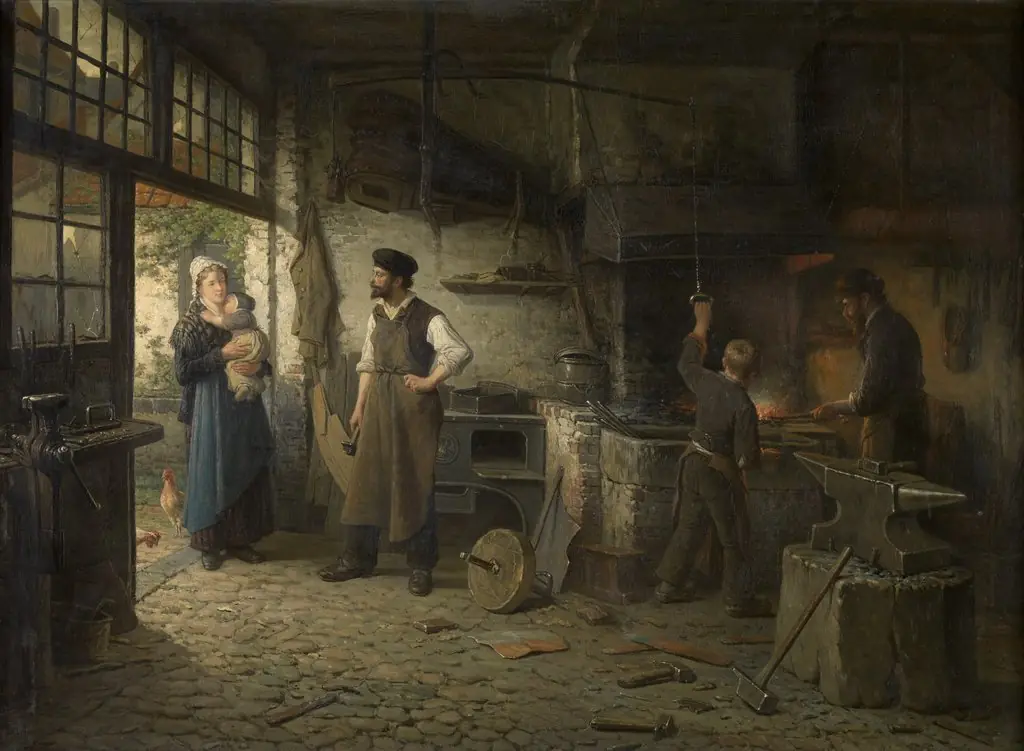 The Shoeing-Smith
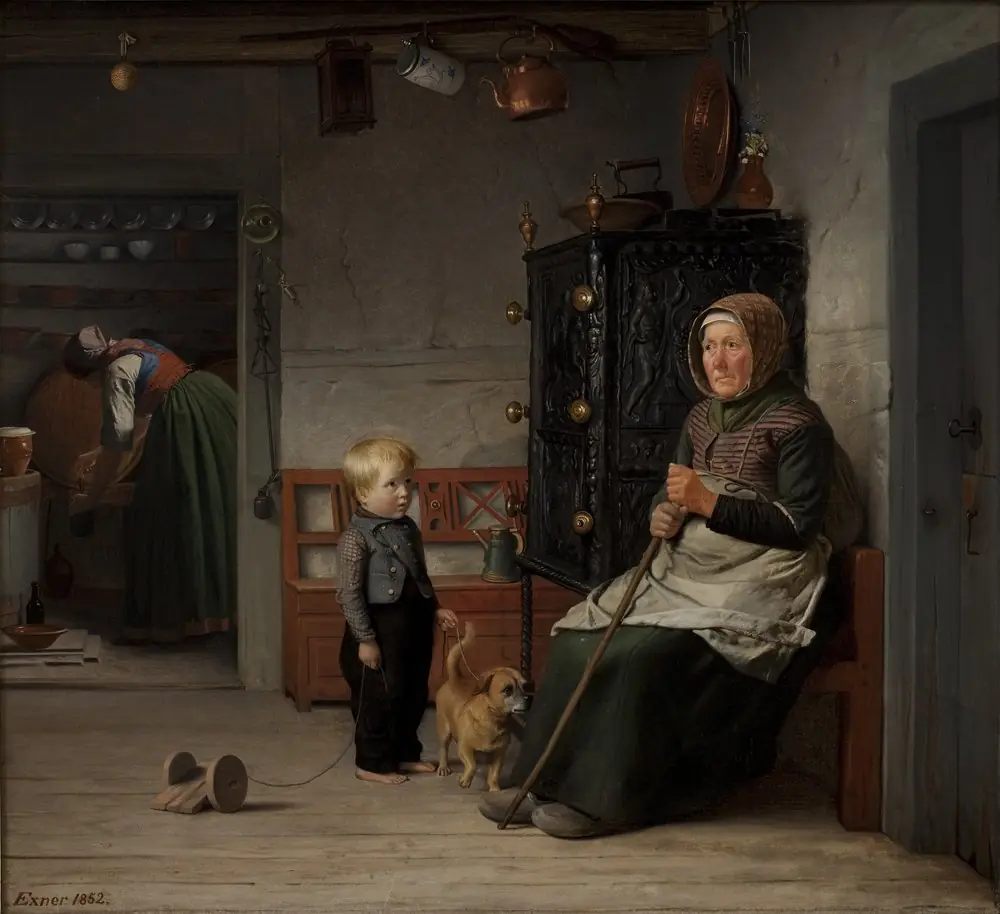 En fattig kone der venter på et krus øl i en bondestue
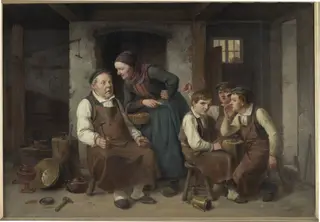 I en kobbersmeds værksted
- Visiting Grandfather
 Woman with a Parasol - Madame Monet and Her Son
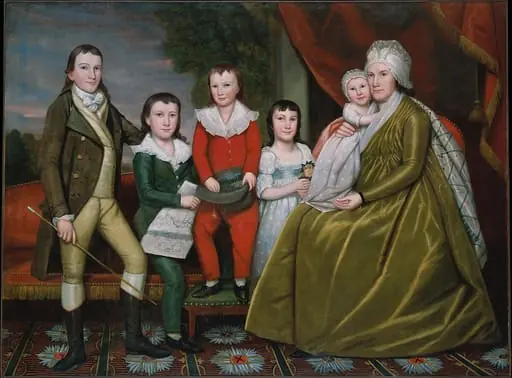 Mrs. Noah Smith and Her Children
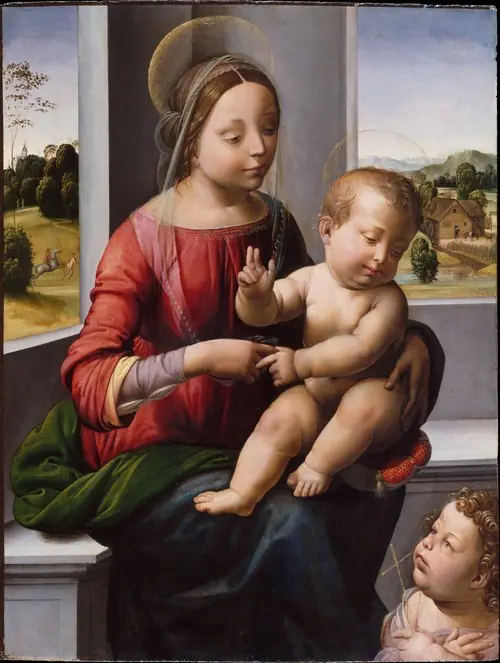 Madonna and Child with the Young Saint John the Baptist
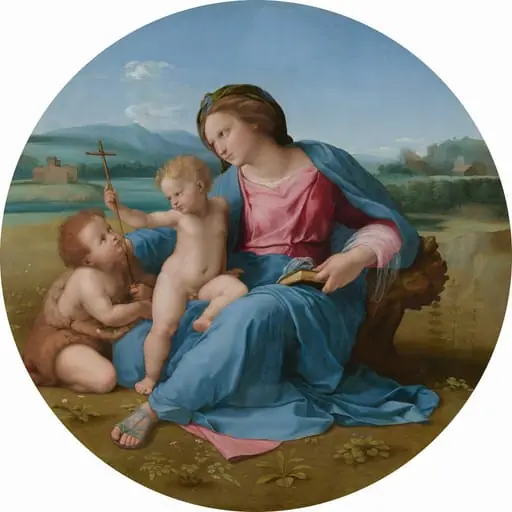 The Alba Madonna
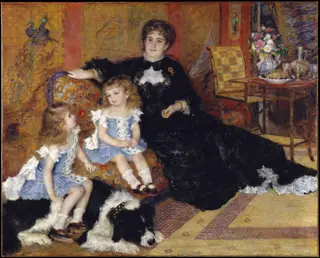 Madame Georges Charpentier and her Children
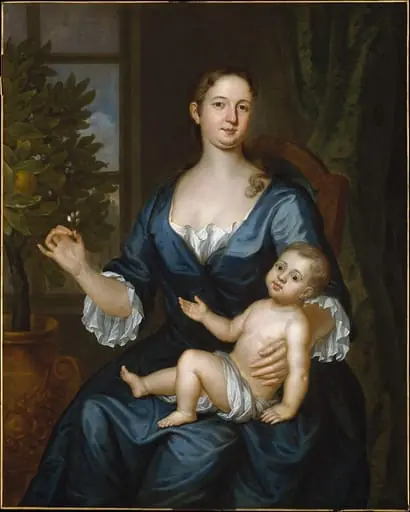 Mrs. Francis Brinley and Her Son Francis
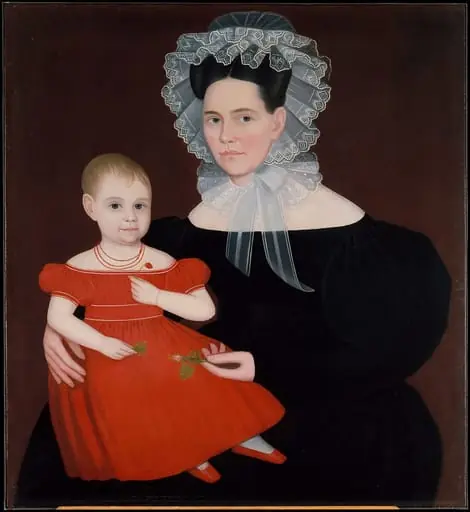 Mrs. Mayer and Daughter
 Madame Philippe Panon Desbassayns de Richemont (Jeanne Eglé Mourgue, 1778–1855) and Her Son, Eugène (1800–1859)