Artwork
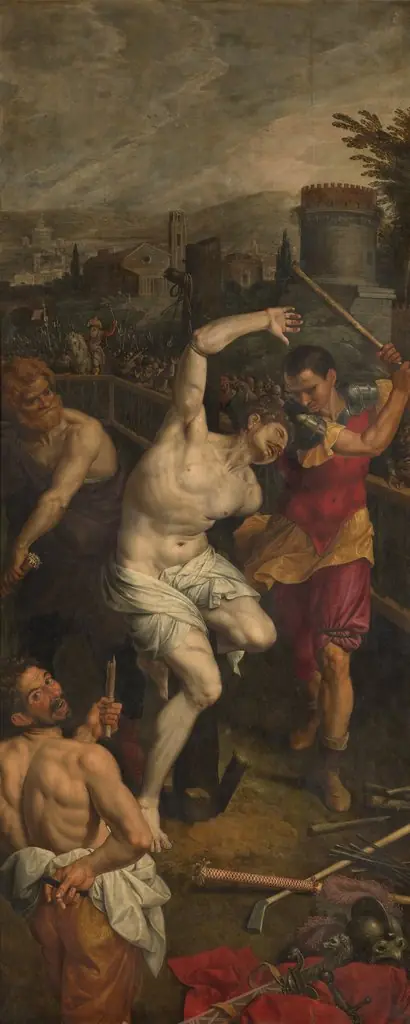
Martyrdom of Saint Bartholomew
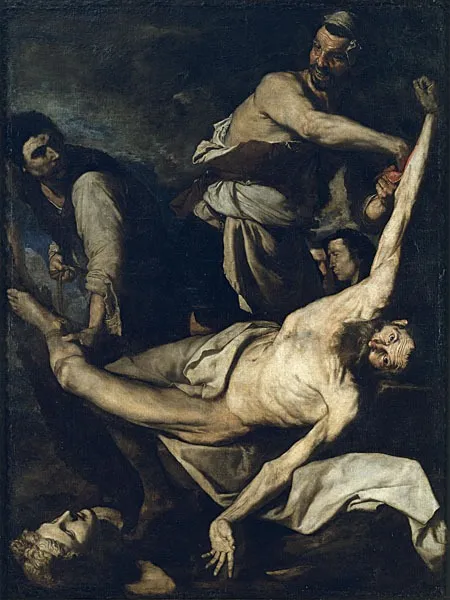
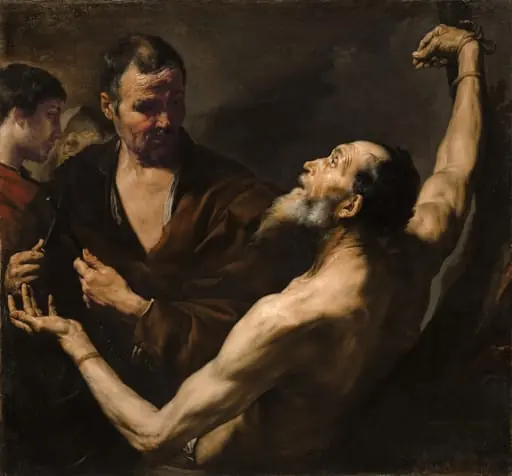
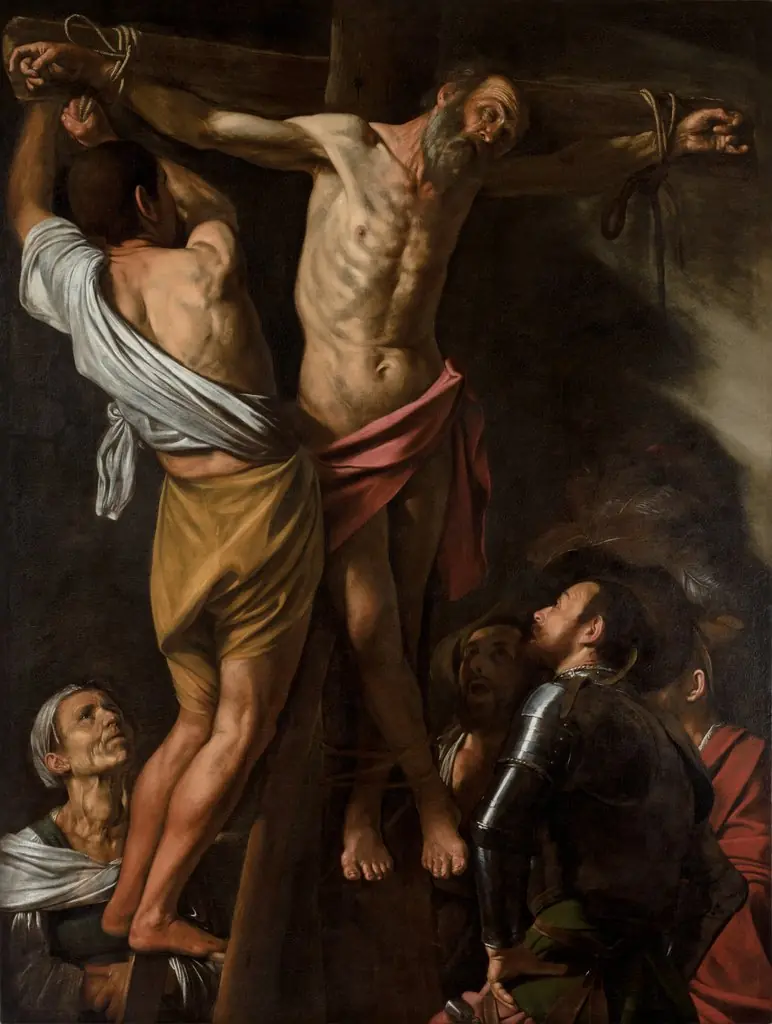
Martyrdom of Saint Bartholomew is an oil painting by the Early Baroque Italian artist Jusepe de Ribera. It dates from 1644 and is held in the collection of the Museu Nacional d'Art de Catalunya.
About this work
Subject & Meaning
This iconography emphasizes physical suffering and spiritual endurance, aligning with Counter-Reformation themes of martyrdom and divine justice.
The painting depicts the flaying of Saint Bartholomew, an apostle martyred by being skinned alive, following the account in Jacobus de Voragine’s 13th-century Golden Legend.
A nearly naked Bartholomew is shown bound and helpless as his executioner, portrayed as intoxicated and sadistic, performs the act. Two priests with covered heads appear in the background as witnesses. On the ground lies a classical sculpture identified as the deity Baldach, linking the scene to the mythological parallel of Marsyas, who suffered the same punishment in Ovid’s Metamorphoses.
This iconography emphasizes physical suffering and spiritual endurance, aligning with Counter-Reformation themes of martyrdom and divine justice.
Technique & Style
The painting is executed in oil on canvas and measures 202 cm in height by 153 cm in width, dated 1644 by Jusepe de Ribera.
Formal qualities emphasize stark realism and dramatic chiaroscuro, with the near-naked apostle positioned centrally in a moment of physical torment. The executioner’s violent flaying is rendered with thick, tactile brushwork that heightens the brutality of the scene. In the background, two hooded priests serve as silent witnesses, while a classical sculpture on the ground is identified as the deity Baldach. The composition draws on the textual tradition of the Golden Legend, aligning the martyrdom with the myth of Marsyas to underscore suffering as a shared motif.
History & Provenance
Created by Jusepe de Ribera in 1644, *The Martyrdom of Saint Bartholomew* is an oil painting on canvas that depicts the physical torment of the apostle. The work illustrates the narrative found in Jacobus de Voragine's *Golden Legend*, drawing parallels to the myth of Marsyas. Prior to its current residence at the Museu Nacional d'Art de Catalunya, the painting was in the possession of the illustrator Alexandre de Riquer. The artwork measures 202 cm in height and 153 cm in width.
The painting is held in the permanent collection of the Museu Nacional d’Art de Catalunya (MNAC), Barcelona, where it remains on view.
It entered the museum after having been in the possession of the illustrator Alexandre de Riquer.
The work was included in the exhibition *Ribera, Shadows and Light* at the MNAC.
Context
Created in 1644 by Jusepe de Ribera, known as Lo Spagnoletto, the painting stands as a definitive example of his mature religious art. The work synthesizes the narrative of Saint Bartholomew from Jacobus de Voragine's 'Golden Legend' with the classical myth of the flayed satyr Marsyas, a thematic pairing that underscores Ribera's engagement with both scriptural and antiquarian traditions. Art historical analysis highlights the composition's dramatic intensity, particularly the juxtaposition of the helpless apostle and the sadistic executioner, which demonstrates the artist's command of physical torment and emotional realism. The inclusion of a classical sculpture identified as the god Baldach further situates the piece within a broader cultural context that blends Christian martyrdom with pagan iconography. Before its acquisition by the Museu Nacional d'Art de Catalunya, the painting was held by the illustrator Alexandre de Riquer, marking its provenance in early 20th-century collections.
Artist & collection
Artist
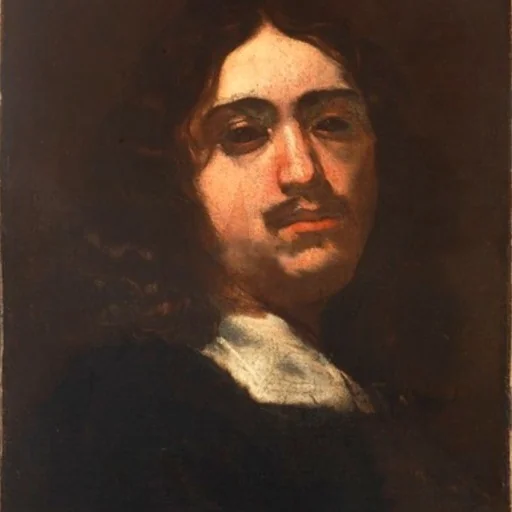
Jusepe de Ribera (Valencian:; baptised 17 February 1591 – 3 November 1652) was a Spanish painter and printmaker.