Artwork
Saint Andrew
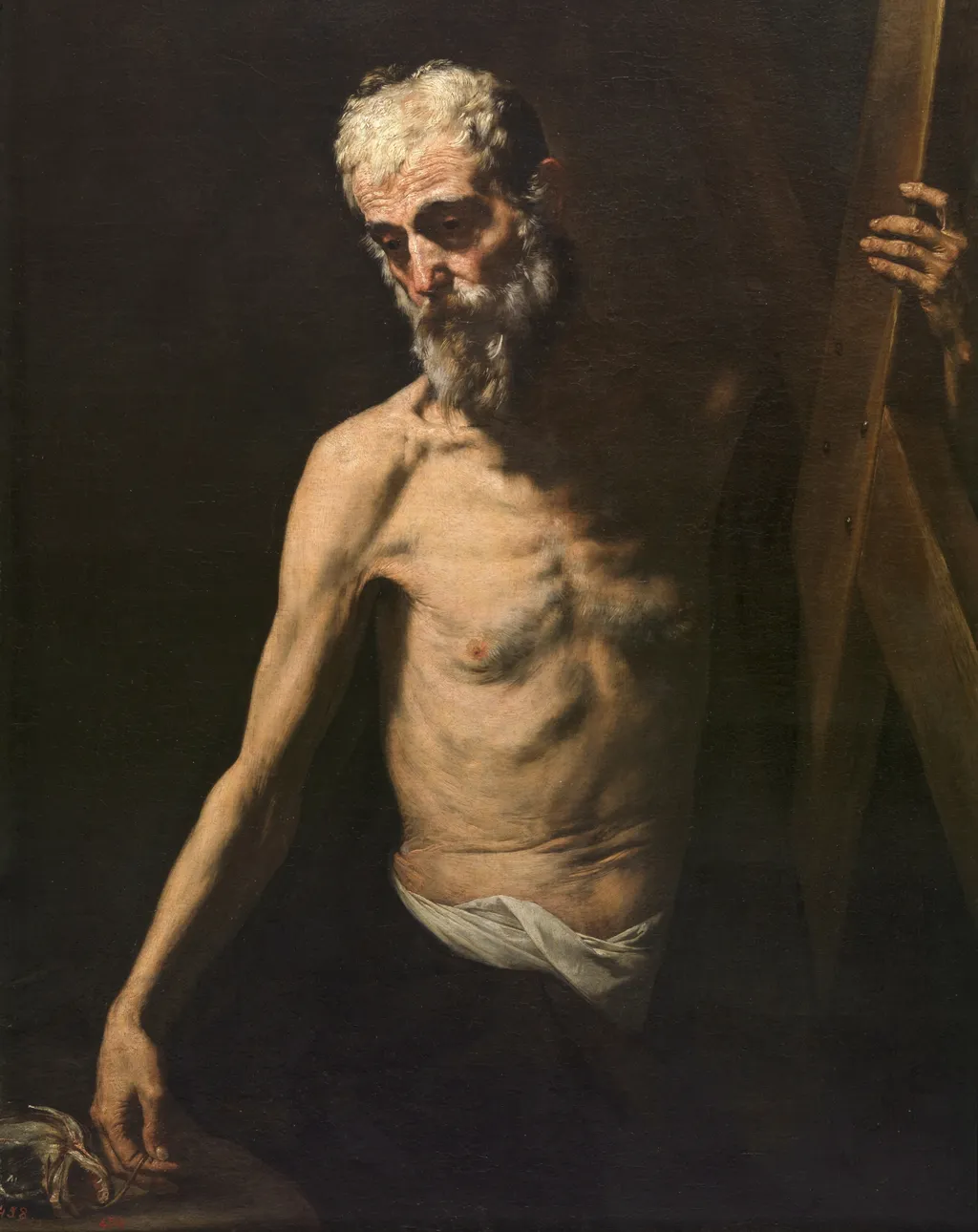
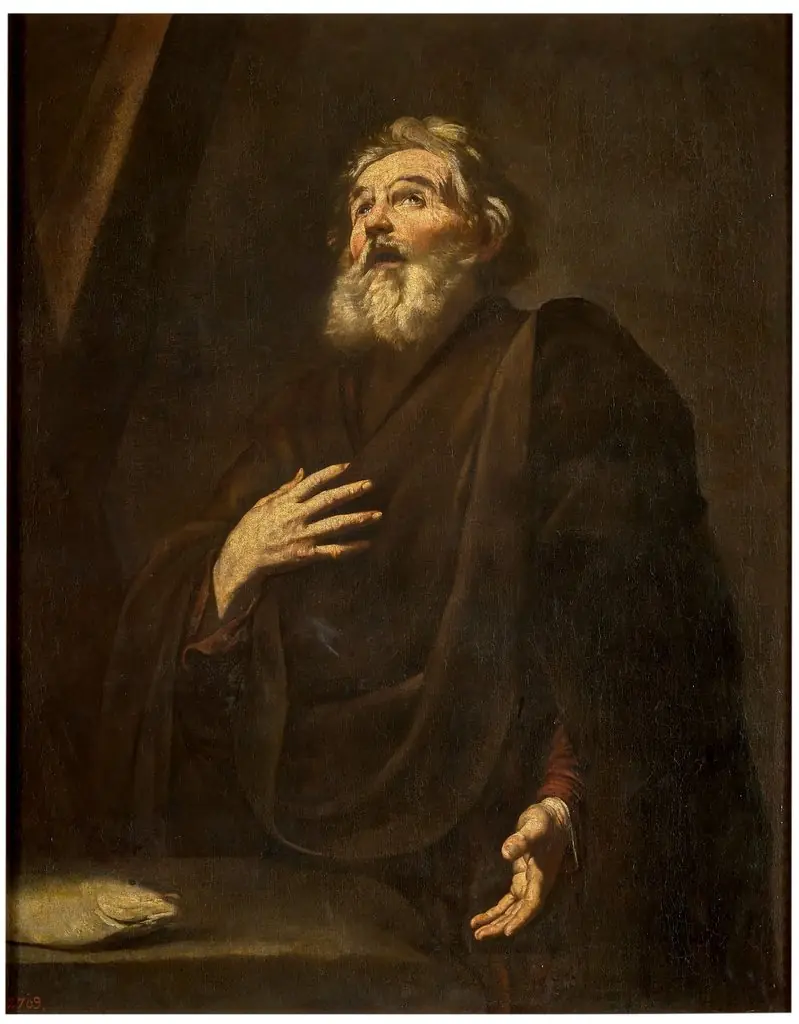
Saint Andrew is an oil painting by the Early Baroque Italian artist Jusepe de Ribera. It dates from 1631 and is held in the collection of the Museo del Prado.
About this work
Subject & Meaning
This treatment exemplifies the early tenebrist phase of José de Ribera, whose practice included drawing from live models such as Neapolitan fishermen.
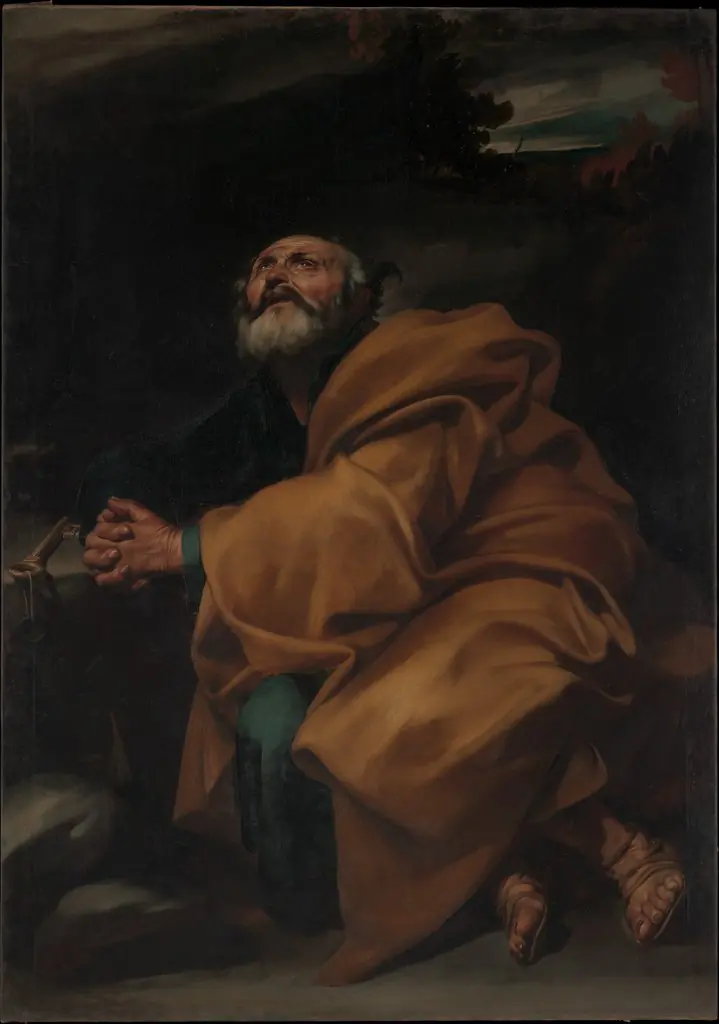
The painting Saint Andrew depicts the apostle Andrew in the moment of his martyrdom, shown embracing a diagonal X‑shaped cross. He holds an anchor with a fish, a reference to his former life as a fisherman. The work employs intense chiaroscuro, with stark light falling from the left that isolates the figure and highlights his hyperrealistic, almost sculptural rendering. This treatment exemplifies the early tenebrist phase of José de Ribera, whose practice included drawing from live models such as Neapolitan fishermen.
Technique & Style
Saint Andrew is an oil painting on canvas, measuring 123 cm in height and 95 cm in width. The work exemplifies the tenebrism of Jusepe de Ribera's early period, characterized by marked contrasts between illuminated and shadowed zones. Light falls violently from the left, strongly highlighting the saint's face and bare torso while leaving the surrounding areas in deep shadow. The Apostle Andrew is rendered as an isolated figure with pronounced hyperrealism, a quality Ribera achieved by copying from life, including the fishermen of Naples who served as models for such subjects. The composition centers on the saint embracing the X-shaped cross of his martyrdom, with a hook and fish held in his hand recalling his profession as a fisherman.
History & Provenance
Painted in 1631, the work entered the Spanish royal collection and was kept at the Casita del Príncipe in the Escorial between 1700 and 1837. Following the disentailment of 1837, the painting was transferred to the Museo del Prado, where it has remained. A partial copy by Marià Fortuny i Marsal was acquired by the Prado in 2014.
The painting is held in the Museo del Prado, Madrid, with inventory number P001099.
It entered the Prado’s collection from the Spanish royal holdings at the Casita del Príncipe in the Escorial, documented between 1700 and 1837. A partial copy by Marià Fortuny i Marsal, acquired by the Prado in 2014, is also held there.
Context
The painting Saint Andrew by Jusepe de Ribera has been understood as a powerful example of the artist's early Spanish Baroque style, particularly his development of tenebrism and naturalistic figuration. Scholarship emphasizes its dramatic illumination, where light strikes the apostle's exposed torso and face from the left, creating stark chiaroscuro that underscores the spiritual intensity of the scene. The work's composition, featuring Andrew clutching an X-shaped cross and holding a fishing hook with a fish, reflects both his martyrdom and his identity as a former fisherman, a detail noted in multiple sources. Its provenance from the royal Casita del Príncipe in the Escorial and subsequent acquisition by the Museo del Prado situates it within a broader historical trajectory of Spanish royal collections and 19th-century art historical interest, as documented in archival records and cited in early 20th-century art histories such as Lafuente Ferrari's 1971 study. The painting's influence is further reinforced by its role as a model for later artists, including a partial copy by Marià Fortuny i Marsal acquired by the Prado in 2014, highlighting its enduring significance in the study of Baroque art and Spanish artistic identity.
Legacy
The painting has shaped the visual conception of the apostle Andrew in later religious art, particularly through Ribera’s dramatic use of chiaroscuro that emphasizes the isolated figure’s tension and martyrdom. Its stark composition and hyperrealist treatment of the saint’s bare torso and illuminated face have been cited as a model for Baroque portrayals of saints in moments of spiritual crisis. The work’s provenance from the royal collection of the Casita del Príncipe at the Escorial and its subsequent display in the Museo del Prado have reinforced its status as a key example of Spanish tenebrism, influencing scholarship on the transmission of naturalistic models in 17th‑century European painting. A partial copy by Marià Fortuny i Marsal, acquired by the Prado in 2014, further demonstrates the painting’s enduring impact on museum collections and artistic study.
Own this work as a print
Artist & collection
Artist
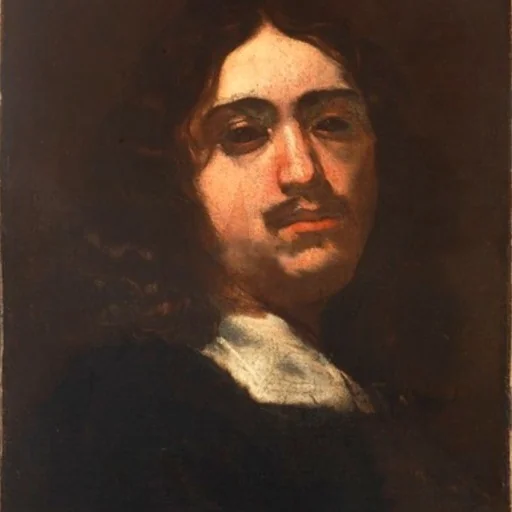
Jusepe de Ribera (Valencian:; baptised 17 February 1591 – 3 November 1652) was a Spanish painter and printmaker.